Gasgoo Munich- Gasgoo reported on April 23 that Tesla dropped a bombshell during its first-quarter 2026 earnings call: The third-generation Optimus Gen3 humanoid robot is set to debut mid-year. Production will kick off at the Fremont, California plant as early as late July or August, with deliveries to enterprise clients slated for the second half of 2026 and deployment in external scenarios beginning next year.
Musk made one thing clear at the meeting: Optimus will be "the highest-volume product in history by production scale."
From overhauling its flagship vehicle lines to pouring more than $25 billion into annual capital expenditures, Tesla is aggressively pivoting its core future business from electric vehicles to humanoid robots.
Auto Lines Yield to Robots
To grasp the strategic weight of Optimus production, consider a critical fact: Tesla is clearing the path by halting production of the Model S and Model X.
These two models, after all, were the foundation of Tesla’s rise from nothing.
Next comes a complete overhaul of production equipment for Optimus, including new wiring, communication systems, and testing infrastructure.
Musk stressed that completing such a line switch in four months is extraordinarily rare. "If we can shut down a line, strip it down entirely, install a brand-new line, and have it running in four months, that would be an incredibly fast pace. I don't think any other company on Earth has ever done this."
Behind this effort lies a fundamental redefinition of Tesla’s future.
Musk has repeatedly emphasized that the humanoid robot will be the most important product Tesla has ever made—and possibly one of the most important in human history.
First-quarter earnings reveal Tesla’s annual capital expenditures will exceed $25 billion—well above the previous $20 billion forecast—as the company goes all-in on three core growth pillars: AI chips, Full Self-Driving (FSD), and Optimus.
Analysts suggest Optimus could eventually eclipse the automotive business in value, with estimates pointing to a $25 trillion market by 2050 that would account for 80% of Tesla’s total worth.
Mass Production Hurdles Remain
But this high-stakes gamble is not without risk.
Musk admitted that initial production volumes for Optimus will be "quite slow." The reason? Optimus relies on a completely new production line involving 10,000 unique parts, making this year's output "impossible to predict."
Musk believes some investor questions fail to grasp the sheer complexity of running a production line.
"The real issue is that Optimus is a new product with a new line and over 10,000 unique parts, none of which have truly been mass-produced," he said. "Overall progress is ultimately held back by the one part among those 10,000 that has the worst luck, is the slowest, or is the dumbest. These things simply cannot be predicted."
History shows the road to mass-producing Optimus has already seen multiple delays.
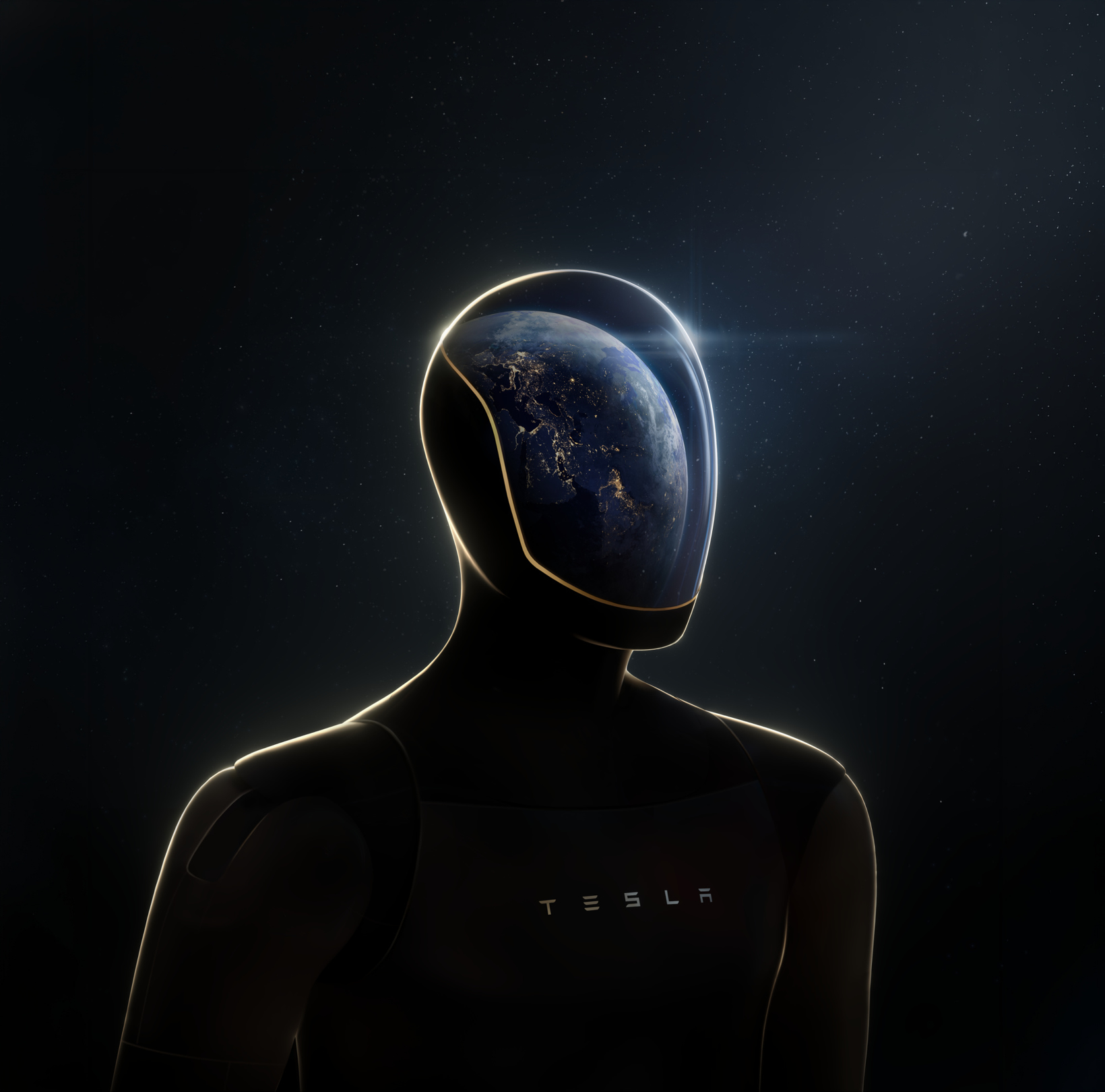
Image Credit: Tesla
Last October, Gasgoo noted a report by tech outlet The Information highlighting the difficulties Tesla faces in ramping up robot production.
Reports indicate Tesla slashed its annual production target for Optimus from 5,000 to 2,000 units. Worse, severe technical challenges with the robot's hands and forearms have prevented the engineering team from achieving human-like dexterity, forcing the company to halt production temporarily while stockpiling armless bodies.
Insiders reveal that Tesla’s engineers have struggled to build a mechanical hand with human-like flexibility. The issue was identified as far back as the summer of 2024, yet the team has yet to crack it after multiple attempts.
Musk has acknowledged on a podcast that fine motor control in the hands is the project's hardest hurdle. The company has shifted resources to a redesign, though no timeline for resuming production has been given. He has previously noted in interviews that replicating the complex movements of a human hand represents a massive engineering challenge.
This episode underscores a stark reality: the technological gap required to achieve truly human-like dexterity is far deeper than imagined.
2026 will be a critical proving ground for humanoid robots—the transition from zero to one. Whether Tesla can pull off this high-stakes crossover from building cars to "building humans" will be answered first on that production line in Fremont.