



Gasgoo Munich- 2026 is set to be a pivotal year in the history of China's new energy battery sector.
Sodium-ion batteries are no longer a "future technology" confined to laboratories or a niche product seen only in isolated pilots. Instead, they are accelerating into the fast lane of mass application—moving from passenger vehicles to commercial trucks at an unprecedented pace.
From Changan Automobile and CATL unveiling a sodium strategy in the freezing depths of Yakeshi early this year, to HiNa Battery demonstrating a full product matrix covering starting, energy storage, and power applications in Wuhan by the end of the first quarter, the message is clear. Backed by tangible products and operational data, the commercial era for sodium-ion batteries has arrived.
Market Deployment: Dual Drive of Passenger and Commercial Vehicles
On March 31, HiNa Battery released its product lineup alongside operational data from "three-location commercial tests" of its sodium-powered heavy trucks.
Unlike standard passenger cars, commercial vehicles operate across vast regions and complex conditions. The extreme cold found in northern China and high-altitude areas has long hindered electrification in sectors ranging from heavy and mining trucks to light commercial vehicles and construction machinery.
HiNa Battery's recent commercial trials targeted core operational pain points, testing low-temperature range, mixed-road performance, and climbing capabilities. By validating economic efficiency based on charging speed, energy efficiency, and cycle life within high-frequency operational models, the trials are redefining the performance value of battery systems in the shift away from diesel internal combustion engines.
Li Shujun, general manager of HiNa Battery, noted that the extreme cold tests relied entirely on the "Seastar" series of sodium-ion cells, whose core performance provides a foundation for tackling complex environmental challenges. These cells feature an ultra-wide operating temperature range from -40°C to 60°C, adapting to various extreme conditions. They retain over 90% discharge capacity at -20°C and offer a fast-charging cycle life exceeding 8,000 cycles to meet high-frequency demands. High-power output capability allows for one-key starting at -40°C, meeting the requirements for heavy-load starts on complex terrain.
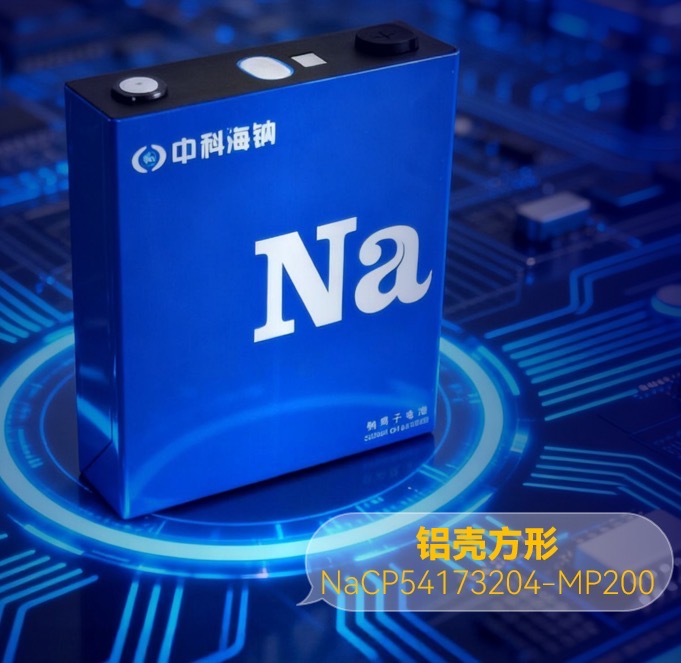
Image Source: HiNa Battery
Regarding energy consumption, sodium-ion batteries consume roughly 15% less energy per kilometer than their lithium-ion counterparts. Combined with superior depth of discharge, this translates to a range increase of about 20% in typical scenarios with equivalent battery energy. Because sodium-ion batteries offer greater regenerative power, their range advantage becomes even more pronounced on complex road conditions.
Notably, HiNa Battery revealed commercial achievements across three scenarios—starting, energy storage, and traction—launching four products tailored to these needs: a 10Ah cylindrical starting battery, two energy storage batteries, and a traction battery designed for commercial heavy trucks.
As far back as February, Changan Automobile partnered with CATL to unveil a global sodium strategy, marking the official debut of the world's first mass-produced passenger vehicle powered by a sodium-ion battery.
Equipped with CATL's "Naxtra" battery, this model has completed winter calibration, with test data indicating performance fully meets user requirements. The cell energy density hits a sector-leading 175 Wh/kg, and combined with third-generation CTP technology, it delivers a pure electric range exceeding 400 kilometers.
As the supply chain matures, future iterations are expected to push range to 500 or even 600 kilometers—sufficient to cover over 50% of current market demands.
Even more impressive is the low-temperature performance. At -30°C, discharge power is nearly three times higher than that of comparable LFP vehicles; capacity retention exceeds 90% in extreme -40°C cold; and stable discharge is maintained even in -50°C environments. Regarding safety, the battery shows no ignition or explosion under extreme abuse tests, such as drill penetration or sawing.
Consequently, multiple Changan brands—including AVATR, DEEPAL, and NEVO—are set to adopt CATL's sodium batteries, working in tandem with a nationwide battery-swapping network. By 2026, CATL plans to deploy more than 3,000 Choco-Swap stations across over 140 cities.
Faced with global energy shifts and resource security challenges, sodium-ion batteries have completed a critical leap from technical breakthrough to market validation, accelerating into a new phase of commercialization.
Why the Sodium Boom in 2026?
Hu Yongsheng, chairman of HiNa Battery, stated that sodium-ion battery technology has achieved a critical transition from the laboratory to commercial application.
So, why is 2026 the year of the sodium breakthrough?
Resources and cost are the underlying logic. Lithium reserves are finite and unevenly distributed, whereas sodium is abundant and widely available in the earth's crust. This grants sodium-ion batteries a long-term, stable advantage in raw material costs. When lithium prices swing violently, the cost stability of sodium becomes a key pillar of its strategic value.
As application scales up, the cost curve will drop steeply. In the future, sodium is poised to replace lead-acid and even some lithium batteries on a large scale in cost-sensitive markets like starting batteries and energy storage.
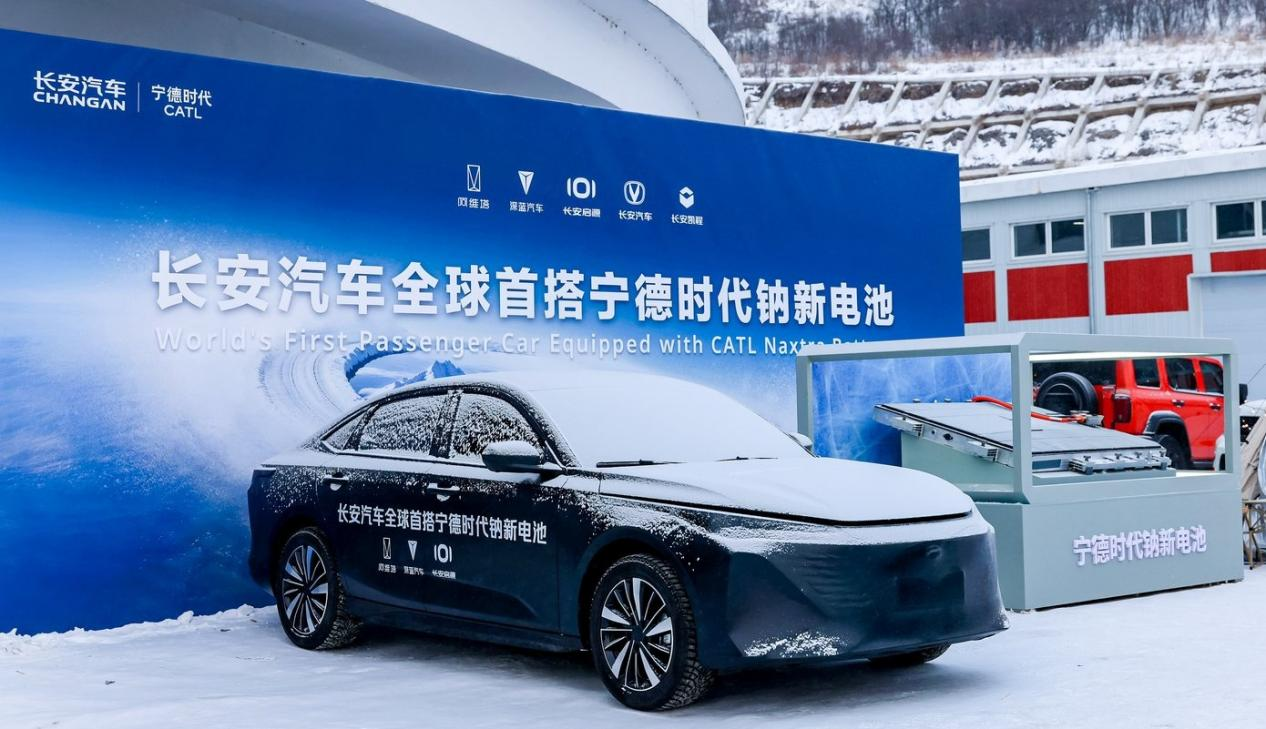
Image Source: CATL
Low-temperature performance is a core breakthrough. Whether it is CATL's excellent performance at -40°C or HiNa Battery's successful one-key start of heavy trucks in extreme cold, the evidence points to a unique advantage: superior performance across a wide temperature range.
For northern markets, high-altitude regions, and commercial operations facing perennial cold, sodium batteries solve the "cold intolerance" problem that has long constrained electrification. This provides critical technical support for new energy vehicles to expand from southern markets nationwide.
Safety and longevity are equally critical. The high safety demonstrated by sodium batteries in tests involving overcharging, deep discharge, and nail penetration provides a natural advantage in scenarios with strict safety requirements, such as starting batteries and energy storage stations.
Meanwhile, cycle life generally reaches several thousand cycles. In the starting battery sector, this enables the battery to last as long as the vehicle itself; in energy storage, it translates to lower overall lifecycle costs.
Synergy between policy and the industrial ecosystem also underpins this surge. From the strategic deployment of the national 15th Five-Year Plan to the goal of "large-scale application of new energy commercial trucks" proposed by ten departments including the Ministry of Transport and the Ministry of Industry and Information Technology, top-level design is charting the course. The National Energy Administration has also issued guidelines explicitly calling for the development of "long-life, wide-temperature, low-degradation sodium batteries."
Industry leaders like CATL and HiNa Battery, backed by a decade of technical accumulation and billions in R&D investment, have built a complete ecosystem spanning materials, cells, and applications.
In 2026, sodium-ion batteries are proving with hard data that they are not merely a "budget alternative" to lithium, but an independent technological route with unique advantages. From passenger to commercial vehicles, and from starting batteries to grid-scale storage, sodium is building a new ecosystem for the new energy industry with a clear commercial path. As the era of the "Sodium-Lithium Twin Stars" truly begins, a more diverse, safe, and efficient energy future is accelerating toward us.


