



Gasgoo Munich- The evolution of the smart cockpit is, at its core, a reconstruction of the relationship between human and vehicle.
In recent years, as intelligence has spread rapidly, China's smart car market has shifted from a hardware race defined by "big screens and powerful chips" to the widespread adoption of voice features like "what you see is what you say" and continuous dialogue. Yet, a persistent pain point remains: users still have to accommodate the machine. They must memorize fixed wake words, recite standard commands, and break down tasks into steps.
The cockpit remains more of a compliant tool than an understanding partner. Even as industry penetration rates climb, user stickiness and satisfaction haven't kept pace. The root cause is simple: most so-called smart cockpits are stuck in a mode of passive response. They lack the capacity to understand complex intent, plan across different scenarios, or deliver proactive services based on perception.
Deeper challenges emerge from two directions. First is the implementation gap. While putting large models in vehicles is a popular slogan, the reality involves hurdles like latency and privacy risks from cloud reliance, balancing on-device computing power with model size, and closing the loop between multimodal perception and execution. Second is the new imperative of globalization. China has become the world's top auto exporter, but taking smart cockpits global involves far more than translation. Interaction habits vary across cultures, semantic understanding can drift, and local digital ecosystems are often missing. These factors turn the ability to speak correctly, understand accurately, and integrate locally into new competitive barriers.
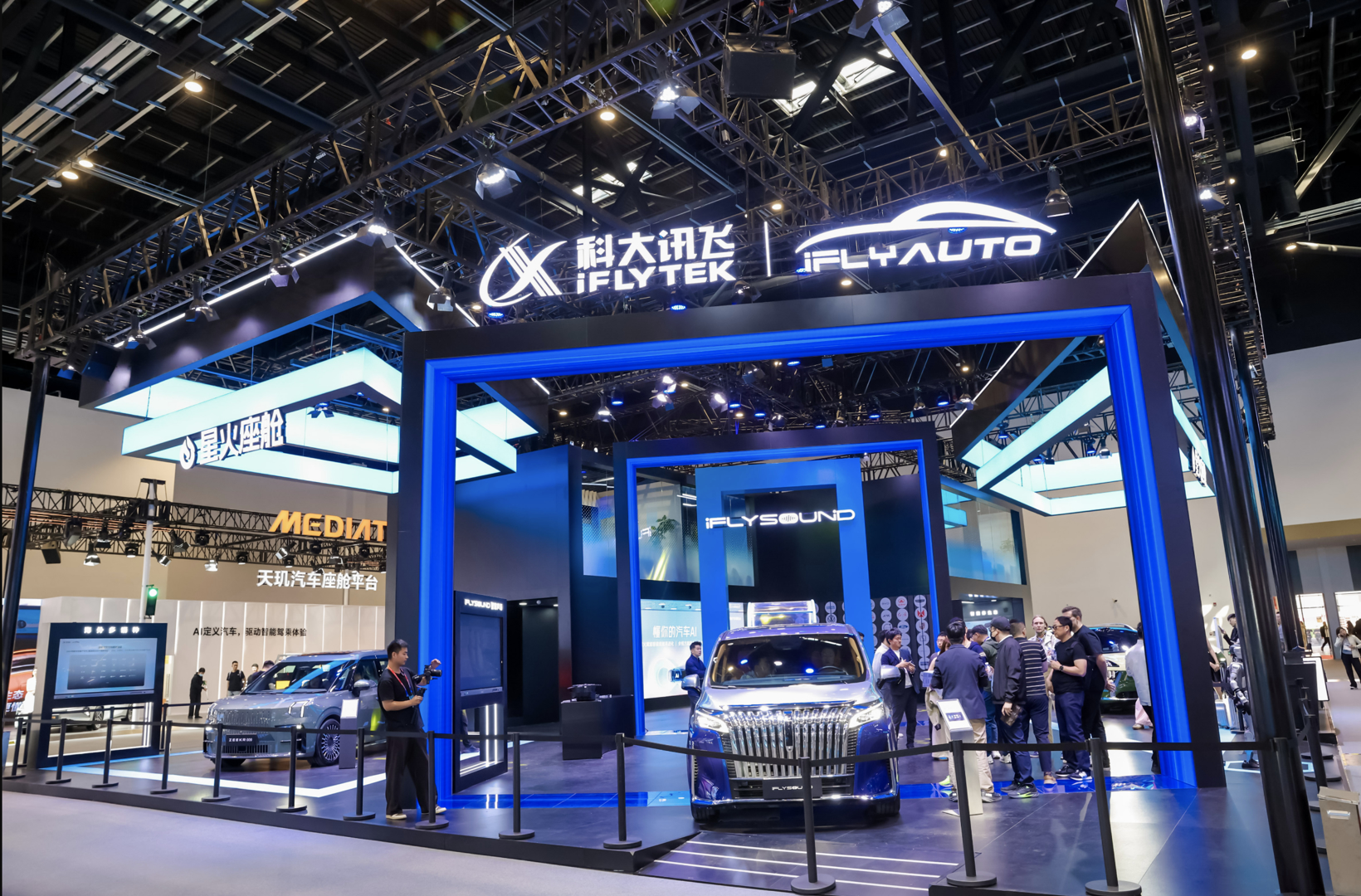
Image source: iFLYTEK (same below)
In this deepening phase of the industry, simply stacking features won't create differentiation. The market demands system-level agent capabilities—a complete closed loop spanning perception, understanding, decision-making, and execution, culminating in proactive service. Constructing this loop requires deep empowerment from underlying large models, the mass production of multimodal perception, software-hardware integrated acoustic innovation, and localized adaptation for global interaction.
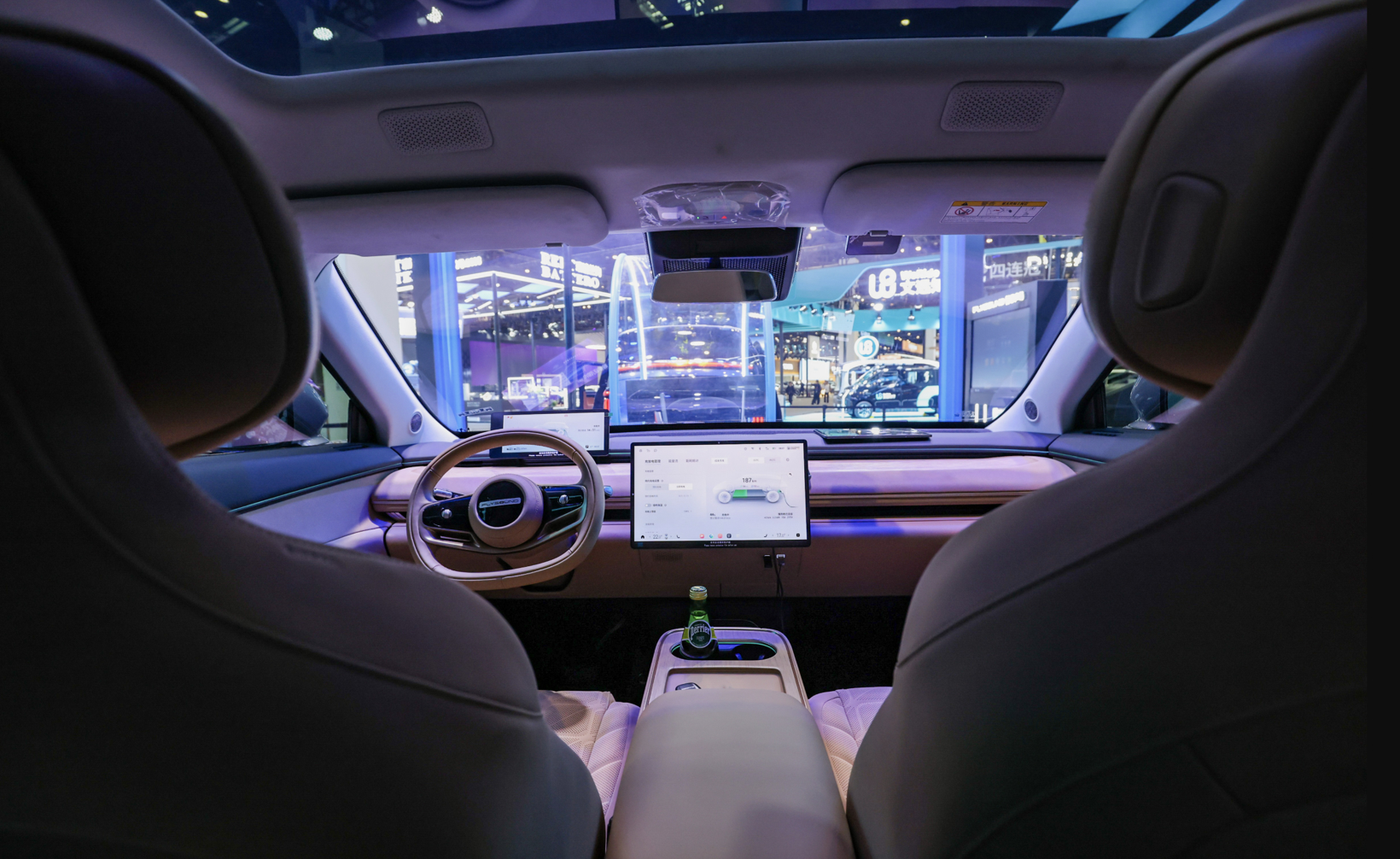
At the Beijing Auto Show, iFLYTEK's answer attacks these dimensions simultaneously. Its new Spark multimodal smart cockpit offers on-device multimodal large models and an agent ecosystem, evolving the cabin from a compliant tool into a "capable butler." The iFLYSOUND GaN master-level acoustic system, backed by over 30 proprietary in-vehicle audio algorithms, reshapes the auditory experience through software-hardware integration—upgrading sound from mere playback to a versatile acoustic space. Meanwhile, the overseas Spark large model breaks down language and cultural barriers, clearing the way for Chinese smart vehicles to expand globally.
These releases form a systematic response to the industry's core challenge: returning the smart cockpit to its essence of "serving people." This involves migrating the Spark large model from general capabilities to deep, car-specific customization; moving on-device multimodal technology from the lab to mass production platforms; and marking the shift of China's acoustic supply chain from substitution to leadership.
Spark Large Model: A Dual Strategy—Domestic "Action" and Overseas "Integration"
To grasp the upgrade in iFLYTEK's new Spark multimodal cockpit, we must first dispel a common industry misconception: the intelligence of voice interaction isn't defined by conversational fluency, but by how deeply the system understands the user's true intent. In recent years, many firms have touted features like "what you see is what you say" and continuous dialogue. Yet these capabilities are largely built on preset command templates and finite state machines. Users still must speak in machine-friendly ways. The templates have multiplied and conversations lengthened, but this approach is hitting diminishing returns—no matter how much the command set expands, colloquial expressions will inevitably fall outside the coverage.
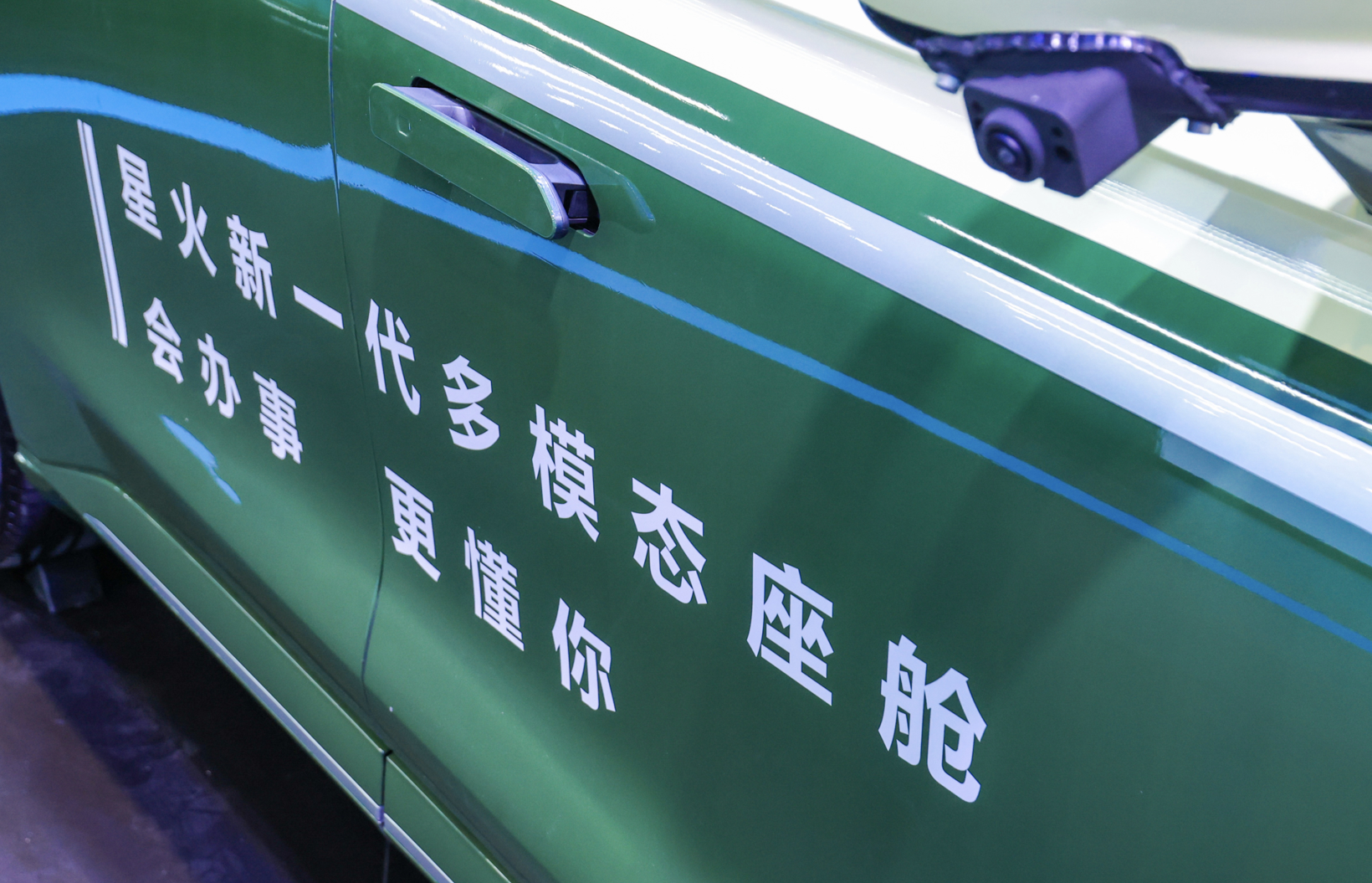
The SparkAuto-EMM on-device multimodal large model, introduced in the new generation cockpit, fundamentally alters this logic. Instead of expanding templates to memorize more phrases, it leverages the large model's semantic representation to comprehend the real need behind a user's words. Take "free-form vehicle control": if a user says, "It's a bit stuffy," the system synthesizes interior and exterior temperatures, window status, weather conditions, and even historical preferences to decide whether to open a window or engage the air conditioning. This requires a suite of capabilities: fuzzy semantic disambiguation, context awareness, and multimodal information fusion.
Even more significant is the industrial implication of on-device deployment.
There are two paths for integrating large models into vehicles: cloud and on-device. Cloud solutions offer high capability ceilings but come with network dependence and privacy risks. Moreover, in signal-poor environments like underground garages, tunnels, or highways, cloud solutions can fail instantly. On-device solutions lock all computation within the vehicle, remaining functional offline and keeping data inside the car—architecturally resolving the core pain points of cloud deployment.
Of course, on-device deployment faces a tension between computing power and model size. An economy car's cockpit chip might offer only a few TOPS of computing power, while a flagship model could boast dozens or even hundreds. iFLYTEK's solution is a tiered model matrix ranging from 0.5B to 7B parameters, allowing different computing platforms to select the optimal version.
Traditional voice systems handle single-step commands, but real-world needs are often multi-step and conditional. A command like "Fill up with gas, then head to the airport, and find a Sichuan restaurant on the way" requires the system to decompose three sub-tasks, query gas stations and restaurants along the route, consider sequencing, and rank results based on user preferences. This complex task planning demands both natural language understanding and real-time interaction with external services like maps and POI search. It is essentially a closed loop of "understanding, planning, and execution." The new Spark cockpit's breakthrough here grants the vehicle task-orchestration capabilities comparable to a dedicated intelligent assistant.
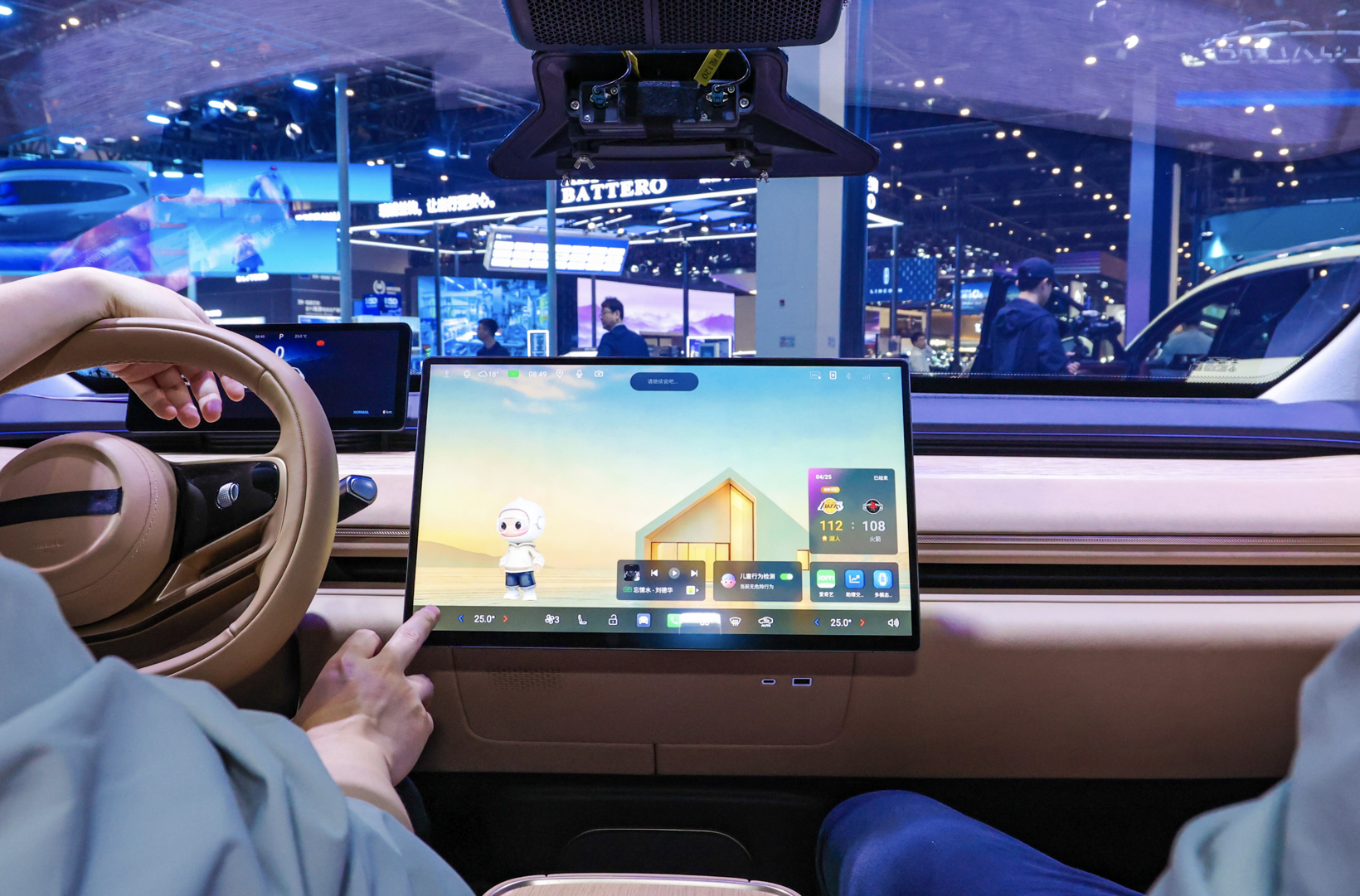
The agent ecosystem is how the Spark cockpit extends its "action" capabilities to external services. Partnering with over 50 leading ecosystem players, iFLYTEK has built a three-layer agent architecture. The first layer focuses on high-frequency, essential scenarios, offering proprietary or deeply customized boutique agents to handle entertainment and information needs for family travel in one stop. The second layer deeply integrates multi-platform general agents optimized for the vehicle by partners—exemplified by Meituan's ecosystem for dining recommendations, smart queuing, and online booking. Users move from discovering a restaurant to reserving a table entirely within the cockpit, no phone needed. The third layer addresses long-tail scenarios by integrating high-quality ecosystem agents as solutions, ensuring the extensibility of the system's capabilities.
The core value of this ecosystem isn't a simple app store or voice-activated third-party apps. Instead, it uses the large model as a central dispatcher to combine different agent capabilities on demand, addressing complex user intents. Unlike consumer AI products with broad generalization, iFLYTEK's ecosystem is designed strictly for automotive scenarios. Interaction time while driving is brief, requiring high first-round accuracy and short task paths. Safety demands are stricter, preventing distraction from processing long-tail requests. Network environments are unpredictable, necessitating offline or weak-network support. These constraints dictate that automotive agent ecosystems cannot simply transplant internet logic; they must be customized based on a deep understanding of real driving behavior.
Turning to the global market: while China's auto export volume has surged to the forefront, the globalization of smart cockpits is far from mature. Many companies simply translate their domestic voice systems into the target language and deploy them. The result is often user feedback like, "The system speaks correctly, but it doesn't sound human." Language is more than vocabulary and grammar; it involves cultural context, usage habits, and even degrees of politeness.
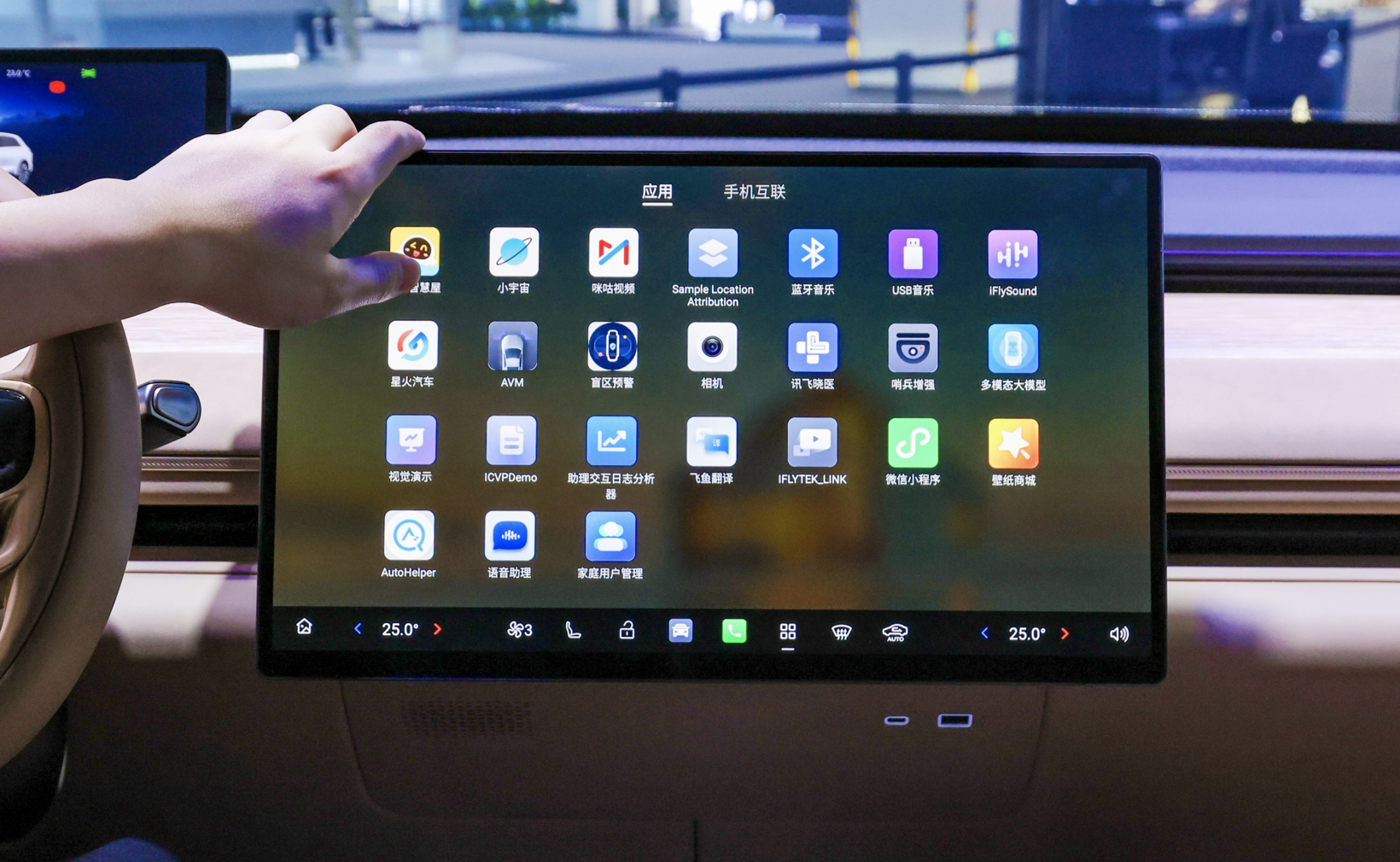
The overseas Spark Assistant differentiates itself by building a native-level interaction framework from the ground up. Covering 32 languages and 60 countries and regions, with mass production deliveries across over 100 flagship models, it counts 8 of China's top 10 exporters among its partners. These figures speak not just to scale, but to reliability proven through high-volume deployment. With 52 high-quality TTS voices, corpora built entirely by native speakers, and multi-round expert cross-validation, the system ensures authenticity, not just correctness. More deeply, the assistant integrates mainstream global in-vehicle ecosystems—from navigation to music, sports to news—delivering a familiar local digital experience rather than the stiff interface of a "foreign car."
Domestically, the Spark model's mission is to make the cockpit "capable"; abroad, it is to make Chinese cars "accepted." Both fronts share the same foundation but are deeply customized for vastly different scenarios. Achieving this requires a team that understands AI, understands automobiles, and understands regional user differences—a core competency that separates iFLYTEK from consumer AI firms that merely wrap generic large models for the automotive market.
A New Species of AI Audio: Bringing Premium Sound to Every Vehicle
If cockpit intelligence represents the triumph of software-defined vehicles, then the transformation of automotive audio demands a software-hardware integrated mindset.
The automotive audio industry has long operated under an unspoken rule: superior sound is tightly bound to high prices. Conventional wisdom held that only top-tier luxury models or vehicles with optioned branded audio systems could deliver a premium listening experience. This belief stemmed from both brand premium economics and the hard constraints of hardware costs and technical thresholds. iFLYTEK's iFLYSOUND challenges this not by launching another high-end audio brand, but by introducing a technical solution that decouples price from performance.
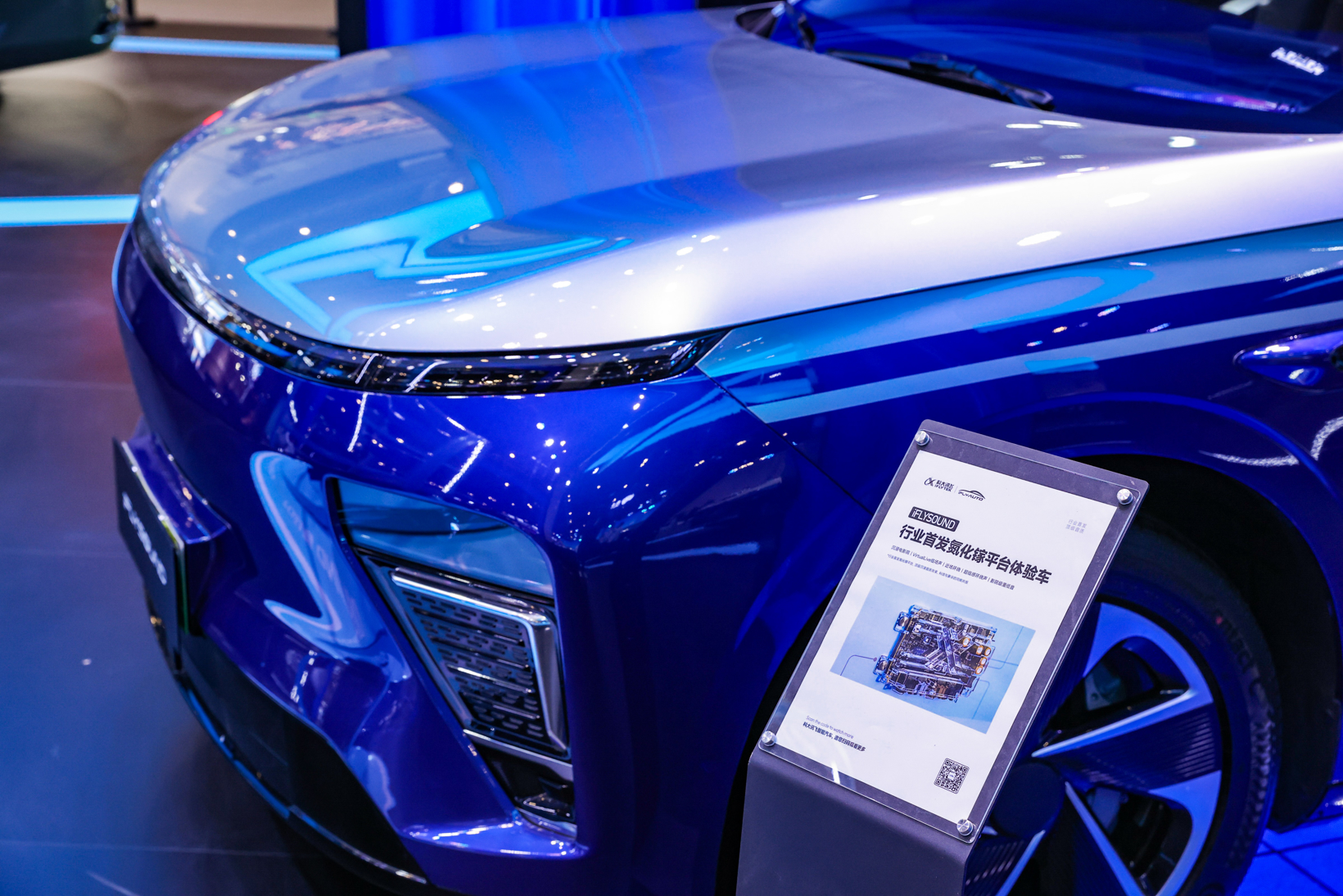
Traditional automotive amplifiers rely on silicon-based MOSFET devices. Limited by material properties, these offer low power density. Achieving high-fidelity, high-power output typically requires increasing size and thermal management structures, driving up both weight and cost. Gallium Nitride (GaN), a next-generation semiconductor material, offers higher operating frequencies and conversion efficiency and is proven in consumer electronics. However, scaling this for automotive use involves navigating challenges like automotive-grade reliability, cost control, and system integration.
iFLYTEK's approach goes beyond simple component replacement. Instead, it redesigns the system architecture, deeply adapting GaN's advantages to the specific demands of the automotive environment. Through chip collaboration, algorithm optimization, and thermal innovation, the company has systematically cleared the bottlenecks from component to system.
Utilizing an ARM+ADSP collaborative SoC architecture alongside a pioneering GaN audio amplifier design, iFLYTEK achieves a peak output of 300W per channel—sufficient to drive 8-ohm, cinema-grade subwoofers. By applying ruby thin-film capacitor and inductor technology alongside a patented low-density fin heat dissipation design, the system delivers a 20% improvement in sound quality and a 30% reduction in weight compared to traditional solutions, all while effectively cutting hardware costs. Consequently, high-fidelity audio is no longer the exclusive domain of cost-is-no-object flagship models; mainstream vehicles can now achieve master-level restoration within limited BOM budgets. The industry's first "QQ Music Premium Sound Quality" certification further validates iFLYSOUND's hardware capabilities, confirming it meets the standards for high-resolution audio playback.
Hardware provides the performance foundation, but algorithms are responsible for translating that potential into tangible user value.
iFLYSOUND features over 30 proprietary in-vehicle audio algorithms covering the entire chain—from microphone input and active noise cancellation to sound field reconstruction and speaker drive. A three-tier framework—"Good to Hear, Good to Use, Good to Play"—further expands the intelligent boundaries of automotive audio.
Traditional audio systems simply play sound. iFLYSOUND treats sound as a dynamic variable for cabin experience. Concert Hall mode pursues authentic sound field restoration, while Cinema Mode boosts lows and vocals to create immersion—each mode tailored to specific content types.
On the usability front, sound field zoning resolves conflicts between users—drivers get navigation prompts while passengers listen to music, isolated in independent zones. Sound field guidance is a safety-centric innovation: by imparting a sense of direction to navigation and warning sounds, the system allows drivers to locate turn directions or hazard sources by ear, reducing visual dependence.
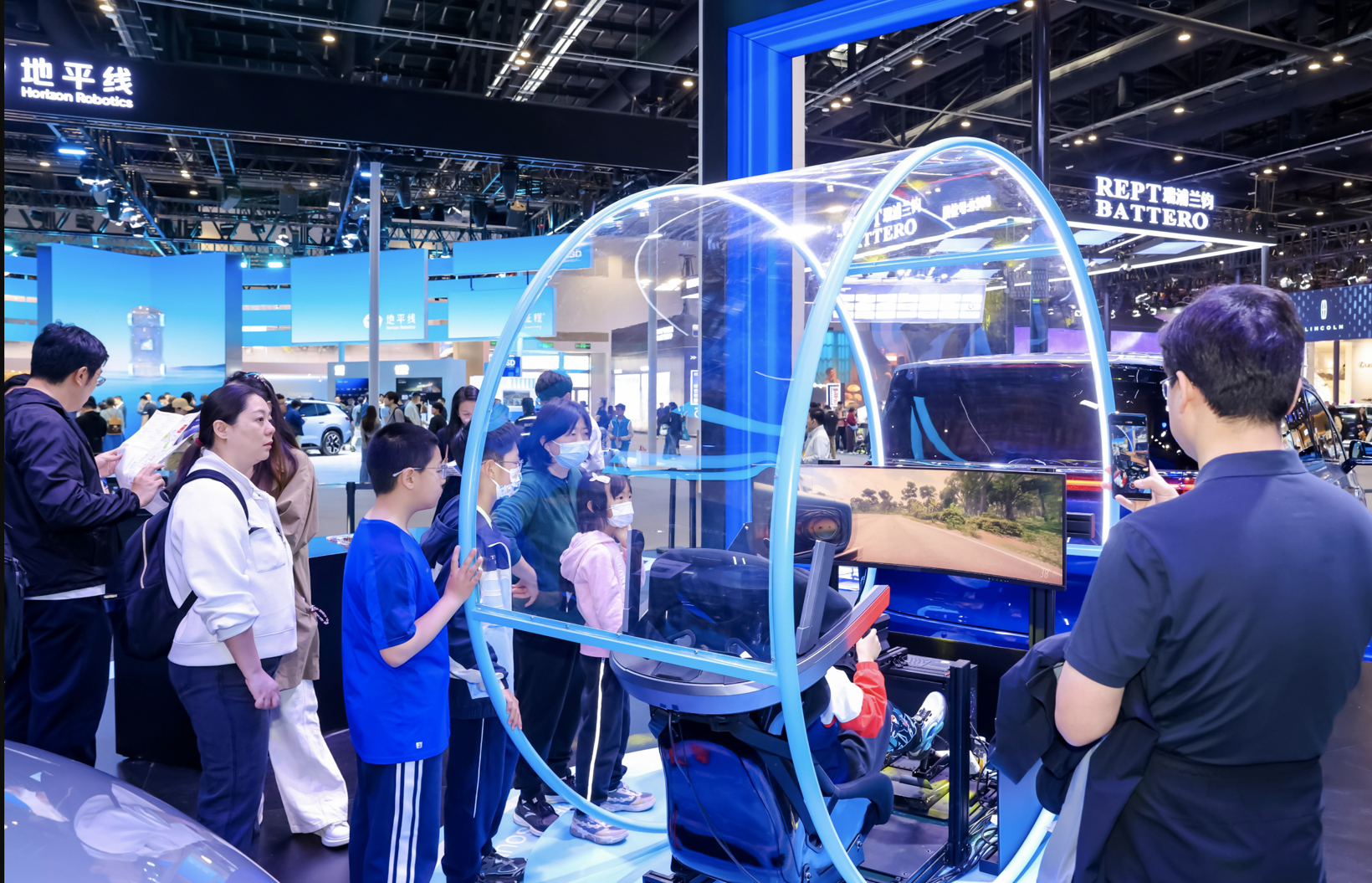
For entertainment, features like microphone-free karaoke, camping mode, and "Traveling DJ" enrich the cabin's social and recreational appeal. With Traveling DJ, for instance, AI automatically mixes music based on real-time data like driving rhythm, speed, and throttle depth, creating a dynamic interplay between music and driving behavior—transforming the system from a player into a creator.
Market data offers validation: iFLYTEK has already deployed iFLYSOUND in over 1.2 million vehicles. New models unveiled at the Beijing Auto Show, including the WEY V9X, Dongfeng Nissan NX8, 2026 Zeekr 007GT, Chery Exeed EX7, Chery Fulwin T9L, and Hyper S600, all feature this technology.
Viewed together, cockpit interaction and automotive acoustics reveal a clear thread: iFLYTEK is building a complete loop from understanding to execution to experience. The Spark large model handles user intent and orchestrates task execution, while iFLYSOUND delivers high-quality, adaptive sensory experiences. Together, they underpin the value proposition of the proactive AI cockpit—providing the right service and atmosphere not just when commanded, but when the user expresses a need, or even before they speak.
Summary:
Looking back over the past two decades, a fundamental truth emerges: iFLYTEK's evolution in the automotive sector has always moved in lockstep with the technological iteration of the smart cockpit. From the earliest in-car voice synthesis to becoming a market leader in domestic automotive voice, and now to the mass production of on-device large models and full-stack acoustic systems, this trajectory represents not a sudden raid by a cross-sector player, but the sustained deep-plowing of a long-termist.
Unlike many internet giants or AI startups, iFLYTEK's understanding of the auto industry is grounded in the delivery of tens of millions of production vehicles, feedback from hundreds of millions of real-world interactions, and the resolution of countless engineering challenges alongside automakers. This knowledge forms a moat built by time and scenario.
iFLYTEK hasn't just accumulated a first-mover advantage in a single technology; it has built a systematic understanding of industry rules, automotive-grade engineering requirements, and real-world driving scenarios. Unlike consumer AI products that simply wrap generic large models for the car market, iFLYTEK knows exactly how brief an interaction path must be when a user is driving at high speeds. It understands how voice feedback volume and screen brightness should adjust for night driving. It knows that users in different regions have vastly different expectations for "politeness" and "speech rate." iFLYTEK's core value lies in refining the general capability of large models into a truly automotive-grade intelligent agent—one that understands the car, the driver, and the global user.
The products iFLYTEK unveiled at the Beijing Auto Show send a clear signal: the battle for the smart cockpit has entered the era of system-level agent capabilities. Stacking isolated features won't build core competitiveness. Only by deeply fusing understanding, planning, execution, perception, and emotion can the cockpit evolve from cold hardware into a warm digital companion.


