



The fourth session of the 14th National People's Congress is set to open on March 5.
As a veteran industry figure and NPC deputy, Feng Xingya—Party Secretary and Chairman of GAC Group—is bringing seven proposals to Beijing this year. Spanning rural charging infrastructure and elderly mobility to hydrogen standards and the low-altitude economy, the agenda is remarkably broad.
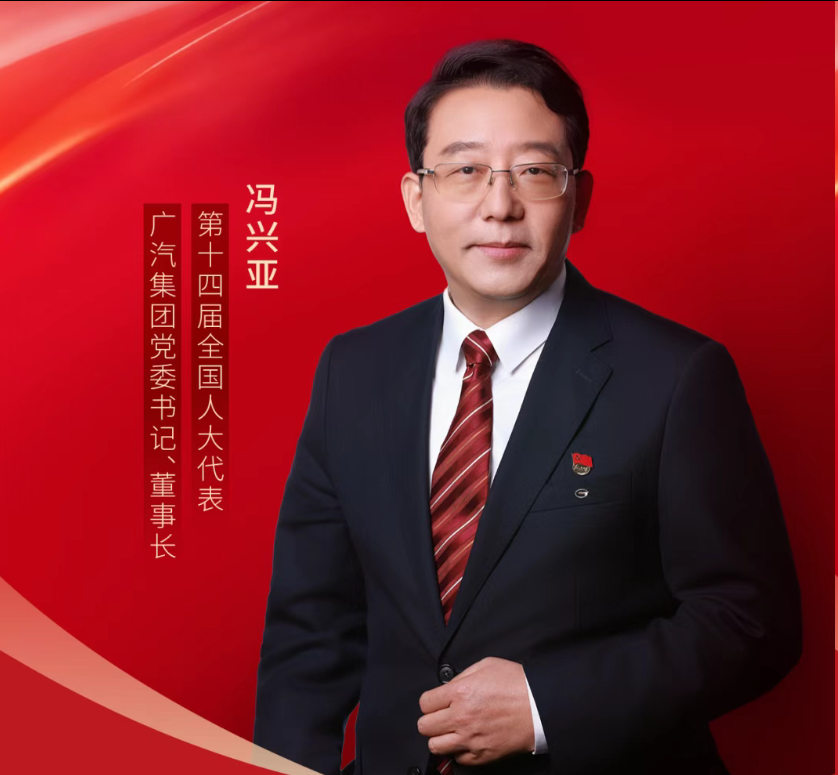
Image Source: GAC Group
Some call this "doing one's duty," but viewed differently, these seven proposals map out seven current "pain points" and "opportunities" in China's auto industry.
Rural Expansion: Don't Let Farmers Buy EVs They Can't Charge
The rural market is seen as the industry's "last blue ocean" for new energy vehicles.
The logic is simple: penetration rates in top-tier cities are hitting a ceiling. In vast rural areas, however, car ownership is low and daily driving distances are moderate—making it a natural fit for EVs.
Ideally, it sounds perfect, but reality is stark. In his proposal, Feng highlights a critical gap: the "hollowing out" of charging networks and service systems.
Anyone returning to their hometown knows the feeling. The county seat might have a fast charger or two, but venture into townships or villages, and you're in a blind spot. Buy an EV, and you risk dangerous extension cords or driving dozens of kilometers just to charge. Worse is the after-sales nightmare: a dashboard warning light flashes, and the nearest dealership is a hundred kilometers away.
Feng's proposal is pragmatic: accelerate the build-out of rural charging networks and push service centers deeper into these regions.
Simply put, rural consumers need peace of mind. This isn't just the automakers' job; it requires policy guidance and financial support. Whoever cracks this nut first will secure the largest slice of growth in the industry's second half.
Battery Swapping and Hydrogen: Stop Going in Circles with "Pilots"
Two of Feng's proposals target currently debated technological paths: battery swapping and hydrogen energy.
First, battery swapping. The advantage is clear: speed. It's as fast as refueling. But the downsides are heavy assets and chaotic standards. NIO has made it work, but other automakers looking to join find battery specs and connector standards fragmented—there's no common ground.
Feng advocates for national unified standards and a coordinated nationwide network. The call is clear: don't let swapping become a "walled garden" for specific brands; turn it into a "public utility" the entire industry can use.
Then there's hydrogen energy, an even more forward-looking frontier. Feng specifically calls for improving 70 MPa refueling standards. Insiders know the difference between 35 MPa and 70 MPa is like slow charging versus fast charging. The 70 MPa standard offers longer range but is technically demanding, and regulations remain blank.
Most domestic stations run on 35 MPa, leaving high-end hydrogen vehicles unable to perform to potential. Feng is pushing for urgency: regulations must keep pace with technology, rather than leaving the industry stuck in "pilot mode" indefinitely.
Autonomous Driving Legislation: Don't Make Technology Wait
This year, Feng highlights the issue of autonomous driving legislation once again.
It's a familiar topic, but the urgency is rising. L2 driver assistance is now common on highways, and L3 and L4 test vehicles are appearing in more cities.
The problem is the legal framework isn't ready. Who is liable in a crash? The owner or the automaker? Without clear definitions, mass deployment is just talk.
Feng notes that global autonomous driving has entered a critical phase of competition. It's true. The U.S., Germany, and Japan are racing ahead, using legislation to secure a technological edge.
If our laws consistently lag, we risk a dilemma where technology, unable to wait, migrates overseas for deployment. A unified national standard and evaluation system isn't a constraint; it's the pathway to getting compliant vehicles on the road legally.
Elderly Mobility: The Ignored Trillion-Dollar Market
Of all his proposals, the one on a "elderly-friendly mobility ecosystem" surprised me most—and carried the most human touch.
We obsess over startups, smart cockpits, and autonomous driving—always focused on the youth market. But China is aging rapidly. Who will address the mobility needs of hundreds of millions of elderly citizens?
Feng sees this as "blind spot." He points to age-friendly digital adaptation, robust human-operated backup services, and upgrades to accessible facilities and transport.
In other words: don't leave the elderly staring blankly at complex screens; don't leave those unable to use ride-hailing apps stranded; and don't make boarding a vehicle feel like a battle for those with limited mobility.
This isn't just social responsibility; it's an overlooked trillion-dollar market. As the youth market saturates, whoever builds a car that a 70-year-old finds easy to drive and comfortable to ride will unlock a new growth engine for the next decade.
Final Thoughts
Reading Feng's seven proposals, one impression stands out: the "first half" of China's auto industry was electrification—a contest of who could build the best car. The "second half" is about ecosystems and institutions, testing who can master business models and drive regulatory improvements.
From rural chargers to 70 MPa hydrogen stations, from autonomous driving laws to elderly mobility—every issue represents a necessary gate the industry must pass to move from unbridled expansion to sophisticated operation.
The Two Sessions officially open on March 5. Whether these proposals materialize remains to be seen. But at least, the issues are on the table—and that is the first step toward change.


