



Gasgoo Munich-Following Aion, another unit under GAC Group is preparing to go public.
"IBT plans to raise funds and list." That remark from General Manager Xu Junhai on March 31 has placed the GAC-affiliated battery maker—founded just over two years ago—back in the spotlight.
Since registering in October 2022, IBT has kept a relatively low profile. To the outside world, it was largely defined as "an in-house battery project under GAC Aion." Now, having achieved mass production, it has explicitly set its sights on an IPO, aiming to strengthen its position through capital markets.
Has IBT Hit Its Initial Targets?
IBT was born out of GAC Group's concerns over the power battery supply chain. In 2022, the new energy vehicle market was booming, but automakers were grappling with soaring costs and tight supplies.
Back in July of that year, then-GAC Chairman Zeng Qinghong stated bluntly: "Batteries account for 60% of a car's cost—am I just working for CATL?" That comment resonated across the industry and became a key driver for GAC to accelerate its in-house battery production.
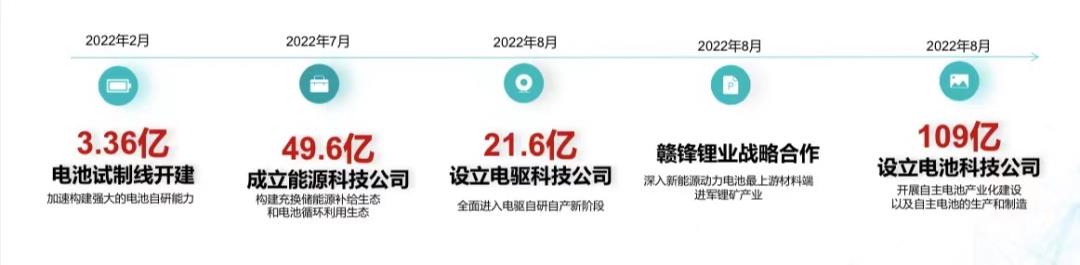
Image source: IBT
Formally established in October that year, IBT is a joint venture backed by GAC Aion, GAC Motor, and GAC Commerce, with Aion holding a controlling stake. With a total investment of 10.9 billion yuan, the company initially planned to build 36 GWh of production lines by the end of 2025, enough to meet the installation requirements of roughly 600,000 new energy vehicles annually.
At the time, GAC Aion was in a phase of rapid sales growth. For GAC, IBT's creation meant completing the loop on an energy ecosystem spanning upstream raw materials, R&D, manufacturing, and battery recycling.
But reality is often more complex than the blueprint. As competition in the new energy vehicle market intensified, sales pressure mounted on GAC Aion, while the long development cycles and high costs of in-house battery R&D began to emerge. Meanwhile, GAC Group deepened its partnership with CATL; their joint venture, Times GAC Power Battery Co., remains one of Aion's key suppliers.
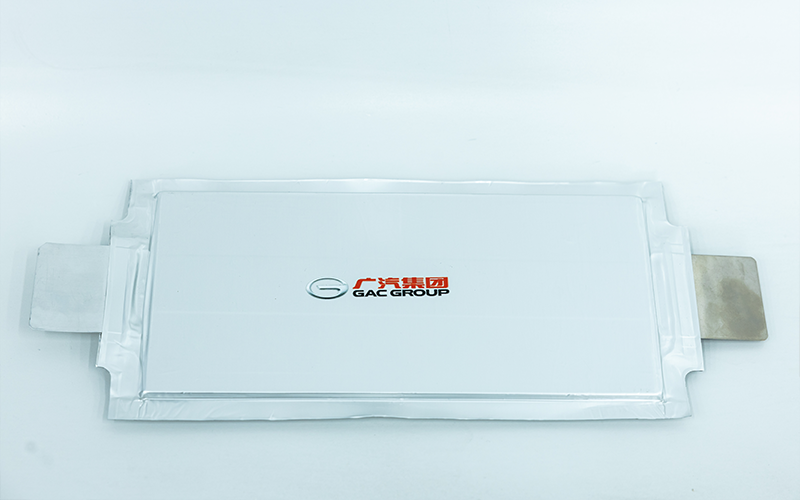
GAC all-solid-state battery, Image source: GAC Group
Recently, IBT has returned to prominence through a series of moves. First came a management change: former Chairman Zheng Heng stepped down, while Wang Ke took over as legal representative and was appointed chairman, alongside several other executive adjustments.
Next, IBT co-hosted an innovation forum on high-quality energy storage development with the National Innovation Center, unveiling two core energy storage cell products: the Haohan liquid cell and the Qiankun semi-solid cell. The latter is set for mass production on a 6.5 GWh solid-liquid hybrid battery line built by IBT.
Xu revealed key figures at the launch: IBT has invested over 2 billion yuan, built an 800-person R&D team, and committed to lithium iron phosphate stacking technology. Currently, automotive-grade cells from its all-solid-state battery pilot line have been produced, with small-batch vehicle validation scheduled for this year. The all-solid-state battery is expected to debut in vehicles under the Hyper brand.
Just a year after production began, IBT's monthly installation volume has surpassed 1 GWh. Recognized as the industry's fastest-growing company for two consecutive years, it aims to break into the top ten for power battery installations by 2026.
Against this backdrop, IBT's plan to list is logical. Transitioning from serving group strategy to independent operations, GAC is trying to build a presence in both power batteries and energy storage, leveraging capital markets to secure more resources for growth.
Batteries Are Big Business
IBT's IPO plans are not an isolated case. In recent years, an increasing number of automakers have been moving into battery manufacturing in various ways.
For instance, BYD has achieved vertical integration across the industry from mineral resources to battery recycling. Geely has established multiple battery projects through holdings and joint ventures, with its subsidiary Jiyaotongxing expected to appear on the domestic power battery installation list by 2025. Dongfeng, SAIC, Changan, NIO, and Li Auto have all taken steps in battery self-development or production.
The most direct pressure driving automakers to "build their own batteries" is cost. Citing data from the 2025 Fortune Global 500, Cui Dongshu, secretary-general of the China Passenger Car Association, noted that listed Chinese automakers earned a combined $14.7 billion in profit, while CATL alone recorded $7.1 billion. "Automakers outside of battery manufacturing account for barely a double-digit percentage share of the profits."
Image source: GAC Group
Developing batteries in-house has become a crucial way for automakers to gain bargaining power and reduce the cost of core components.
Supply chain security is another major consideration. In past years, significant fluctuations in raw material prices and battery shortages have constrained vehicle deliveries. Having in-house production capacity provides additional security when supplies tighten.
Control over technological innovation is equally vital. Battery performance directly impacts range, safety, and fast charging—core concerns for consumers. GAC's "Magazine" battery technology has been fitted to over 1.3 million vehicles with no fire incidents, and the company has already built its first pilot line for large-capacity all-solid-state batteries.
Of course, automakers face hurdles in making batteries. Manufacturing requires long-term technical expertise, and mastering electrochemical systems, controlling yield rates, and optimizing efficiency is not easy to achieve in the short term. The industry also features significant economies of scale, giving top players a clear edge in cost control.
For this reason, most automakers currently pursue a parallel strategy of "self-research plus outsourcing," using in-house production primarily to supplement and balance their supply chains.
Looking at the industry landscape, leading battery firms will likely maintain their edge for some time thanks to technology and scale. Yet, automaker-backed battery companies are gradually emerging, with new names appearing more frequently on installation rankings.
IBT's explicit IPO plan signals that these "automaker-affiliated battery makers" are attempting to break out from internal supply roles into broader market competition, competing for a place in the trillion-yuan power battery and energy storage sectors.


