



What were the major headlines in the new energy vehicle market this week?
Priced from 159,800 yuan, First SAIC-GM-Wuling and Huawei vehicle hits the market
On the evening of May 8, SAIC-GM-Wuling launched the Huajing S, a large six-seat intelligent SUV. Built on the Tianyu Architecture L platform, the new model is positioned as a large SUV and comes in four variants. The official guide price ranges from 159,800 to 203,800 yuan, with a super trade-in price of 149,800 to 193,800 yuan.
As the flagship model born from the deepened strategic partnership between SAIC-GM-Wuling and Huawei, the Huajing S boasts standard Huawei Qiankun Intelligent Driving® and HarmonyOS Cockpit across the lineup. It also features Huawei's in-cabin Laser Vision (Limera) capability. Power comes from a 1.5T plug-in hybrid system, equipped with CATL's super range-extending hybrid cells.
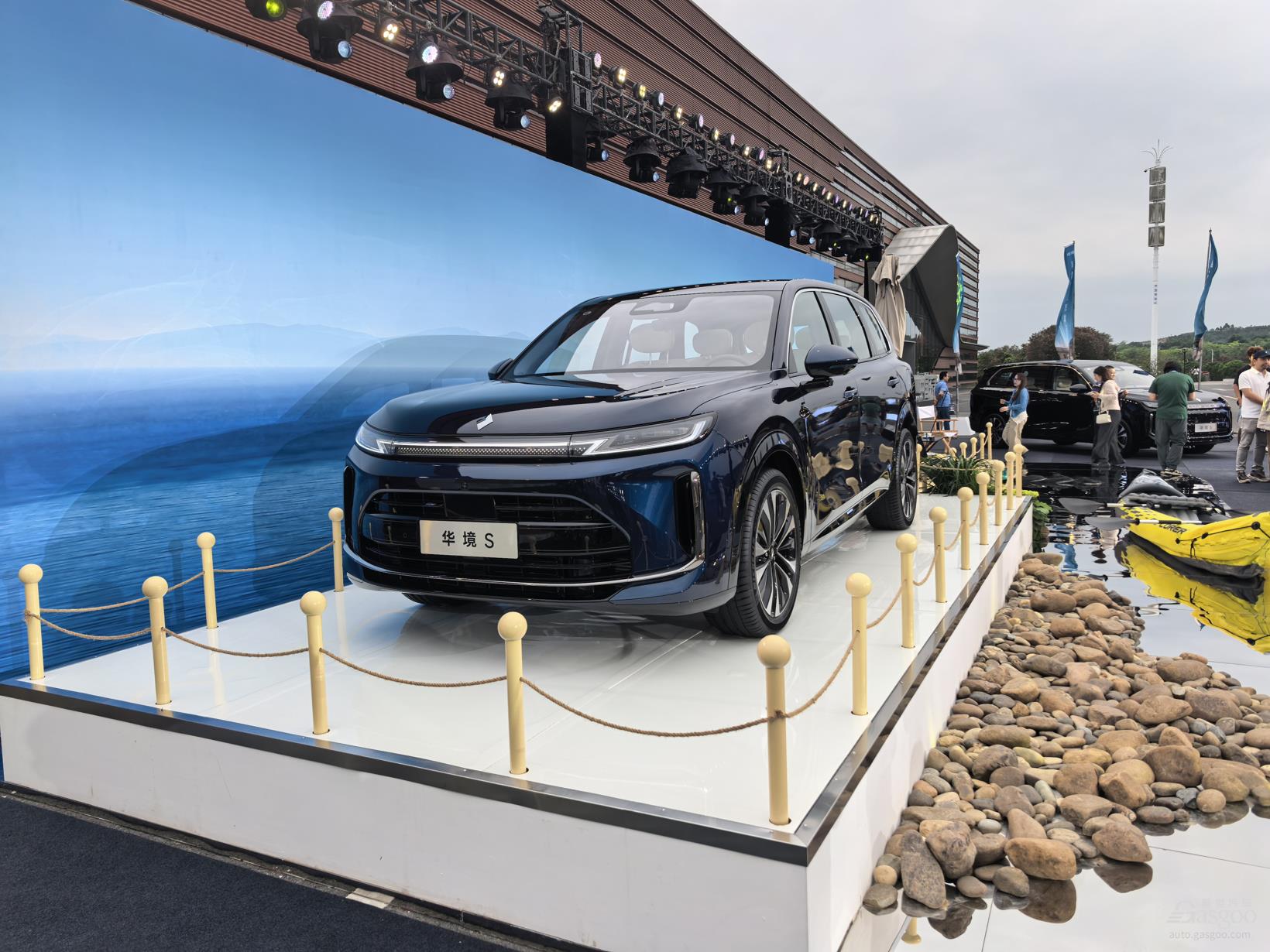
Image source: Gasgoo Auto
In September 2025, SAIC-GM-Wuling and Huawei Technologies held a signing ceremony in Liuzhou to deepen their "Three Intelligences" cooperation regarding Baojun. This marked a comprehensive upgrade of their strategic partnership. Under the agreement, the two sides will deepen collaboration in assisted driving, smart cockpits, and smart manufacturing, jointly developing new vehicles equipped with Huawei's intelligent technology. SAIC-GM-Wuling will lead product definition, engineering development, manufacturing, and full-channel services, while Huawei will provide intelligent solutions including Qiankun Intelligent Driving, HarmonyOS Cockpit, and Qiankun Vehicle Cloud. The results of this joint R&D will be applied first to the Huajing S.
As a large SUV, the Huajing S faces stiff competition upon launch. Since the start of 2026, both joint ventures and domestic brands have accelerated their push into the full-size SUV market. This includes the Leapmotor D19, Geely Galaxy M9, and Chery Fengyun T11—all direct rivals. Additionally, with the Huajing S benchmarking the AITO M9 in space, models like the Li Auto L9 and AITO M9 are also potential competitors.
Gasgoo Take: It remains to be seen whether the Huajing S can stand out in the full-size SUV market and become a hit.
Tesla, XPENG, Aion, and others deny rumors of being "summoned" over battery locking issues
Previous reports by CCTV noted a surge in complaints over OTA battery locking, drawing regulatory attention. Recently, rumors circulated that the Ministry of Industry and Information Technology (MIIT) had summoned eight automakers and opened investigations into three, though no specific names were released. The viral list of eight companies was reportedly generated by an AI query and spread rapidly on social media. On May 9, several implicated automakers issued successive statements denying they had been summoned or investigated, stating they would pursue legal action against the rumor mongers.
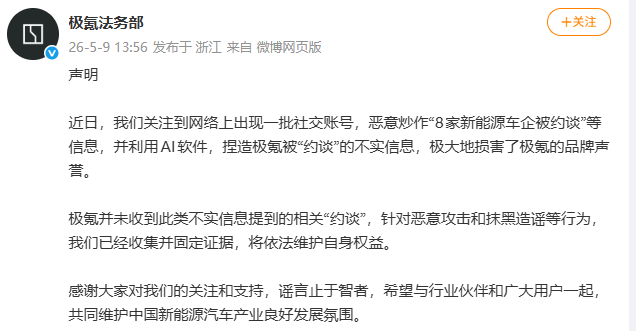
Image source: ZEEKR Legal Department
BYD stated that claims of it being "summoned or investigated" are purely false rumors, adding that it has gathered evidence and will pursue accountability. XPENG Group's legal department also said the online information was malicious hype generated by AI via social media accounts. The company stated it has not been summoned or investigated, and it has secured evidence to pursue legal liability. ZEEKR's legal department likewise declared the content an AI fabrication, denying any summons and stating it would defend its rights legally.
Tesla also responded that the news is untrue, noting all software updates undergo strict testing and filing. GAC Aion's legal department stated the company has never been summoned or investigated and has initiated evidence preservation and tracing to pursue legal action. Li Auto and NIO also denied being on the summons list.
Gasgoo Take: While consumer concerns over battery locking are real, the AI-fabricated "summons list" reflects public anxiety and a lack of trust regarding automakers' OTA transparency.
China's first skateboard chassis overseas mass production partnership lands
On May 7, Gasgoo learned officially that Times Intelligent, a subsidiary of CATL, has signed an agreement with Turkish EV manufacturer Togg. The two will jointly develop three models under Togg's new B-segment platform based on CATL's Panshi skateboard chassis. The first mass-produced model is scheduled to hit the market in 2027.
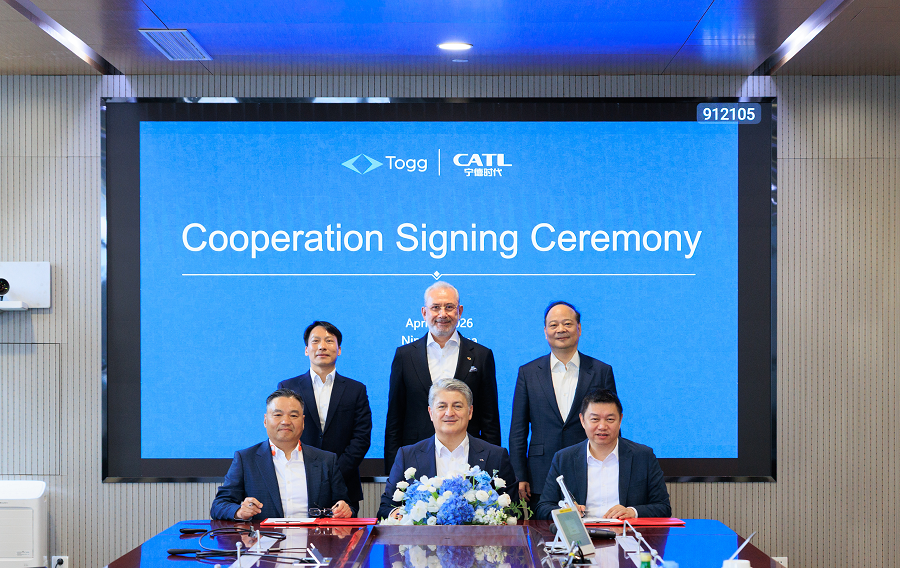
Image source: CATL
Under the agreement, Togg will lead user experience design, vehicle product requirement definition, and digital architecture construction, while Times Intelligent will provide the Panshi chassis and related integrated technical support.
The Panshi chassis, released by CATL in 2024, is an integrated skateboard chassis product featuring a cell-to-chassis structure that integrates battery cells directly into the chassis framework. The company claims it possesses three key technical characteristics: structural safety, cell safety, and high-voltage safety.
Togg is Turkey's first independently developed EV brand and leads in local sales. By adopting the CATL Panshi chassis for these three B-segment models, Togg can reduce resource investment in chassis development and battery system integration. This allows for focusing more energy and cost on upper-layer user experience, in-vehicle digital systems, and overall vehicle definition.
CATL revealed that beyond Turkey, its skateboard chassis business is advancing cooperation with multiple OEMs in Europe and Southeast Asia. The goal is to help EV brands in emerging markets shorten development cycles and reduce initial platform investment, while also driving the coordinated global expansion of China's new energy supply chain.
Gasgoo Take: This partnership marks the first application of the Panshi chassis in an overseas passenger vehicle mass production project, representing a tangible step for Chinese skateboard chassis technology being exported to foreign automakers.
Rumor: Xiaomi EV plans independent sub-brand "Xuntian," first SUV Kunlun N3 to launch in H2
Recent reports suggest Xiaomi EV is launching a new independent sub-brand called "Xuntian." Its first range-extending SUV, internally codenamed Kunlun N3, drops the previously rumored "YU9" name. The vehicle is slated for market launch in the second half of 2026 and will not carry the main Xiaomi brand logo.
Trademark information shows Xiaomi Technology Co., Ltd. applied to register the "Xuntian" trademark as early as April 3, 2023, and submitted the "SKYNOMAD" trademark application on November 15, 2024. Both categories cover transportation tools, directly relating to the automotive business.
Regarding the brand naming and model planning, Gasgoo contacted Xiaomi's public relations department but had received no response by press time.
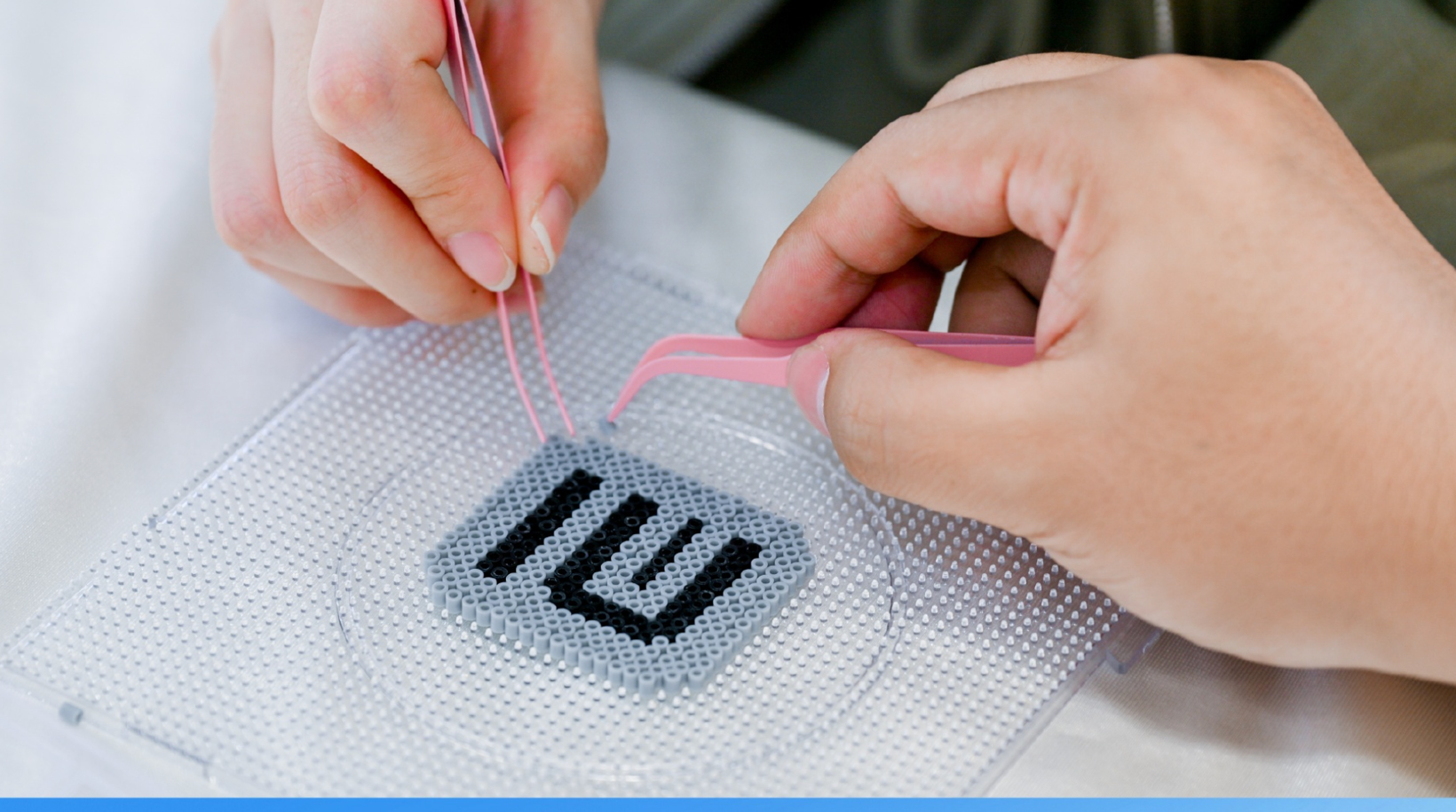
Image source: Xiaomi EV
Available information indicates the Xuntian brand will focus on home, long-distance, and outdoor travel markets, creating a differentiated layout from the main Xiaomi brand's pure electric performance positioning.
As the first model under Xuntian, the Kunlun N3 is positioned as the premium offering within the brand. It will be followed by the Kunlun 10, Kunlun 20, and Kunlun 30 range-extending SUVs to complete the product matrix. Additionally, reports suggest the brand plans a pop-top outdoor RV codenamed "Mann Island," positioned higher than the Kunlun series to expand into high-end outdoor scenarios.
Currently, the Xuntian brand and Kunlun N3 model remain under wraps, with netizens debating the Chinese naming, suggesting alternatives like "Wujie" (Boundless) or "Wujiang" (Limitless).
Gasgoo Take: In an intensifying range-extender market, Xiaomi's entry via an independent sub-brand avoids diluting its main brand image while targeting the family user segment. The specific impact on the existing range-extending SUV landscape remains to be seen.
Huawei Digital Energy upgrades partnership with JAC Group
On May 7, Huawei Digital Energy Technology Co., Ltd. ("Huawei Digital Energy") and Anhui Jianghuai Automobile Group Corp., Ltd. ("JAC Group") held an unveiling ceremony in Hefei. The ceremony was for the "Huawei Digital Energy - JAC Group Intelligent Electric Joint Innovation Center."
This marks a milestone step in the two parties' cooperation on core technologies for intelligent new energy vehicles. It also signifies the full implementation of a strategic upgrade for motion domain product solutions. This moves the model from "procurement and supply" to "joint definition and deep co-development."
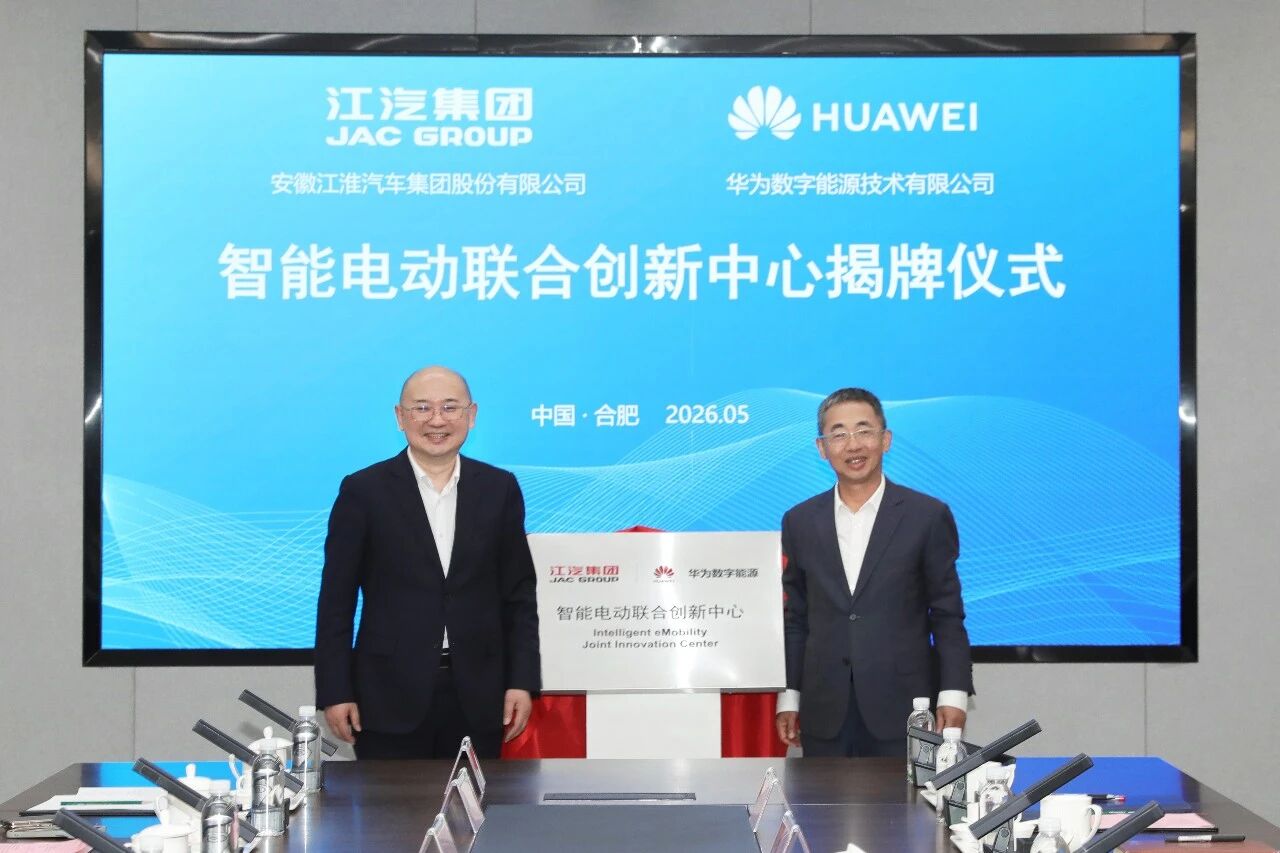
Image source: Huawei Digital Energy
The Joint Innovation Center will leverage JAC Group's deep vehicle R&D and manufacturing system, integrating deeply with Huawei Digital Energy's core technology accumulation in the intelligent vehicle motion domain. Focusing on the high-voltage, high-efficiency, and intelligent direction of next-generation NEVs, the two will collaborate on cutting-edge technologies in core areas such as intelligent electronic control, power module applications, and high-performance motors. This aims to continuously consolidate their collaborative innovation capabilities in the motion domain and jointly build products and solutions with global market competitiveness.
As early as April 2024, JAC Group and Huawei Digital Energy signed a "Comprehensive Strategic Cooperation Agreement" in Beijing. Centering on the "vehicle, machine, and charging" trinity of new energy vehicles, they focused on comprehensive strategic cooperation. This included NEV model/platform technology development and application, intelligent electric component application and manufacturing, and charging network construction and operation. It also covered NEV internationalization. In April 2025, the two signed a "Comprehensive Deepening Strategic Cooperation Agreement" in Shanghai. The agreement shifted the focus to key areas such as the joint definition and manufacturing of intelligent electric motion domain components. It also covers charging network construction and operation, and the joint development of ultra-fast charging technology for heavy commercial vehicles.
Gasgoo Take: The establishment of this Joint Innovation Center is an important embodiment of the continuous advancement and deepening of the strategic partnership between the two sides. It achieves a leap from product coordination to underlying technology co-research, exploring a new paradigm of future-oriented industrial collaboration.


