What were the major headlines in the global automotive industry this week?
20 Journalists Invited to Monitor Payment Terms in Auto Industry
Gasgoo has learned that the Ministry of Industry and Information Technology (MIIT) recently convened a media briefing to outline efforts to shorten payment terms for suppliers at major automakers. The ministry invited 20 journalists from state, financial, and trade outlets to serve as the first batch of "supervisors" for payment issues in the sector.
Image Source: VCG
The meeting revealed that since June 2025, the MIIT has pushed 17 major automakers to comply with regulations guaranteeing payments to small and medium enterprises (SMEs) and issue a "60-day payment commitment." Additionally, the ministry guided the China Association of Automobile Manufacturers to release an initiative on standardized payments and launched an online portal for reporting issues, using multiple levers to shorten supplier payment cycles.
Despite the progress, officials noted that a few automakers are still effectively extending payment cycles by delaying start dates or using irregular management practices—issues requiring further rectification. To leverage media oversight, the ministry appointed these 20 supervisors to spot irregularities and report objectively on industry conditions, aiming to foster a more efficient and collaborative ecosystem.
Moving forward, the MIIT will work with other agencies to accelerate the release of guidelines on supplier payments. It plans to intensify scrutiny of automakers that disguise extended payment terms and crack down on violations, aiming to protect the legitimate rights of supply chain firms—especially SMEs.
Gasgoo Take: The MIIT’s introduction of media supervisors creates a diversified oversight mechanism that pressures automakers to standardize payments to smaller suppliers.
BMW Plans to Cut Thousands of Jobs in Germany by Late 2027
A spokesperson for German luxury automaker BMW said on July 29 that the company has reached a voluntary redundancy agreement with employee representatives. The plan aims to cut thousands of jobs in Germany by the end of 2027.

Image Source: BMW
The spokesperson added that BMW has agreed on a severance package with the works council. The job cuts will target administrative and R&D departments, while production operations remain outside the scope of this round.
Sources familiar with the matter revealed that BMW plans to reduce its headcount by roughly 8,000 people—mostly in Germany—representing about 5% of its total workforce. This marks the latest restructuring move by a German automaker grappling with intense operational pressure.
The program applies to staff in R&D, planning, and other corporate functions, excluding frontline factory workers, and has not yet been formally announced. As part of broader cost-cutting measures, BMW also plans to streamline its management hierarchy over the coming months.
In June, BMW lowered its full-year profit outlook, citing weaker-than-expected performance in China where sales have slumped in recent months. Chief Executive Officer Milan Nedeljkovic subsequently signaled that the automaker would accelerate and intensify cost-cutting efforts. These layoffs are the result of that push.
BMW’s 2026 annual report had already signaled a slight reduction in headcount. Internally, the company defines a "slight" cut as up to 5% of the workforce. The Munich-based automaker currently employs approximately 150,000 people globally.
Hammered by slumping sales in China, U.S. import tariffs, and high manufacturing costs in Europe, BMW and its German peers are tightening their belts. Volkswagen—which owns Audi and Porsche—is also planning to cut tens of thousands of jobs and adjust capacity to fend off fast-rising Chinese rivals like BYD.
Gasgoo Take: By targeting R&D and administrative roles while preserving production jobs, BMW is moving to ease profit pressure by shrinking back-office costs amid a challenging market.
Confirmed: Tao Hailong Appointed General Manager of Hasco
Gasgoo News: On July 29, Hasco announced the results of its eighth board meeting. Following the departure of former General Manager Xu Ping due to a job transfer, the board formally appointed Tao Hailong as general manager and nominated him as a non-independent director. His tenure will align with the current board term.
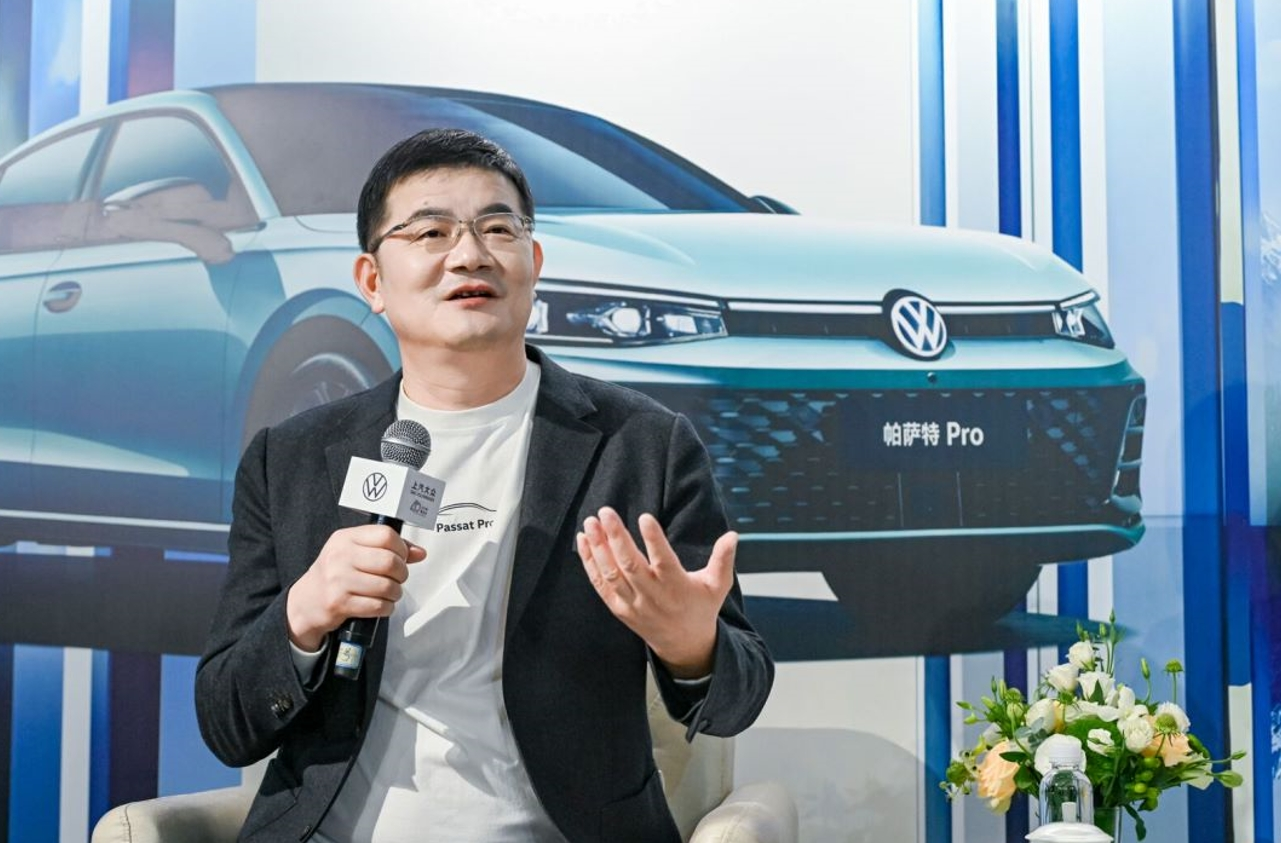
Tao Hailong; Image Source: SAIC Volkswagen
This leadership shuffle is part of a broad rotation across SAIC Motor’s vehicle and components divisions, coinciding with management changes at SAIC Motor Passenger Vehicle and SAIC GM. A senior engineer, Tao has spent over three decades deep in the SAIC system, spanning vehicle manufacturing, quality control, and components operations across the upstream and downstream supply chain.
Tao began his career at SAIC Volkswagen (formerly Shanghai Volkswagen), where he held roles such as deputy manager of quality assurance and acting deputy manager of manufacturing, gaining deep knowledge of assembly line production and full-process quality standards. Later, at SAIC Motor Passenger Vehicle, he served as executive director and vice general manager of quality assurance, building a comprehensive quality framework for the group’s proprietary brands. He subsequently led Shanghai Automobile Gear Works, focusing on core transmission components and amassing experience in large-scale parts production.
This is not Tao’s first time at the helm of Hasco; he previously served as a director and general manager there. In July 2024, he moved to SAIC Volkswagen as general manager and Party secretary, overseeing production, brand operations, and channel coordination. His return to Hasco reflects SAIC’s strategy of rotating talent between its vehicle and components divisions to strengthen synergy.
As the industry electrifies, automakers are rapidly iterating core components like batteries, smart chassis systems, and intelligent cockpits, requiring suppliers to match their R&D pace precisely. Tao’s background spans factory management, quality control for proprietary brands, and components operations—giving him insight into both OEM demands and the pain points of parts development and mass production.
That experience should help Hasco optimize coordination with upstream and downstream partners, better securing smart component orders for Roewe, MG, SAIC Volkswagen, and SAIC GM, and aligning its parts business with the pace of the transition to new energy vehicles.
Gasgoo Take: Tao Hailong’s return to Hasco is part of SAIC’s rotation strategy and is expected to further strengthen the synergy between the group’s automakers and its components division.
Qualcomm Wins Major Order from BMW
Gasgoo has learned that on July 29, Qualcomm Technologies and the BMW Group announced a long-term partnership. Under the agreement, Qualcomm will supply computing chips for BMW’s next-generation digital cockpits and advanced driver assistance/autonomous driving (ADAS/AD) systems over the next decade.

Image Source: Qualcomm
Building on years of technical collaboration, the partnership aims to meet the rigorous demands of BMW’s vehicle programs. It includes multiple solutions from Qualcomm’s Snapdragon® Digital Chassis™, featuring its most powerful system-on-chip, the Snapdragon® Automotive Platform Premium, along with dedicated AI accelerators. These components will form the hardware foundation for BMW’s next generation of AI-powered vehicles.
Nakul Duggal, executive vice president and general manager of automotive, industrial, and embedded IoT at Qualcomm Technologies, said BMW’s decision underscores its trust in Qualcomm’s technical prowess and product roadmap. As agentic and physical AI drive the next generation of smart vehicles, this partnership aims to define the future direction of mobility.
A recent milestone in their collaboration came in November 2025, when a system based on Snapdragon Ride™ Pilot went into mass production on the BMW iX3—the first model from BMW’s Neue Klasse lineup. Jointly developed, this system facilitates driver-assistance collaboration in a uniquely BMW way and is being rolled out across the company’s latest models.
The Snapdragon Digital Chassis is a unified automotive computing platform that integrates over two decades of Qualcomm’s expertise in automotive-grade chips and software. Its solutions are designed for specific functional domains but operate on a unified architecture, allowing the vehicle to function as a single, intelligent system.
Gasgoo Take: Qualcomm’s decade-long deal with BMW highlights a growing trend of deep consolidation between top-tier players in the automotive computing power race.
Bosch Wins Designation for Next-Gen AI Smart Cockpit; Production Set for 2027
Gasgoo learned on July 29 that Bosch has made headway in intelligent cockpits. Its next-generation AI cockpit has secured a project designation from a leading Chinese automaker, with mass production slated for the third quarter of 2027. Meanwhile, Bosch is deepening joint development with global luxury brands and major domestic automakers.

Image Source: Bosch
The next-generation AI cockpit aims to address common industry issues such as fragmented scenarios, unstable responses, and safety risks posed by "AI hallucinations." Its core approach relies on an end-cloud collaborative "Harness" security framework to build a dedicated AI companion for the entire mobility cycle—both inside and outside the vehicle.
Bosch claims its AI cockpit will bridge in-car and off-vehicle scenarios. Inside the car, the system uses enhanced scene perception to actively adapt to driving needs—such as mitigating driver fatigue, monitoring sleeping children, or planning charging stops. Outside the car, the AI remains online, supporting multi-device connectivity to sync schedules and traffic conditions, allowing users to pre-condition their vehicles remotely for a seamless departure.
On safety, Bosch has developed a vehicle-wide Harness security framework to manage automotive AI. This framework validates vehicle control commands generated by large models throughout the entire chain, intercepting high-risk or erroneous instructions at the architectural level to prevent AI failures. Additionally, Bosch employs an end-cloud collaboration strategy: on-device AI handles core functions like facial recognition locally to protect privacy and ensure functionality in weak network conditions, while cloud AI manages complex, cross-terminal, long-cycle tasks to support continuous iteration and hyper-personalized services.
Bosch says the full capability of its next-generation AI cockpit lies in combining a personalized, full-cycle experience with robust safety safeguards. Moving forward, Bosch plans to leverage this production project to drive automotive AI toward greater safety, comprehensive coverage, continuity, and personalization.
Gasgoo Take: Bosch’s next-generation AI cockpit centers on a security framework to tackle the challenge of AI hallucinations, potentially opening a new dimension in the battle for intelligent cockpits.
Baolong Tech Forecasts H1 Net Profit Growth of 82.56% to 122.64%
Gasgoo has learned that Shanghai Baolong Automotive Technology Co., Ltd. (Baolong Tech) recently released a forecast for its first-half 2026 financial results. Preliminary calculations indicate net profit attributable to shareholders will reach 246 million yuan to 300 million yuan—an increase of 111 million yuan to 165 million yuan year-on-year, representing growth of 82.56% to 122.64%.

Image Source: Company Announcement Screenshot
Additionally, Baolong Tech expects net profit attributable to shareholders, excluding non-recurring items, to range from 128 million yuan to 154 million yuan—up 30 million yuan to 56 million yuan, or 30.04% to 56.46%, from a year earlier. For the same period last year, the company reported a total profit of 227 million yuan, net profit of 135 million yuan, recurring net profit of 98 million yuan, and basic earnings per share of 0.63 yuan.
Regarding the growth, Baolong Tech attributed the gains to the continued expansion of its core business and steady improvement in profitability during the first half. It also noted that gains from changes in the fair value of its equity investments contributed positively to the results.
Baolong Tech cautioned that these figures are preliminary and unaudited, though there are no major uncertainties expected to affect their accuracy. Final results will be confirmed in the official 2026 semi-annual report, and investors are advised to heed the risks.
Gasgoo Take: Baolong Tech’s forecast for a sharp surge in first-half net profit reflects strong growth momentum, driven by an expanding core business and positive contributions from investment gains.