



Gasgoo Munich- The auto industry is undergoing a profound transformation. On March 18, 2026, at the 7th Software-Defined Vehicle Forum, Gasgoo CEO Tina Zhou opened with a clear message: software and artificial intelligence are rapidly rewriting the rules of the game. As industry capabilities spill over into new frontiers like embodied intelligence and the low-altitude economy, companies are facing unprecedented competitive pressure—even as vast new opportunities open up. Around key themes like "software-defined vehicles" and "AI-defined cars," the entire supply chain is accelerating collaborative innovation and global expansion, cementing China's lead in intelligence, electrification, and ecosystem development.
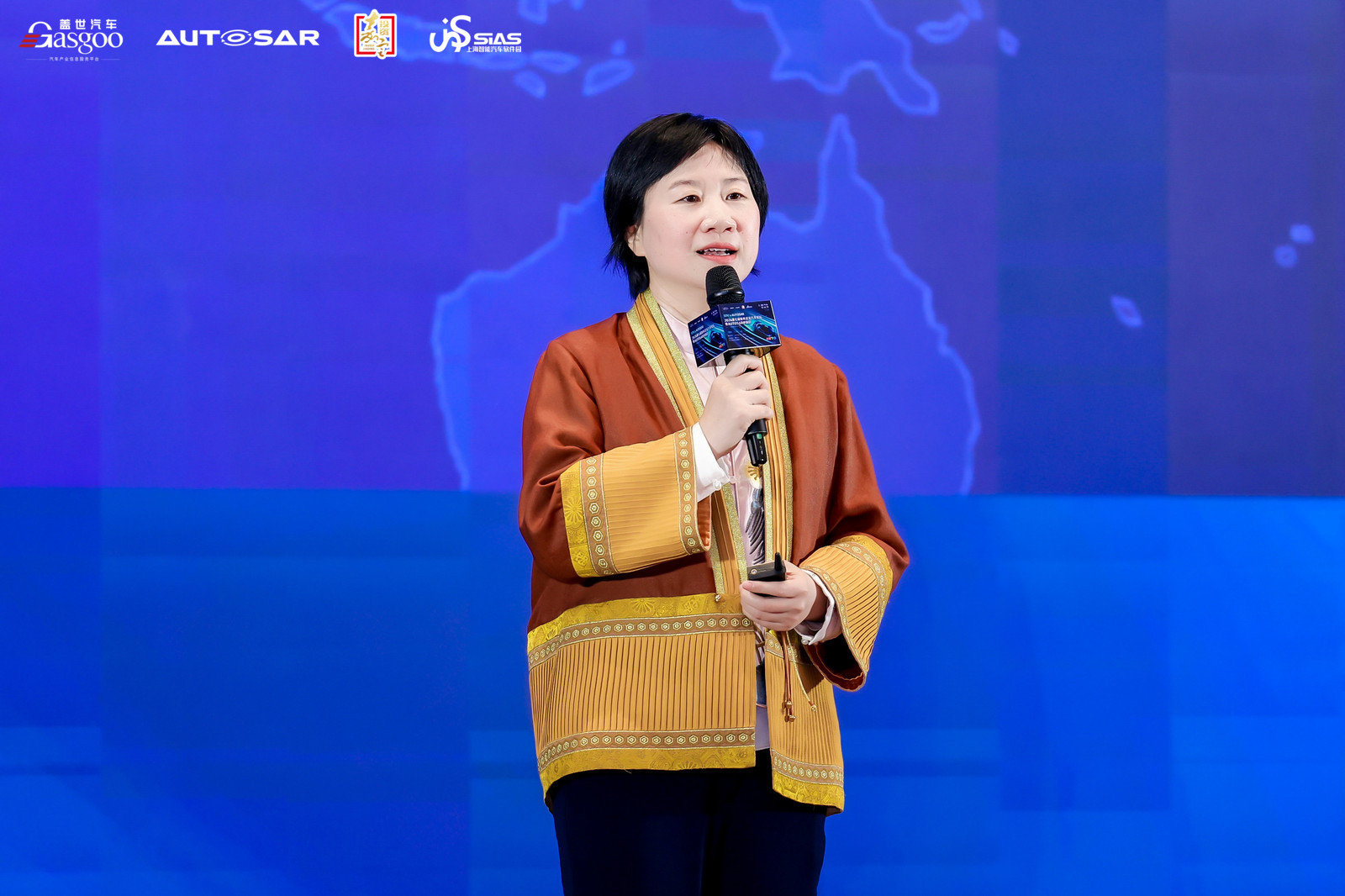
Tina Zhou | CEO of Gasgoo
The following is a summary of the speech:
Distinguished leaders, guests, and friends watching the livestream, good morning.
On behalf of the organizers, I welcome you to the Shanghai International Automotive City for the 2026 7th Software-Defined Vehicle Forum and AUTOSAR China Day. Guided by the Shanghai Jiading District People's Government, this event is jointly hosted by Gasgoo, AUTOSAR, the Jiading District Investment Promotion Service Center, and the Shanghai Intelligent Automotive Software Park. It also serves as a key side event for the Shanghai Global Investment Promotion Conference and the Shanghai Automotive Culture Festival.
We extend our sincere gratitude to the Anting International Automotive City for its strong support. With guidance from the Shanghai Commission of Economy and Informatization, the 7th Software-Defined Vehicle Forum and AUTOSAR China Day has successfully kicked off.
As the industry evolves, our work has expanded far beyond the vehicle itself. We are now tracking emerging fields like embodied intelligence and the low-altitude economy—areas closely tied to the spillover of automotive capabilities. Increasingly, companies are treating their core competencies as a foundational "software" layer, expanding into industries that demand deep hardware integration. Yesterday, an event on embodied intelligence held right here in this venue drew a crowd of over 1,000 from the robotics, AI, and automotive sectors, a clear testament to the heat and activity in these related fields.
As companies mature, their priorities shift. For SMEs, securing clients and orders remains the lifeline, though the source of that business is pivoting from a purely domestic focus to a balance between home and abroad. As these companies scale, the challenge becomes reading industry trends, clarifying direction, and using digital tools for scientific decision-making. This year marks the start of China's 15th Five-Year Plan; in this climate, policy stability and strategic clarity are vital for sustainable growth. At the same time, the value of industrial connections is coming into sharper focus. Despite the surge in investment in the virtual world, real-world collaboration and resource linkage are becoming more critical than ever.
The rapid rise of AI is reshaping individuals and organizations alike, forcing companies to confront how they structure themselves. We've systematically analyzed the organizational forms of various players in the automotive and "automotive-plus" sectors. The "chain leaders"—the dominant OEMs—remain at the core of the ecosystem, but their reach is extending beyond traditional auto. Yet these giants cannot thrive alone. Their ecosystem now includes traditional hardware suppliers, but also chipmakers, computing power providers, algorithm houses, and AI software firms, all fueled by sustained capital investment.
The auto industry has become China's largest pillar, with total output value reaching roughly 13 trillion yuan. Technical capabilities accumulated over decades are now spilling over into broader "pan-automotive" fields. Globally, annual passenger car sales sit around 90 million units—roughly 30 million in China, 16 million in the U.S., and 13 million to 14 million in Europe. With domestic capacity exceeding 50 million units, exporting vehicles and parts has become an inevitability. Over the past three years, China's auto exports have surged, with models upgrading and market coverage widening. Chery, for instance, now operates in 128 countries and regions. Meanwhile, overseas capacity build-out is accelerating, growing by about 1 million units annually over the last three years, driven primarily by pure electric and hybrid models. This shift is propelling the global expansion of a new smart electric industrial ecosystem. 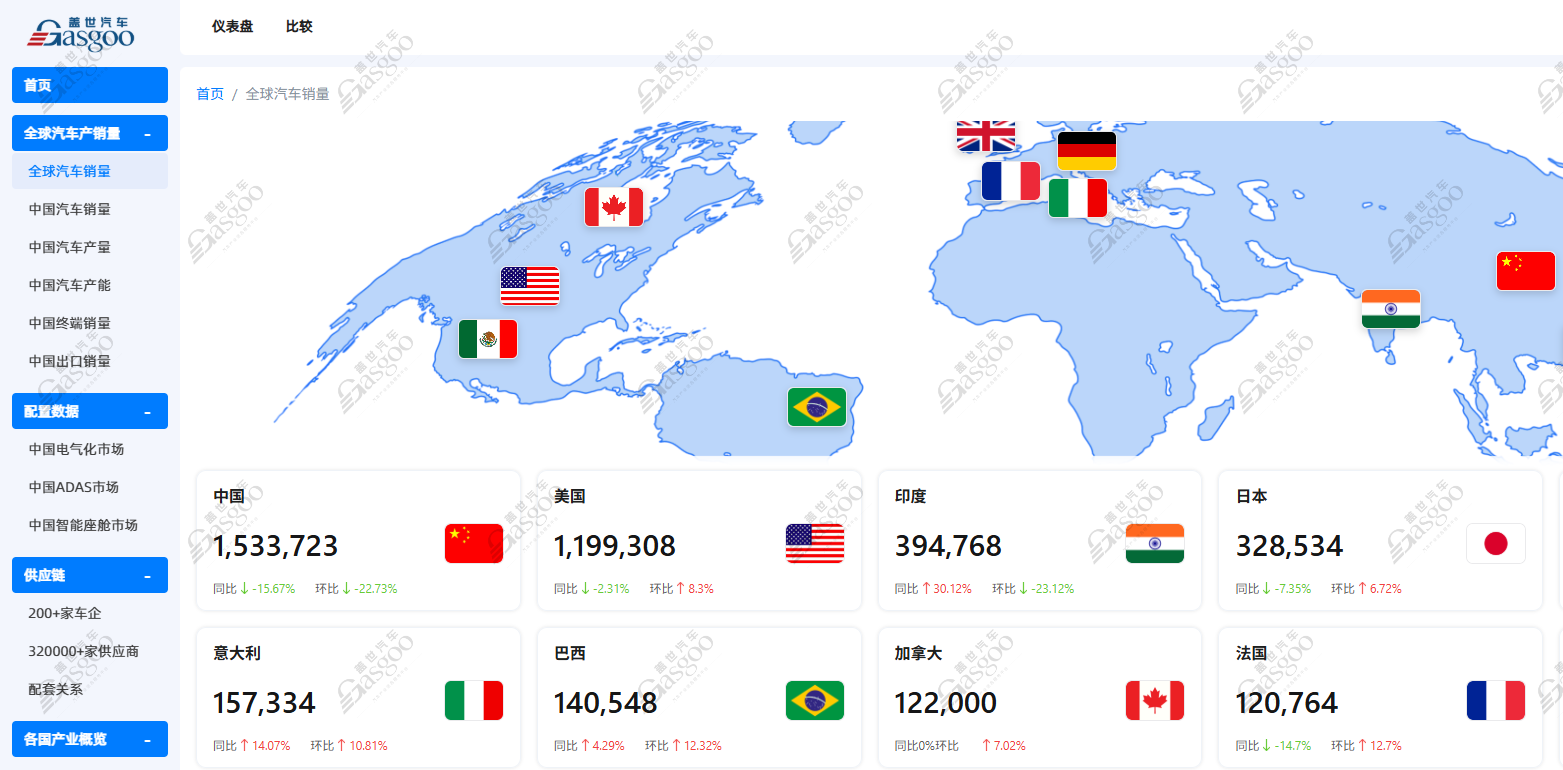
Image Source: Gasgoo Global Auto Industry Big Data autodata.gasgoo.com
From a supply chain perspective, China is leading the transition toward a software-driven organizational model, while other major markets remain dominated by traditional internal combustion engine ecosystems. That makes the next three to five years a critical window for the global expansion of this new ecosystem. This forum has welcomed software firms from Europe, as well as chip and algorithm service providers from Southeast Asia and North America, all eager to showcase their capabilities and secure partnerships in China.
The data paints a picture of intense competition. As of 2025, China is home to about 78 automotive groups, collectively managing roughly 148 brands—Geely Group alone operates 12. In just the single year of 2025, the Chinese market saw the launch of over 200 new models, a stark indicator of the battlefield intensity.
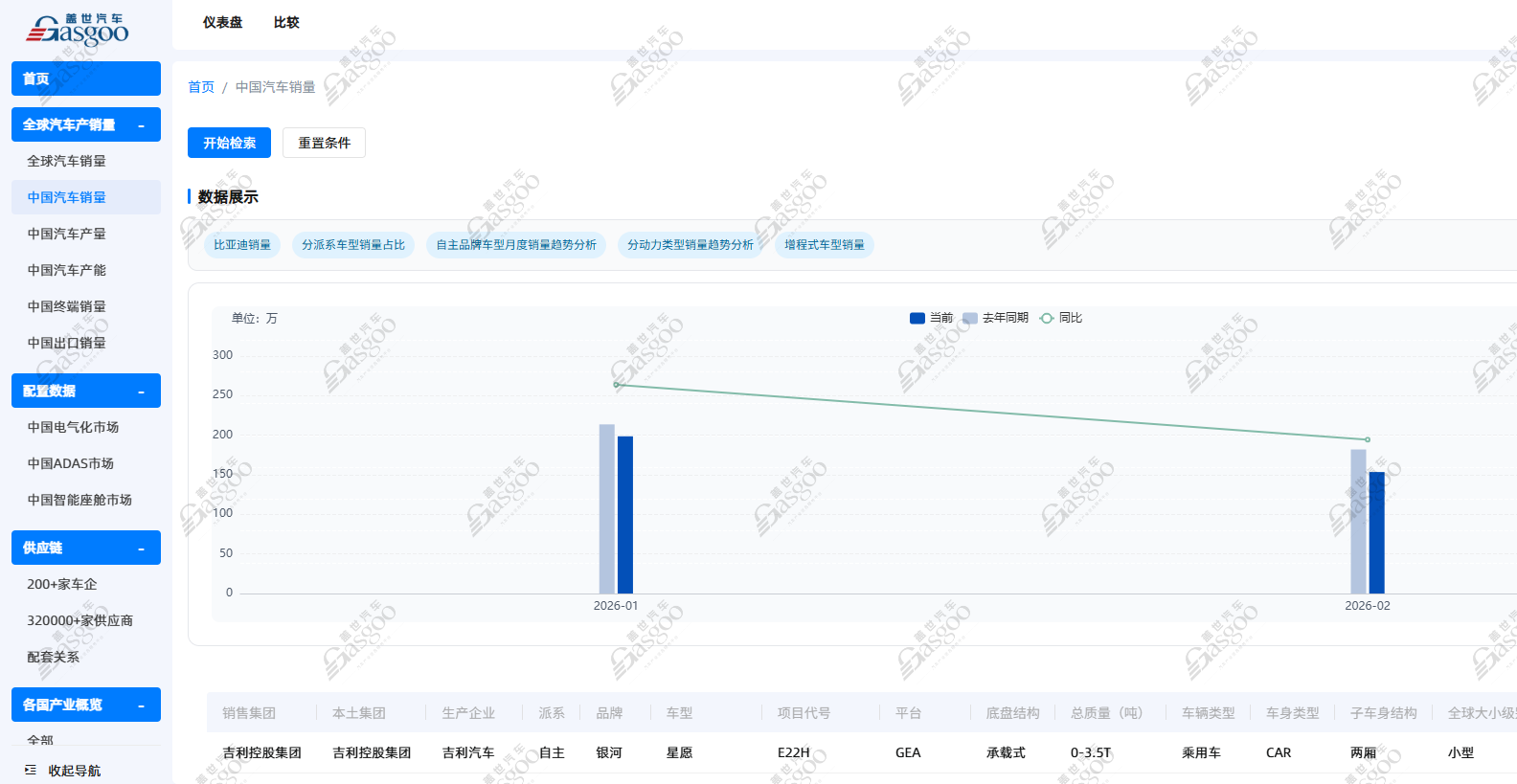
Image Source: Gasgoo Global Auto Industry Big Data autodata.gasgoo.com
I recently visited JAC Motors, a state-owned enterprise with over 60 years of history that started in parts. There, I learned about their breakout product: the Yangjie S800. It became the first Chinese sedan priced above 1 million yuan. Within nine months of launch, it delivered 15,000 units—outpacing the Maybach, which delivered about 11,000 units in all of 2025. That performance underscores how Chinese companies are shattering market ceilings and setting new industry benchmarks.
Looking back at the history of this forum, the first edition debated whether software could actually define the car, and how to apply iterative software development to safety-critical vehicles. Today, software-defined vehicles are a given, and the conversation has leveled up to "AI-defined cars." The industry is now diving deeper into systemic issues: data and software security, personalized user experience, the localization of toolchains, open-source software, and business model innovation.
The rapid rise of China's auto sector is a double-edged sword: it brings intense pressure, but also vast opportunity. In a recent conversation with Visteon, an international supplier, I learned their global HQ team numbers about 200, while their China team is nearly 1,400 strong. Their leadership even posed a provocative question: if the future requires driving the company's total business growth, "why not the China team?" That sentiment stuck with me. It shows Chinese companies now have the capability, the opportunity, and the vision to explore uncharted technological territory. In intelligence and electrification, China is not just participating; it is leading, pushing new standards and industrial paradigms.
So when we discuss software-defined vehicles today, we are talking about much more than code. The conversation spans industry standards, business models, toolchain systems, and globalization strategies. My hope is that over the next two days, this forum will serve as a high-quality platform for exchange—one that identifies real industry pain points, fosters practical cooperation, and helps upstream and downstream players find new growth opportunities.
Jiading, a region deeply fused with the automotive industry, is also pushing its boundaries. Emerging firms in the low-altitude economy and embodied intelligence are finding partners, application scenarios, and investment here, driving tech validation and industrial landing. In recent talks with German companies, I sensed both fascination with China's speed and a desire to understand its unique innovation model. Chinese innovation is so vital partly because of the sheer number of market players and fierce competition, but also because of a culture of "practice, apply, iterate." Rather than waiting for the perfect moment to hit a fixed target, Chinese companies prefer to adjust course in a shifting environment—hitting a moving target. That flexibility and resilience is a key competitive advantage.
In closing, I want to thank our long-standing partners for co-hosting this forum. I hope the Software-Defined Vehicle Forum continues to serve as a bridge for the industry. I wish this event a complete success and look forward to fruitful outcomes for all our guests in the sessions ahead. Thank you.
Image Source: Gasgoo auto.gasgoo.com


