Gasgoo Munich-In the first half of 2026, domestic sales and export figures for the Chinese auto market pointed in two starkly different directions.
Domestic sales slumped 21.1% year-on-year to 9.921 million units, marking a tangible contraction that weighs on operations. Yet overseas markets tell a different story: exports surged 65.3% to 5.096 million units, breaking the 5-million mark for a half-year period for the first time.
This divergence sends a clear signal: China's automotive growth engine is shifting from reliance on a single domestic market to a dual-drive system of "home plus abroad." Forecasts suggest the country's auto exports could hit 10 million units in 2026, making it the first nation globally to breach that threshold.
But beyond the raw numbers lies a more pressing question: Can this momentum last? How much room is left for expansion in the coming years? To answer that, we must first tackle a fundamental proposition—what gives Chinese automakers the right to win in others' home markets?
What Has the "Hell-Level" Competition at Home Forged?
Is it just low prices? Not entirely. The real answer lies in the domestic market.
European automakers typically spend 5 to 7 years developing a new model, with a platform lifecycle lasting a decade. Chinese rivals? They can develop a car in 2 to 3 years and overhaul a platform in 3 to 5. By the time an overseas competitor finishes one car, Chinese makers have completed two or three iterations. This isn't just about speed—it's about how a technological gap widens through differences in rhythm.
Then there is cost efficiency. Chinese power batteries cost over 30% less than those in Europe. This isn't propped up by subsidies; it's the result of spreading costs across tens of millions of units—a structural advantage no other market can replicate.
Conversely, once outside this cluster, that advantage fades. Take CATL's plant in Thuringia, Germany: its production costs are notably higher than in China. That's not a management issue; it is the direct result of the gap in industrial clusters.

Image Source: Huaban.com
Chinese consumers also demand the highest levels of intelligence and connectivity. The intensity of domestic competition forces automakers to perfect in-car system fluidity, voice interaction, and advanced autonomous driving. A common refrain from European consumers: "Chinese cars feel like smartphones; European cars feel like feature phones." Chen Shihua, deputy secretary-general of the China Association of Automobile Manufacturers, draws a parallel: "Great products naturally win over global consumers. It’s the same logic as Apple phones or Japanese cameras entering China."
These three gaps—faster iteration, lower costs, better experiences—form the foundation for sustainable growth. As long as the cutthroat competition at home continues, industrial efficiency won't stall, and exports will have an endless supply of ammunition.
After Capability, Where Is the Growth?
Capability is one thing; space is another. Future overseas gains won't follow a straight line. Different markets and strategies will yield different growth curves.
First, the data. According to Gasgoo Automotive Research Institute, the top 10 destinations for China's passenger vehicle exports shifted significantly in the first half of 2026.

Russia reclaimed the top spot with 432,698 units, a 154.2% surge, overtaking Brazil. The market vacuum left by the exit of European, American, Japanese, and Korean brands is being filled rapidly by Chinese firms. Coupled with the gradual release of localized capacity from Great Wall Motor's Tula plant, Geely's Belarus joint venture, and Chery's KD assembly lines, exports have rebounded further.
Brazil followed with 394,410 units, up 158.6%, taking second place. The spike was driven by a rush to stockpile before Brazil raised its import tariff on complete vehicles to 35% in July. Yet this "head start" works because of real long-term demand: Brazil's new energy vehicle sales jumped 125% in the first half, with a penetration rate reaching 18%. With KD kit tariffs also set to rise to 35% in 2027, BYD, Great Wall Motor, and Changan have launched or begun building local factories, shifting from exporting vehicles to local production.
Europe remains a core growth engine for exports. The UK held steady in third with 251,290 units, while Belgium (215,184), Italy (146,769), and Spain (115,264) all made the top ten. Italy alone saw 141.9% growth, continuing its rapid expansion.
Latin America shows a clear split. While Brazil surged, exports to Mexico fell 33.7% to 148,154 units, hit by tariff adjustments and a tightening North American trade environment. The Middle East is also adjusting: exports to the UAE dropped 36.4% to 135,713 units. In contrast, the Asia-Pacific region expanded steadily, with Australia up 84.2% to 211,965 units and Malaysia breaking the 100,000 mark for the first time at 103,745 units.
Gasgoo’s assessment: Growth momentum is shifting from single-market drivers to multi-region synergy. High value in Europe, scale in Latin America, and substitution effects in Southeast Asia—these three layers define the space for export growth.
Lin Huaibin, director of light vehicle sales forecasting at Mobility Global, predicts the center of overseas production will shift from Russia and Belarus to Brazil and Southern Europe. He projects overseas production will reach about 1 million units in 2025 and approach 4 million by 2030. "Spain, Hungary, and the UK combined will surpass Russia's production volume," he asserts.
Looking at corporate expansion requires looking past sales figures to the strategic logic. Strip away the surface, and the common goal is "localization"—but the paths to get there vary.
BYD represents the "heavy asset, self-build" camp. It not only operates its own ro-ro fleets to solve logistics but also pours capital into factories in Brazil and Hungary. The upfront cost is steep, but once capacity ramps up, it avoids tariff barriers and controls costs from battery to final vehicle, keeping the reins of power and risk resistance firmly in hand.

Image Source: Geely Auto
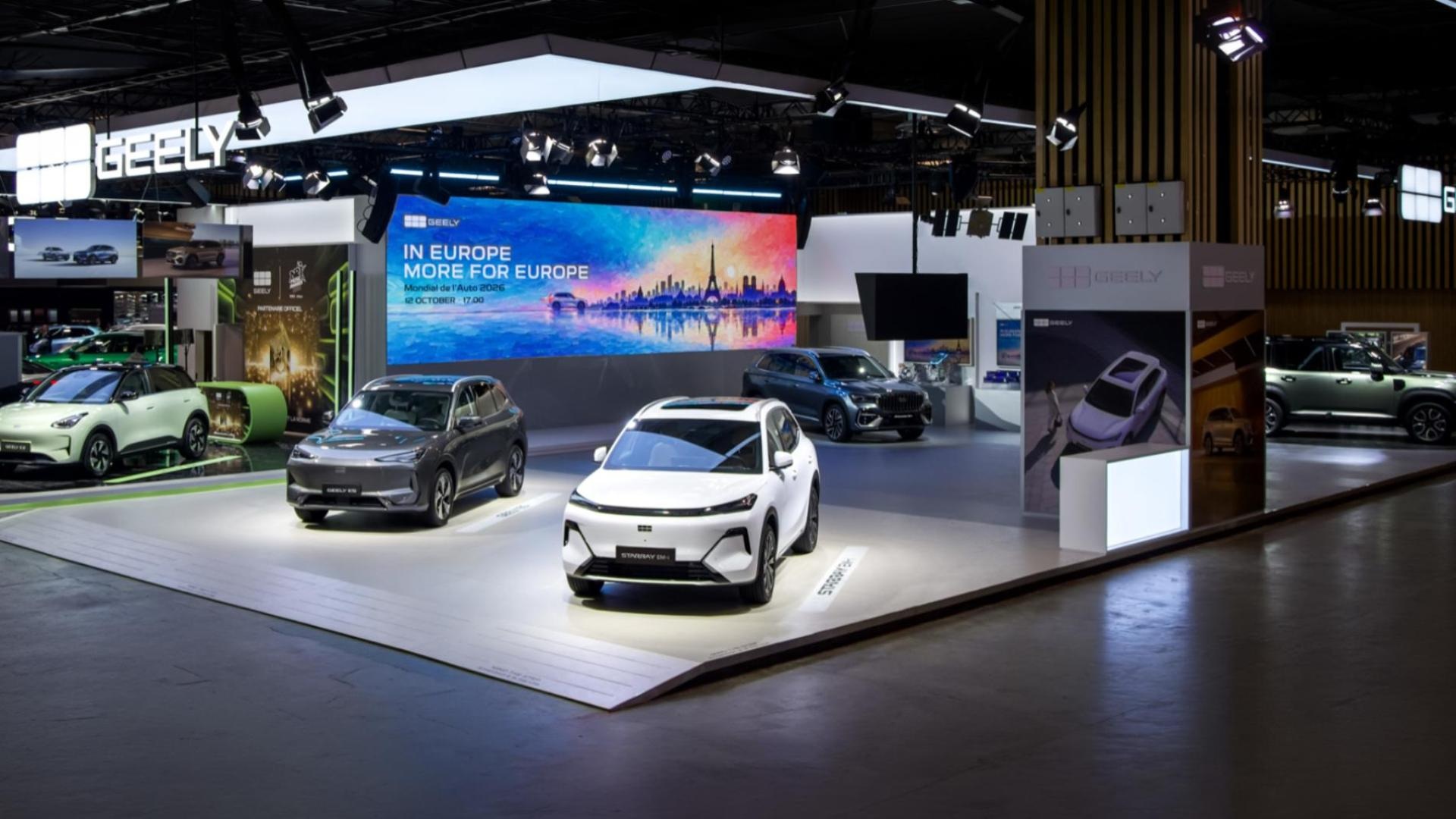
Not everyone is taking the heavy-asset route. Geely and Chery have found a solution in "industrial symbiosis." Rather than building from scratch, they leverage existing strengths. Geely favors capital and technology exports—taking stakes in Ford’s Spanish plant or partnering with Renault in Brazil. This low-asset approach secures a "Made in Europe" label quickly with strong risk resistance. Chery, meanwhile, used a "technology-for-equity" stake to revive Spain’s Ebro brand, dodging trade friction while winning local cultural acceptance.
As Tang Liming, chief product strategy officer of the Geely Auto Group, puts it: "We don’t go out alone; we go out with partners." Geely’s partnership with Renault on Horse, the Smart joint venture with Mercedes-Benz, and its industrial presence in Malaysia under the Proton brand—"We are not playing a zero-sum game, but inviting partners into the ecosystem to share value."

Image Source: Leapmotor
For a new force like Leapmotor, limited capital and scale dictate a "light asset, hitching a ride" strategy. It let Stellantis take a stake in a joint venture, fully leveraging the giant’s mature global network and capacity. This approach of "leveraging minimal effort for maximum impact" allowed Leapmotor to quickly open over 1,000 outlets in Europe and Southeast Asia. It not only took the crown in Italy’s pure EV market but also achieved rapid profitability in overseas operations with minimal trial costs.
Whether through heavy self-investment, capital leverage, or joint ventures, the destination is the same: moving from simply "selling cars" to a deep "ecosystem export."
Yet going abroad is not without risks. Lin Huaibin warns that Chinese NEVs in mature markets like the UK and Germany face the risk of excessive depreciation in the used car market: "Sales are strong, but fierce price competition is driving up depreciation rates."
Vehicle Exports Hit a Ceiling, Supply Chain Moves "En Masse"
The growth of vehicle exports inevitably has a ceiling; trade barriers and tariffs can cut off the flow at any time. But once the supply chain moves, it is irreversible. The ceiling for China’s auto exports in the coming years depends not on how many cars are sold, but on how deep and wide the industrial chain goes.
Now, parts suppliers are "moving house" alongside the automakers.
CATL is investing 7.34 billion euros in a battery plant in Debrecen, Hungary, with a planned capacity of 100 GWh, serving Central and Western European production hubs. Mercedes-Benz has been confirmed as the first major customer, with BMW also on board.

Image Source: Sunwoda
Gotion High-Tech’s four overseas bases in Germany, Vietnam, Indonesia, and Thailand have entered production. Sunwoda’s first European battery plant in Hungary has entered a critical construction phase, with production slated for the second half of 2026. This is no longer simple "support"—it is a collective relocation of the supply chain system.
But this isn't enough. Tang Liming emphasizes, "Enterprises must not only 'go global' themselves but also help the supply chain 'go global'." Geely has set up a 1 billion yuan fund dedicated to supply chain exports, offering financing guarantees and low-interest loans for SMEs: "Going alone isn't competitive. Taking the supply chain advantage with us is where the future competitiveness of Chinese enterprises lies." This view aligns with the trend of parts makers moving en masse: the limit of exports is defined by the depth of the supply chain.
Meanwhile, intelligent solutions are being exported in reverse. Huawei’s Qiankun has partnered with over 50 models from more than 25 brands, including international names like Audi and Toyota, with over 1.9 million intelligent driving installations.

Image Source: Horizon Robotics
In the era of internal combustion engines, Chinese automakers bought chassis solutions from Bosch and Continental. In the era of smart cars, foreign automakers are buying Chinese intelligent driving solutions. Horizon Robotics’ Journey series chips have been selected for over 100 models by more than 25 automakers. Even international Tier 1 giants like ZF are specifying domestic Chinese chip solutions to shorten development cycles and cut costs.
The significance of this "reverse export" is that incremental growth is extending from "vehicle exports" to "technology exports"—and the ceiling for the latter is far higher. As Chen Shihua remarked at the 2026 China Auto Forum: "Chinese-made new energy smart connected vehicles are showing strong competitiveness in overseas markets."
The deeper battle is over standards. Jia Jianxu, president of SAIC Motor, offered a sharp observation at the 2026 China Auto Forum: The Chinese auto industry is shifting from simple product exports to coordinated full-industry-chain exports, upgrading from trade-based exports to deep localization across the entire value chain. He summarized the shift in one sentence: "Chinese automakers must move from 'going out' to 'walking in.' We must truly enter a country to deeply cultivate the market and take deep roots."
Jia also stressed the importance of compliance in local operations. He offered an analogy: "When you are a guest in someone’s home, you follow the host’s rules. If you enter the house and ignore the rules, you will eventually be kicked out." Behind this lies a profound judgment: The ultimate goal of going global is not just to "sell more cars," but for the Chinese auto industry to evolve from a "rule taker" to a "rule maker."
Conclusion
5.096 million exports in half a year is just the tip of the iceberg of this industrial exodus.
The growth momentum for China’s auto exports in the coming years will not be linear; it will be superimposed and rising—from vehicles to brands, from brands to technology, from technology to standards. Each leap raises the growth ceiling.
The road ahead is far from smooth, but the direction is clear.
As the domestic market settles into a game of attrition, going abroad has become the most certain source of incremental growth. This growth is not bought by dumping at low prices, but is the natural result of capacity overflow in the Chinese auto industry. Breaking the 10-million export mark in 2026 is highly probable, but more important than the number is the fact that Chinese automakers are truly completing a transition from "quantity" to "quality" amidst this wave of globalization.