



Gasgoo Munich- Schaeffler Group recently released its 2025 financial data. Against a backdrop of structural adjustments in the global auto industry and regional market divergence, the group achieved full-year sales of 23.49 billion euros. At constant exchange rates, this represents a slight dip of 0.6% compared to pro forma figures, yet overall performance remains solid.
As a core player in global drive technology, Schaeffler is navigating its first full fiscal year following the Vitesco acquisition. Performance across regions and divisions has diverged, but the gradual implementation of its emerging business portfolio is laying the groundwork for long-term growth.
Electric Mobility Leads Growth as Structural Upgrades Drive Divergence Across Divisions
Schaeffler’s 2025 performance across its divisions was distinctly split, with the Electric Mobility division emerging as the clear growth engine. Full-year sales reached 5.02 billion euros — a 7% year-on-year increase at constant exchange rates versus pro forma data.
This surge is no accident. Global production of new energy vehicles continued its climb in 2025, and as capacity ramped up, it sustained demand for electric drive systems. Schaeffler’s technical accumulation and capacity positioning allowed it to fully capitalize on this industry tailwind. On the order book, the Electric Mobility division secured 15.5 billion euros in new orders during 2025, with 8.8 billion euros from hybrid business and 2.0 billion euros from pure electric drive.
Contrasting that momentum, the Powertrain and Chassis division reported sales of 8.9 billion euros, down 5.2% year-on-year. The decline stems largely from sluggish demand among traditional European automakers, though strategic optimization of the business structure also weighed on short-term results.

Image Source: Schaeffler (same below)
Yet this adjustment is not a passive reaction but an active choice by Schaeffler to align with the industry’s shift from combustion to electric. By shedding inefficient operations and focusing on core capabilities, the company is freeing up resources for emerging sectors like electric mobility.
Notably, the two remaining divisions posted steady gains. Vehicle Lifecycle Services sales climbed 5% to 3.04 billion euros, while the Industrial division edged up 0.7% to 6.37 billion euros. Strong performance in wind power and aerospace bearings provided a highlight, while modest growth across regional markets cemented a stable baseline for the industrial business.
Regionally, the picture was mixed but complementary. The Americas and Asia Pacific saw sales rise 2.4% and 5.1%, respectively, serving as key pillars for the group. Meanwhile, Europe and Greater China declined 2.3% and 4.2%.
Europe’s drop tracks directly with the shrinking combustion vehicle market, while China’s short-term volatility reflects intensifying competition and structural adjustments. On balance, however, growth in emerging markets effectively offset weakness in mature ones, keeping group results stable.
Betting on Humanoid Robots: Emerging Businesses Spark a Second Growth Curve
If electric mobility is the growth engine of today, then emerging businesses—led by humanoid robotics—are the strategic bet anchoring the next decade.
In 2025, Schaeffler made a pivotal strategic shift, consolidating new growth areas outside its core business and future-oriented segments into the “Others” division. This unit operates with a startup-like management model. The move is significant: a startup’s agility allows these emerging businesses to escape the bureaucratic inertia of a large conglomerate and respond faster to market nuances. At the same time, Schaeffler’s decades of manufacturing excellence and industrialization experience provide the technical, capacity, and supply chain backbone—striking a balance between innovation and efficiency.
Humanoid robotics sit at the heart of this emerging portfolio. The group aims for revenue from high-potential fields like these to account for 10% of total sales by 2035. This is not a pie-in-the-sky target but a goal grounded in deep technical expertise and a broad product range.
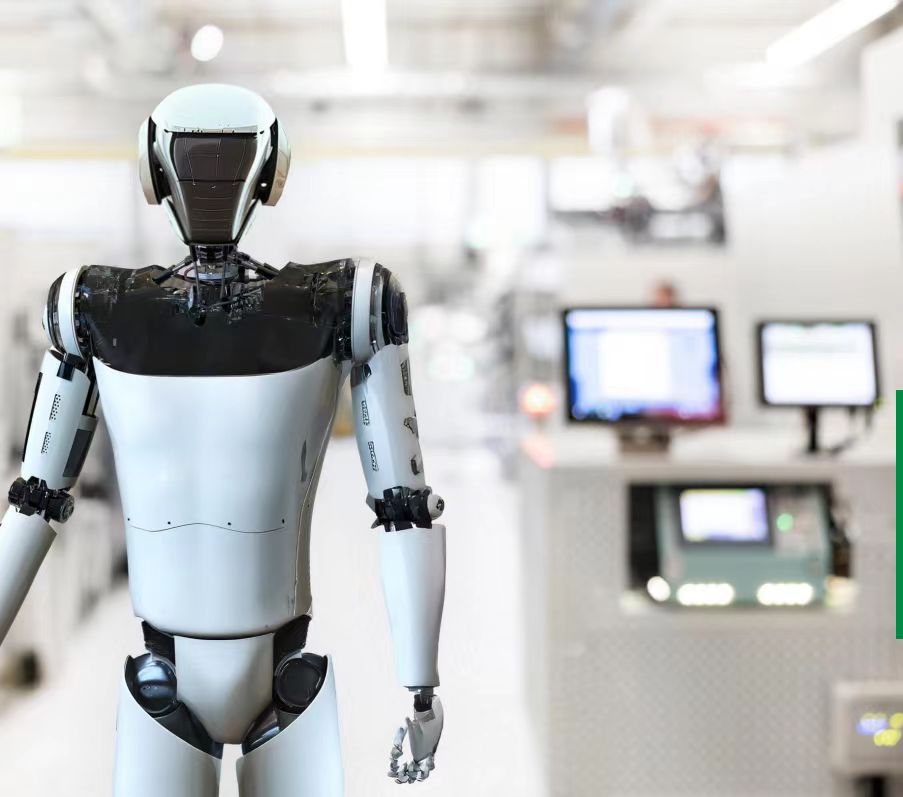
According to Schaeffler, it supplies core components and key subsystems for humanoid robots, covering everything from rolling bearings, roller screws, and precision gear reducers to motors, sensors, linear and rotary actuators, and thermal and battery management modules. These fulfill critical needs for drive, transmission, perception and feedback, power control, and energy management. Furthermore, Schaeffler holds mastery over 12 core processes, including metalworking and additive manufacturing. Combining these strengths creates unique conditions for fusing mature processes with frontier technologies to develop mass-producible solutions.
To accelerate its robotics push, Schaeffler has partnered with several leading players since 2025, including Agility Robotics, Neura Robotics, Humanoid, and Leju Robotics. Deep collaboration with OEMs allows Schaeffler to stay close to market demand, iterate products rapidly, and open channels for large-scale application. Beyond humanoid robots, the company is actively expanding into other emerging fields, leveraging its strengths in drive technology and precision manufacturing to build a diversified matrix of new businesses.
For fiscal 2026, Schaeffler maintains a cautious outlook. Sales are projected between 22.5 billion and 24.5 billion euros, with an adjusted EBIT margin of 3.5% to 5.5%. Free cash flow is expected to be 100 million to 300 million euros, a figure that factors in significant cash outlays for restructuring and integration.
Breaking it down by division, Schaeffler forecasts 2026 sales of 5.2 billion to 5.8 billion euros for Electric Mobility; 8.0 billion to 8.6 billion euros for Powertrain and Chassis; 3.1 billion to 3.3 billion euros for Vehicle Lifecycle Services; and 6.2 billion to 6.7 billion euros for the Industrial division.
Looking ahead, Schaeffler is steadily advancing on a path of “steady core growth + rapid emerging breakthroughs.” The sustained lead in electric mobility provides the confidence for its transition, while the strategic positioning of emerging businesses like humanoid robots opens up the horizon for future growth.


