Gasgoo Munich- In March, Shanghai Zhangjiang Robot Valley.
A production line is churning out humanoid robot joints at a pace of one every 70 seconds. These are black metal modules that integrate motors, reducers, and encoders.
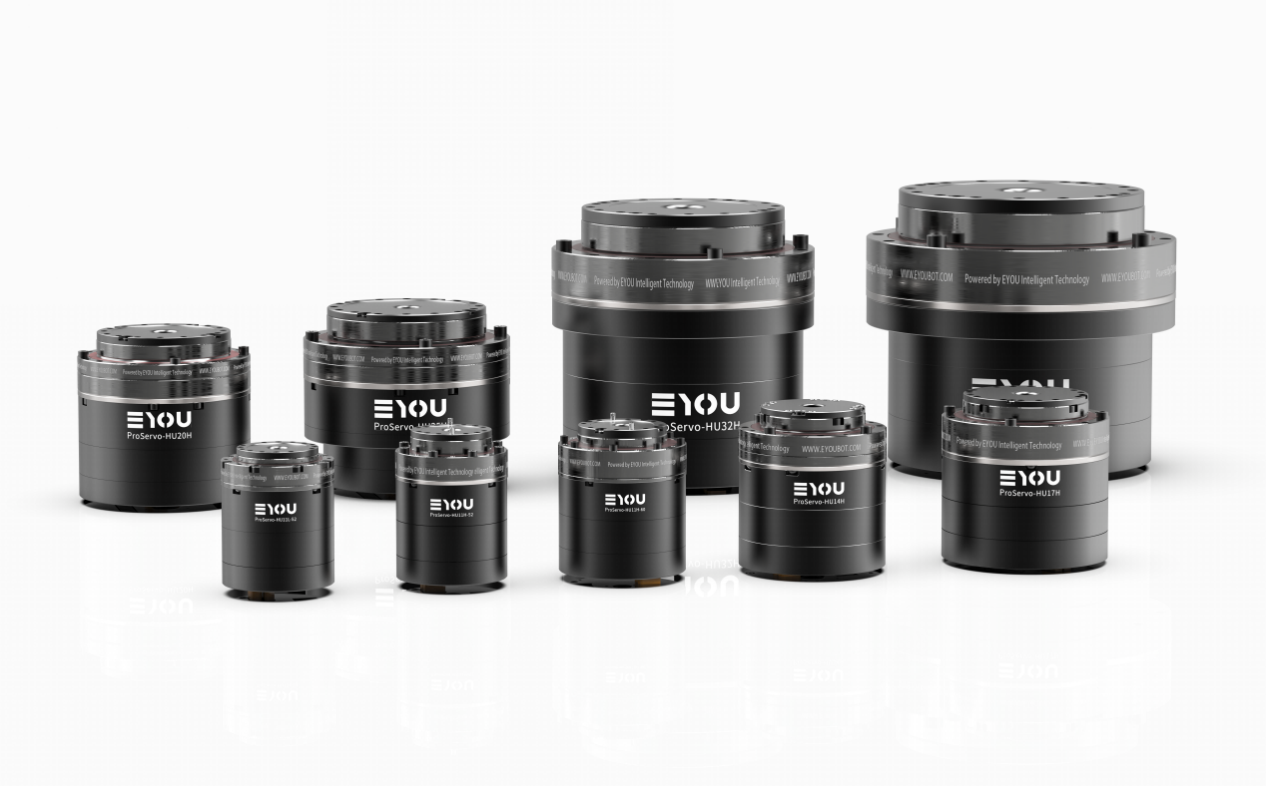
Image Source: Yiyou Technology
After undergoing no-load aging, load operation, and a battery of other tests, each unit is boxed individually. Shipped in batches via SF Express, JD, or Kuayue, they race to assembly plants or laboratories in Shanghai's Lingang, Beijing's Yizhuang, and Shenzhen's Nanshan. There, they become part of a robot torso that has yet to be named.
They leave as mere components, but arrive as the starting point of a body.
This is a silent industrial revolution.
Just days ago, Tesla CEO Elon Musk revealed that production of the Optimus Gen 3 robot will launch this summer. Almost simultaneously, Figure AI released footage of its Figure 03 model completing household chores fully autonomously in a real home environment—entirely without human intervention.
While the spotlight shines on dazzling demos from OEMs, the real shadow war has already shifted upstream.
In the realm of joint modules—the "motion hubs" of these machines—a life-or-death elimination contest centered on time, yield rates, and scaling is entering a white-hot phase.
Meanwhile, Sun Zeju, founder of Yiyou Technology, told Gasgoo that according to the company's 2026 production schedule, joint module shipments this year could surge past 400,000 units.
Yet when the company was founded in 2018, this sector was virtually a wasteland.


The Battle for "Birth Time"
The "Magic of Time" Takes Effect: The Window for Joint Modules is Narrowing
"Companies founded after 2023 will struggle immensely with mass production," Sun Zeju offers a stark assessment.
That assessment aligns closely with the current state of the industry.
According to an analysis by Dongwu Securities, the humanoid robot sector saw significant large-scale orders land in 2025, with Unitree, AgiBot, and UBTECH leading in shipments. However, there is still room for improvement in the precision and lifespan of core components. While backing from industrial capital has driven down prices significantly, the industry still lags behind automotive-grade maturity.
In a market fueled by capital frenzy, the greatest misjudgment is often mistaking luck for foresight. An easily overlooked fact remains: humanoid robots are "machines" first, "humanoid" second. At their core, they are industrial products that must operate at high frequency in the physical world, withstand impact, and maintain precision.
After Musk unveiled the Optimus prototype in 2022, a wave of embodied intelligence companies emerged globally. Armed with pitch decks, outsourcing partners, and demos, they attempted to disrupt manufacturing with the speed of the internet.
But when the orders actually arrive, many discover that a pitch deck cannot transform into hardware capable of stable delivery.
Yiyou's journey began in 2018.
It was a time when the concept of humanoid robots was still in its infancy, and the capital market had little understanding of "joints."
Back then, the pain point Sun identified was the "scattered parts dilemma" in domestic industrial automation: reducers came from one source, motors from another. Integrators had to assemble them like building blocks, often resulting in bulky units with low performance and poor consistency.
"It's like how transistors and triodes eventually evolved into integrated circuits," Sun says, using the analogy to explain Yiyou's origins.
"We predicted that joint integration and intelligence were inevitable trends, much like electronic components evolving from discrete parts to integrated circuits," he recalls.
The prediction holds water. In electronics, integration triggered an avalanche of cost reductions and a leap in reliability. In robotics, "joint integration" is equally an irreversible endgame.
From 2018 to 2021, Yiyou kept its head down, mastering the underlying technologies of integrated joints.
Those three years allowed Yiyou to develop a unique "muscle memory." As the market descends into a price war in 2026, Yiyou is bold enough to target a failure rate of within 0.01%. By comparison, the industry standard of 0.1% implies a geometric explosion in after-sales costs when faced with mass production.
That is the magic of time.
Sun Xiaotian, a partner at iFlytek Capital, confirms this view from an investor's perspective. Before backing Yiyou, his team systematically scanned the sector. "Shipment growth across the industry is accelerating rapidly, with most companies more than doubling last year," Sun says. "But the market is consolidating at the top, and leading players are significantly outshipping the mid-to-tail pack."
He emphasizes that the market's tolerance for error is shrinking fast. "Downstream embodied intelligence companies demand extreme quality stability, timely delivery, cost efficiency, and advanced technology," Sun notes. "There's little room left for trial and error. The window is closing rapidly. Starting from zero now creates a massive time lag. Downstream standards for joints are constantly upgrading, and the leaders are already iterating their technology to match that demand."
Sun argues that if the competition before 2023 was a technological battle from "0 to 1," the contest in 2026 is a test of systemic warfare capabilities from "1 to 100."
This encompasses not just technology, but also supply chain control, advance capacity planning, and a deep understanding of large-scale manufacturing management.
Planning Capacity Ahead of Time
Behind the Self-Built Line: The Yield Game and the Hidden Cost War
In January 2026, Yiyou announced the official launch of its "world's first automated production line for robot joints" in Shanghai.
Behind that announcement lies an extreme tug-of-war over "yield rates."
"With a manual line, a defect rate of 0.1% is basically the limit," Sun reveals. Yiyou's automated line, however, targets a defect rate of within 100 PPM—or 0.01%.
Joints account for nearly 50% of a humanoid robot's total cost. Their precision, stability, and consistency directly determine whether a robot will fall while walking or shake during operation.
Historically, robot joints relied on manual assembly and debugging by engineers. That approach sufficed when annual shipments numbered in the hundreds or thousands. But as order volumes approach the million-unit mark, the efficiency bottlenecks and quality fluctuations of manual assembly become disastrous.
Launching the automated line has not only driven a leap in quality but also laid the groundwork for cost reductions over the next two to three years.
Currently, the cost benefits of automation are muted due to high material costs and R&D amortization. But as overall industry prices fall, labor costs will consume a larger share of the budget. When that happens, companies that automated early will possess immense cost leverage.
Yiyou designed this line with future tech iterations in mind from day one. "The first line is relatively modular, so the overall coupling isn't too high," Sun explains. "We can quickly adapt to new products by reorganizing and adjusting workstations, without needing to scrap everything and start over."
Sun estimates this production line will have a lifecycle of at least five years.
Gasgoo observes that pricing pressure in the embodied intelligence sector is already showing signs of rippling upstream.
As OEMs launch increasingly cost-effective robots, cost reduction has become a mandatory course for the entire supply chain.
Predicting the Market Boom
The Consumer Market Ignites Early, and a "Growth Explosion" Is Imminent
"2024 was year one of mass production, 2025 was year one of commercialization, and 2026 is what we call the year of implementation," Sun says, defining the current timeline.
Sun Xiaotian adds the logic behind this view: "New energy vehicles started with just tens of thousands of units a year nationwide; now it's over 13 million. This year, domestic sales of humanoid robots should cross the 100,000-unit threshold. For component companies, that implies demand for joints at the million-unit level."
Yiyou's goal for 2026 is 400,000 units, with plans to hit 1 million deliveries next year. This is not merely a sales target, but a strategic position to secure.
Crossing the million-unit threshold means a company has passed a brutal "stress test" for its supply chain, quality control, and manufacturing systems, establishing a massive advantage over latecomers.
As mentioned earlier, this goal is set against a backdrop where Yiyou is highly sensitive to structural shifts in the downstream market.
The conventional wisdom held that humanoid robots would enter industrial settings first, then commercial, and finally homes. But in 2026, the consumer market unexpectedly ignited early. A wave of small robots standing 0.8 to 1.2 meters tall is flooding into scenarios like guiding, companionship, and education.
"The consumer market is extremely price-sensitive, but fortunately, volumes are huge," Sun says. He believes the consumer boom will be the key driver pushing joint module volumes to the million-unit scale.
A report by Sinolink Securities also notes that in 2026, shipments from top domestic manufacturers are expected to jump from the thousands to the tens of thousands. The launch of the consumer market will shift the industry from being industrial-led to a dual-engine drive of both industry and consumption.
Choosing the Right Customers to Beat the Clock
"Your Client List Reveals Your Rank"
The unexpected boom in the consumer market provides a tangible foothold for crossing the "million-unit" threshold. But as scale builds, a deeper question for the supply chain emerges: who can truly gain a foothold during this explosion? The answer may lie in a company's client list.
In Sun Xiaotian's view, the criteria for investors screening projects have shifted from purely comparing technical specs to a more rigorous assessment of "commercial closed-loop capabilities." This means that the technical barriers, supply chain prowess, and team backgrounds that investors take for granted must ultimately translate into one thing: the ability to solve customer problems.
Whose problems? And what kind of problems?
This is about how component companies define their industry standing and market positioning.
Regarding its position in the humanoid robot supply chain, Yiyou made a choice with clear boundaries: to be a Tier 1 supplier.
Drawing lessons from the new energy vehicle industry, Sun clearly recognizes that the logic of the humanoid robot supply chain is converging with that of the auto industry: a mature supply chain inevitably moves toward extreme specialization. The auto supply chain generally boasts million-level delivery capabilities, achieving annual cost reductions while maintaining quality by constantly integrating and optimizing upstream and downstream resources. Only when the cost of core components continues to dive will the day humanoid robots truly enter households arrive.
"We focus on the joint sector, concentrating all our technological advantages and production capacity there," Sun says. Yiyou is simultaneously betting on three major categories of joint modules—planetary, harmonic, and linear—covering almost all power requirements for humanoid robots, from upper limbs and waists to lower limbs.
This is a strategic layout fraught with risk yet full of wisdom.
The risk lies in the fact that technological routes have not yet converged. Currently, industrial scenarios favor high-precision harmonic joints, while the consumer market widely adopts planetary joints for cost control. Will the future be bipedal or wheeled? Harmonic or planetary? Could linear joints even stage a breakout? No one can give a definitive answer.
The wisdom lies in responding to all changes with constancy. "We aren't sure which technological route will ultimately win," Sun admits. "But as long as you're building humanoid robots, you need joints." Yiyou's strategy is to use the "completeness" of its product line to cover the "uncertainty" of future technological routes.
What is certain is that the market in 2026 is already providing immediate feedback.
Sun's assessment is this: in 2026, with the consumer market exploding and demand for planetary joints surging, Yiyou is shifting capacity toward planetary units. Meanwhile, in the industrial sector, harmonic joints are still maintaining two- to three-fold growth. This flexible supply capability is built on deep cultivation of all three technological routes.
Its stance as a comprehensive "enabler" has earned Yiyou the trust of OEMs. AgiBot Robotics, currently a leading domestic player in shipments, has naturally become a major client.
"This isn't about being tied together; it's simply because they sell the most, so naturally they account for the largest share of our sales," Sun corrects the term "binding." He emphasizes that the core value of a Tier 1 is to serve all global OEMs.
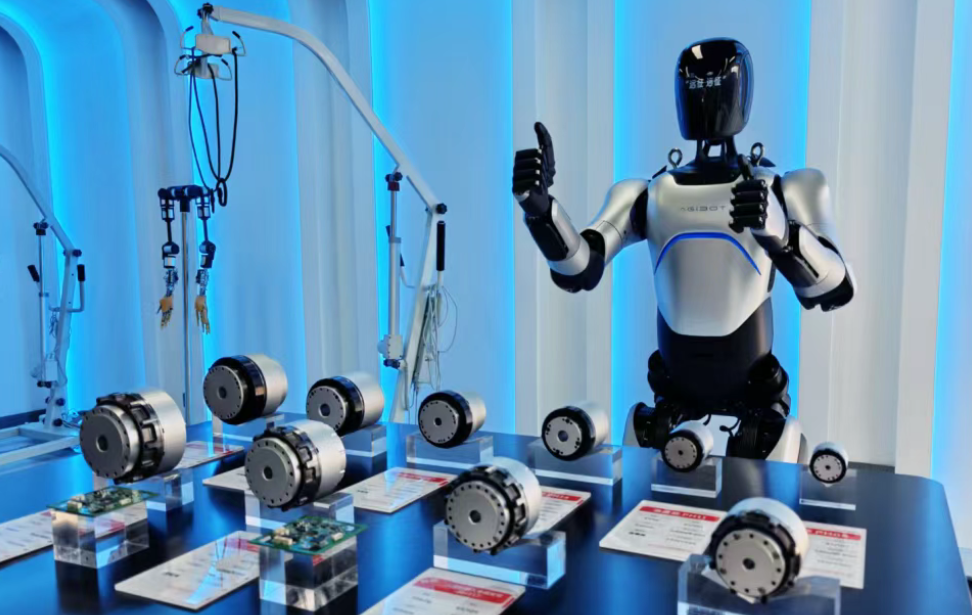
Image Source: Yiyou Technology
iFlytek Ventures' investment logic aligns perfectly with Yiyou's industrial positioning.
In Sun's view, the embodied intelligence sector is still in a phase similar to the early days of new energy vehicles, when "only tens of thousands were sold nationwide." Choosing the right downstream partner is crucial.
"It's just like the auto industry: you have to look at who your downstream OEMs are. If you choose BYD or the Huawei camp, you can grow alongside them, and your performance will see significant improvement," he notes. He further points out that for a component company, growth speed depends first on customer quality. Only by deeply aligning with leading enterprises can a company rapidly widen the gap with its competitors.
In investment circles, this is called "downstream positioning." Simply put: your client list reveals your rank.
But clients alone aren't enough; internal hard power is equally critical. Can the quality and R&D systems iterate quickly? Does batch delivery capability come with cost advantages? Are customer response speeds and service systems robust? These comprehensive qualities determine whether a company can truly stand firm during an industry boom.
This is also one reason investors favor backing component companies.
In other words, investing in the component sector is attractive because it serves a broader base of downstream OEMs. Regardless of how individual OEMs' performance fluctuates, component companies with core capabilities can share in the growth dividends of the entire industry.
This logic is identical to the early development of the new energy vehicle supply chain.
Regarding the next stage of growth for joint module companies, Sun believes that beyond the hard metric of shipment volume, future R&D reserves are equally critical.
"Joint technology isn't fully finalized yet, and OEMs are still iterating. To truly develop joints suitable for future robot forms requires greater R&D investment in materials, core components, and overall architecture. That is the standard for judging whether a company can continue to lead," Sun says.
Epilogue: Time Is Not Just a Friend, But a Referee
On the long march of humanoid robots toward a trillion-dollar household market, time is not a countdown—it is the starting gun.
Those companies that buried their heads in research in 2018, completed their technological groundwork before 2023, and cross the million-unit threshold in 2027 are not competing on who runs faster, but on who woke up earlier.
As spotlights chase every dazzling debut by OEMs, the real battle has long since sunk deep into the supply chain. There, time is the best friend—and the cruelest referee: it rewards the early risers.