Gasgoo Munich- Spring 2026 brought a wake-up call to the industry. As word spread that UK eVTOL manufacturer Vertical Aerospace had secured $850 million in financing, it became clear: a fresh "pit stop" had emerged in the marathon of the low-altitude economy.
Around the same time, Gasgoo observed that AutoFlight, a domestic eVTOL manufacturer, was preparing its self-developed V2000CG Keriou for test flights in actual commercial scenarios.
Clearly, China’s eVTOL sector has reached a delicate juncture. After the conceptual sprint and "hundred flowers bloom" of the 2023–2025 track start, the landscape is shifting. Policy is moving from top-level design to concrete implementation; capital is shifting from casting a wide net to picking winners; and technical debates over configurations are evolving into a comprehensive contest of commercial viability.
This is a race for the skies. And now, the first leg of this long run is approaching a decisive moment.
Who will cross the finish line first? And who will truly find the "gavel" that seals the deal on commercialization?
Armed with these questions, Gasgoo’s "Intelligent Electrification & Capital Discourse" column spent over two months in deep dialogue with Guo Liang, CEO of WoFei, Xie Jia, Senior Vice President of AutoFlight, and other industry insiders. The goal: to reconstruct the true state of the eVTOL track at this very moment.

The Track Has Shifted: From "Getting Airborne" to "Staying Alive"
Focus on the eVTOL industry’s trajectory over the past two years, and a subtle shift in rhythm becomes unmistakable.
From 2023 to 2024, headlines were dominated by "maiden flight" news. Who had completed hover tests? Who had unveiled a full-scale prototype? Capital markets rode the waves of each announcement.
It was a carnival of concept validation.
Entering 2025, the wind shifted. Policy moved from design to implementation; trials for low-altitude airspace management expanded; and the airworthiness certification system began tailoring rules for eVTOLs. Meanwhile, capital stopped paying just to see things fly. The questions now are sharper: When will you secure your Type Certificate (TC)? Where are your use cases? Can your costs compete?
Xie Jia, Senior Vice President at AutoFlight, encapsulates the shift succinctly: "The industry has moved beyond pure technical validation. It’s now a comprehensive assessment of commercial capabilities—airworthiness certification, cost control, scenario validation, and ecosystem building."
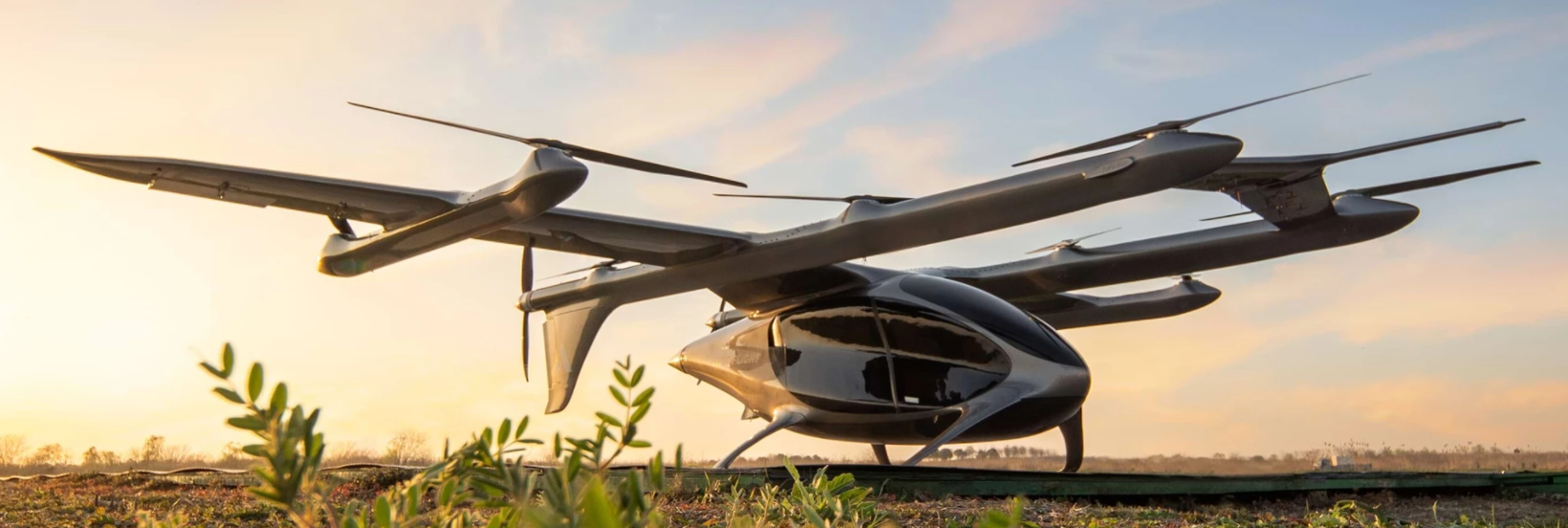
Image Caption: AutoFlight
Just over two months ago, Guo Liang, CEO of WoFei, told Gasgoo that while OEMs remain in the R&D and certification phase, there is good news: domestically, regulations, airspace, infrastructure, and information services have all entered a stage of substantive advancement.
In other words, conditions in the air and on the ground are ripening. But only those who secure their "tickets" first will advance to the next round.
That ticket is airworthiness certification.
Reportedly, Volant’s VE25-100 is targeting Type Certification (TC) by early 2027. Volant stated that its self-developed E20 model has entered the compliance verification phase, with certification planned for 2027. Yue Tingting, Vice President of AutoFlight, revealed in an interview that the company already holds the world’s first Type Certificate for a medium composite-wing UAV. Having fully navigated the certification process, AutoFlight plans to accelerate full certification for its existing models in 2026 and launch a new medium composite-wing logistics drone.
To date, EHang’s EH216-S remains the only eVTOL product to have secured the "full set" of four certificates (AC, TC, PC, OC). For most companies, simply obtaining a Type Certificate takes 3 to 5 years and involves completing hundreds of tests.
However, industry insiders reveal that certification for cargo eVTOLs takes less time than for passenger models. Moreover, the technical validation gained from cargo operations can significantly lower the risks for subsequent passenger aircraft.
Yet, one fact remains undeniable: the industry is accelerating toward consolidation in 2025. Capital and customers are polarizing, flocking to either leading enterprises or select startups. Mid-tier companies are under pressure to survive, while government support has shifted from "casting a wide net" to "targeted funding."
This means that some companies that staged high-profile maiden flights in 2023 face the risk of broken funding chains if they fail to secure their TC by 2026 or 2027.
Xie predicts that over the next three years, the competitive landscape of the eVTOL industry will evolve from "a hundred flowers blooming" to a process where "the waves wash away the sand."
In his view, leading players are currently focused on three tasks: pushing aggressively for passenger aircraft certification—the ticket to commercialization; partnering with government bodies to build infrastructure like vertiports and digital surveillance systems; and collaborating with partners to advance logistics commercialization tailored to local conditions.
"Certification, infrastructure, and scenarios" form a trinity. Neglecting any one of them is not an option.
This multi-pronged approach reflects a clear-headed understanding among top firms: airworthiness is the ticket, but a ticket alone doesn't grant you the stage.
Regarding technology routes, AutoFlight and WoFei have made diverging choices—choices that happen to represent the two mainstream directions in the global eVTOL industry.
AutoFlight has adopted a composite wing configuration. Simply put, vertical takeoff relies on lift rotors, while horizontal cruising uses push propellers—two independent systems. The benefit is high safety redundancy. If the aircraft encounters wind shear or a system failure during flight, the independent lift system can activate immediately, allowing for a hover and controlled descent. The response is almost instantaneous.
Xie’s assessment is blunt: the composite wing configuration "enables greater payload, higher safety and reliability, longer range, and lower manufacturing costs once mass production is achieved."
WoFei, meanwhile, has opted for a tilt-rotor configuration. Its AE200 series features a high-wing, vector-thrust design. Guo Liang explains that compared to multi-rotor or lift-plus-cruise designs, the tilt-rotor offers less aerodynamic drag—resulting in higher efficiency, longer range, and better ride comfort.
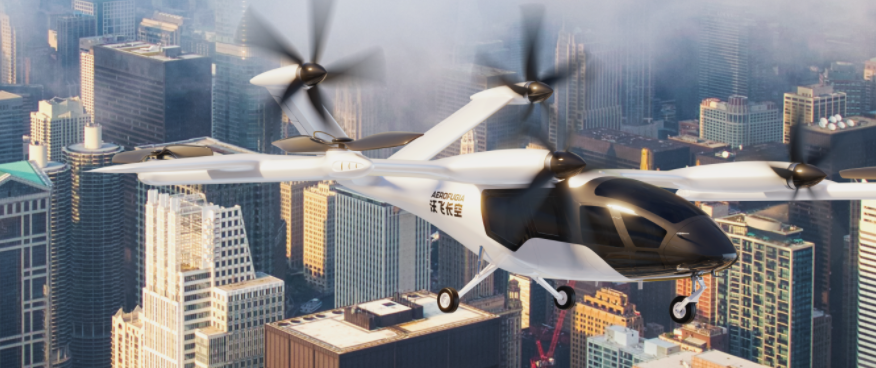
Image Caption: WoFei
According to the "Global eVTOL Manufacturer Advanced Air Mobility Reality Index" published by SMG Consulting, as of June 2025, composite wing configurations accounted for approximately 42% of the 31 key global OEMs, while tilt-rotors made up 35%. Together, they dominate the mainstream.
These choices reflect, in essence, different risk appetites and commercial logics: composite wings emphasize safety redundancy and engineering maturity, while tilt-rotors pursue aerodynamic efficiency and range economy.
There is no absolute right or wrong—only what fits their respective scenario objectives.
Supply Chain Reuse Does Not Mean "Plug-and-Play"
A long-standing rumor in the industry suggests that eVTOLs will reuse 80% of the new energy vehicle supply chain, leaving the conversion of the remaining 20% to "aviation-grade" standards as the real challenge.
"Automotive-grade" standards pursue high reliability and cost-effectiveness within controllable costs. "Aviation-grade" standards, however, demand "zero fault tolerance." This disparity is particularly evident in core components.
Xie offers a more pragmatic interpretation: "In reality, the eVTOL industry applies production and verification standards to automotive supply chain components that differ from those used for cars themselves."
In other words, reuse does not equate to plug-and-play.
The same supplier, offering the same motor or battery, must navigate a completely different certification process to enter the eVTOL supply chain. Automotive standards seek reliability within cost limits; aviation standards demand zero tolerance for failure.
So, where exactly does that 20% get stuck?
Xie points to the core: the upgrade and conversion of the supply chain from "automotive-grade" to "aviation-grade." The difficulty lies in the fact that existing airworthiness standards were written for traditional aircraft, making it hard to fully adapt them to the structural design, power systems, and safety reliability requirements of eVTOLs.
Take batteries, for instance. They are the "energy core" of an eVTOL, determining key metrics like safety, range, and payload. "Automotive-grade batteries provide a foundation, but core aviation technologies must adhere to aviation standards," an industry insider told Gasgoo.
That is no exaggeration. Unlike new energy vehicles, eVTOLs impose near-exacting demands on battery cells: high energy density, high power output, high cycle life, and high safety reliability—all while meeting aviation-grade safety standards and passing airworthiness certification.
Currently, AutoFlight and its strategic investor CATL are jointly developing high-energy-density, high-safety aviation-grade power batteries. Tailored to the rigorous flight scenarios of eVTOLs, these batteries balance range, lightweighting, and reliability in extreme environments, accelerating product iteration and airworthiness certification.
AutoFlight’s supply chain strategy also emphasizes "growing together." According to Xie, AutoFlight’s ecosystem includes partners from the automotive sector, with cooperation spanning everything from production standards to inspection and testing. The goal is to "grow alongside our suppliers."
Additionally, Gasgoo has learned that between March and April 2025, XPeng Aeroht signed cooperation agreements with three power battery manufacturers. On March 18, 2025, EVE Energy received a nomination notice from XPeng Aeroht to supply low-voltage lithium batteries for the next-generation prototype. On March 20, Farasis Energy received a similar nomination, selected to supply high-voltage batteries, high-voltage connectors, and low-voltage connectors for the next-generation prototype. Then, on April 11, XPeng Aeroht signed a deepened strategic cooperation agreement with CALB, which will supply power batteries for XPeng’s next aircraft model.
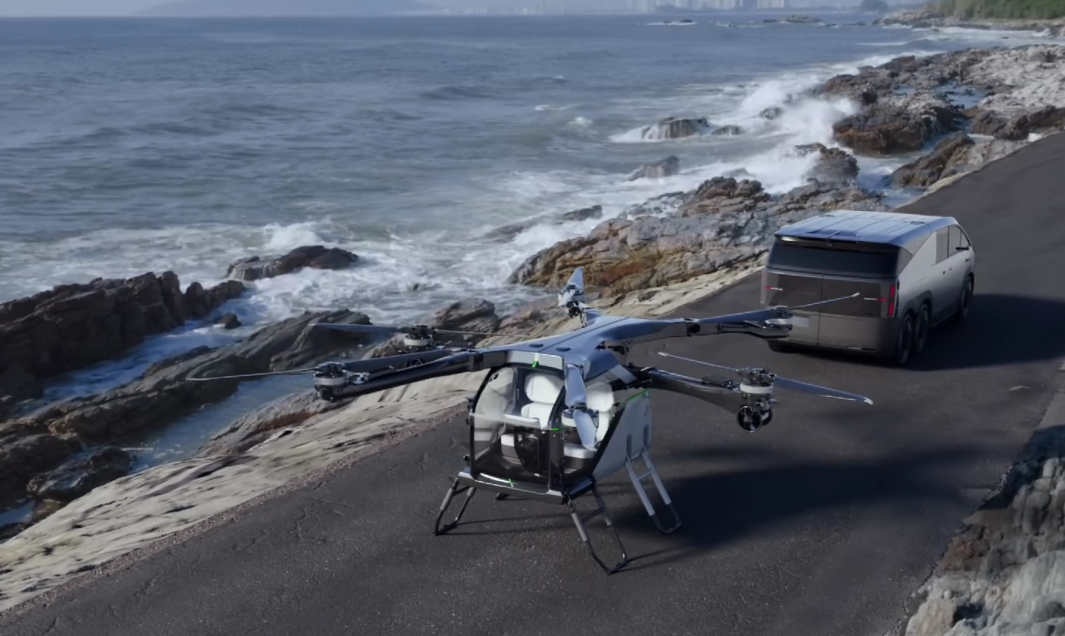
Image Caption: XPeng Aeroht
In June 2025, Gotion announced a strategic partnership with EHang. This collaboration marks an upgrade to the power system framework agreement signed by both parties in December 2023. Building on their earlier cooperation, the two will focus on upgrading the power systems for EHang’s flagship EH216 series of autonomous eVTOLs, with plans to deepen collaboration across multiple aircraft models in the future.
Behind these choices lies a reality of supply chain management for eVTOL OEMs: the aviation-grade supplier ecosystem is not yet mature, forcing manufacturers to deeply participate in—or even lead—the technical breakthroughs required for core components.
In a sense, the maturity of the eVTOL supply chain directly determines how long it will take the industry to move from "getting airborne" to "staying airborne."
Finding the "Decisive Note" of Commercialization
If technical validation is the leap from zero to one, commercial implementation is the journey from one to a hundred. And the key to that journey isn’t how high you fly, but whether you can close the loop in a specific use case.
When choosing commercial scenarios, mainstream domestic eVTOL manufacturers show both consensus and divergence.
AutoFlight’s current orders are concentrated in aerial logistics, covering offshore platform transport, island scenarios, and mountainous low-altitude transport. Additionally, AutoFlight is actively expanding into other applications, including regional logistics, emergency rescue, and inter-city travel.
Xie’s judgment on which scenarios will scale first is clear: "For cargo, it should be aerial logistics; for passengers, it should be low-altitude tourism."
理由是:这两类是目前面向大众、培育市场的关键入口,也是积累多样化运营经验的重要场景。
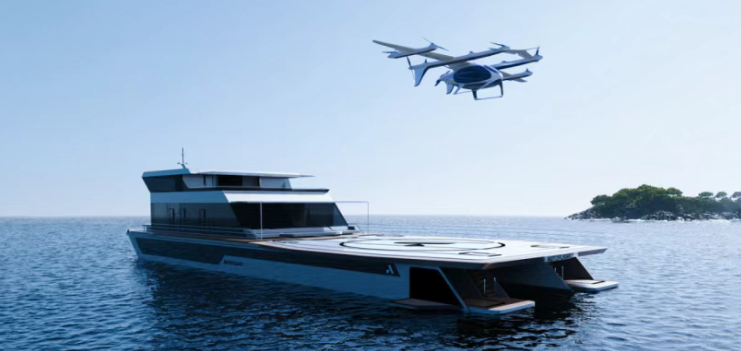
Image Caption: AutoFlight
The facts bear this out. Currently, multiple domestic eVTOL manufacturers are focusing heavily on these two areas.
In December 2025, Zero-G Aircraft signed a procurement agreement with Zhongchuang Aoxiang, landing an order for 66 units across the RX1E-A, RX1E-S, and ZG-ONE "Magpie" models. The partnership aims to advance the large-scale application of green aviation products in tourism scenarios.
In November 2025, Shenzhou Rental signed a formal strategic cooperation agreement with Volant, a leader in the low-altitude mobility sector. According to the agreement, Shenzhou Rental will leverage its deep experience in tourism scenarios to develop integrated solutions for users that combine "ground car rental + air commuting/sightseeing."
While these companies have different focal points, their underlying logic is consistent: first, close the commercial loop in one scenario, then replicate it horizontally.
Regarding mass production plans, Xie offers a clear benchmark: "The threshold for achieving mass production of an eVTOL model is at least several hundred units."
He also emphasizes that breaking this barrier requires two core prerequisites. First, the commercial loop in application scenarios must be completed first—running the full chain from technical validation to normalized operations, and finally to positive cash flow, thereby proving the sustainability of the business model. Second, the entire eVTOL industrial ecosystem must be built in parallel, covering infrastructure such as takeoff and landing networks, air traffic management systems, maintenance support, and airworthiness standards, as well as the complete commercial loop from user education to market demand cultivation.
A domestic eVTOL manufacturer told Gasgoo that between 2025 and 2027, its first-generation products will complete R&D and successively finish airworthiness certification. From 2027 to 2030, it expects to launch commercial trial operations on fixed point-to-point inter-city routes. After 2030, it anticipates entering the stage of normalized operations.
The Sky Remains, but Fewer Companies Will Be Able to Afford It
From the "concept sprint" to the "airworthiness race," and from the "configuration debate" to the "commercial verdict," China’s eVTOL industry is undergoing a profound evolution.
As representatives of two distinct technological paths, AutoFlight and WoFei have forged different development trajectories. Yet, their endpoints point in the same direction: finding a commercial loop in the trillion-dollar blue ocean of the low-altitude economy that is safe, economical, and scalable.
As one industry insider put it: "The low-altitude economy is not a sprint; it is a marathon. Once the tailwind fades, the sky will still be there—but fewer companies will be able to reach it."
In the spring of 2026, the starting gun for the first leg of this marathon has already fired. Whoever is first to cross the double finish line of airworthiness certification and commercialization stands to claim the most advantageous flight paths in the skies of the future.