



Gasgoo Munich-Gasgoo reports that March marked a watershed moment for the German auto industry: monthly registrations of pure electric vehicles surpassed traditional gasoline cars for the first time.
Data released by the Federal Motor Transport Authority on April 7 shows pure electric vehicle registrations hit 70,663 in March — a 66.2% surge that became the primary engine for market growth. By contrast, traditional internal combustion engine sales remain under pressure. Gasoline car registrations slipped 4.9% to 66,959 units, while diesel registrations edged down 0.6%.
Amidst these diverging trends, the tipping point for Germany's auto market electrification is set.
This structural shift stands out against the backdrop of a broader market recovery. In March, pure electric vehicles overtook gasoline cars in Germany.
New energy vehicles have emerged as the core engine driving growth, while traditional fuel-powered vehicles retreat in the face of intensifying competition.
What forces fueled this "historic overtaking," and what deeper shifts in the German and global automotive landscape does it signal?
Analysts point to rising international energy prices driven by recent tensions in the Middle East, alongside Berlin's support policies for new energy vehicles, as key factors.
Soaring Oil Prices and Policy Incentives: A Dual Boost for EVs
Two key drivers deserve credit for the explosion in pure electric vehicle sales.
First is the surge in energy prices triggered by geopolitical factors. Escalating tensions in the Middle East have pushed global oil prices higher, while disrupted shipping through the Strait of Hormuz has intensified market anxiety.
Soaring fuel costs may be pushing more German consumers to rethink their mobility options.
Even more decisive is the strong support from policymakers.
The German Environment Ministry announced a 3 billion euro subsidy program aimed at private consumers. It applies to pure electric vehicles, certain plug-in hybrids, and range-extended electric vehicles registered from January 1, 2026.
Under government tiered criteria based on vehicle type, household size, and income, subsidies range from 1,500 to 6,000 euros. The available funds are expected to support the purchase or leasing of roughly 800,000 new vehicles.
German Environment Minister Carsten Schneider noted that the new support plan will be retroactive to the start of this year and run through 2029. It aims to strengthen German and European industry without regional restrictions. "We will not take any restrictive measures in the face of competition," he added.
For German consumers, high fuel prices and purchase subsidies create a dual economic incentive: the more you drive a combustion car, the more expensive it gets, while buying an electric vehicle becomes increasingly economical.
This is undoubtedly the most direct explanation for why pure electric vehicle sales surpassed gasoline cars in March.
From the Old World to the New: The German Auto Industry's Painful Pivot
If oil prices and subsidies were the trigger that ignited the market, the structural transformation of the German automotive industry is the deeper logic behind this shift.
The German Association of the Automotive Industry (VDA) forecasts that stimulated by the new subsidy policy, electric vehicle registrations in Germany will climb 17% year-on-year in 2026, approaching 1 million units.
Yet, electrification in Germany is far from a smooth ride. Long-standing constraints — including insufficient charging infrastructure and high electricity prices — persist and could threaten the sustainable development of the electric vehicle sector.
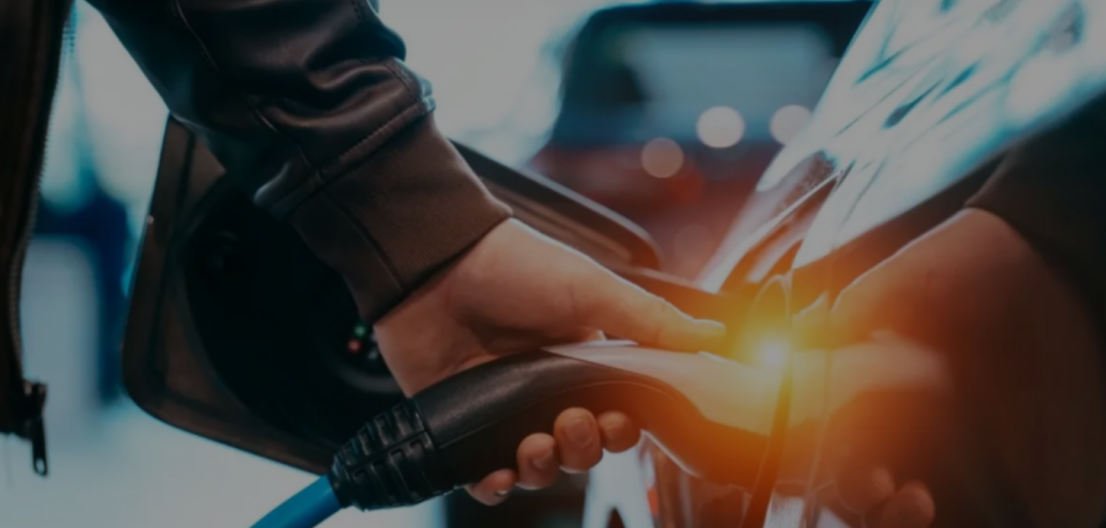
Image Source: German Association of the Automotive Industry
But one thing is indisputable: pure electric vehicles surpassing gasoline cars marks an irreversible changing of the guard in the German auto market.
Electrification is no longer just a vision outlined in policy documents; it is becoming a reality in every German consumer's purchasing decision.
The March overtaking is more than a monthly statistical milestone; it is an annotation of a new era.
Propelled by high oil prices and catalyzed by policy incentives, the purchasing choices of German consumers are undergoing a fundamental shift.
For the birthplace of the automotive industry, this serves as proof of phased success in the electric transition — and a sign that even fiercer global competition is just beginning to unfold.


