



Gasgoo Munich- "What era are we in? Why are brands still slapping labels on female users?" That was the sentiment yesterday when photos from XPENG’s second-generation VLA experience day hit the company chat. Many colleagues expressed offense at the phrase "whether moms love to drive it."
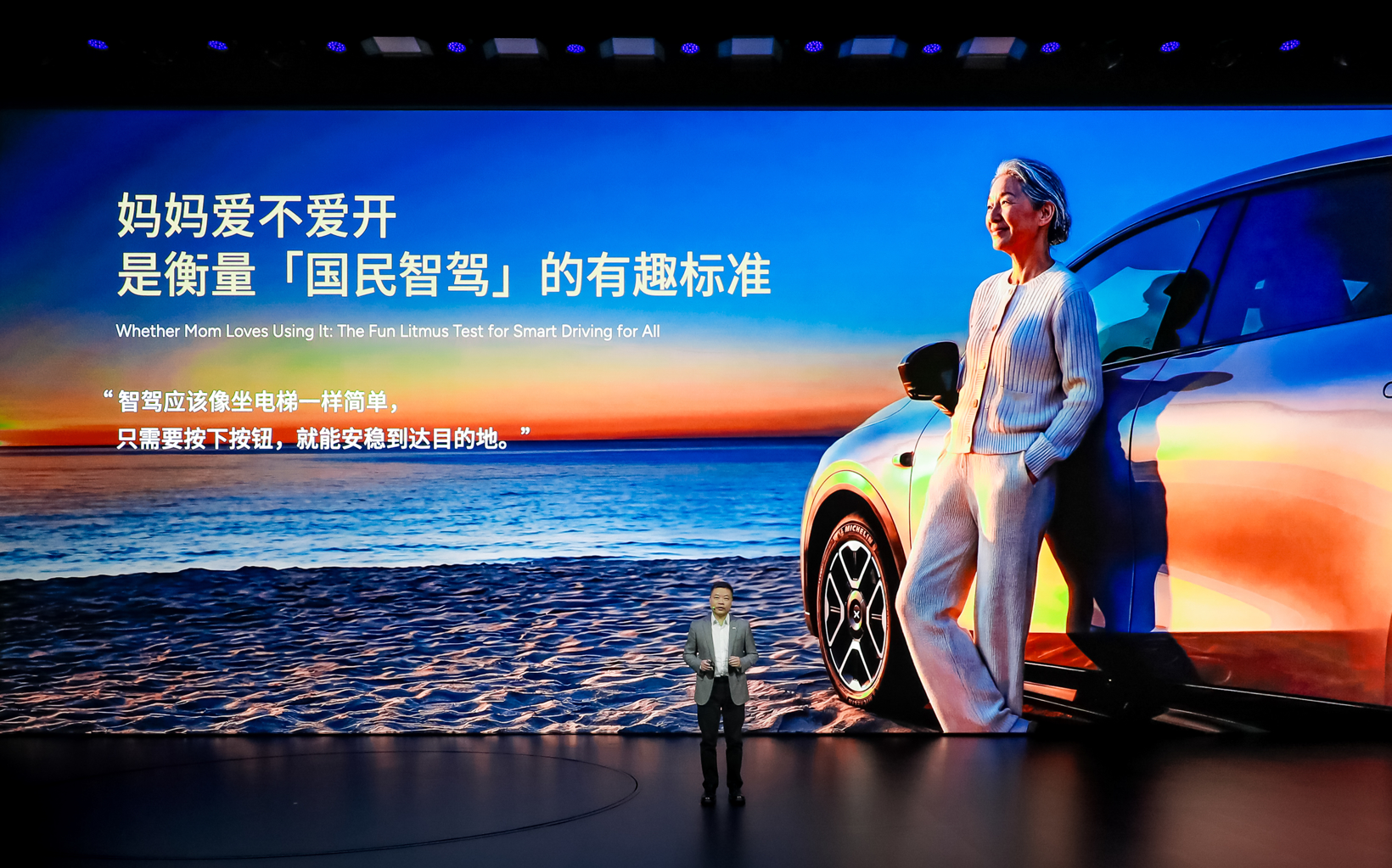
Image source: XPENG
XPENG Chairman He Xiaopeng sparked controversy at the launch event, arguing that a system can only be called "national smart driving" if "moms love to drive it." The remark quickly sent ripples through industry groups and social media.
As the race for intelligent driving enters the deep end, rivals are still locked in a battle over computing power, specs, and takeover mileage. So why is XPENG defining its technology with a label that feels grounded in daily life yet strikes some as "politically incorrect"?
This is far more than a marketing slogan; it reflects XPENG’s strategic anxiety and deep deliberation at a crossroads for smart driving adoption. To understand the true risks and opportunities of this move, we must first look back at the cautionary tales of those who crashed and burned on the path of "female exclusivity."
The Illusion of the "She Economy"
Plenty of brands have already learned painful lessons by building castles out of pink.
In the history of Chinese automotive marketing, few brands have tied their fate so decisively to the word "women" as ORA once did.
In late 2018, Great Wall Motor officially launched ORA, an independent new energy vehicle brand, at its Haval Technical Center in Baoding. As Great Wall's fourth brand—following the parent company, Haval, and Wey—ORA marked the automaker's first systematic foray into the new energy sector. Initially, Great Wall positioned ORA to capture the market for boutique electric vehicles under 100,000 yuan, targeting the mobility needs of urban youth.
The first pivot came months later. In early 2019, news broke that ORA was about to launch a "Goddess Edition" of the R1. Great Wall executives took to social media to announce the car, explicitly labeling it a vehicle exclusively for women.
The word "exclusive" carries an inherent sense of "othering." Global boutique players like MINI and Smart, despite their success, never dared to market themselves as female-only. When Great Wall introduced this concept to the auto sector, the industry shock was predictable. After launching female-exclusive products, ORA seemed to unlock a new level in the "she economy," gradually shifting the entire brand toward a female-exclusive identity.
As the writer Sanmao once said, "If you bloom, the butterflies will come." By 2021, ORA was loudly proclaiming its ambition to become "the world’s favorite car brand for women," declaring it aimed to "please Chinese female drivers." A massive "pink campaign" followed. At auto shows, ORA often built its booth into a pink "princess castle." Model names shifted from cold codes to the Good Cat, Ballet Cat, and Lightning Cat. Interiors were fitted with makeup mirrors and crystal shelves. Even the color palette leaned on Morandi tones, using a strategy of "seduction by color" to tap into female demand.
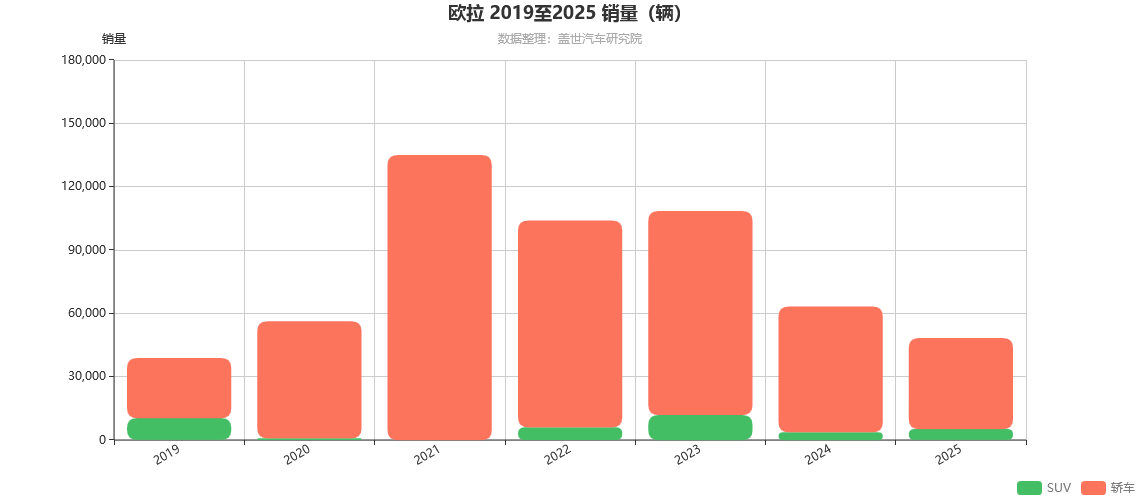
The strategy worked—at first. In 2021, ORA’s sales surged, surpassing 130,000 units for the year, with women making up the vast majority of buyers. Executives at launch events even excitedly ranked men’s status below that of pet dogs. The industry seemed to see infinite potential in the "she economy." Imitators flooded in, launching "Witch Editions" and "Goddess Editions." Colors had to be pink or mint green; interiors needed slots for high heels; some models even came with a makeup table in the trunk.
Yet, the collapse of this pink feast came faster than expected.
By 2023, ORA’s annual sales began to stagnate. Entering 2024, they plunged, and by 2025, volumes had fallen to fewer than 50,000 units.
Data source: Gasgoo Industry Big Data Platform
Even more telling is that those copycat models claiming to be "female exclusive"—aimed to "please women and reassure men"—mostly didn’t survive a year. Some sold only a few dozen units a month.
By mid-2025, ORA pivoted again, emphasizing the mainstream market and downplaying its female-exclusive features. This marked the failure of a nearly four-year experiment. By late 2025, Great Wall launched the ORA 5, using the occasion to declare a comprehensive brand upgrade. The signal was clear: ORA was trying to transform from a disruptor relying on niche design into a mainstream competitor leveraging global platform technology.
Why did a strategy designed to please women end up alienating them? The answer lies in ignored user feedback. "Stop talking about sun protection and storage at every launch. Women aren’t clueless; they pay for performance too." The deeper issue is that the industry’s version of "female exclusive" essentially viewed women as consumers who "don’t understand cars and only care about looks," attempting to harvest a "pink tax"—slapping a "female" label on the same product to sell it at a premium.
This stereotype ignores a basic fact: women prioritize safety, running costs, and comfort just as much as men do. Ironically, the models that actually attract female drivers rarely use the term "female exclusive" in their marketing, yet they still secure large shares of female buyers.
ORA’s failure offers a profound lesson for the industry: the steering wheel should have no gender. Any attempt to define complex users with simple labels will eventually be corrected by the market. Female consumers don’t need pink stereotypes; they need to be respected as knowledgeable buyers who know how to choose a car.
From "Pink Filter" to "Smart Hardcore": Will It Be Different This Time?
Viewing XPENG’s "mom standard" through the lens of ORA’s case study reveals that while they point to different core values, the fundamental problem remains the same.
ORA’s "female exclusivity" defined user identity—a market segmentation strategy. XPENG’s "mom standard" defines technical experience—a usability benchmark. One asks, "Who is our user?" The other asks, "Is our tech good enough?" Yet, if we peel back the layer of technical experience and examine the phrase "whether moms love to drive it" through the lens of communications and social psychology, it remains trapped in the essential dilemma of gender labeling.
Labeling, at its core, isn’t about the specific word used; it’s about reducing a group to a single, stereotypical role and using that simplified definition to frame, interpret, or replace the group’s complexity. By this definition, XPENG’s "mom standard" and ORA’s "pink makeup mirror" share the same underlying logic.
ORA’s labeling was explicit and crude. It used visual and auditory symbols like pink, makeup mirrors, and "meowing" to build a cognitive framework of "female exclusivity," telling consumers: *If you are a woman, this is the car you should like.* The problem was that it reduced women to "a gender that likes cute things," ignoring aesthetic differences and diverse needs. Feedback like "It looks like a cartoon car, the kind you drive for kids" reflected a desire not to be treated as a vulnerable group needing special care, but as consumers with independent judgment.
XPENG’s "mom standard" is a more implicit, refined form of labeling. It doesn’t use pink or mirrors; instead, it uses the identity symbol "mom" to build a technical evaluation framework centered on "reassurance and ease of use." On the surface, this looks like respect—women are no longer princesses surrounded by pink, but guardians of family travel and judges of technical experience. But when we dissect the function of "mom" in this context, we find it still reduces women to a single identity tied to family responsibility.
Why "mom" and not "dad"? Why "whether moms love to drive it" and not "whether the family loves it" or "whether beginners love to drive it"? The choice itself implies a presumption—or at least invites one. In this framework, does "mom" represent the group unfamiliar with driving, sensitive to risk, and most in need of protection? Is that presumption really more progressive than "women like pink"? Or does it simply swap gender characteristics for family roles, and the stereotype of "technophobe" for "looks-obsessed"? Essentially, it still places women in a position needing special care—only now the care takes the form of simpler smart driving rather than a makeup mirror.
This presumption suffers from cognitive bias on several levels. First, it assumes women—especially mothers—naturally lack confidence and skill in driving. In reality, the number of female drivers in China is growing rapidly. Second, it equates "mom" with "technophobe," ignoring the vast number of women who are tech enthusiasts or have professional judgment regarding smart features. Third, in a sphere where family members should share responsibility, it once again anchors women as the primary bearer. Why is mom the judge of whether smart driving is good? Doesn’t dad’s opinion matter? This rhetoric inadvertently reinforces the traditional division of labor where mothers dominate parenting and family travel.
Industry experts point out that when you say "built for women," you are using gender to draw a line, naturally excluding the other half of users. XPENG’s "mom standard" sounds milder, but it still distinguishes by gender and family role. It doesn’t say "sold only to moms," but it elevates the single role of "mom" to the ultimate arbiter of smart driving experience—a labeling operation in the eyes of communication theory.
In terms of social feedback, the sensitivity of this approach has already been captured—at least among the women we know. Discussions about XPENG’s launch have included voices saying they felt offended by the phrase "whether moms love to drive it." This sense of offense is not baseless; it stems from consumers’ increasing vigilance against being labeled.
Having learned from past industry "lessons," female consumers are now more sensitive to any marketing that plays the gender card. They are no longer satisfied with being treated as a special group to be placated; they demand to be treated as normal consumers with independent judgment. This psychological shift is something XPENG must confront when pushing the "mom standard."
A deeper problem arises when XPENG uses "whether moms love to drive it" as the yardstick for smart driving. It effectively uses "the group least sensitive to technology" as the measure of usability. The logic itself holds—good tech should be easy for non-techies to use. But when that "least sensitive group" is embodied by "mom," the issue emerges: Why is the representative of "least sensitive" female? Why is the embodiment of "tech fear" a mother? This risks being interpreted as implicit gender bias.
Therefore, even if the technical experience is excellent, XPENG needs to be wary of the cognitive risks inherent in labeling itself. In this sense, XPENG’s "mom standard" is both a brave attempt and a dangerous probe. So, let’s take a closer look at exactly what this "mom standard" entails.
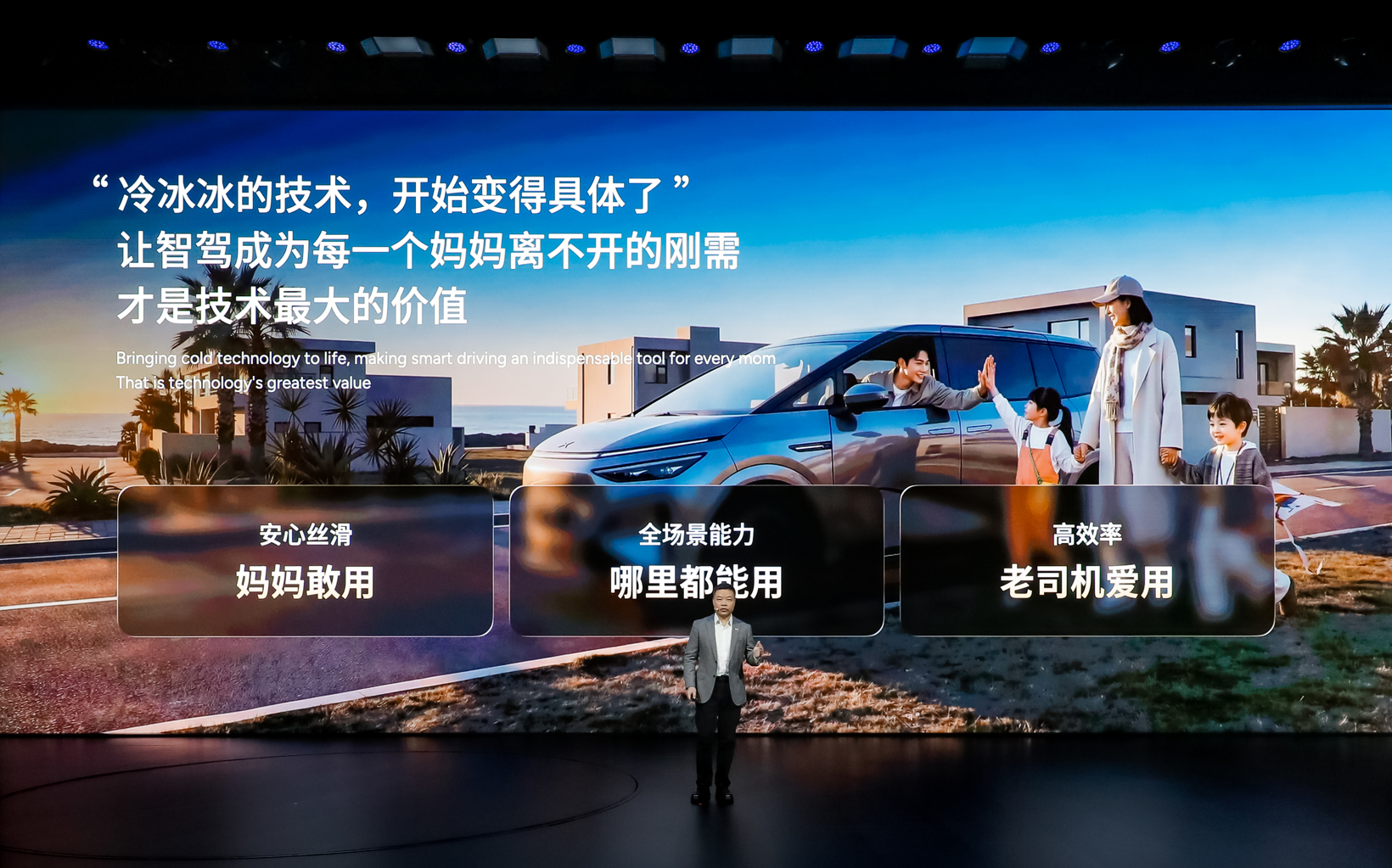
Image source: XPENG
How Strong Is the Second-Generation VLA?
In official materials provided by XPENG, the core obstacle to smart driving adoption is summarized as the "psychological safety valve." Issues like failing to slow down in congestion 200 meters ahead, inexplicable acceleration or sudden hard braking, stopping dead during narrow road encounters, or failing to create distance when driving alongside large trucks—these are reasons users "don’t use smart driving." It’s not that the tech can’t get from A to B; it’s that the system lacks a "sense of propriety" and "foresight," leaving users tense at every interaction.
He Xiaopeng offered a pithy metaphor: good smart driving should be like taking an elevator—press the button, and you arrive safely at your destination.
Before the release of the second-generation VLA, the industry stood at a subtle watershed. End-to-end small models had hit their capability ceiling; facing complex long-tail scenarios, traditional smart driving often felt mechanical, failing to anticipate, control speed reasonably, or yield politely. XPENG’s new second-generation VLA (Visual-Language-Action model) represents a breakthrough not in simple parameter stacking, but in the reconstruction of the model paradigm itself.
According to the official introduction, the core technical breakthrough of the second-generation VLA is solving this very "insecurity." As a native multimodal physical world model, it possesses deep logical reasoning capabilities about the physical world: it can identify pedestrians in dark clothing earlier thanks to perception that surpasses the human eye, and it can use physical logic to infer the spatial occupation of unseen debris or accident fragments, enabling safe detours. XPENG even developed a tool called "Sa-le-me" to generate a comfort score for every trip, turning previously subjective feelings of jerkiness or anxiety into objective data.
From this perspective, XPENG has indeed raised the bar for technical experience—demanding the system possess human-like propriety and warmth, freeing users from the tension of constant takeovers.
These technical details point to a core shift: the criteria for judging smart driving are moving from the binary logic of "can it drive" to the continuous experience evaluation of "does it drive well." XPENG developed the "Sa-le-me" tool precisely to quantify the previously subjective feelings of jerkiness and anxiety. The goal is clear: XPENG is shifting its R&D perspective from an engineer’s mindset to a user’s mindset, moving from pursuing technical limits to pursuing physical comfort.
This is certainly an expression of confidence—confidence that technical maturity is sufficient for downward compatibility. He Xiaopeng stated bluntly at the launch: "The second-generation VLA is the first version designed for fully autonomous driving. It will iterate at a speed XPENG has never seen before. Fully autonomous driving will arrive within the next one to three years and become a true daily habit."
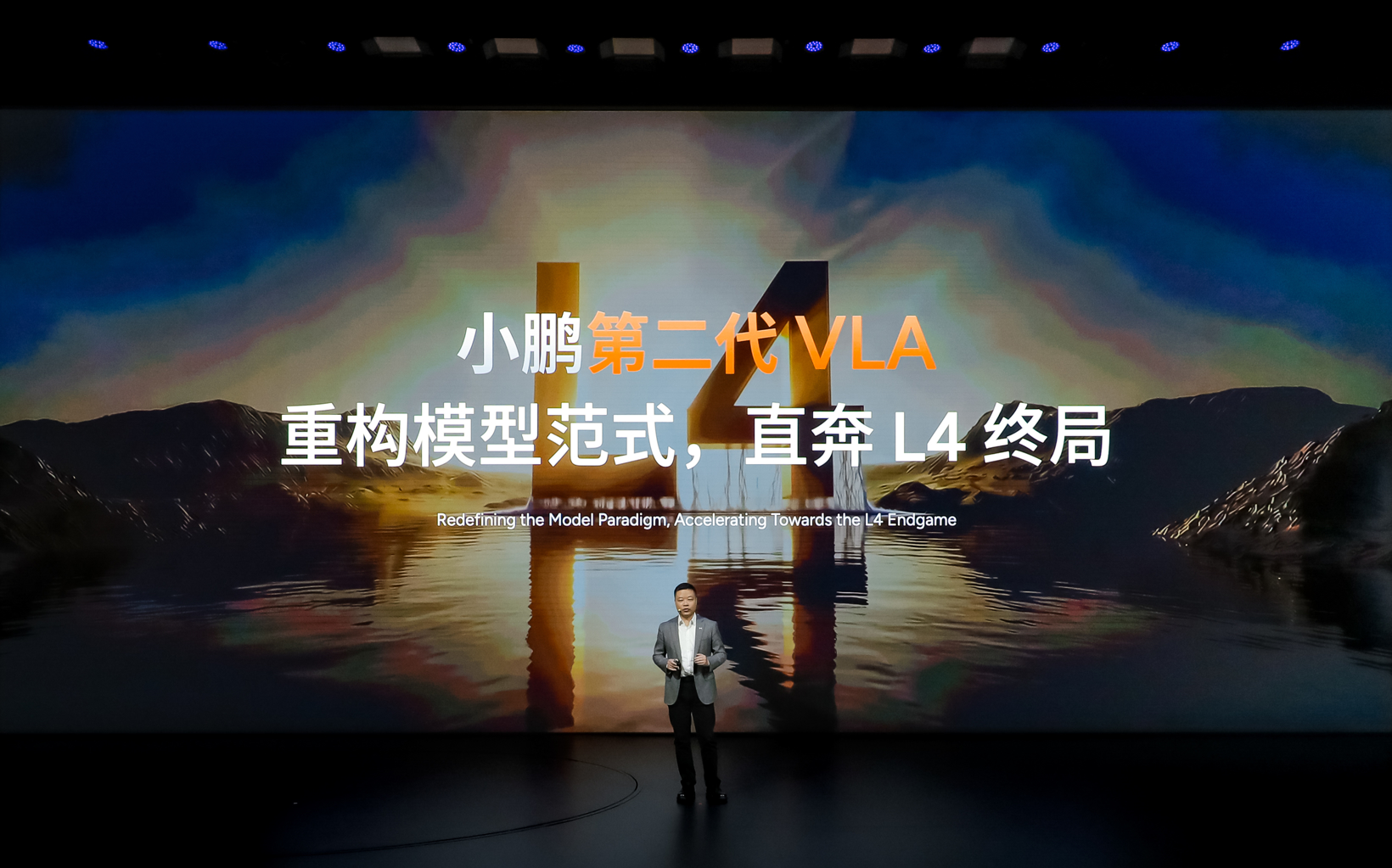
Image source: XPENG
Yet, returning to the marketing layer, it must be said that despite the self-consistent technical logic, the word "mom" remains sensitive in today’s public opinion climate.
Conclusion:
The release of XPENG’s second-generation VLA marks a turning point in China’s intelligent driving race. The competition has officially moved from the first half—defined by hardware arms races and parameter wars—to the second half, defined by experience shaping technology and the battle for user mindshare.
XPENG chose to use the controversial yet relatable standard of "whether moms love to drive it" to measure smart driving quality. This is both an open strategy based on confidence in VLA technology and a precise strike at the family user market.
Yet, the warning signs are clear. The "female-exclusive" castles built of pink and makeup mirrors were eventually pushed down by the very users they sought to please. This serves as a profound warning to any brand attempting to play the "gender card."
Only when smart driving systems cross the threshold of "reassurance," allowing even the least familiar drivers to use them with ease, will the L4 future truly have a mass foundation for adoption. True success doesn’t lie in shouting the loudest labels. It lies in the moment a user closes the door, engages the system, and sincerely exclaims, "This car drives really well"—whether they are a mother, father, son, or daughter.


