



Gasgoo Munich- On March 16, Leapmotor released its full-year financial report for 2025.
The figures show the company delivered 596,555 new vehicles over the past year, doubling sales for the second consecutive year and topping the charts among domestic new-energy startups. Net profit stood at 540 million yuan, marking its first full-year profit and making it only the second Chinese startup to achieve this milestone after Li Auto. Revenue climbed to 64.73 billion yuan — a 101.3% jump — while the gross margin hit 14.4%, an annual high.
By the end of 2025, Leapmotor held 37.88 billion yuan in cash, while maintaining positive operating and free cash flow.
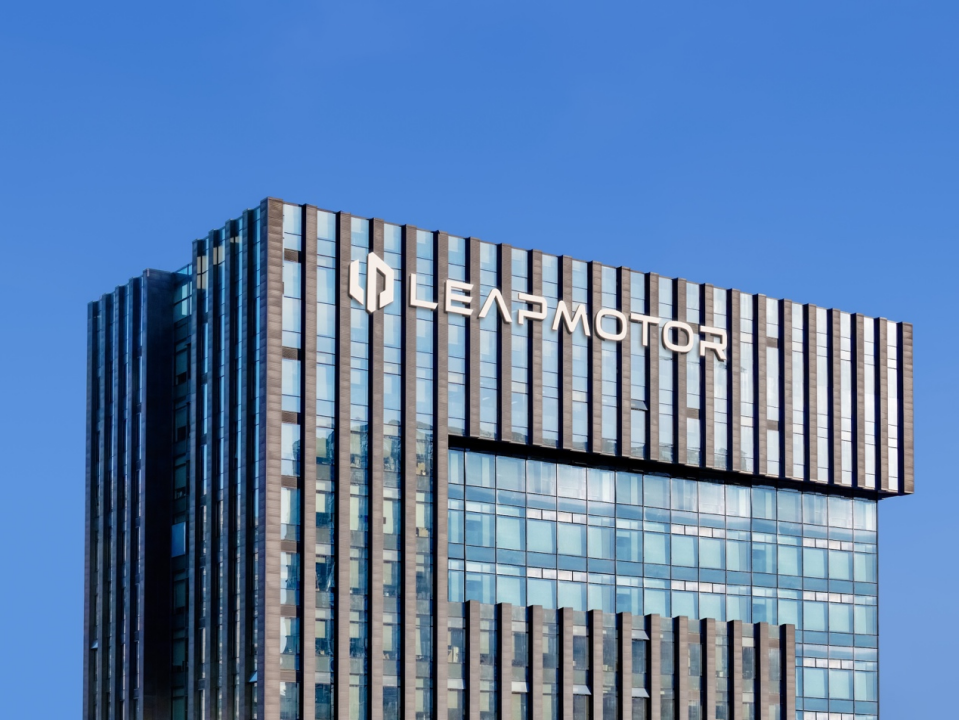
Image Source: Leapmotor
The report reflects a shift in Leapmotor's operations. Startups have long struggled to balance expansion with profitability, but Leapmotor's full-year profit suggests its scale is finally translating into financial returns.
The rise in gross margin is also noteworthy. At 14.4%, the annual figure not only beat last year but also signaled improvements in pricing, cost control, and supply chain management. Moreover, with nearly 38 billion yuan on hand and positive cash flow, Leapmotor has built a war chest for future R&D, capacity expansion, and overseas growth.
Product Launches Drive Sales Growth
According to the report, Leapmotor's 2025 performance growth was directly tied to a barrage of new product launches.
Over the past year, Leapmotor's lineup underwent its largest overhaul since inception. The B platform launched three new models: the B10, B01, and Lafa5. Three SUVs on the C platform were refreshed, while the A10 from the A platform and the D19 and D99 from the D platform made their debuts. Spanning A-segment to D-segment, and from SUVs to MPVs, Leapmotor's matrix covered more niches within a single year.
This launch pace directly drove retail sales and gave Leapmotor more flagship models across various price bands.
Behind the improved product strength lies the continuous iteration of technical architecture. In March 2025, Leapmotor unveiled the LEAP 3.5 architecture. Built on a central domain controller, it upgraded core systems including autonomous driving, smart cockpit, electric drive, battery, thermal management, and chassis. The C-series EVs now feature an 800V high-voltage platform across the lineup, placing their charging efficiency and energy consumption among the industry's best.

Image Source: Leapmotor
At the D platform tech launch, Leapmotor detailed core metrics. These figures reflect its long-standing strategy of full-domain self-development: 65% of core components are developed and made in-house. This gives the company greater autonomy in product definition and cost control.
Looking to 2026, Leapmotor has clarified its new car plans. The A10, the first model on the A platform, is set to launch on March 26. Positioned as a smart, long-range SUV, it will offer over 500 km of CLTC range, an 8650 autonomous driving chip, and an 8295 smart cockpit chip, supporting door-to-door smart driving functions.
The D19, a tech-focused luxury flagship SUV on the D platform, is slated for an April launch, targeting the 300,000-yuan full-size SUV segment. The D99 enters the MPV race and will hit the market later. Both D platform models will feature an 80.3 kWh battery for 500 km of EV range, a 115 kWh super hybrid cell, a full-stack 1,000V electric system, dual 8797 chips delivering 1,280 TOPS of computing power, and VLA autonomous driving with edge-based large-model cockpit technology.
Overseas Operations Already Turning a Profit
As Chinese EV makers expand overseas, Leapmotor is pushing its global footprint. In 2025, exports reached 67,052 units, ranking first among domestic startups. By the end of February 2026, cumulative exports topped 100,000 units. Across 29 European markets, Leapmotor's EV sales ranked among the top three Chinese passenger car brands, rising to second place in the fourth quarter.
This success stems largely from the channel synergy of Leapmotor International, a joint venture with Stellantis formed in 2024. Leveraging Stellantis' global sales network, Leapmotor entered about 40 international markets, including Europe, the Middle East, Africa, South America, and the Asia-Pacific. By the end of 2025, Leapmotor International had established roughly 900 outlets overseas combining sales and service, with over 800 in Europe.
Overseas markets are now contributing not just sales volume, but profit. In 2025, just its second year, Leapmotor International turned an annual profit. This proves Leapmotor's products and technology are gaining acceptance abroad and possess commercial sustainability.
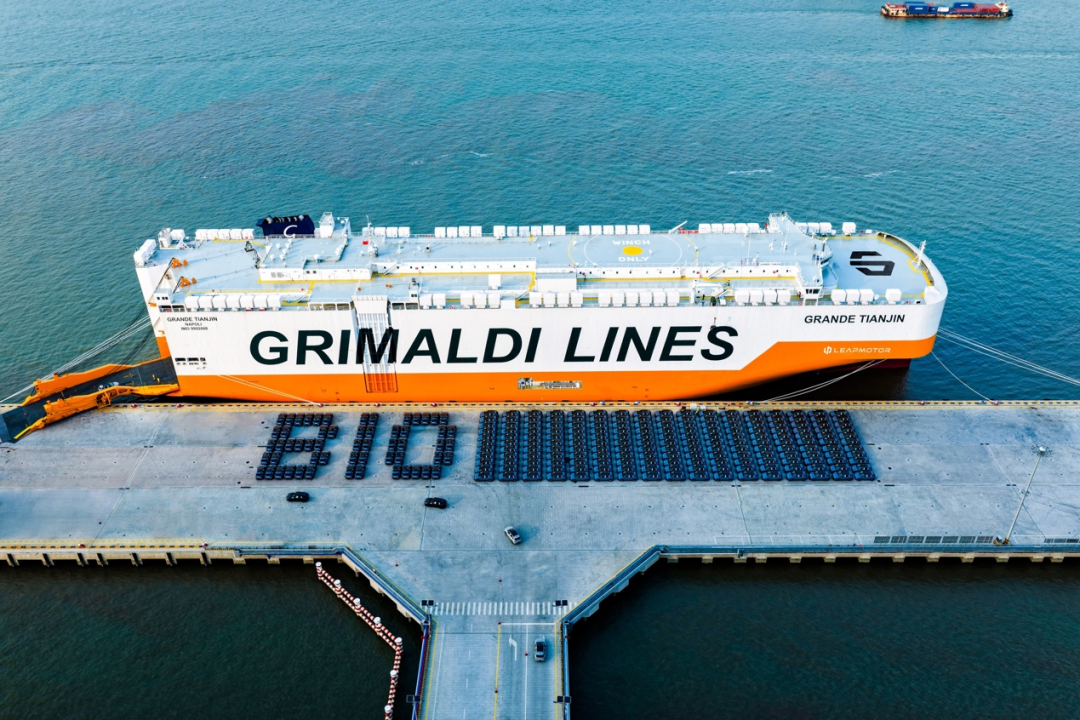
Image Source: Leapmotor
Regionally, South America became a key breakthrough for Leapmotor in 2025. The C10 and B10 launched officially in Brazil, where store count surpassed 30. An appearance at the São Paulo Auto Show marked the brand's entry into the region. In Europe, the A10's debut at the Brussels Motor Show in January 2026 has already drawn interest from local media and consumers.
More notably, Leapmotor is advancing localized production overseas. The CKD project in Spain has been approved, with plans to introduce the B10 and B05 models.
The B10 has entered the OTS (Off-Tooling Sample) phase for local production, with the first prototype already rolled off the line; mass production is expected by October 2026. The B05 is slated to begin trial production in June 2026, with official production starting in 2027. A supporting battery factory has been selected and is now undergoing renovation, with the first battery pack trial set for April 2026 and mass production in July.
This "vehicle plus core components" export model will help Leapmotor navigate trade barriers, cut logistics costs, and integrate into local supply chains.
In Conclusion
Overall, Leapmotor's 2025 financial report signals that it has moved past its early growth stage and entered a phase prioritizing both scale and profit. The full-year profit, improved gross margins, and positive cash flow cycle all point to a maturing business model. At the same time, the 2026 launch pipeline and the progress of overseas localized production provide new growth engines for the company's future.
Of course, competition in the EV industry is far from over. The price war at home persists, regulatory risks abroad remain, and the pace of technological innovation hasn't slowed. How to optimize profitability while maintaining scale, how to balance investment and risk during global expansion, and how to stay ahead in R&D are challenges Leapmotor's management must still face.


