Gasgoo Munich- Lotus Sports Cars unveiled its first super hybrid model, the For Me, at a global technology launch in March 2026. It is set to hit the Chinese market by the end of the month, followed by a European launch in mid-year, before gradually expanding to North America, the Middle East, and the Asia-Pacific region.
In an era obsessed with six-seaters and interiors packed with refrigerators, TVs, and plush sofas, this "super SUV"—marketed as "born for those who love themselves"—stands out. Its arrival not only completes Lotus's powertrain portfolio but also reflects the strategic trade-offs of this 78-year-old British marque operating within the Geely ecosystem.
Lotus For Me: The Advance and the Retreat
On paper, the For Me boasts eye-catching performance specs. Built on Lotus's new "Luyao Super Hybrid Architecture" (X-Hybrid), it utilizes a 900V high-voltage platform with a combined output of 952 horsepower, sprinting from 0 to 100 km/h in 3.3 seconds. Pure electric range is 420 km (CLTC), while total range exceeds 1,400 km. Even with just 10% battery charge, the 0-100 km/h dash remains possible in 3.5 seconds—a figure backed by a 150 kW high-power P1 generator that can replenish 25 kWh of electricity per hour while cruising at 120 km/h with a depleted battery.
Lotus Group CEO Feng Qingfeng named his competitors directly at the launch: the Lamborghini Urus and Ferrari Purosangue. The former's plug-in hybrid version maxes out at 789 horsepower, while the latter sells for nearly 5 million yuan. Lotus positions the For Me as “unmatched under 3 million yuan and ready to fight head-on above that,” aiming to carve out a niche in the million-yuan luxury SUV segment.
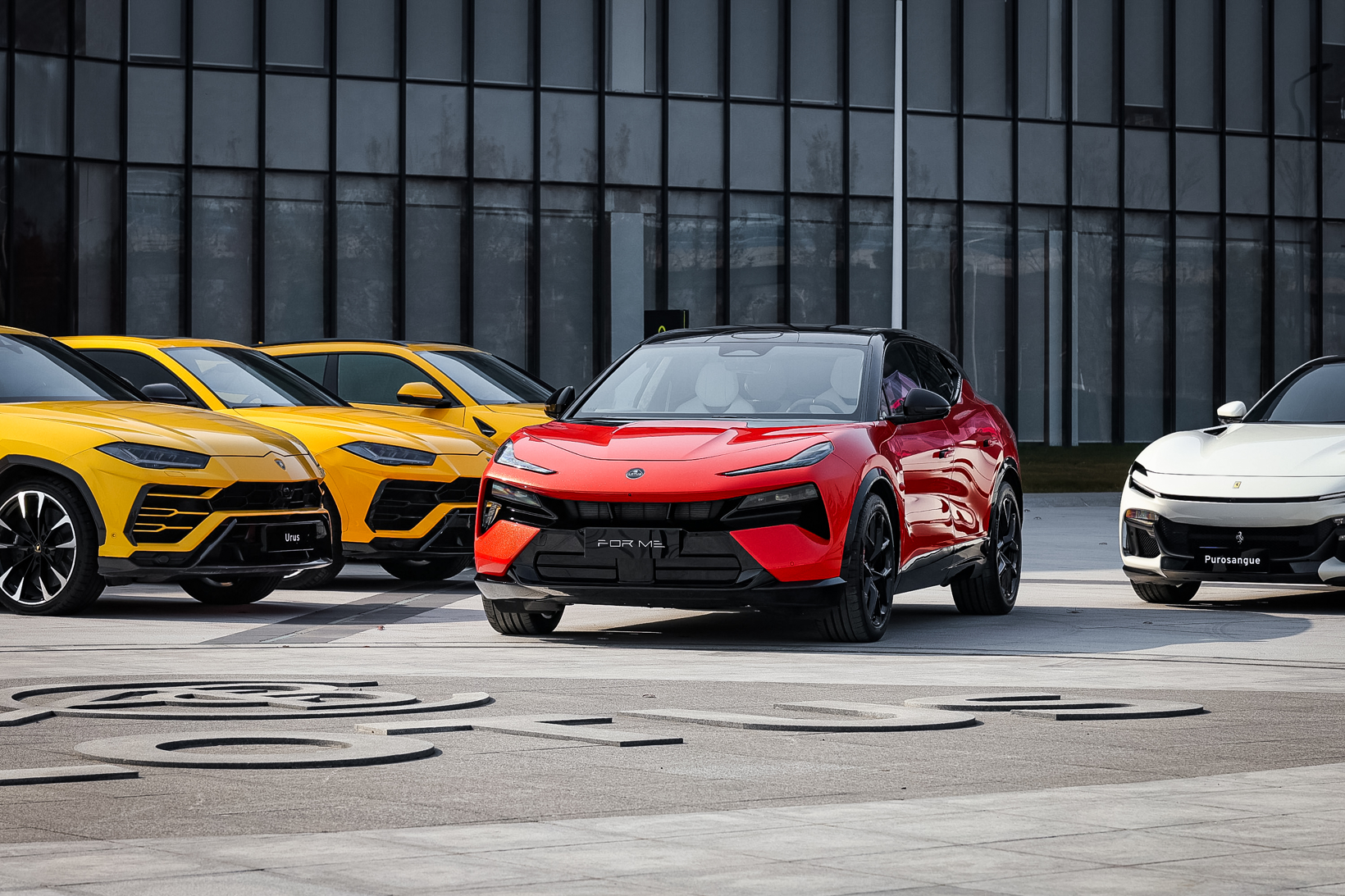
Image Source: Lotus Cars
The For Me slips into a gap market with few competitors. The current mainstream trend for large SUVs favors six-seaters designed for family and business use, where refrigerators and large screens are standard. Lotus chose a “differentiated” path—building for high-net-worth individuals who are hesitant about pure electrics but refuse to compromise on performance. “It's not that we can't build big, soft six-seaters,” Feng Qingfeng explained at a media event, “it's that we don't want to build a car that drives like a boat.” This highlights the unique technical route Lotus is taking in the performance-oriented SUV sector.
The reality facing this strategy is that the ultra-luxury SUV market is limited, though its structure is shifting. Lotus already holds a 30% share of China's ultra-luxury pure EV market above 500,000 yuan, providing a user base for its hybrid offering. The For Me launch aims to widen that audience. Feng admits that plug-in hybrids will help boost sales in markets where EV adoption is slower, while the car is also seen as a key tool for improving profitability. The “Luyao Golden Dual 900” plug-in hybrid technology underpinning the For Me offers competitive differentiation while controlling costs, helping lift gross margins and laying the groundwork for long-term profit.
On the product side, the For Me's technical spec sheet is squarely aimed at rivals like the Urus. Active stabilizer bars, Brembo six-piston calipers, and Pirelli LTS custom tires come standard. The official braking distance from 100 to 0 km/h is 33.9 meters, essentially on par with the Urus's 33 meters. With a width-to-height ratio of 1.24 and a windshield angle of 26 degrees, it continues the supercar proportions of the Evija.
In design, the For Me reflects Lotus's differentiated thinking in the details. For instance, its LiDAR uses a retractable, hidden design—deploying when needed and stowing away when not. “LiDAR units on the roof of new energy cars today are like a person wearing a bespoke suit with a camera stuck on their head,” Lotus Group CEO Feng Qingfeng quipped at the technical launch.
Beyond the specs, the For Me comes standard with handling hardware that traditional ultra-luxury brands either offer as options or lack entirely—all at a price point in the millions. This pricing strategy is viewed by the industry as a challenge to the established pricing system of traditional luxury cars.
Of course, the market challenges facing the For Me cannot be ignored. First is brand awareness. Despite 78 years of history, Lotus's public recognition still lags behind some ultra-luxury brands that have cultivated the Chinese market for decades. Furthermore, the competitive landscape in this price bracket is shifting: traditional ultra-luxury brands are accelerating their electrification, while domestic brands are moving upmarket, increasing the number of choices available in this segment.
What Game Is Lotus Playing?
With the release of the For Me, Lotus becomes the world's first top-tier sports brand to simultaneously offer internal combustion, pure electric, and super hybrid powertrains.
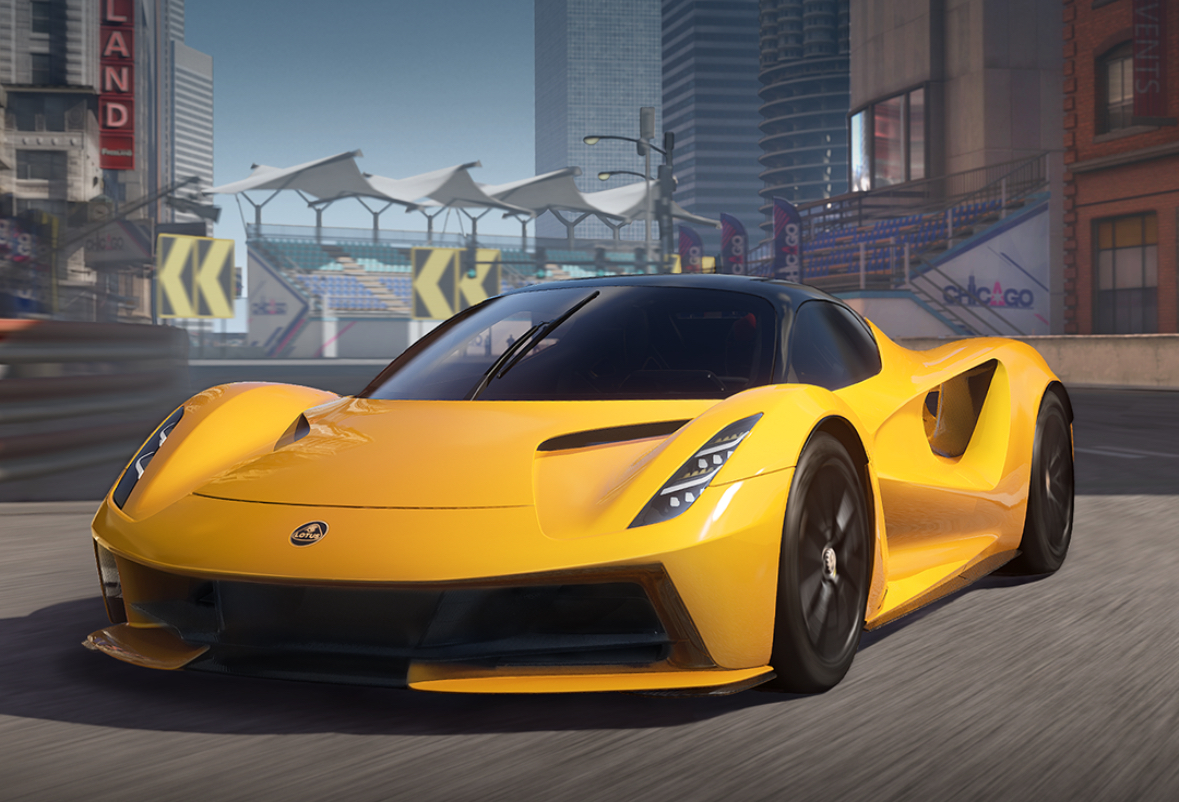
Image Source: Lotus Sports Cars
A look at Lotus's current product matrix reveals a clear hierarchy: the 2019 Evija hypercar serves as the brand's technological totem; the 2021 Emira sports caters to internal combustion nostalgia; the 2022 Eletre SUV and 2024 Emeya sedan form the core of its electric lineup; and the For Me completes the powertrain picture.
In terms of product rollout logic, Lotus has gone through two phases: the first focused on pure electrics, using the Evija to establish technical heights and the Eletre and Emeya for market validation; the second introduces the super hybrid For Me to round out the powertrain options. “The Lotus For Me is a milestone,” Feng Qingfeng said in an interview. “In the past, Lotus has made both fuel cars and pure electric cars.”
Another detail worth noting is that the For Me breaks with Lotus's tradition of “E” names. Feng Qingfeng explained the shift to media: “The past ‘E' names caused a lot of confusion—Eletre means ‘new life,' Emira means ‘beauty' or ‘flower' in Arabic, which many people found difficult to understand. Now, with For Me, we felt it was time for a change, and it makes it easier for everyone to understand and remember.” Clearly, the name change is driven by communication efficiency. On a deeper level, it reflects a shift in Lotus's brand communication strategy—from “meaning-based naming” driven by engineer thinking, to “scenario-based naming” driven by user thinking, aiming to lower the cognitive barrier for potential customers.
Financial reports show that in the third quarter of 2025, Lotus Sports Cars delivered 735 units in China, a year-on-year increase of 7.1%. Sales from January to September rose 11% year-on-year, contrasting with a 9.7% decline in domestic passenger vehicle sales above 400,000 yuan over the same period. In the first quarter of 2025, global deliveries reached 1,274 units, with revenue hitting $93 million and gross margins recovering to 12%.
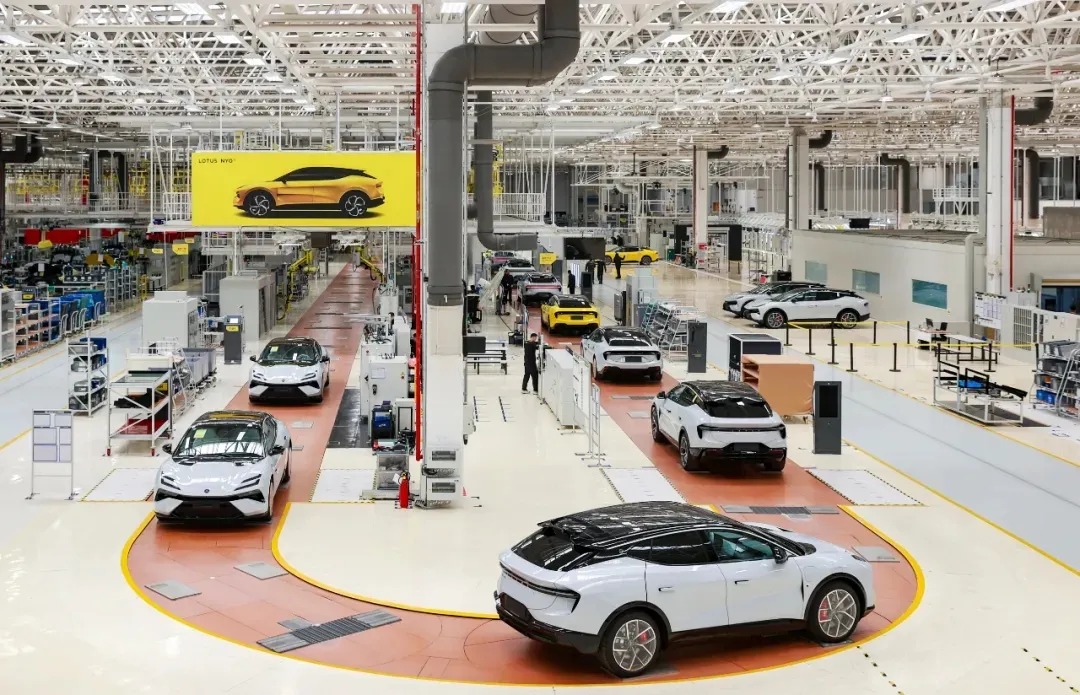
Image Source: Wuhan Economic Development Zone
Behind this counter-cyclical growth lies the critical support of the Wuhan Global Smart Factory's capacity and quality control. On February 27, 35 dealers and 58 investors from the UK, Germany, Italy, and other countries visited the facility. The factory has been in production for three years with an annual capacity of 150,000 units. Intelligence coverage reaches 95%, and four models can be produced on the same assembly line. This flexibility allows Lotus to adjust production ratios based on market demand, offering greater resilience against sales fluctuations. The plant's welding shop features 344 robots working in tandem, achieving 100% automation on the main welding line and rolling out a car every two minutes on average.
Currently, Lotus models produced in Wuhan are exported to over 40 countries and regions, including the UK, the brand's birthplace. In January of this year, Canada slashed import tariffs on Chinese new energy vehicles from 100% to 6.1%, opening space for Lotus to expand in North America. Many vehicles currently in production are being prepared for export to Canada.
Meanwhile, Lotus's financial metrics are improving. Lotus Technology's third-quarter 2025 report shows the company's gross margin rose to 8%, a significant increase from the previous year. Operating expenses for the quarter fell both year-on-year and quarter-on-quarter, with losses narrowing by 68% annually. On the funding front, the company secured $300 million in financing from ATW Partners in August 2025, alongside a credit line of up to 1.6 billion yuan from Geely Group. In December of the same year, ECARX invested $23 million in Lotus, with the two parties agreeing to deepen cooperation on smart cockpit technology.
On intelligent driving, Lotus has chosen a “performance-first” approach. Its highway assist system functions up to 150 km/h, whereas most other brands disengage at 130 km/h. “European users can't accept 130 km/h, so we challenged ourselves to reach 150,” Feng explained. Behind this metric lies Lotus's belief that “driver assistance should also be born for performance”—higher limits require perception systems that see further and decision systems that react faster. Officials reveal that Lotus achieves stable driver assistance at higher speeds through a layout of four LiDARs and a high-bandwidth electrical and electronic architecture.
From the Track to the Geely Era
The Lotus story began in 1947. That year, 19-year-old Colin Chapman, studying at the University of London, converted a 1930 Austin into a rudimentary racer, naming it the Lotus Mk I. In 1948, Chapman officially founded the brand under the name “Lotus.” He firmly believed that “reducing weight is the most effective way to improve performance”—a principle that has permeated the design of every Lotus model.
In the decades that followed, Lotus won 7 Formula 1 Constructors' Championships and 81 Grands Prix, pioneering technologies such as the monocoque chassis, ground effect, and active suspension. It is celebrated alongside Ferrari and Porsche as one of the world's three great sports car brands.
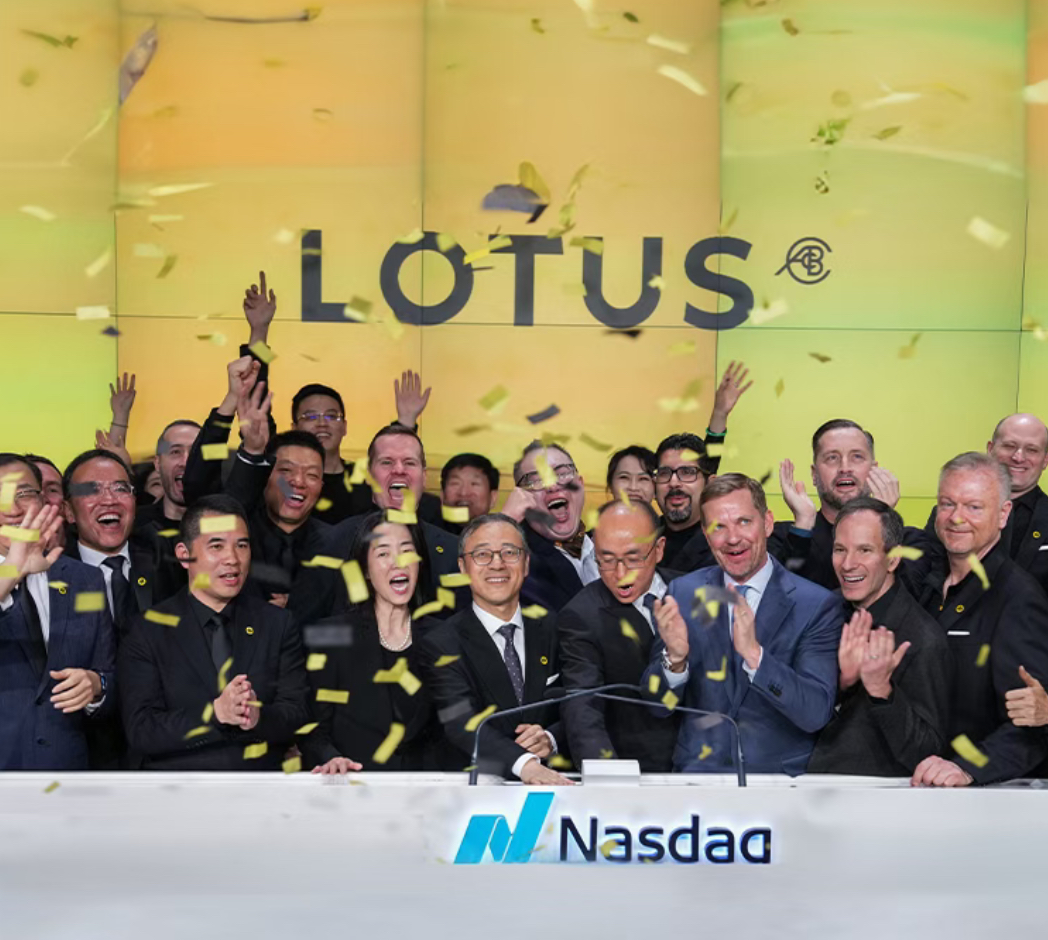
Image Source: Lotus Sports Cars
But Lotus's commercial path has been rocky. Since the 1980s, the brand has passed through the hands of Toyota, General Motors, Bugatti, and Proton. It wasn't until 2017 that Geely Holding acquired a 51% stake, becoming the controlling shareholder. In February 2024, Lotus Technology listed on the Nasdaq under the ticker symbol “LOT.”
In January 2025, Lotus officially changed its name to “Lotus Sports Cars,” unifying the brand name globally. “The ‘Lotus' name is ours, and we had to get it back,” Feng Qingfeng wrote at the time. Because the “Lotus” and “LOTUS” trademarks had been registered by a domestic auto parts company in 1984, the brand was forced to use the phonetic transliteration “Lutesi” upon entering China. This sparked a protracted battle for the trademark. Feng revealed that it took 11 lawsuits over five years to finally reclaim the “Lotus” trademark.
Empowered by Geely, Lotus has adopted a “China-UK dual-core” R&D model: the UK team handles chassis tuning, engineering development, and dynamic calibration, while the Chinese team manages electrification, intelligence, and manufacturing. According to Feng Qingfeng, the development of the For Me's hybrid system was a collaborative effort between the two sides.
In April 2025, Lotus Technology announced the acquisition of a 51% stake in Lotus Advanced Technology Co., Ltd. (“Lotus UK”) from Geely, giving it direct control over the UK entity post-transaction. Lotus Technology's leadership believes this move will make corporate governance more efficient.
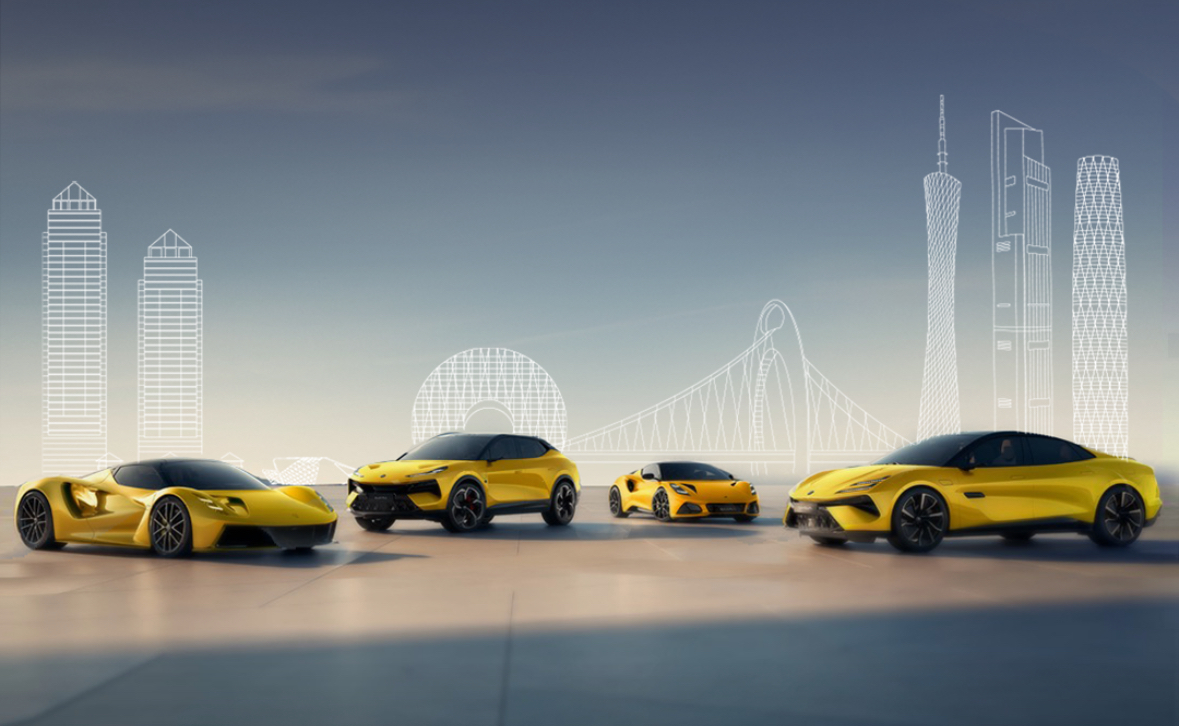
Image Source: Lotus Sports Cars
In terms of product planning, Lotus has established a parallel powertrain matrix covering internal combustion (Emira), pure electric (Evija, Eletre, Emeya), and super hybrid (For Me). Feng Qingfeng revealed that more models will be launched to cover sub-segments. “We will launch in China first, with deliveries starting in March. Then the Middle East and Asia-Pacific. Europe will follow due to certification times. There's also the specific factor of right-hand drive, which will lead to launches in the UK and other Commonwealth RHD countries. That is our global launch sequence,” he stated in a previous interview.
Looking ahead, Lotus still faces multiple challenges.
First is balancing scale with brand character. Lotus's Vision80 strategy has been adjusted to a “pure electric + super hybrid” dual-track layout, with “positive cash flow” and “annual sales of 30,000 units” set as core goals for 2026. Yet, there is an inherent tension between being “non-mainstream” and achieving scale. “In China, the high-end market is only about 50,000 people a year. The US market is bigger, and Europe is comparable to China,” Feng said regarding market size. Whether the For Me can expand its user base while safeguarding the brand's core identity will be answered by market feedback in the coming months.
Second is the communication dilemma. The value of handling is difficult for ordinary consumers to perceive—a common challenge for all performance brands. “We might invest 100 million in tires and another 100 million in brakes, but the user doesn't feel it. That is something we haven't done well,” Feng admitted in an interview.
Third, amidst the squeeze of market competition, Lotus needs to find clearer points of differentiation.
When Lotus changed its name, an industry insider remarked: “Those who know Lotus Sports Cars will recognize it as Lutesi, and those who don't know it won't recognize it as Lotus either.” This perhaps encapsulates the deep dilemma Lotus faces in the Chinese market—building brand awareness requires far more than just the return of a name.
Conclusion:
From Colin Chapman's backyard racing dream to a Wuhan factory rolling out a hybrid SUV every two minutes, Lotus has traveled a long road in 78 years. Along the way, it won 81 F1 Grands Prix and endured several changes of ownership. Now, with the product lineup in place, the real test is just beginning.
The launch of the For Me offers a window into the market. In an era dominated by six-seaters, is “building cars for drivers” still a sustainable business? Can it expand its user base while holding onto its brand soul? These questions will be answered by the market feedback following March 2026.