



Gasgoo Munich-William Li was perhaps the interviewee industry reporters were most eager to catch at the 2026 Intelligent Electric Vehicle Development Forum.
On April 11, NIO’s interview room was packed to capacity — a clear sign of the "Li Bin effect."
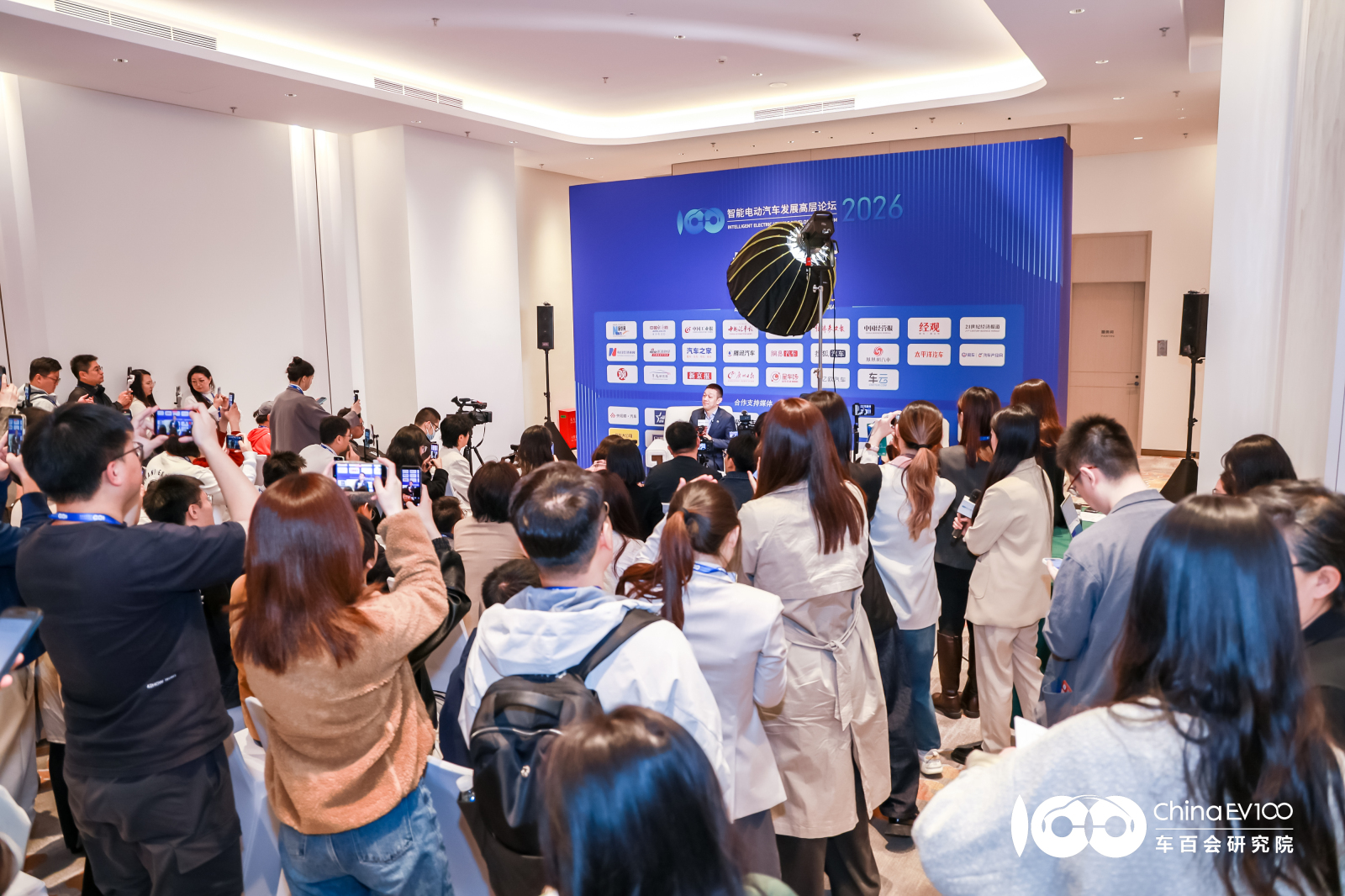
For starters, NIO was the only company among the "NIO-Xpeng-Li Auto" trio to attend the forum. Second, the company is making money. Third, Li has a knack for speaking in "human terms" that tend to go viral. But perhaps most crucially, this representative "young automaker" is staring down a sudden industry chill.
Just how cold is this snap?
This spring, China’s auto industry hit yet another "inflection point." Data released by the China Association of Automobile Manufacturers (CAAM) on April 10 measured the depth of the freeze: domestic sales hit 4.823 million units in the first quarter, a 20.3% plunge year-on-year.
That means in the first three months of 2026, the world’s largest auto market was selling nearly 9,000 fewer cars every day than it did last year.
Breaking it down, passenger vehicle sales fell 23.4% to 4.013 million units, while new energy vehicle (NEV) sales dropped 23.8% to 2.006 million.
No segment has been spared.
The chill is so biting that NIO, having just turned a profit, hasn’t had a moment to celebrate before being forced back to the table for the next round of the game.
Everyone wants to know how Li plans to steer NIO through this "cold front." The interview went ahead without cancellation, suggesting Li himself had something he wanted to get off his chest.
In reality, the story behind NIO’s profitability is far more complex than the headline numbers. It isn’t the result of a single hit model, but the payoff of systemic capabilities. In this system, battery swapping has flipped from a cost burden into a policy moat; in-house chips have shifted from money-burners to money-savers; and Li’s own management philosophy has evolved from "spending at any cost" to "measuring everything by ROI."
Behind these three shifts lies Li’s own careful calculation.
How Battery Swapping Flipped from Burden to Moat
Before the power battery recycling policy arrived, battery swapping was long labeled a "money pit."
Building a single station often costs millions, battery reserves are expensive, and the return on investment cycle is long — these hard facts fueled market skepticism.
But the "Interim Measures for the Management of Recycling and Comprehensive Utilization of Waste Power Batteries for New Energy Vehicles," effective April 1, 2026, introduced a new variable into that equation.
The policy’s core clause mandates "scrapping vehicle and battery as one unit": when an NEV is scrapped, its battery must be scrapped simultaneously and cannot go missing.
"It should be noted that this regulation does not apply to swappable models; relevant departments are studying specific management measures for new models like battery swapping," said Wang Peng, director of the Department of Energy Conservation and Comprehensive Utilization at the Ministry of Industry and Information Technology.
The logic behind this design is simple: if a standard NEV is scrapped without its original battery, that battery could slip into illegal recycling channels, creating safety and environmental risks.
The very nature of battery swapping — separating vehicle from battery and managing the latter centrally — naturally avoids this risk. Swapping operators are responsible for the battery’s health and safety throughout its lifecycle, allowing them to establish an independent tracing system without needing to fit the "vehicle-battery integration" mold.
This "exemption" isn’t a special favor for swapping, but an institutional confirmation of the model’s inherent compliance capabilities.
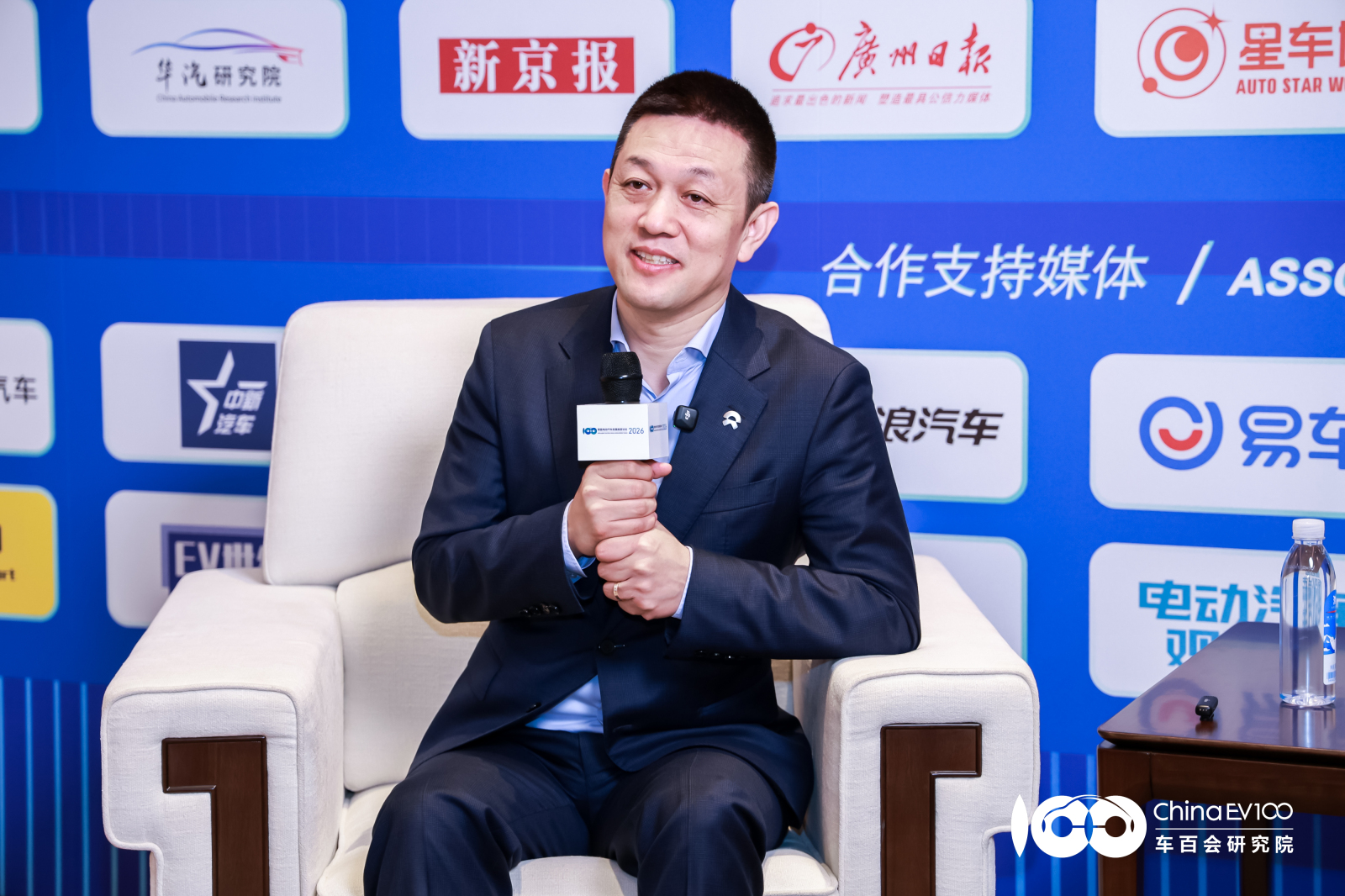
Li’s comments in the interview are worth a close read: "The state exempted swapping from the requirement to scrap vehicle and battery together because it recognizes that under the swapping system, the operator must be responsible for the battery’s ultimate health and safety."
In other words, the policy "exemption" is the result, not the cause.
The cause lies in the battery health management system the swapping model has built: over 300 real-time monitoring models and data accumulated from more than 100 million swap services.
That represents a massive barrier of time and data that no competitor can replicate in the short term.
Notably, this policy dividend has arrived at just the right moment.
Institutions predict China’s retired lithium batteries will reach 981,600 tons in 2026, marking the official first year of large-scale battery retirement. The China Automotive Strategy and Policy Research Center offers a more precise forecast: 43 GWh of power batteries will retire in 2026, surging to 171 GWh by 2030.
"I think the timing of this regulation is excellent," Li said.
As this tidal wave of battery retirements approaches, standard NEVs that can’t meet compliance requirements will face rising disposal hurdles. The swapping system, thanks to centralized management, gains a compliance advantage through simplified processes. Owners only need to scrap the vehicle body; NIO handles the battery’s unified recycling through its swapping network.
This "compliance cost advantage" has already trickled down to consumers, validated by the market in the most direct way possible: resale value.
Reportedly, models supporting battery swapping hold their value 5 to 8 percentage points higher than non-swappable models after one year. Swapping effectively alleviates consumer concerns about battery aging, boosting market acceptance of used cars.
Li explicitly attributes the rise in both volume and price to the swapping system: "The longer it’s used, the better the car’s resale value."
This isn’t marketing spin; it’s an economic proposition being validated by data. When a vehicle’s value no longer decays linearly with battery aging, and when the battery is always under real-time health monitoring, the economic logic of residual value is rewritten.
Right now, an even bigger trend is quietly taking shape: NIO is moving its swapping network from closed to open.
Li previously revealed on a call that NIO has built over 28,000 superchargers and destination chargers, making it one of the most aggressive automakers in charging infrastructure. It already operates a complete system of "charge, swap, and upgrade" capable of meeting user needs across different scenarios.

Image Source: NIO
Policy exemptions, resale data, and infrastructure density — these three forces are converging to turn swapping from a "cost center" into a "value engine" with network effects.
But buried here is a boundary worth watching: the policy exemption isn’t permanent.
MIIT officials have made it clear that specific rules for swappable models are being drafted. If future regulations require swapping operators to bear the physical responsibility for battery recycling — including dismantling, cascade utilization, and material recovery — operating costs could climb significantly.
In other words, the institutional dividend enjoyed by swapping today may need to be exchanged for higher compliance costs tomorrow.
How much scale and network density NIO can achieve during this window will directly determine the long-term economics of its swapping system.
In-House Chips: The Turning Point from $300 Million in Outsourcing to External Supply
If proving the value of battery swapping took five years of accumulation, the payback cycle for in-house chips is much shorter.
Li dropped a striking financial figure during the interview: "For years, we were Nvidia’s largest customer for the OrinX chip, and we were the first to put it in a car. At our peak, we bought $300 million worth of OrinX chips a year. If we were still outsourcing today, with our 40% to 50% annual growth, our entire lineup would need Nvidia chips. That’s a huge expense, and you know what the margins are like."
"Developing chips in-house definitely makes sense if you look at it as trading R&D for lower costs and higher margins," Li said. "The initial investment is large, but with NIO’s current volume — hundreds of thousands of units this year — it’s already paying off."
That claim needs to be examined against a specific financial backdrop.
According to the latest data Li disclosed on April 13, NIO’s cumulative in-house chip shipments have surpassed 550,000 units, driven primarily by the Shenji NX9031 intelligent driving chip and the Yangjian lidar control chip.
Li previously revealed that the R&D cost for the Shenji NX9031 was roughly equivalent to building 1,500 battery swap stations. Assuming a station costs 20 million to 30 million yuan, the chip’s R&D cost comes to 3 billion to 4.5 billion yuan.
Li also noted that Shenji delivers "about 10,000 yuan in cost savings per vehicle." Based on the main brand’s sales of 179,000 units last year, and excluding future R&D costs or external sales, the upfront investment would take two to three years to recoup.
The math is so simple and direct that it’s easy to overlook the structural meaning behind it: when the scale effect of in-house chips offsets the scaling pressure of procurement costs, self-development isn’t "burning money" — it’s the optimal solution for "saving money."
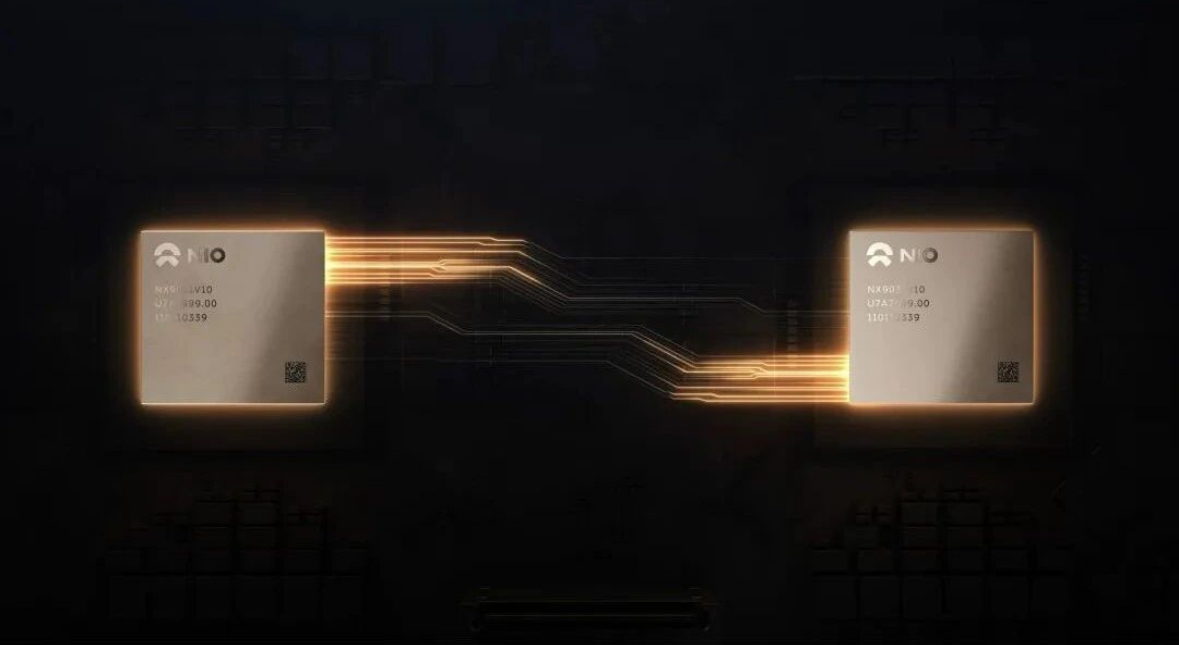
Image Source: NIO
What deserves deeper scrutiny is the relationship between the Shenji NX9031’s technical specs and its cost substitution. This means NIO can apply "dimensionality reduction substitution" logic to vehicle configuration. The reduction in procurement costs doesn’t come from simply swapping self-made for outsourced parts, but from streamlining hardware configurations enabled by a generational technological lead.
This logic is now cascading from the NIO brand down to the Onvo brand.
On April 21, the 2026 Onvo L90 will launch equipped with the Shenji NX9031, marking the first time a global flagship intelligent driving chip enters the 200,000 to 300,000 yuan market segment.
Li defined this in the interview as "fully applying a global flagship intelligent driving chip across the 200,000 to 300,000 yuan segment."
This isn’t just a simple trickle-down of technology; it’s the result of economic logic: when the unit cost of an in-house chip is amortized to a viable range, equipping volume models doesn’t raise per-vehicle costs. Instead, it further lowers costs through parts unification (one chip serving multiple brands).
A positive feedback loop has formed between chip unification and vehicle sales scale.
Another dimension widely underestimated by the outside world is the independent commercialization of NIO’s chip business.
In June 2025, NIO spun off its chip business to establish Anhui Shenji Technology Company. It completed its first round of financing exceeding 2.2 billion yuan in February 2026, with a post-investment valuation approaching 10 billion yuan.
That financing scale signals that external investors recognize the commercial value of Shenji chips outside the NIO ecosystem. NIO revealed in the interview that Shenji chips have begun external sales, with customers covering industry peers, Robotaxis, autonomous logistics vehicles, and embodied intelligence.
But the flip side is this: a single tape-out for an automotive-grade chip costs hundreds of millions. To expand external clients and maintain a technological lead, Shenji’s R&D spending won’t decrease. The 2.2 billion yuan in funding may just be temporary ammunition.
Whether NIO can balance external sales with internal security remains to be seen.
The leap from in-house to external supply tests not the chip’s technical capability, but whether the enterprise can complete an organizational transformation from "client mindset" (building for oneself) to "vendor mindset" (building for the market).
In this logic chain, what’s most easily overlooked is the "strategic option" attribute of the chip.
Although the R&D investment is massive, what it grants NIO isn’t just a single-point cost saving, but a range of strategic options: autonomous control over the iteration pace of intelligent driving systems, immunity from external supply chain chokeholds, and the ability to trade chip capabilities for industry influence.
The value of these "options" cannot be quantified on a short-term cost ledger, but together they form the underlying support of NIO’s technological moat.
A Shift in Philosophy: From "At Any Cost" to "Measuring Everything by ROI"
A change even more profound than product or technology evolution is taking place inside Li Bin’s head.
In the fourth quarter of 2025, NIO’s R&D expenses fell 44.3% year-on-year, while sales, general, and administrative expenses dropped 27.5%. At the same time, revenue climbed 75.9%.
The divergence between these two data sets forms the financial backdrop of NIO’s profitability.
But the key question isn’t "how much was saved," but "how was it possible to save."
Li’s comments in the interview read almost like a "white paper on NIO’s management philosophy": "Many companies globally are our role models. Singapore Airlines, for instance, provides a world-class user experience, but their internal management is incredibly frugal. The two are not contradictory."
The analogy is precise enough to warrant dissection. Singapore Airlines has been voted the world’s best airline for years, yet it’s also famous for ruthless cost control. Its logic: ultimate user experience doesn’t come from extravagance, but from precisely directing limited resources to the value points users actually perceive.
Li then used two details to unpack the boundaries of this "frugality": he shares a ten-square-meter office with a co-founder, and his travel standards are the same as frontline employees. These details are meant to send a signal — NIO’s "cost-saving" isn’t a crisis-driven reaction, but a consistent organizational culture.
As Li said in the interview: "We didn’t just start doing this today."
But the truly interesting change isn’t "saving money" itself, but the reconstruction of the decision logic behind "what to save" and "what to spend."
Li admitted in the interview that previous technology and infrastructure investments "inevitably included some projects with relatively low ROI."
This means NIO’s management philosophy is undergoing a transition from "spending at any cost" to "measuring everything by ROI."
Seen from another angle, NIO has never truly "saved" on tech R&D. In-house chips, the swapping network, and the three-brand matrix require massive resource input. These "big ledgers" haven’t been cut because of "frugality." What’s truly being optimized are the "small ledgers outside the big ones": edge projects in the R&D pipeline with low ROI, underperforming sales channels, and redundant management layers.
In other words, NIO is shifting from "extensive expansion" to "refined operations," but the direction of expansion hasn’t changed.
Even more powerful proof was Li’s keynote speech at the forum, which pointed the finger directly at the industry’s "involutionary waste."
He pointedly noted that batteries and chips now account for over 50% of the cost of intelligent EVs, yet inconsistent cell specifications make it hard for the industry to balance supply and demand, while an excessive variety of chips causes massive supply chain volatility.
Li’s prescription for this industry pain point is "standardization of cell specifications" and "unification of chip types." His quantitative judgment: doing just these two things could cut industry costs by over 100 billion yuan. If this initiative lands, the implication for NIO is self-evident — as a pioneer in standardization and unification, NIO holds a first-mover advantage in both key components. The process of standardization itself deepens the moat.

Image Source: NIO
From saving money for NIO to crunching numbers for the industry, Li’s role is shifting.
He is no longer just NIO’s CEO, but is attempting to become a redefiner of the industry’s rules of the game.
This role transition itself marks NIO’s exit from "survival mode." When a company starts calculating cost-reduction space for the entire industry, it is no longer struggling just to "survive," but has the confidence and ambition to define the rules of competition.
Conclusion: "Limited Responsibility" After Profitability
Is NIO’s profitability quarterly or sustainable?
The answer depends on whether the swapping network’s effects can continue to expand, whether in-house chip commercialization can move from "internal supply" to "external sales," and whether organizational efficiency optimization has hit a ceiling.
If any of these three dimensions lose speed, the "inflection point" of profitability could revert to a "pivot point."
But at least this April, NIO proved one thing: as the NEV industry shifts from "burning cash for scale" to "efficiency for profit," it is running ahead of most.
And Li Bin’s persona shift from "the CEO most willing to spend" to "the calculating accountant" may not be a personal image overhaul, but a collective microcosm of an industry cycle changing guard.
When capital stops paying for losses, when policy dividends ebb, and when the market shifts from growth to saturation, the ability to "do the math" may be scarcer than the ability to "build cars."


