Gasgoo Munich- On March 2, Pony.ai officially announced that its seventh-generation Robotaxi achieved positive monthly unit economics in Shenzhen this February. This marks a landmark breakthrough for the autonomous driving sector after years of development.
As early as November 2025, Pony.ai had already achieved this milestone in Guangzhou. Repeating the feat in Shenzhen means this business model has now been validated and replicated across two megacities.
Positive unit economics is the core metric for measuring Robotaxi commercialization. It means a single vehicle's daily revenue covers its direct operating costs. These include depreciation of the vehicle and autonomous kit, electricity consumption, routine maintenance, remote cloud assistance, insurance, and ground crew expenses.
Reaching this indicator signals that autonomous driving is shifting from R&D pilots reliant on financing to a stage of large-scale operations with self-sustaining capabilities.
Tech Iteration and Cost Compression
The primary factor driving profitability for Pony.ai's seventh-generation Robotaxi in Shenzhen lies in significant hardware optimization and the iteration of core technologies. It is reported that this model has achieved a transition from "experimental retrofit" to "mass production pre-installation."
The seventh-generation model uses 100% automotive-grade components for cost control. The bill of materials (BOM) cost for its autonomous kit dropped about 70% from the previous generation. This reduction significantly lowered the proportion of vehicle depreciation in operating costs. The vehicle's service life reaches 600,000 km, further optimizing the financial structure through long-cycle depreciation amortization.
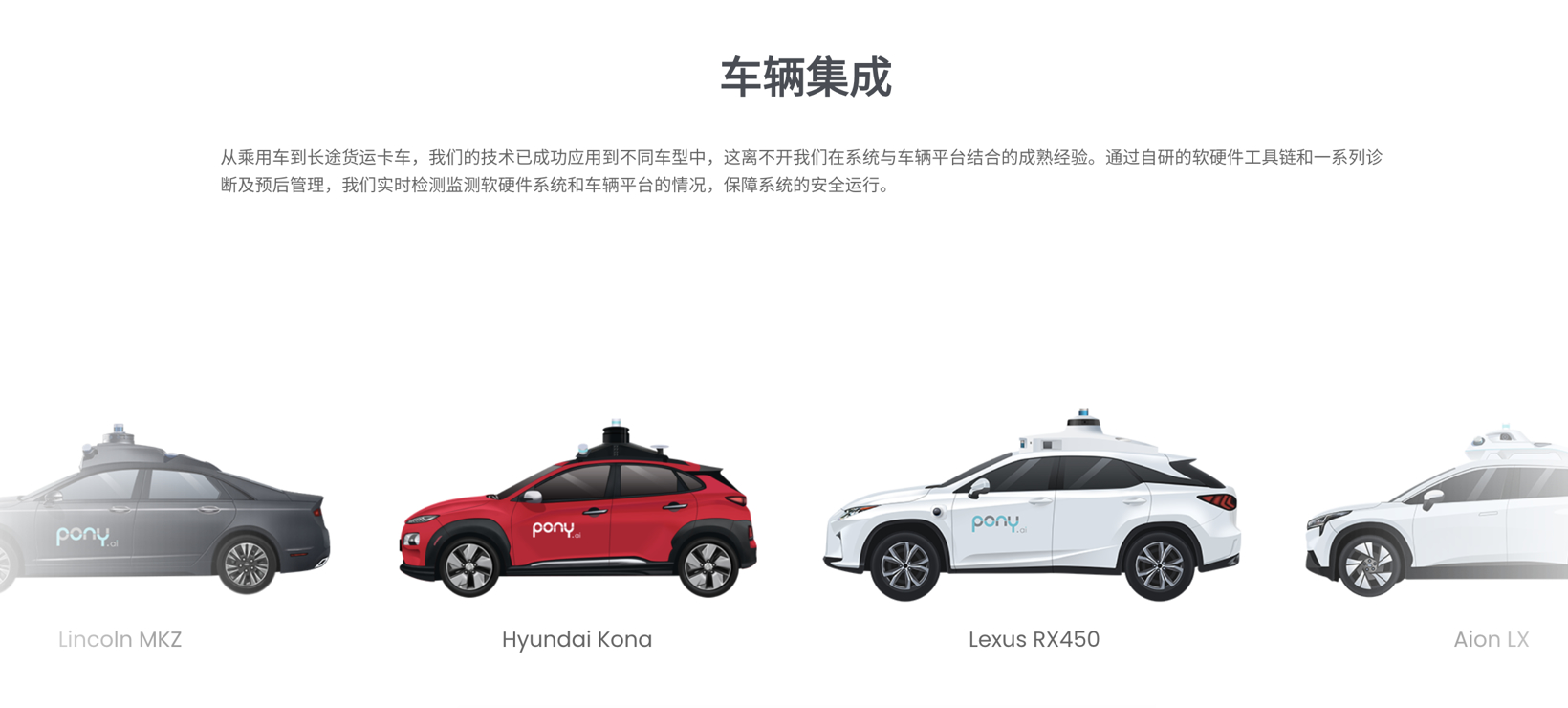
Image Source: Pony.ai
On the technical front, the seventh-generation Robotaxi is equipped with 34 sensors, including nine LiDAR units and 14 cameras, achieving 360-degree blind-spot coverage and a perception distance of up to 650 meters. Data shows the fleet uses Hesai Technology's AT128 LiDAR. Its high-resolution perception ensures stable operation in Shenzhen's humid and complex traffic environments.
Furthermore, relying on the proprietary PonyWorld model, the vehicle's safety has reportedly reached ten times that of a human driver. This directly led to a roughly 50% reduction in commercial insurance costs compared to traditional taxis, effectively compressing fixed operating expenses.
Beyond hardware, upgrades to user experience have directly driven market demand. Through virtual driver technology that precisely controls driving paths and acceleration frequency, the model significantly reduces ride bumpiness. In-car features like voice interaction and climate control enhance the vehicle's service value as a mobile space. This lays the foundation for stable order growth.
Operational Efficiency and Scale Effects
The rapid expansion of operational scope and the refinement of efficiency are the other major pillars supporting Pony.ai's profitability in Shenzhen. Pony.ai's operational area in Shenzhen has gradually expanded from an initial 21.7 square kilometers to 167.4 square kilometers by the end of 2025.
The widening of the operational area directly drove an increase in order density. Data shows daily net income per vehicle reached 338 CNY as of Feb. 28, 2026. The daily order volume was 23.
During the 2026 Spring Festival holiday, driven by tourism and family visits, daily orders per vehicle briefly surged to 26—far above the 2025 national industry average of 15 orders for Robotaxis.
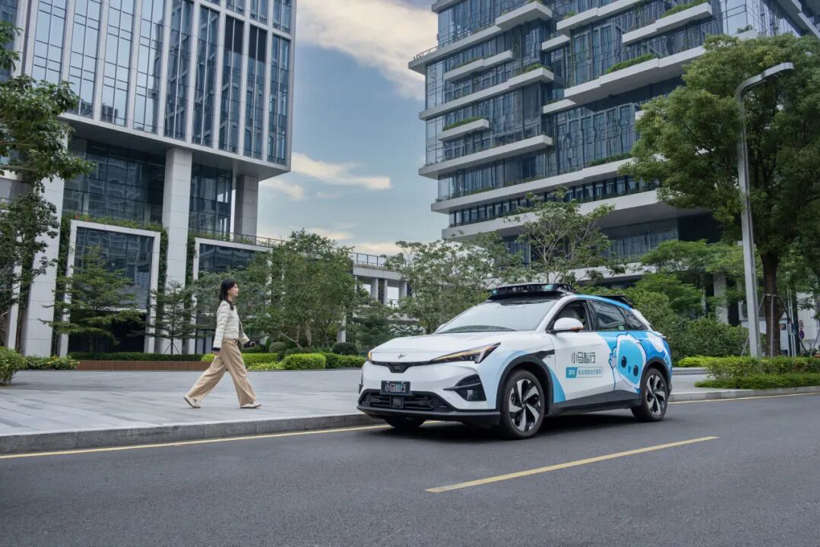
Image Source: Pony.ai
In terms of operations management, Pony.ai has improved workforce efficiency through AI empowerment, reducing the ratio of remote assistance personnel to vehicles to 1:30. Additionally, Pony.ai has launched an "asset-light" cooperation model. By building fleets with partners like GAC, Toyota, and Shenzhen Xihu Group, it turns capital pressure into revenue from technology licensing.
By the end of 2025, the scale of Pony.ai's seventh-generation Robotaxi deployment in Shenzhen had expanded to 1,000 vehicles. Economies of scale will further dilute backend management and R&D costs.
Meanwhile, Shenzhen's robust intelligent connected infrastructure provides a guarantee for profitability. By accessing the Shenzhen Intelligent Connected Vehicle Cloud Control Platform, vehicles achieve "vehicle-road-cloud" collaboration, directly improving turnover efficiency.
Pony.ai's consecutive profitability in Guangzhou and Shenzhen holds exemplary significance for an autonomous driving industry long plagued by "concerns over losses." It proves that L4 autonomous driving has not only technically bridged the challenges of urban scenarios but also possesses an economically sustainable model for commercial operation.
Pony.ai founder and CEO Peng Jun stated, "Achieving positive unit economics for Robotaxis in Shenzhen is an important validation of the company's technological maturity and commercial strategy. Achieving this goal in two first-tier cities in China proves that autonomous mobility is not only technically feasible but also economically sustainable for large-scale operation."
According to market predictions, Pony.ai plans to reduce kit costs by another 20% in 2026, with a fleet scale target of 3,000 vehicles. If an operational scale of 100,000 vehicles is achieved by 2030, Robotaxis are expected to capture more than 5% of the mobility market in first-tier cities. This trend will accelerate the shift from traditional to intelligent mobility platforms. It will also drive volume growth in supply chain sectors like sensors and domain controllers.
However, despite the breakthrough in per-vehicle profitability, the company's overall profitability still faces challenges. Pony.ai recorded revenue of $25.4 million in Q3 2025, up 72% year-on-year, according to financial reports. However, the net loss reached $61.6 million.
This indicates that after achieving per-vehicle profitability, it still needs further scale expansion to cover massive R&D and administrative expenditures. Additionally, differences in cross-regional regulations, handling long-tail effects in severe weather, and user data privacy protection remain long-term challenges for the industry.