



Gasgoo Munich-In 2025, domestic auto production and sales held firm above the 30 million threshold, while exports surpassed 7 million vehicles. Across the supply chain, some parts suppliers are feeling the squeeze, while others are breaking out.
The annual report recently released by APG shows that the veteran braking system supplier generated 5.607 billion yuan in revenue last year, up 31.61% year-on-year. Net profit attributable to shareholders reached 490 million yuan — a jump of 130.18%.
The figures are striking. But what matters more is the structural shift behind them.
Electronics Business Contributes Nearly 30% of Revenue, Becoming Main Growth Engine
Breaking down the revenue mix reveals that while APG's traditional business is still growing, the real incremental growth is coming from automotive electronic control systems.
In 2025, revenue from basic braking systems came to 3.819 billion yuan, a 22.82% increase that accounted for 68.11% of total revenue. Meanwhile, revenue from electronic control systems climbed 59.54% to 1.626 billion yuan, lifting its share of total revenue from 23.92% to 29.00%.
This shift reflects a direct adjustment in its product structure. APG notes that orders for electronic products like IBS (Intelligent Braking System) and ESC (Electronic Stability Control) are steadily increasing from automakers both at home and abroad.
The data backs this up: 244 projects were launched during the reporting period, 111 of which involved electronic control systems. Another 160 projects moved to mass production, serving customers including Changan, Geely, FAW Hongqi, and Leapmotor.
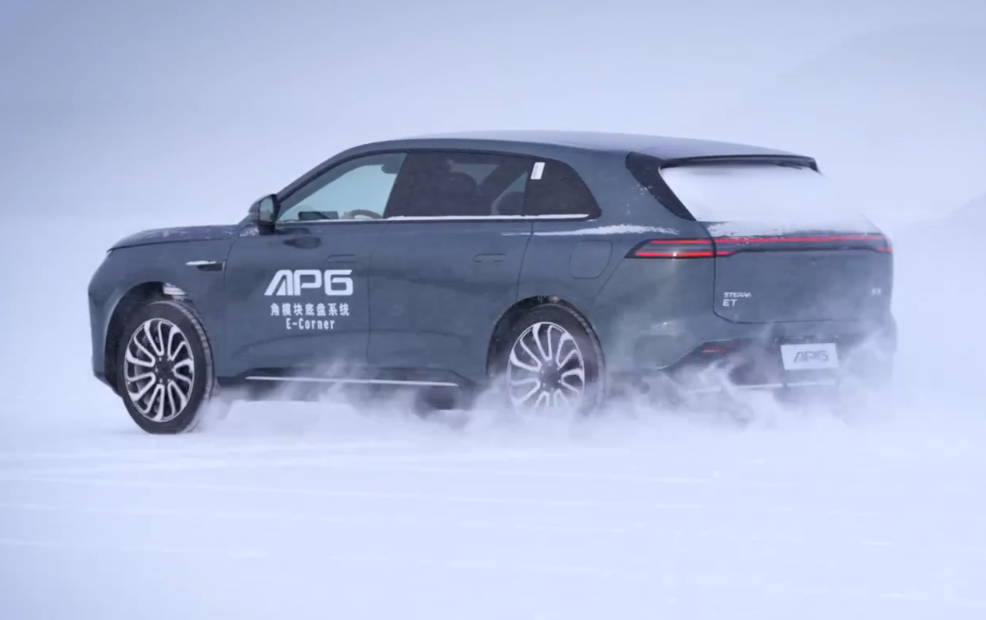
Image Source: APG
On profitability, the comprehensive gross margin rose to 20.83%, an increase of 2.42 percentage points. The weighted average return on net assets more than doubled, climbing from 7.49% to 15.66%.
Net operating cash flow hit 1.349 billion yuan, up 71.16% year-on-year. As profits grew, cash flow improved in tandem.
R&D Investment Reaches 342 Million Yuan as Globalization Accelerates
APG invested 342 million yuan in R&D in 2025, representing 6.11% of revenue. By the end of the reporting period, the company held 694 valid patents, including 153 invention patents.
In terms of technology roadmap, APG has built a product matrix spanning basic braking to brake-by-wire systems. The IBS (ONEBOX) intelligent braking system achieves ASIL D functional safety and integrates dual-control, dual-redundancy electronic parking. Simultaneously, it is positioning itself in EMB (Electromechanical Braking System) and corner module chassis fusion control, the latter integrating controllers and algorithms for subsystems like kingpin steering, in-wheel motors, EMB braking, and active suspension.
Groundbreaking of APG's Morocco Plant; Image Source: APG
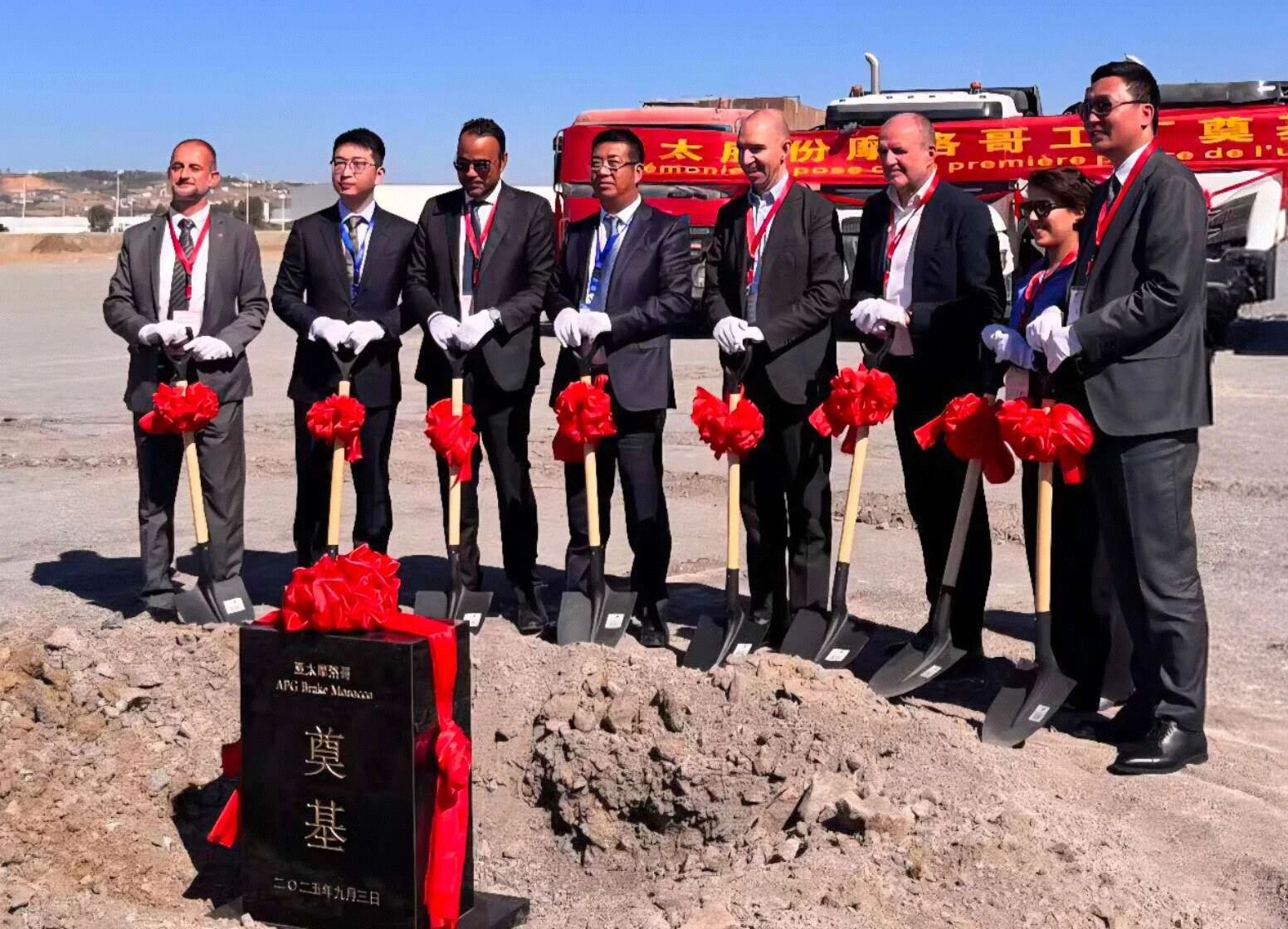
Globalization is another highlight in the financial report. APG is pursuing a "R&D + production" dual-track strategy: establishing a research center in Germany and planning a manufacturing base in Morocco. Slated for production in 2027, the facility is designed with an annual capacity of 2.65 million brake caliper assemblies.
The logic behind this layout is straightforward — get closer to international markets, lower production costs, and hedge against global supply chain uncertainties.
Risks Remain That Warrant Caution
The risk factors listed in the financial report are equally worth watching.
First, economic cycle fluctuations. The auto industry is highly correlated with the macroeconomy. If the economic environment fluctuates and car sales slip, it will directly impact orders and payments.
Second, intensifying market competition. Domestic automakers and parts suppliers are expanding capacity, while international giants are building plants in China through wholly-owned or joint ventures. The pressure of price competition is transmitting upstream.
Third, raw material price volatility. APG's main raw materials are steel plates, pig iron, and aluminum, making gross margins highly sensitive to commodity prices. If raw material costs continue to rise, compounded by increasing labor costs, margins will face further pressure.
Fourth, implementation progress of fundraising projects. Funds raised from APG's 2017 convertible bonds were partly allocated to projects like the technical renovation for 150,000 sets of new energy vehicle in-wheel motor drive chassis modules. Affected by the macroeconomic environment, there is a risk that project progress may fall short of expectations.
Conclusion
APG's 2025 performance certainly delivers a solid report card. The rapid growth of its electronics business validates the phased results of its transition from traditional braking to electronics. The layout of overseas capacity also lays the foundation for future participation in global competition.
But the auto parts industry is never a set-it-and-forget-it track. Technology iteration, cost control, and customer stickiness are all tough battles. The key going forward lies in sustaining the growth momentum of the electronics business while digesting the investment pressure brought by global expansion.
For this veteran supplier of nearly fifty years, the window for a breakout has opened, but the challenges are equally present.


