



Shanghai (Gasgoo)- SAIC Z-ONE, the software arm of SAIC Motor, announced on August 2 the strategic partnership it formed with Chinese automotive SoC (system-on-chip) developer SemiDrive for the joint development and customization of chips.
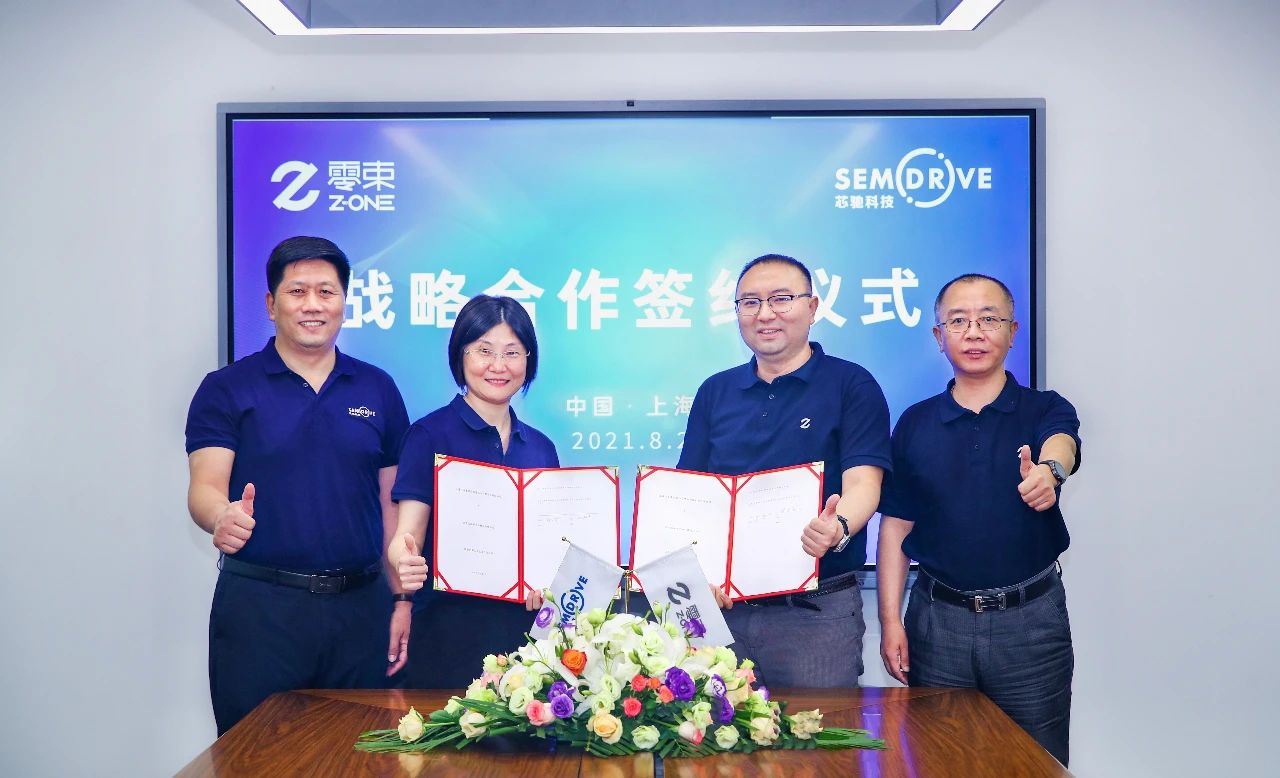
SAIC Z-ONE, SemiDrive signing agreement; photo credit: SAIC Z-ONE
Under the agreement, the duo will leverage their core R&D capabilities and resources to jointly hammer out the development roadmap for chips and complete vehicle electrical architecture pivoting on SAIC Z-ONE's Galaxy Full-stack Solution 3.0 digital platform. Focusing on chip-level underlying software operating system and virtual platform technologies, they will co-explore and develop the operating systems compatible with the Galaxy Full-stack Solution 3.0, vigorously promote the replacement of imported chips with locally-made ones, and explore the joint R&D of customized chips and relevant business cooperation models.
To build a long-term cooperation mechanism, both parties agreed to set up a joint lab for innovation of chips. The lab will primarily work on the research related to HPC (high-performance computing power) and zone controller, and contribute to the R&D of the new-generation complete vehicle electrical architecture by utilizing SemiDrive's capabilities in the definition, design, and R&D of automotive-grade chips, and SAIC Z-ONE’s know-how in vehicle software & hardware architecture and the complete R&D system.
SAIC Motor revealed the SAIC Z-ONE Galaxy Full-stack Solution, its latest solution to smart vehicles, at the SAIC Developer Conference held in Shanghai on April 9. The solution includes four fundamental technical pillars, namely a centralized electronic architecture, a SOA (service-oriented architecture), intelligent vehicle data plant, full-stack OTA and cyber security solution. It also includes an intelligent scene service platform, which is expected to provide end-to-end experience.
Founded in 2018, SemiDrive is dedicated to offering the automotive industry high-reliability and high-performance automotive-grade chips, which are applied in smart car cockpits, central gateways, autonomous driving system, and MCUs (microcontroller units). The company announced in late July it raised nearly 1 billion yuan ($154.65 million) in a Series B funding round, which was co-led by CDB Equipment Manufacturing Industrial Investment Fund and V Fund. Proceeds from the financing round will be mainly used for the R&D of chips built on more advanced manufacturing process.


