



As auto parts giants increasingly share the stage with humanoid robotics firms, the lines between industries are quietly blurring.
On March 4, Schaeffler and Leju Robot officially signed a strategic partnership agreement in Suzhou. Under the deal, Leju becomes Schaeffler's first partner for embodied intelligence in China. The two will focus on three core areas—industrial applications, data training grounds, and new technology R&D—to drive the large-scale deployment of humanoid robots in manufacturing.
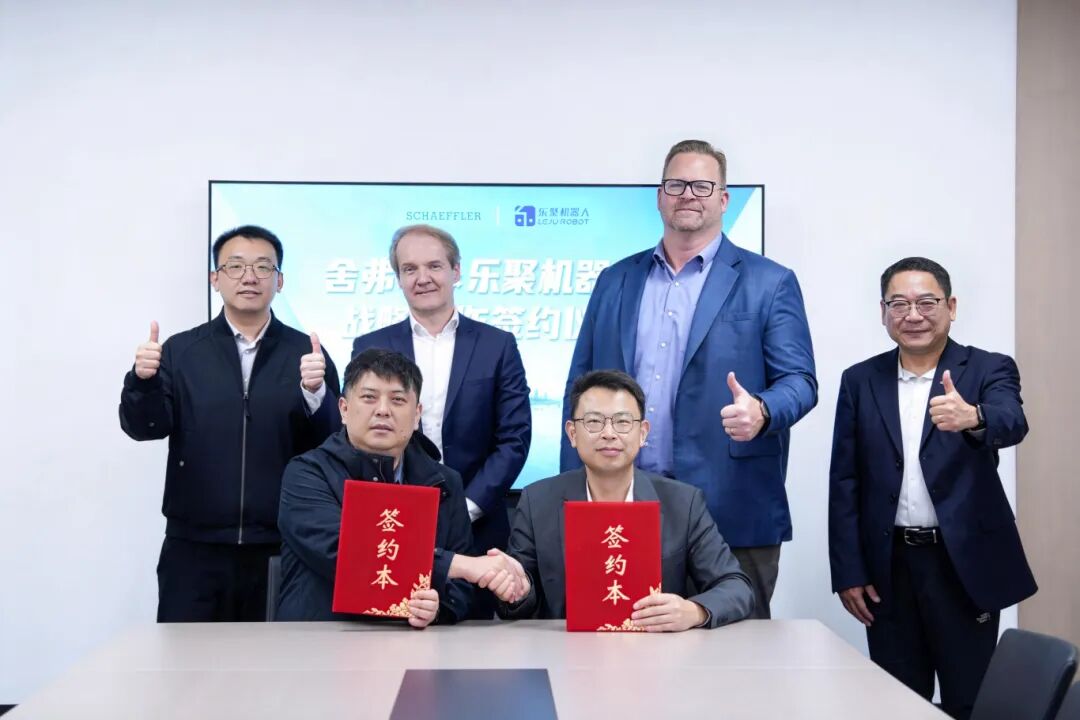
Image Source: Leju Robot
This is more than a simple handshake. Just a week earlier, on February 27, Schaeffler announced the establishment of an embodied intelligence robotics unit in Taicang, Suzhou, targeting core components and key subsystems for humanoid robots. From bearings and roller screws to precision reducers and sensors, Schaeffler is redefining its traditional expertise as the "joints" and "muscles" of robots.
On one side stands a German century-old powerhouse in drive technology; on the other, a leading Chinese humanoid robotics startup. Behind this collaboration lies a collective "crossover" wave launched by Tier 1 giants.
Tier 1 Giants Rush In, Humanoid Robots Become the New Battleground
The details of the Schaeffler-Leju partnership are substantial.
The pair will focus on typical industrial scenarios such as small parts loading, factory inspections, and production line logistics, creating demonstration projects that deeply integrate humanoid robots with high-end manufacturing. They will also collaborate closely on industrial data collection, model training iteration, core component supply chains, and next-generation technology R&D.
Schaeffler Group CEO Klaus Rosenfeld put it bluntly: "With this strategic partnership, Schaeffler is adding a strong innovation partner in the humanoid robotics market—a field with immense growth potential."
Schaeffler's ambitions extend far beyond partnerships. As noted earlier, the company's wholly-owned subsidiary in Taicang—Schaeffler Embodied Intelligence Robotics (Taicang) Co., Ltd.—has already mapped out a comprehensive strategic blueprint. From core component R&D and production to intelligent R&D centers, digital production lines, computing hubs, and data collection and training centers, Schaeffler aims to replicate its "system-level" capabilities from the automotive sector in the robotics arena.
Zhang Yilin, CEO of Schaeffler China, clarified the intent: "Humanoid robotics is one of Schaeffler's strategic business areas, offering immense market potential in China."
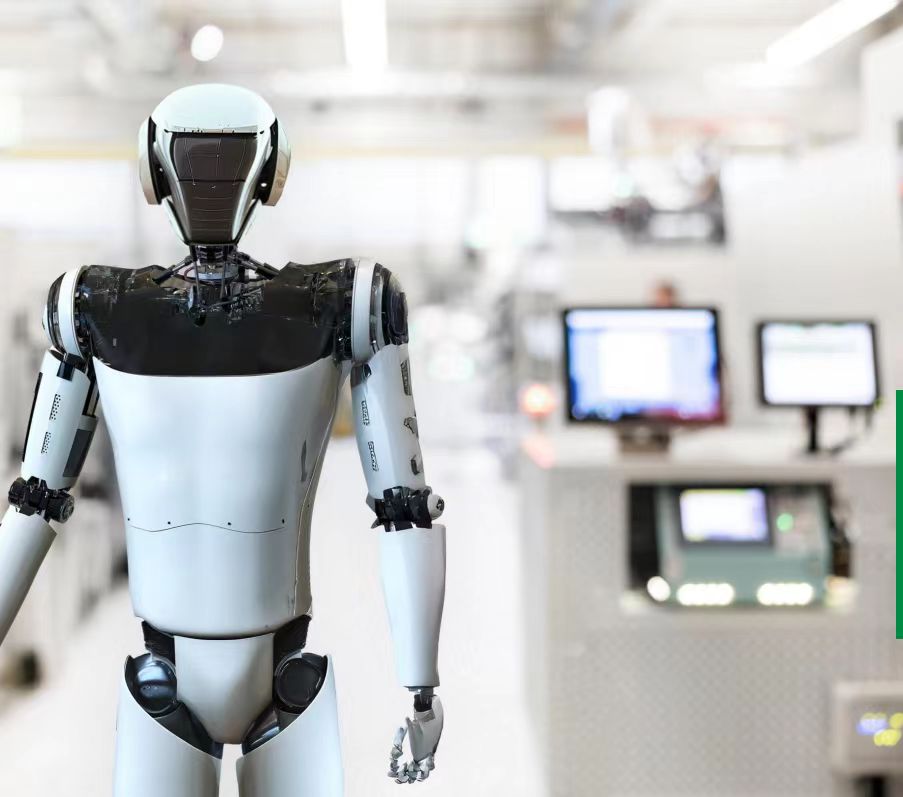
Image Source: Schaeffler
In fact, Schaeffler is not an isolated case. Since the start of 2024, Tier 1 giants have been flooding into the humanoid robotics sector at a breakneck pace.
CATL has deployed intelligent robots developed with Shanghai Jiao Tong University on actual production lines; BYD has invested in Zhiyuan Robotics, a move widely seen as an effort to explore the use of robots on automotive assembly lines; Sanhua Intelligent Controls and Tuopu Group have both allocated capacity for related production; and Inovance Technology continues to make breakthroughs in industrial robotics, rolling out core control systems.
These companies share a common trait: they are "hidden champions" of the automotive supply chain, having accumulated decades of manufacturing experience and supply chain capabilities in motors, reducers, sensors, and control systems. The "joints" and "brains" of humanoid robots are highly homologous with their core businesses.
As Ke Zhendong, executive vice president of Leju Robot, noted: "Schaeffler has deep roots in high-end equipment manufacturing and industrial automation, while Leju holds a leading edge in humanoid robotics R&D and industrialization. By combining our strengths, we aim to drive the large-scale application of humanoid robots in industry through collaborative innovation across the supply chain."
Tech Homology and Closed Loops: Why Tier 1s Must Bet on Robotics
Why are Tier 1 giants rushing in now? The answer lies in two keywords: technological homology and closed-loop scenarios.
First, technological homology.
The core joint drive units of humanoid robots—including rotary actuators, linear actuators, and dexterous hands—are essentially precision transmission systems composed of motors, reducers, screws, and sensors. These are the very "housekeeping skills" of Tier 1 firms like Schaeffler, Sanhua, and Tuopu.
Take Schaeffler: its expertise in bearings and roller screws spans over 70 years. With some adaptation, these technologies can be directly applied to the linear joints of robots. Similarly, Inovance's servo motors and control systems are already proven in industrial robotics, and Sanhua's thermal management technology can be migrated directly into the battery thermal management systems of robots.
Technological homology means the barrier to entry for Tier 1 suppliers is far lower than outsiders might assume. They don't need to start from scratch; they only need to adapt their existing technologies for "robotization" to quickly penetrate this emerging market.
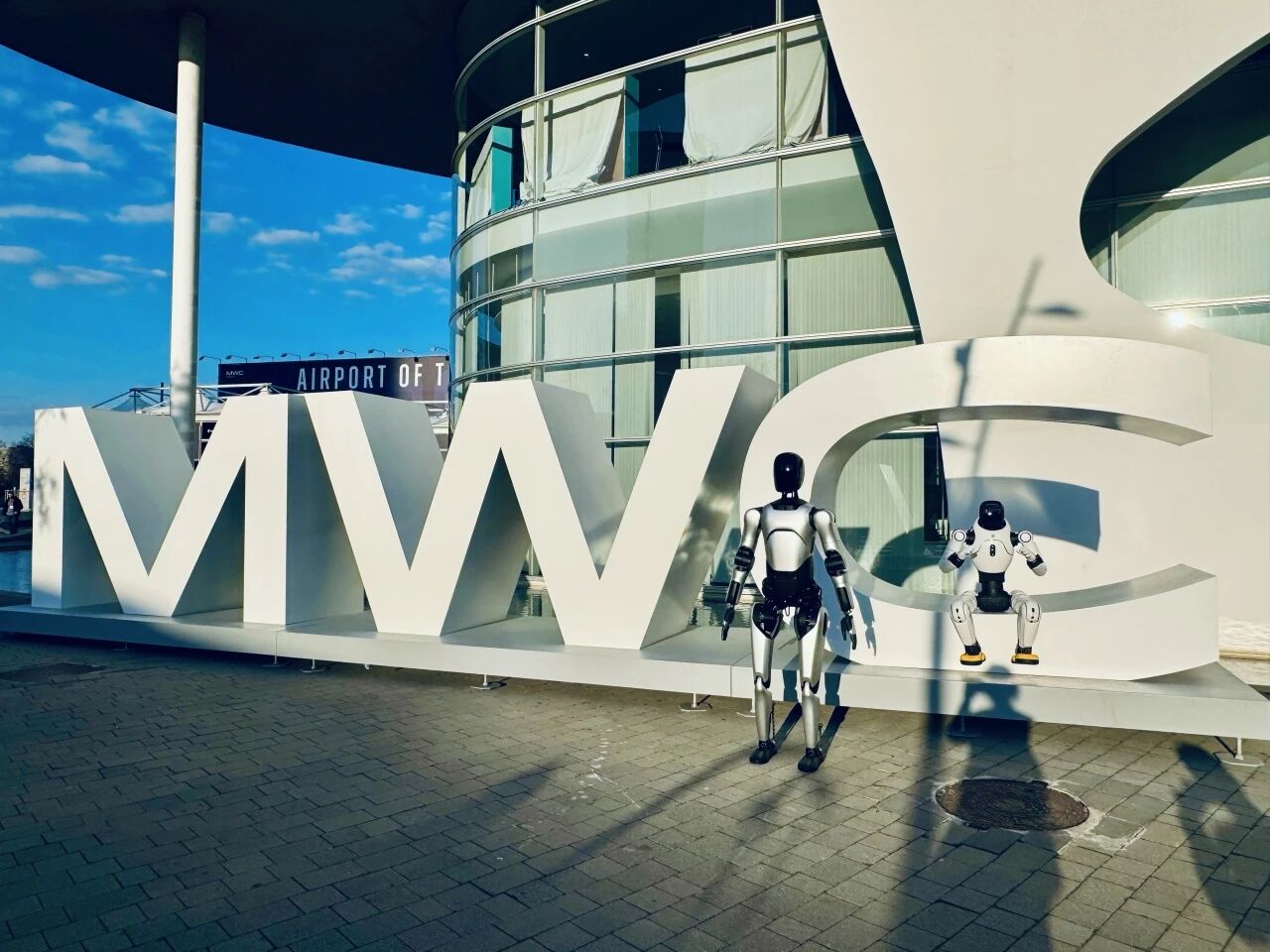
Image Source: Zhiyuan Robotics
Then there is the closed-loop scenario.
The biggest bottleneck in humanoid robot commercialization has never been the technology itself, but rather "where to use it" and "how to use it well." This is precisely where Tier 1 giants hold a distinct advantage.
Schaeffler operates dozens of factories globally, running tens of thousands of automated production lines every day. These real-world industrial settings serve as ideal data collection and testing grounds for humanoid robots.
The collaboration targets typical industrial pain points: small parts loading, factory inspections, and production line logistics. Small parts loading is repetitive and dull; inspections are time-consuming and labor-intensive; logistics coordination on the line is complex and fluid. These scenarios require both physical strength and a degree of intelligent judgment, making them ideal entry points for the initial deployment of humanoid robots.
Looking deeper, there is a strategic consideration behind the Tier 1 push into humanoid robotics: seizing the "operating system" of next-generation manufacturing.
The smart factory of the future will be a complex system where humanoid robots, industrial robots, automation equipment, and human workers collaborate. Whoever controls the core components and control systems of these robots will hold the commanding heights of the future factory.
Schaeffler's new unit in Taicang has planned a comprehensive R&D and manufacturing ecosystem, covering an intelligent R&D center, digital production lines, a computing hub, and data collection and training facilities. This is not merely a component factory, but an incubator for system-level robotics solutions built for the future.
From an industry perspective, the entry of Tier 1 giants will have a threefold effect:
First, it will accelerate cost reduction. When a precision manufacturing giant like Schaeffler mass-produces robot joint components, economies of scale will rapidly drive down the cost of core parts, lowering the price of the complete machine and speeding up commercialization.
Second, it will improve reliability. The automotive supply chain demands extreme component reliability. These stringent quality control standards will "spill over" into the robotics sector, elevating the overall quality of domestic robots.
Third, it will close the data loop. Tier 1 giants possess real industrial environments where robots can continuously collect data and iterate algorithms during actual production, creating a virtuous cycle of "R&D, testing, application, and feedback."


