



Gasgoo Munich- Speaking at the 4th Embodied Intelligent Robot Industry Development Forum, Li Jia, Director of Investment Promotion at the Shanghai Intelligent Automotive Software Park, noted that 2026 is widely viewed as the breakout year for scaling and commercializing embodied intelligence. Analyzing the landscape through technology, application scenarios, hardware-software synergy, and the broader ecosystem, she emphasized that robots are shifting from pre-programmed tasks to deep integration with high-dynamic control and large AI models. This transition enables a move from structured environments to complex settings like homes, commercial spaces, and specialized operations.
Li also outlined the strategic positioning of the Shanghai International Automotive City and its software park in driving the industrialization of embodied intelligence. Leveraging 25 years of automotive heritage, the city has built a comprehensive ecosystem spanning manufacturing, R&D, data, and capital. It recently launched the "π Platform" for embodied intelligence, designed to offer full-lifecycle support—from startup mentoring and scenario validation to capital access. Li stressed that the initiative goes beyond physical space; by layering data, computing power, capital, and real-world scenarios, it aims to foster a human-machine symbiotic ecosystem that helps companies grow systematically from "seeds" into industry giants.
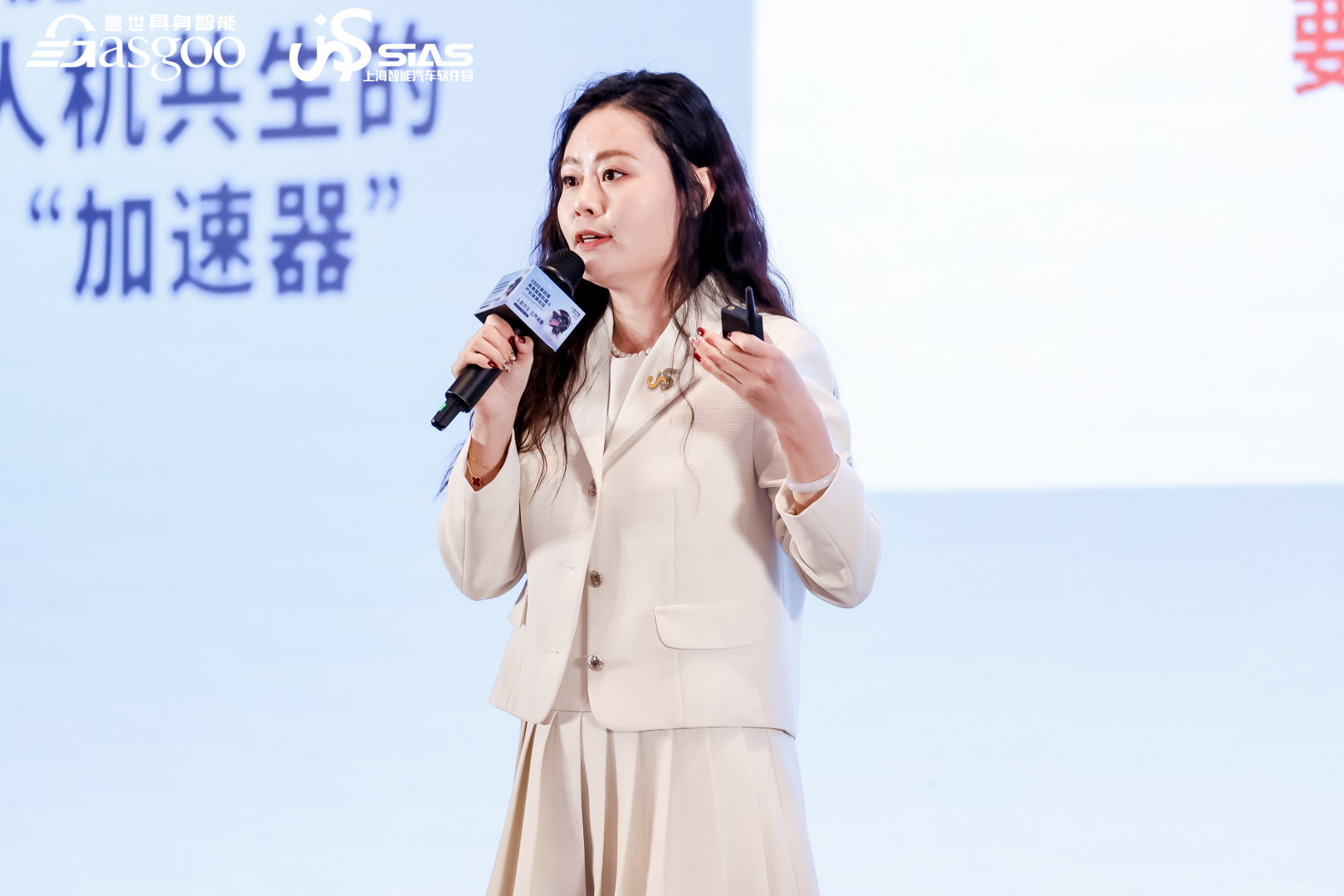
Li Jia | Director of Investment Promotion, Shanghai Intelligent Automotive Software Park
The following is an edited summary of the speech:
A Brief Overview of the Embodied Intelligence Industry
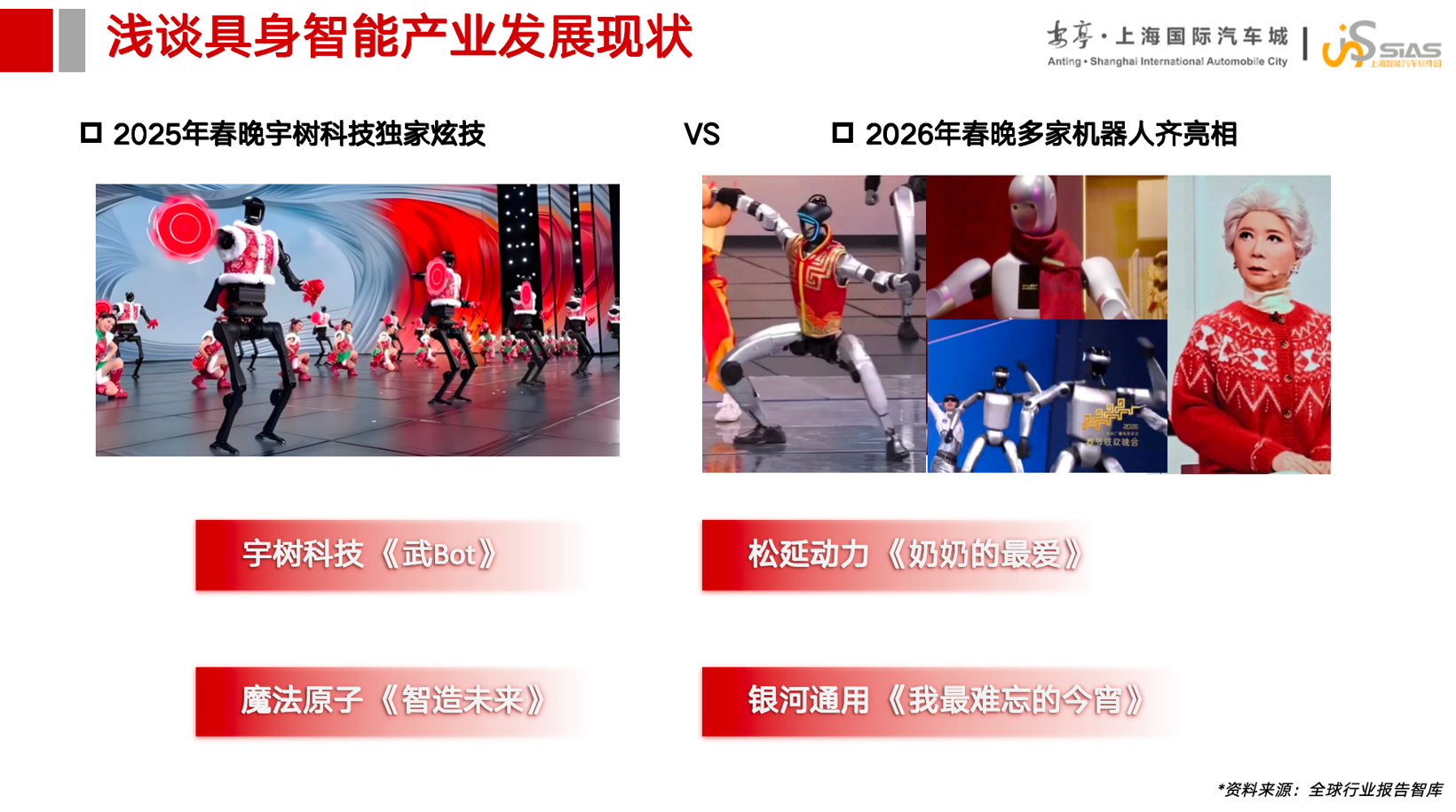
In 2025, Unitree Robotics stole the spotlight at the Spring Festival Gala. By 2026, multiple robots shared the stage, signaling a trend toward accessible technology. Industry observers view 2026 as the inaugural year for scaled commercialization of embodied intelligence—a critical starting point for future economic growth.
Take Unitree as an example. In 2025, its robots appeared relatively rudimentary, relying on pre-set programming for performances like "waving handkerchiefs," with limited human interaction. But in the 2026 program "Martial Arts Bot," the robots demonstrated extreme athletic performance and high-dynamic control capabilities—a marked technological leap.
Source: Speaker's materials
Meanwhile, bionic robots are diversifying, with some products entering the consumer market and moving gradually into home applications. For instance, Magic Atom's performance "Smart Manufacturing Future" showcased capabilities in high-dynamic integrated formations, real-time multi-machine communication, and distributed computing—highlighting a high level of system coordination. Similarly, Galaxy General's "My Most Unforgettable Tonight" exemplified the practical application of "robots + large AI models," serving as a case study in technological convergence.
The rapid evolution of embodied intelligence is driven by forward-looking national strategies and coordinated local efforts. In 2025, the sector was included in the government work report for the first time and integrated into the "15th Five-Year Plan" for future industries. At the strategic level, central ministries like the Ministry of Industry and Information Technology and the Ministry of Science and Technology, alongside local governments in Beijing, Shanghai, and Shenzhen, have rolled out three-year action plans and implementation guidelines. These measures provide macro-level policy direction and localized support for the industry's expansion.
Yet, as the industry booms, it raises critical questions about technology implementation and the ecosystem. Key challenges include defining specific directions for breakthroughs in robotics technology, identifying the tipping point for mass production and profitability, demonstrating scenario-driven capabilities, overcoming friction in software-hardware synergy, and achieving rapid, balanced growth amid the convergence of policy, capital, talent, and standards.
Regarding technological breakthroughs, a brief review can be made across technical strength, key metrics, and industry scalability. In motion control and balance, companies like Unitree rely on core technical supports such as peak joint torque, control precision, servo system performance, reaction time, real-time response speed, and load-bearing capacity.
In terms of end-to-end decision-making, robots require AI capabilities similar to intelligent driver-assistance systems, spanning perception, planning, decision-making, and execution. Deep scenario understanding is paramount. For example, Galaxy Robotics' demonstrations—stringing sausages, cracking walnuts, or picking up glass shards—went beyond simple object recognition and grasping. They involved understanding object properties and scene semantics: can the robot recognize it is handling food, or an object meant for social interaction? This capability dictates the level of deep learning and adaptability. Even a simple task like sweeping requires nuance; apply too much force, and an empty bottle might roll out of reach. Recognizing these subtleties remains a significant challenge.
Another area is dynamic swarm formations. Large-scale drone displays are now common in tourist attractions, shifting through various formations and shapes. This relies on real-time inter-machine communication, distributed decision-making, and overall coordination. In the future, such technology could enable hundreds of robots to operate in concert on battlefields or at disaster rescue sites.
Additionally, Noetix Robotics has developed a bionic interactive robot equipped with micro-motors in its face—a technology that can be extended to elderly care, commercial services, and various other business scenarios.
The trajectory of embodied intelligence mirrors that of intelligent driver-assistance systems a decade ago: moving from lab R&D and testing to demonstration applications, then to large-scale commercial operations, and finally to widespread adoption. What was once a technological luxury for the few has become a travel necessity for the many.
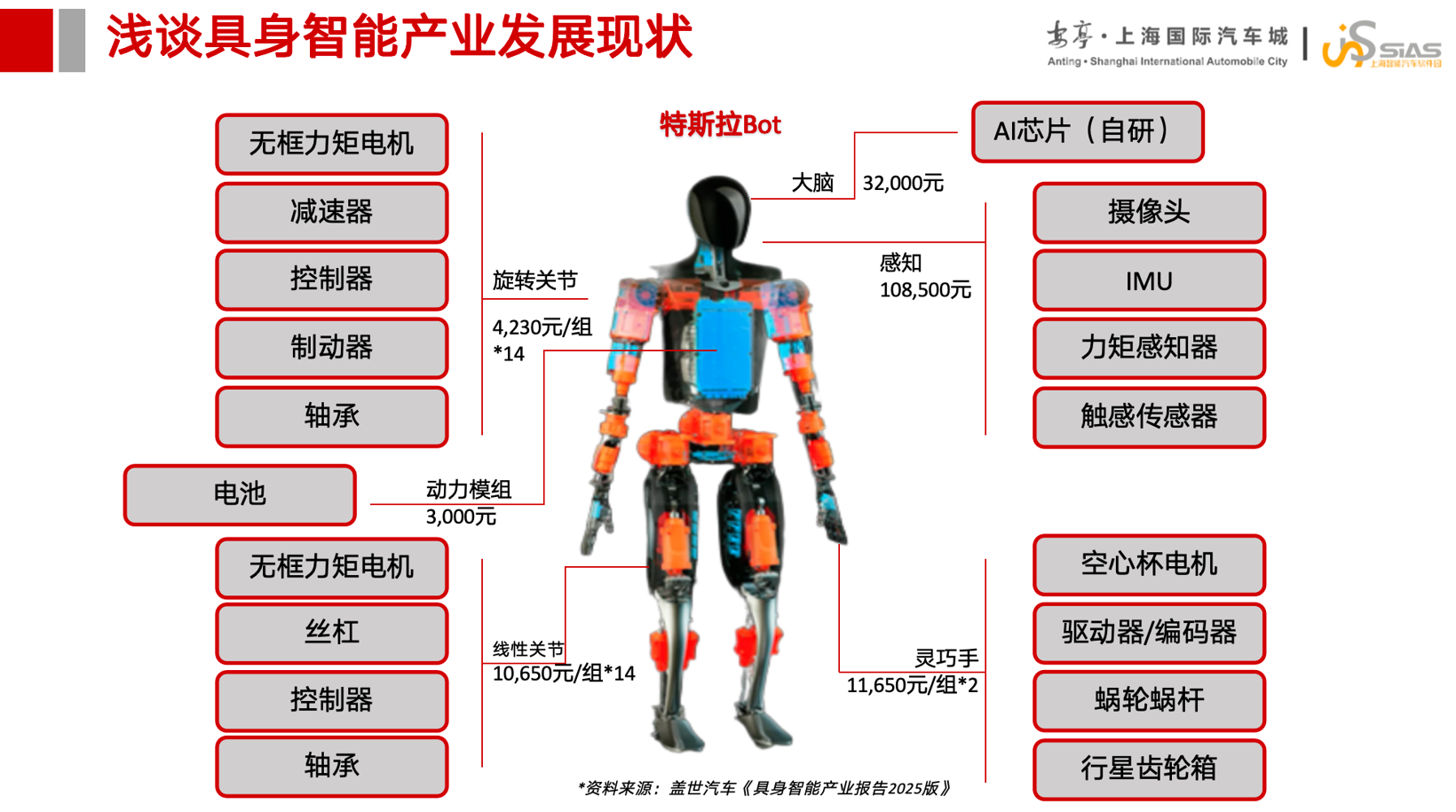
Take Tesla's robot: the hardware cost alone exceeds 370,000 yuan, excluding software development, system debugging, and customization. That price point is clearly steep. Of course, embodied intelligence carriers vary widely in size, scenario, form, and function—ranging from bipeds and four-wheeled units to robot dogs, with potential future forms like robotic birds or cats. Despite this diversity, the core logic of development remains unchanged: true cost reduction and efficiency gains depend on technological breakthroughs, standard coordination, industrialization capabilities, and scenario-driven application. Overall, the maturation of embodied intelligence will take time; it cannot remain merely at the level of performance demonstrations.
Source: Speaker's materials
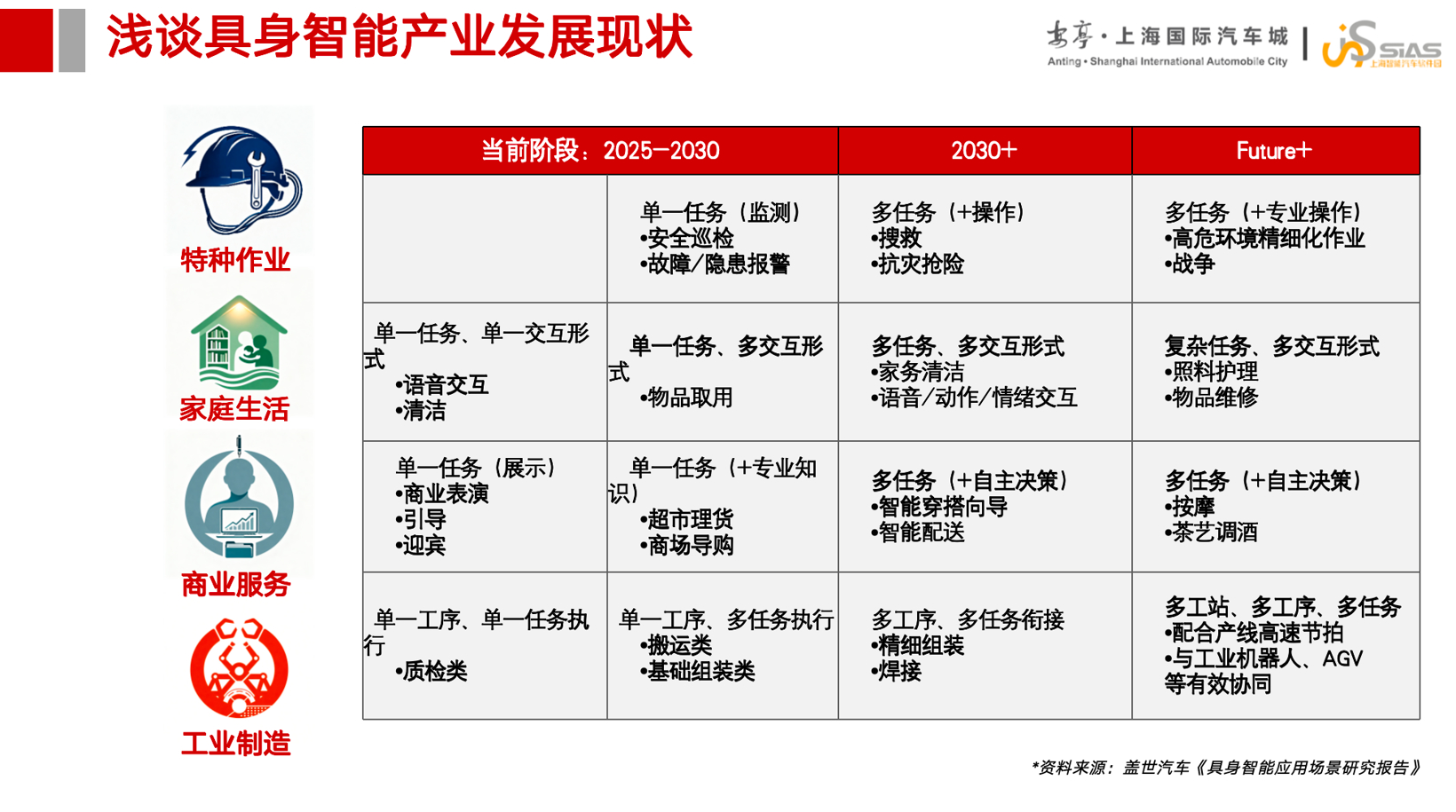
The development of the robotics industry must be driven by practical application scenarios. Without them, the value of embodied intelligence is impossible to demonstrate.
The diagram below illustrates the development path for robotic application scenarios. Initially, applications focused on structured environments—relatively fixed and stable settings like smart manufacturing, including production lines and assembly work. Over time, scenarios expanded into commercial services and extended into households, where market and cost sensitivities are high. Ultimately, robots will enter specialized operation fields such as warfare, rescue missions, and disaster zones.
Source: Speaker's materials
Furthermore, software-hardware synergy is the core path for robots to break into unstructured scenarios. Real-world environments are often unpredictable and volatile; robots must step out of their relatively controllable comfort zones and enter unstructured settings like homes and streets. Bridging this gap requires more than unilateral algorithmic breakthroughs or simply stacking hardware; it demands deep, evolutionary collaboration between software and hardware.
Traditionally, software and hardware in robotics R&D have been siloed. For instance, a robot might master a skill in an ideal simulation environment but fail to replicate it in the physical world due to parameter mismatches. In AI systems, the "brain" may make a decision but struggle to precisely drive a complex "body." Conversely, capabilities learned in simulation may fail to materialize due to physical discrepancies. Take the dexterous hand: higher degrees of freedom enhance grasping and force sensing for delicate tasks, yet structural complexity can compromise reliability and durability. Clearly, software-hardware synergy is critical in robotics development.
From the automotive perspective, "Software Defined Vehicles" has become a major trend in recent years. As the Auto City's forward-looking platform for this shift, the Shanghai Intelligent Automotive Software Park shares a logical consistency with embodied intelligence's emphasis on software-hardware synergy.
The underlying logic and supply chain systems of automobiles are highly relevant to embodied intelligence robots—approximately 70% of automakers' technological reserves can be directly repurposed for robotics. Automotive motors, electronic controls, and steer-by-wire systems can migrate to robotic joint units; sensors like millimeter-wave radar, LiDAR, and cameras can seamlessly adapt to robotic perception modules; EV batteries and thermal management systems offer high-dynamic, long-endurance solutions; and automotive chips provide the real-time response capabilities necessary for localized AI deployment. The automotive supply chain has a solid foundation and potential to shift into robotics. Furthermore, the auto industry's experience in mass production could help robotics achieve cost reduction and greater efficiency.
Shanghai International Automotive City: Transformation and Upgrade Based on Automotive Foundations
The Shanghai International Automotive City has cultivated the automotive sector for 25 years, amassing extensive resources across the industrial and supply chains. The journey hasn't been smooth; navigating through "deep waters" or critical windows for the next stage of development has required deep reflection and continuous choices. Behind these key "firsts" lies a consistent core logic: change. The current shift is a strategic pivot toward embodied intelligence—a move to break the mold and achieve rebirth based on the philosophy of "originating from automotive, but transcending automotive."
In terms of ecosystem, the city has established a complete system covering OEM manufacturing and Global 500 parts suppliers. As these companies advance the "CASE" transformation (Connected, Autonomous, Shared, Electric), new industrial forms are emerging. The supply chain resources accumulated by the Auto City are highly compatible with those needed for embodied intelligence, allowing for a degree of seamless integration. Already, numerous automakers are entering the embodied intelligence space through in-house development or partnerships, and the Auto City is poised to channel its existing resources into this growing sector.
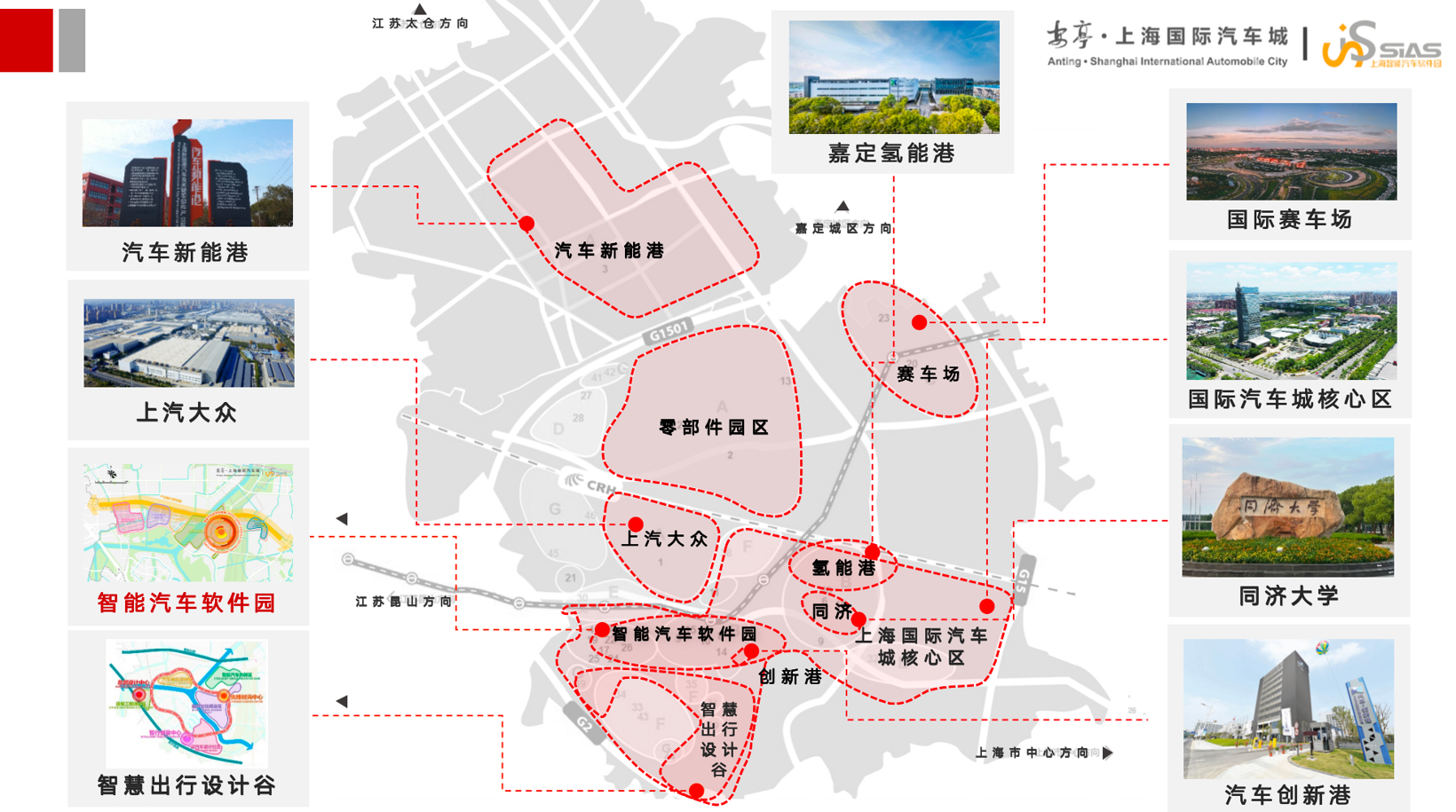
Spanning 100 square kilometers—with a core area of 25 square kilometers—the Auto City is more than just an industrial hub. It integrates living amenities, commercial services, and automotive culture, including F1 facilities, creating a development pattern that fuses industry with city life.
Regarding industrial layout, the New Energy Port focuses on manufacturing batteries, motors, and electronic controls. The Innovation Port serves as a core hub for R&D centers and headquarters specializing in intelligent connected vehicles, autonomous driving, smart cockpits, algorithms, and data. The Tongji Science Park fosters innovation from Tongji University, while the Smart Mobility Design Valley concentrates on automotive styling design and cultural heritage. Currently, the Software Park aggregates companies in autonomous driving, smart cockpits, algorithms, and large AI models.
 Source: Speaker's materials
Growth Accelerator: Full-Cycle Empowerment for Embodied Intelligence Projects
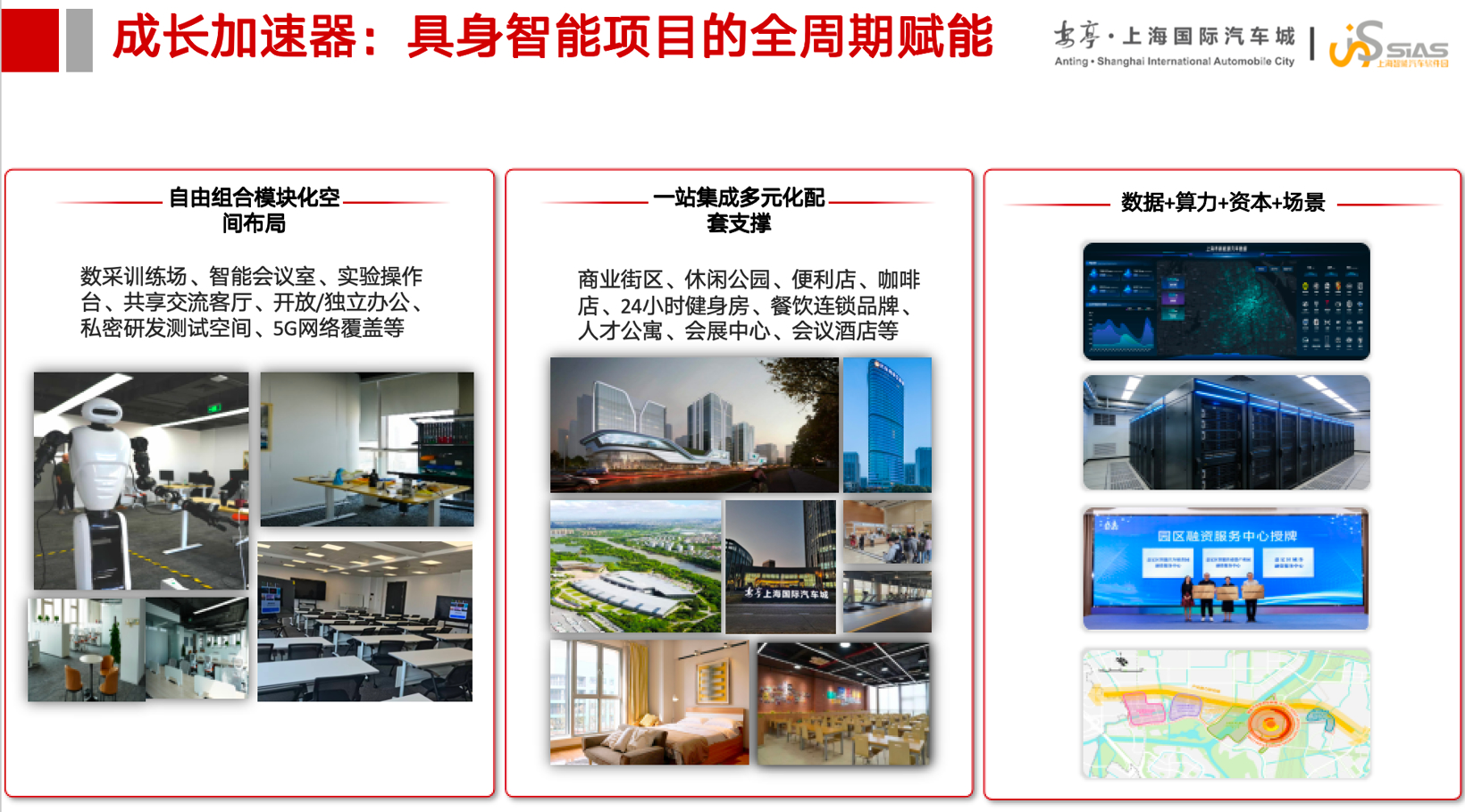
The "π Platform" is an industrial innovation ecosystem designed to provide comprehensive support for embodied intelligence companies. Using physical space as a carrier, it deeply integrates personalized office space, data collection and training, scenario validation, financial capital support, and collaborative exchange to systematically catalyze the growth of innovative projects. We go beyond merely providing space; we aim to build an "innovation rainforest" that combines computing power, data, scenarios, capital, and talent—offering a full-lifecycle environment for embodied intelligence enterprises to grow from "seeds" into towering giants.
To support corporate development, the Auto City provides startup mentoring at the early stage. In the growth phase, it opens various scenario resources across its 100-square-kilometer area—including hospitals, schools, parks, offices, factory zones, and districts—for hardware testing, software development, and simulation verification. On the capital front, the Auto City has established three funds, each worth 1 billion yuan, targeting different investment strategies and sectors. Additionally, a team of professional service officers has been deployed, and ecosystem exchange platforms are continuously being developed to help companies integrate industry with finance.
The diagram below illustrates the scalable, flexible spaces, one-stop diversified support, and the cumulative effects of data, computing power, capital, and scenarios. Some might view this as just another accelerator or incubator—a familiar concept. However, it is important to note that incubators vary significantly in quality. Furthermore, we maintain strict screening criteria: projects must be highly relevant to embodied intelligence, spanning hardware, software, algorithms, and new materials like lightweight composites.
Source: Speaker's materials
Secondly, the incubator has already nurtured relatively mature projects, with several securing high-quality orders late last year. We expect new entrants to play a role in extending, supplementing, and strengthening the supply chain.
Third, we assess project quality based on the founding team, the specific market segment, market potential, and the business model.
Finally, at the "π Platform," innovation is not a solitary spark. It is systematic growth nourished by a complete ecosystem.
(The above content is sourced from the speech "Embodied Intelligence 'π Platform': Building a Growth 'Accelerator' for Human-Machine Symbiosis," delivered by Li Jia, Director of Investment Promotion at the Shanghai Intelligent Automotive Software Park, on March 17, 2026, at the 4th Embodied Intelligent Robot Industry Development Forum.)


