



Gasgoo Munich- The Intelligent Electric Vehicle Development Forum (2026) (Smart EV 2026) convened in Beijing on April 11 and 12. During a breakout session on intelligent powertrain innovation, Fang Haifeng — chief expert at the China Automotive Technology and Research Center (CATARC) and deputy director of the China Automotive Strategy and Policy Research Center — delivered a keynote. He delved into the market positioning of hybrid vehicles, the development of standard systems, and the future competitive landscape.
Hybrids, he argued, are far from a mere stopgap solution. Instead, they represent a necessary path toward building an automotive powerhouse. The market is set for a long-term coexistence of diverse technologies, spanning both energy-saving and new-energy vehicles.
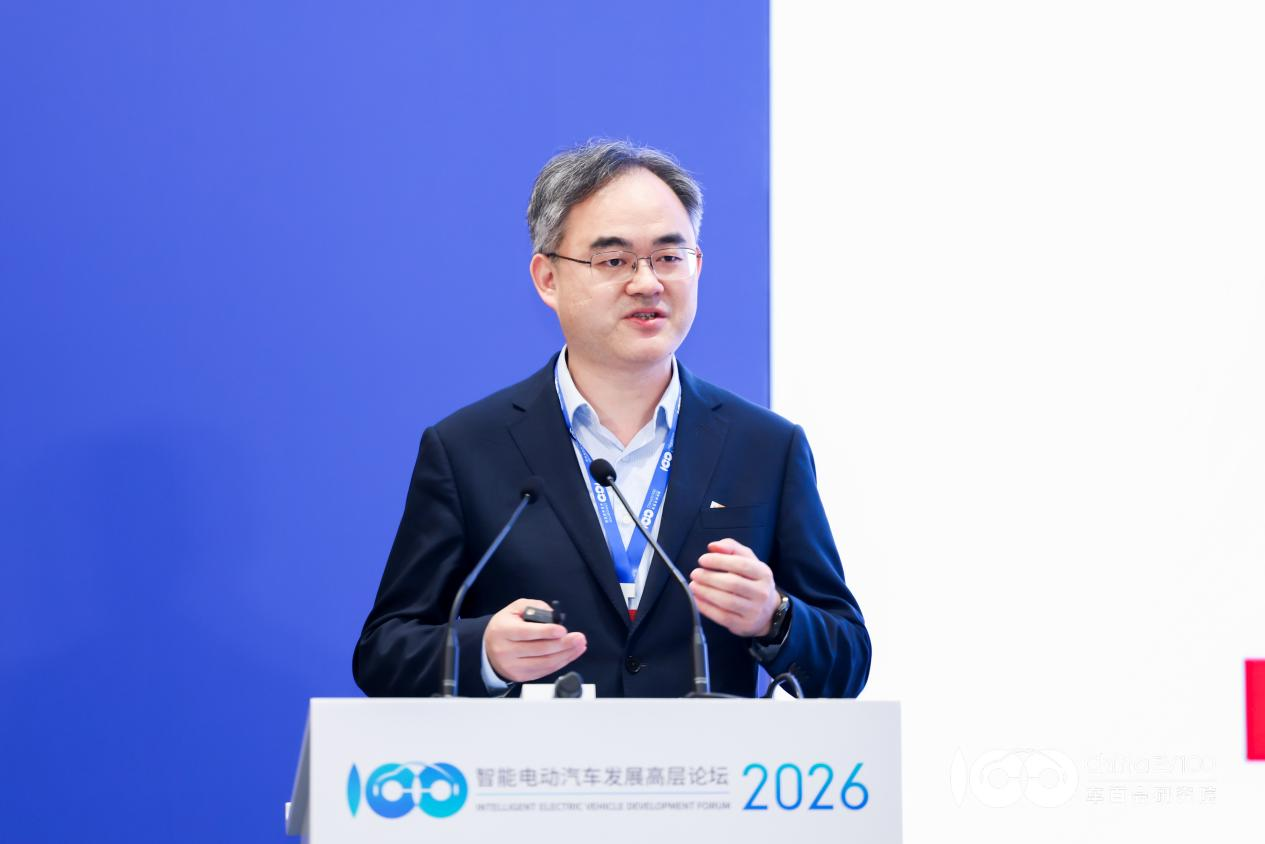
Image Credit: Chebaihui Research Institute
Fang noted that backed by industrial planning and fiscal incentives, China has led the world in new-energy vehicle sales for 11 consecutive years. By 2025, the penetration rate had hit 48%, with the country accounting for nearly 70% of the global total. Within that mix, plug-in hybrids and extended-range electric vehicles made up 36% of the NEV market, with absolute volumes surging. Notably, non-plug-in hybrids reclaimed a 5.3% share of sales in the first two months of 2026.
This suggests a market landscape where pure electrics and hybrids are advancing in tandem — proof, Fang believes, that hybrid technology is here to stay.
Still, Fang cautioned that historical leaps in market scale have often been tied to policy shifts. The industry is now at a critical juncture, transitioning from policy-driven to market-driven growth. Facing a new reality of a market exceeding 10 million units, the sector — having been helped onto the horse — may need an extra push, requiring more precise policy support to sustain momentum.
Looking ahead, Fang projected that new-energy vehicles will capture roughly 70% of sales by 2030. While pure electrics will remain the dominant force, market share for PHEVs, extended-range vehicles, and hybrids is expected to keep expanding.
Citing the Technology Roadmap for Energy-Saving and New Energy Vehicles 3.0, he added that traditional internal combustion passenger cars are set to become fully hybridized by 2035. By 2040, hybrids are projected to account for more than 65% of new commercial vehicles running on conventional energy.
Fang also highlighted that fuel cell vehicle sales in China surpassed the 10,000-unit mark last year, boosting the country's global share from 20% to between 60% and 70%. With the government launching a new round of hydrogen energy pilot programs in March, the future landscape will be defined by competition across multiple technological fronts.
Furthermore, Fang pointed to the convergence of smart electric vehicles, flying cars, and humanoid robots, noting shared core technologies and supply chains. Hybrids, which rely on the same core "three-electric" and "three-intelligent" systems, offer broader application scenarios and scalability. They are poised to serve as a strong carrier for this integrated development moving forward.

