



Gasgoo Munich- Gasgoo reported on April 12 that at the Smart EV Development High-Level Forum (2026), Onvo President Shen Fei broke down the core value of battery separation and swapping for the industry's supply-side reform. Examining industry shifts, technological evolution, and business model innovation, Shen highlighted a broader trend: the refueling ecosystem is transitioning from standalone charging to a diversified, integrated approach.
The new-energy vehicle sector has entered a new phase defined by the deep integration of electrification and intelligence. Consequently, market competition is pivoting away from price wars on products to a broader contest spanning technology, ecosystems, and business models.
Breaking the cycle of hyper-competition doesn't hinge on building cheaper vehicles, Shen argued. Instead, the industry must reconstruct its supply structure through a triple innovation of technology, philosophy, and business models. NIO Group has poured more than 67 billion yuan into R&D over the past 12 years, developing 12 full-stack proprietary systems. That investment provides a robust technological foundation for the Onvo brand and the rollout of its battery-swapping model.
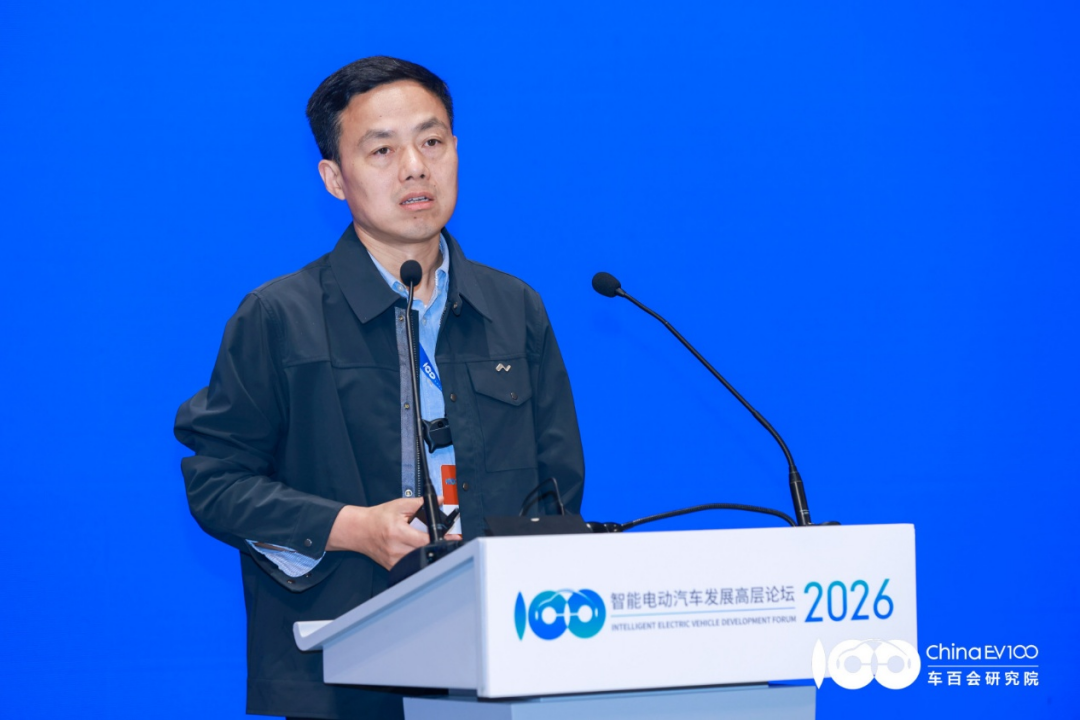
Onvo President Shen Fei. Image source: China EV 100 Research Institute
As a central pillar of the refueling revolution, battery separation challenges the traditional notion of tethering the battery to the vehicle, addressing the critical mismatch between the lifespan of a mechanical chassis and an electrochemical battery. This approach significantly extends the lifecycle of electric vehicles and boosts residual values. The Onvo L60, for instance, claimed the title of industry residual value champion in 2025 — just over a year after its launch — driven by this separation model. Users can select batteries based on their range needs, easing maintenance concerns and enabling more efficient resource allocation.
Intelligent technology is providing the critical support needed to scale battery swapping. With smart reservation and scheduling systems, users can remotely check queue times and plan their charging stops independently, significantly alleviating congestion. Onvo’s autonomous driving has now logged more than 460 million kilometers, with active safety features triggered over 380,000 times. Looking ahead, the 2026 L90 model will feature NIO’s in-house 5nm intelligent driving chip, the Shenji NX9031 — the world’s first of its kind — keeping the brand at the forefront of the intelligent driving experience.
Economically, while the initial investment for a battery-swapping station runs two to three times that of a standard charging station, the cost per kilowatt-hour becomes more competitive through diversified revenue streams. These include utilizing off-peak electricity, vehicle-to-grid (V2G) interaction, and integrated energy services. In Zhejiang province, for example, users participating in two-way grid interaction can earn an additional 15,000 to 20,000 yuan annually — creating a sustainable ecosystem where users, companies, and the industry all benefit.
With its global leadership in patents, standards, and scale, China's battery-swapping model is gaining recognition in markets including the U.S. and Europe. Shen emphasized that swapping — the physical manifestation of battery separation — has evolved from a corporate experiment into an industry consensus and a global trend. It is set to become a core form of refueling infrastructure in the smart electric era, propelling the industry toward a new stage of high-quality development.

