



Gasgoo Munich- April 12 — Wang Qing, deputy director of the Market Economy Research Institute at the Development Research Center of the State Council, delivered a deep dive into the current auto market landscape at the Smart EV Development High-Level Forum (2026). His analysis covered shifting growth logic and emerging consumer trends, offering an authoritative roadmap for the industry’s steady development.
Wang noted that China’s domestic passenger vehicle market slumped in the first quarter of 2026. Although the pace of decline narrowed in March, the recovery fell short of expectations—a result of overlapping headwinds. First, broader consumption has cooled, and trade-up demand—now a larger share of the mix—is more sensitive to macroeconomic shifts and income expectations. Second, sales growth surpassed 9% last year, well above the 3–4% potential rate, meaning the previous surge pulled forward some demand. Finally, policy adjustments, including changes to new-energy vehicle purchase taxes, triggered short-term market contraction.
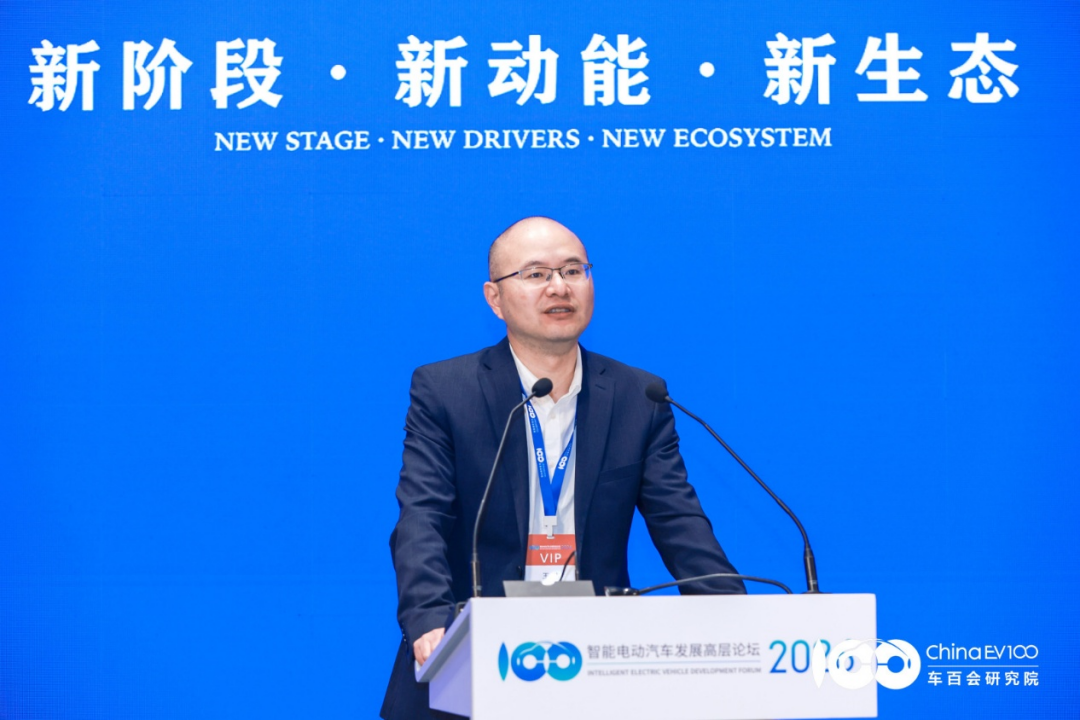
Wang Qing, deputy director of the Market Economy Research Institute at the Development Research Center of the State Council; Image Source: China EV 100 Institute
The long-term logic for market growth remains intact. China is still in a medium-to-low growth band of 200 to 400 vehicles per 1,000 people. Potential annual growth sits around 2% leading up to 2030, though it has held at 3%–4% in recent years. The market is poised for three structural shifts: moving from incremental growth to stock adjustment, where the existing fleet plays a bigger role; pivoting from a domestic focus to a dual-track approach where exports become a key growth engine; and shifting from sheer scale expansion to value deepening, with high-quality development as the core guide.
Four new trends are reshaping consumption and marketing. First, omnichannel marketing is now table stakes; automakers must tap into derived demands like road trips and camping by integrating into tourism and retail hubs. Second, AI and cutting-edge technology are upgrading the customer experience, reinforcing direct-to-consumer (DTC) models and leveraging KOLs and KOCs to drive impulse buying. Third, minimalist and green consumption is taking hold, with rising acceptance of used vehicles and a rational cooling of average transaction prices. Fourth, embedding diverse cultural elements is critical—building competitive differentiation through product storytelling and emotional resonance.
Wang emphasized that the current market correction represents the growing pains of transitioning to high-quality development. The industry must seize structural opportunities—leveraging stock activation, global expansion, and consumption upgrades—to drive a steady transformation.

