



Gasgoo Munich- At the Smart Electric Vehicle Development Forum on April 12, Xu Changming, deputy director of the National Information Center, stated that the 2026 auto market will be defined by "domestic stability and international growth."
Domestic Stability: A Weak Q1 Does Not Mean a Weak Year
First, the domestic market. A 22% drop in domestic demand and a 17% decline in retail sales during the first quarter would be sufficient to raise concerns in almost any year. Yet Xu told the forum this is largely driven by consumer hesitation, not a fundamental collapse in demand.
A mid-March survey by the National Information Center found that among potential internal combustion engine (ICE) vehicle buyers, 59% intend to proceed as planned, while 38% are postponing their purchase. Only 4% have abandoned the idea entirely. In other words, nearly 40% of demand has simply been deferred.
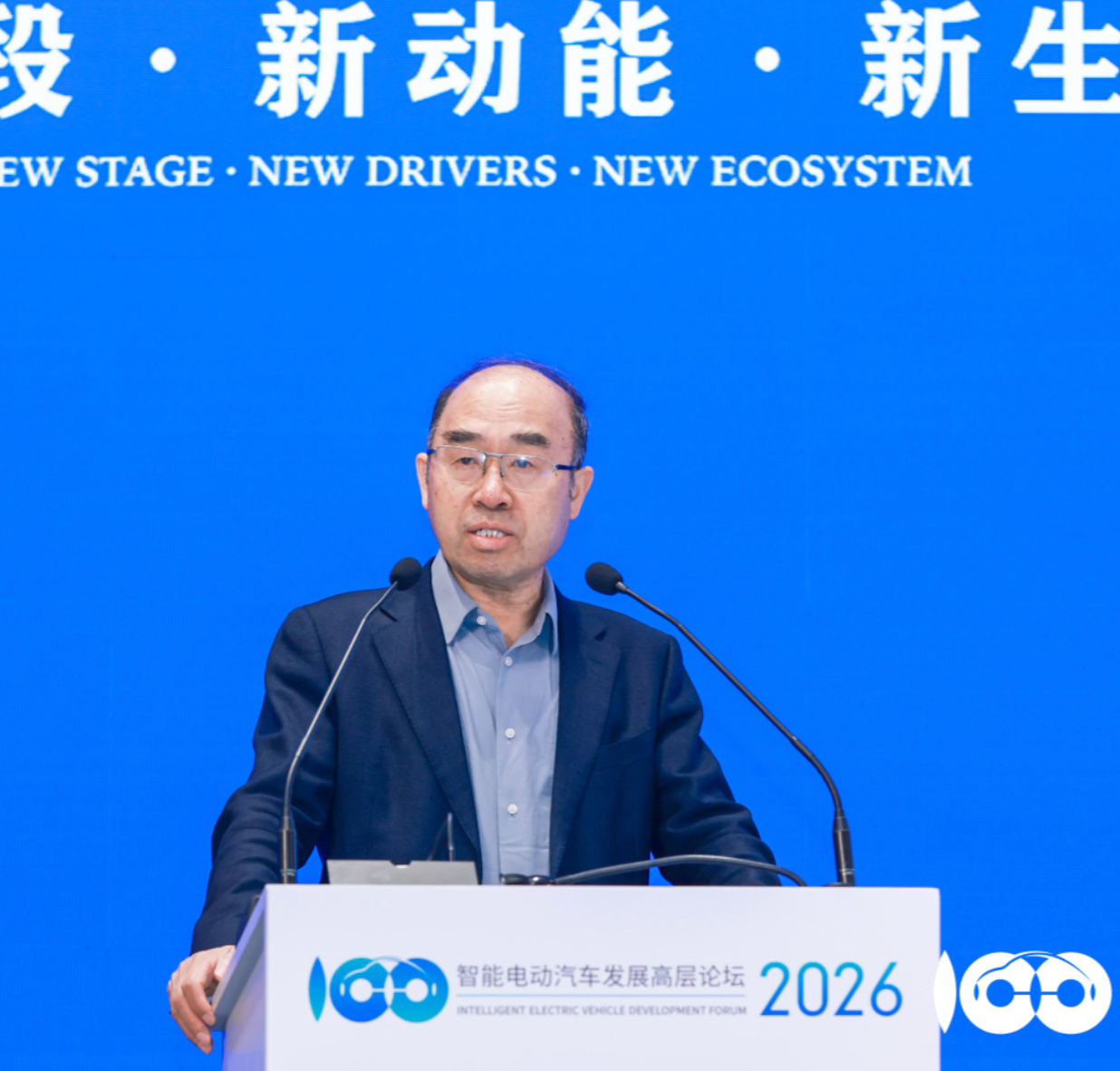
Xu Changming of the National Information Center; Image source: China EV 100 Research Institute
Why the delay? Xu argues the core issue is not the policy shift itself, but the slow rollout of local implementation. By early January, only six provinces had released specific subsidy rules; that number rose to nine by mid-January and hovered around 20 by the end of the month. Many consumers are delaying spending, waiting for local clarity—and watching to see if automakers will cut prices further.
Rising oil prices in March intensified this wait-and-see sentiment. The survey showed 38% of ICE buyers postponing purchases—a direct contributor to the 26% year-on-year plunge in ICE sales in March, compared to an 18% decline for new energy vehicles (NEVs).
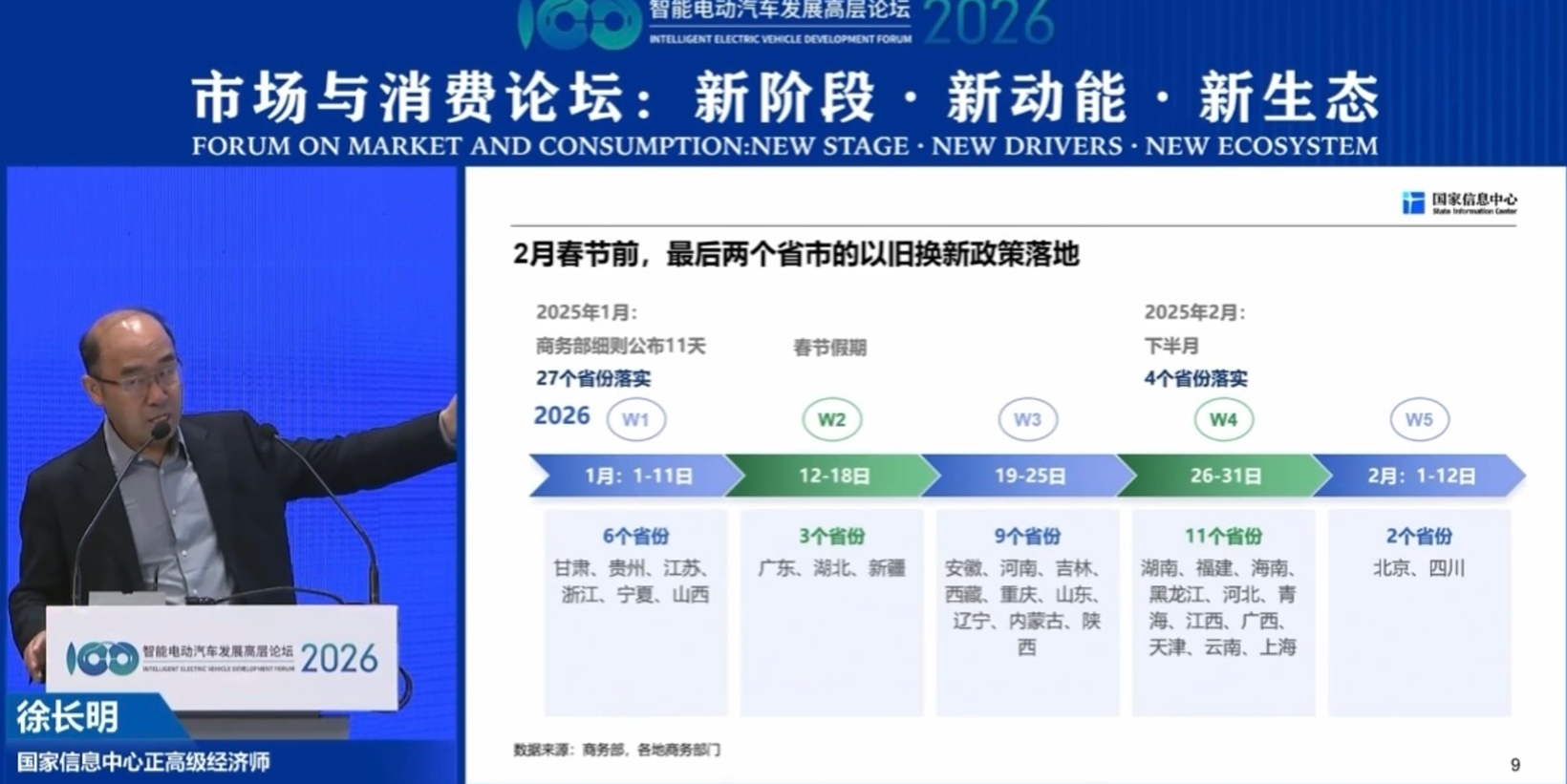
Image source: China EV 100 Research Institute
Such hesitation during a "policy window" is historically common. Xu believes pent-up demand will likely materialize later on. Dealer feedback reflects this: 9.8% saw a clear recovery in March, 20.7% expect it in April, and 35.9% look to May—meaning 70% of respondents anticipate a rebound by the end of the second quarter. Direct interviews by the center also suggest the market has shown signs of recovery since late March.
Deeper structural factors also support the forecast for a "stable full year."
Xu outlined three phases of China's auto market: 2000 to 2010 was a period of hyper-growth with an average annual increase of 34%; 2011 to 2017 saw rapid growth averaging 10.5%; and since 2018, the market has entered a phase of fluctuating, slow growth with an annual rate of about 2% to 3%. In short, the Chinese auto market has moved past wild swings and settled into a relatively stable trajectory.
On the macroeconomic front, forecasts from over a dozen institutions put China's 2026 GDP growth at an average of around 4.73%. Xu estimates that a 4.8% growth rate is sufficient to sustain a normal market scale of 23 million to 24 million vehicles. International experience shows that countries with stable economic growth—like Germany and Japan—tend to have stable auto markets, whereas most other nations see significant volatility.
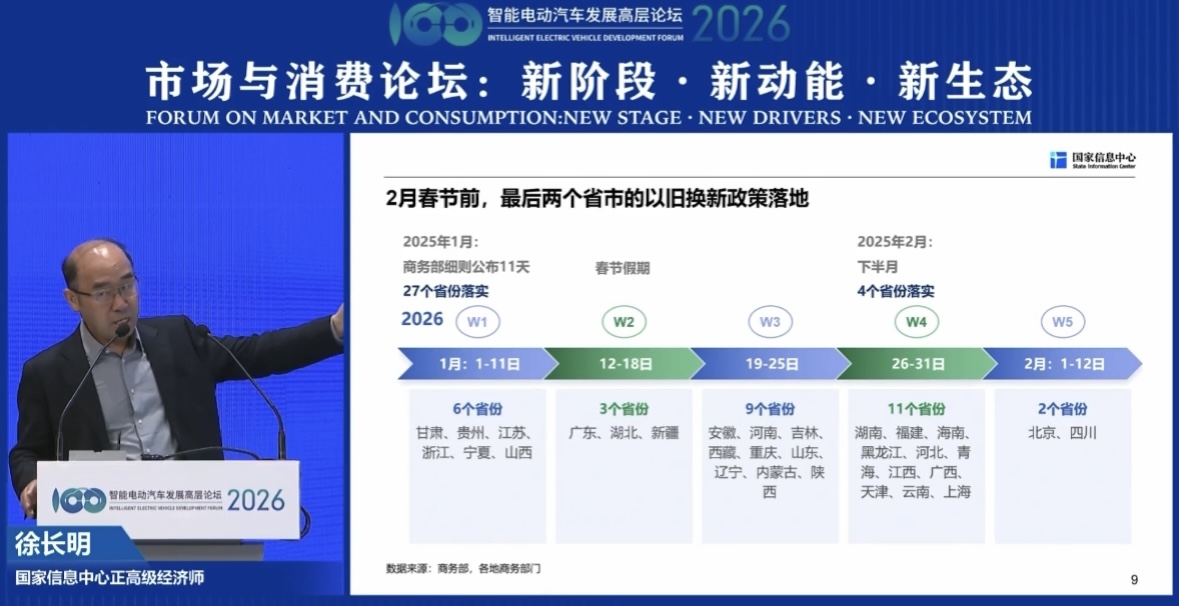
Image source: China EV 100 Research Institute
On the policy front, this year's subsidy scheme has been overhauled: incentives have shifted from fixed amounts to percentages of the vehicle price. Scrapping an old car for a new NEV now provides a subsidy of 12% of the price, capped at 20,000 yuan; for an ICE vehicle, it is 10% capped at 15,000 yuan. Trade-ins for ICE vehicles receive a 6% subsidy.
Xu believes this approach is no less aggressive than previous purchase tax cuts in 2009–2010, 2015–2016, and 2022. However, structural impacts are already visible: lower-priced models (in the 60,000 to 80,000 yuan range) may see slowing growth or even negative growth, while higher-priced models stand to benefit.
Another key shift: in 2025, individuals could claim both scrapping and replacement subsidies simultaneously, but in 2026, this is limited to one subsidy per person. Xu notes this expands the pool of eligible households and broadens policy coverage. It also ensures the incentives will likely last the full year—avoiding last year's scenario where local quotas were exhausted by the fourth quarter.
Weighing these factors, Xu predicts that the first quarter's decline will likely be offset by gains in the fourth. For the full year, stability will be the dominant theme; a slight dip is possible, but a market stall is unlikely.
International Growth: Steady Progress After 7.1 Million Units
If the keyword for the domestic market is "stability," then for the export market, it is "growth"—specifically rapid growth.
Xu presented data at the forum showing that during the "14th Five-Year Plan" period, China's auto exports surged from 1 million units in 2020 to 7.1 million in 2025. In the first quarter of 2026 alone, new vehicle exports reached 2.23 million—a 57% year-on-year increase. "That is a very fast pace," he remarked, given the sheer scale of the base.
Can this growth be sustained? Xu offered three reasons to believe it can.
The global auto market, particularly in emerging economies, still holds significant room for growth. Since 2024, the National Information Center has studied over 200 countries and regions, finding that global sales have increased by roughly 10 million units every decade for the past 60 years. The accelerated growth between 2000 and 2017 was largely driven by the simultaneous rise of China and India.
Future growth will be powered by other emerging markets. Mature markets have remained essentially flat over the past two decades, while emerging markets have expanded from just over 9 million units to more than 40 million—historically surpassing mature markets in scale. Take ASEAN: with a population of 700 million, it currently sells only 3 million new vehicles annually. By contrast, China's 1.4 billion people support sales of 24 million.
Xu projects that as economies develop and the auto industry matures, the ASEAN market could eventually reach annual sales of 11 million to 12 million units—making it a "lucrative market" for Chinese auto exports.
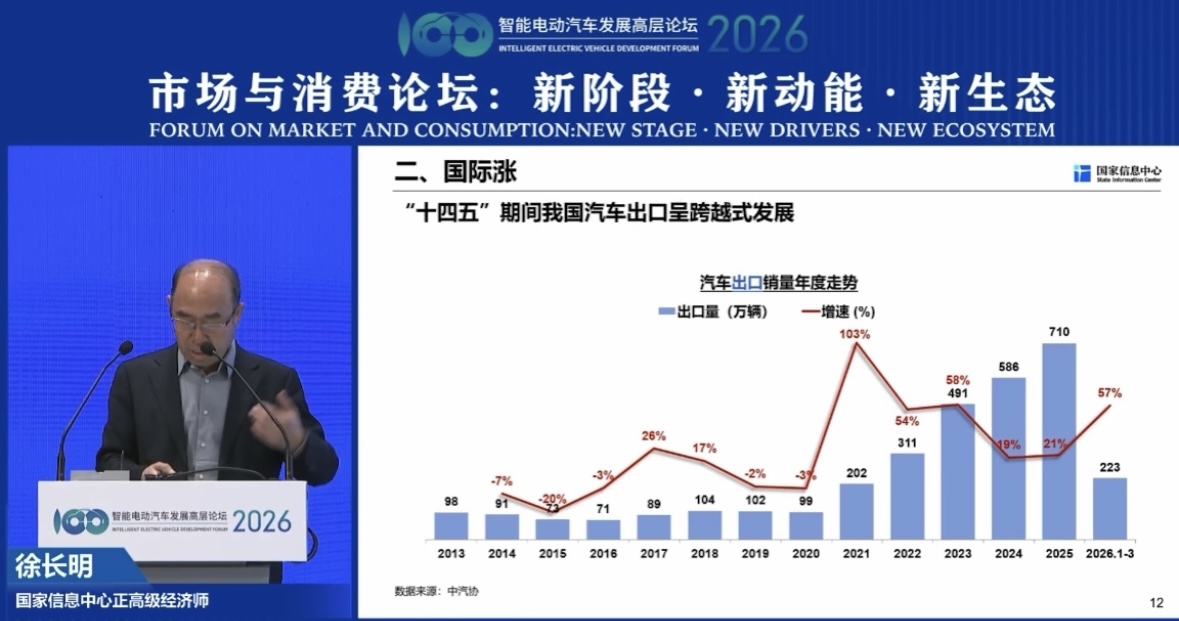
Image source: China EV 100 Research Institute
At the same time, the competitiveness of Chinese brands has undergone a qualitative shift. Today, 6.5 out of every 100 cars sold globally are Chinese brands, compared to less than one five years ago. In emerging markets, that figure rises to 13.6; in the EV sector, it hits 18.7—nearly one in five. More importantly, brand reputation is catching up.
Xu drew a sharp contrast with the failure of Chinese motorcycles in Vietnam, which was largely due to poor after-sales support, arguing that this time is different. In Thailand, 2025 EV sales totaled 126,000 units, with Chinese brands accounting for 109,000—an 86% market share. In Indonesia, 91.7 out of every 100 EVs sold are Chinese. Local consumers praise Chinese EVs for their intelligent features, such as safety systems, adaptive cruise control, and collision avoidance.
For ICE vehicles, Chinese brands hold a 23.6% share in Malaysia. Consumers see prices comparable to local brands but with far superior configuration—intelligent cockpits, sunroofs, power seats, and LED lights are strong draws for younger buyers. Xu did sound a note of caution: the main risk lies in building after-sales systems. With many vehicles exported as used cars or "zero-kilometer used cars," ensuring a robust service network is critical to sustaining that hard-won reputation.
Furthermore, automakers have elevated exports from a "sales supplement" to a "strategic imperative." In 2025, Chery maintained its lead with 1.33 million exports, while BYD exceeded the 1 million mark to reach 1.01 million. SAIC Motor Passenger Vehicle followed with 790,000 units, and Geely, Changan, and Great Wall Motor all exceeded 400,000. JAC, Dongfeng, GAC, and FAW also reached the 100,000-unit level.
More importantly, the entire supply chain—parts, logistics, dealerships, auto finance, and aftersales services—is expanding overseas simultaneously. Some dealers have already built 4S stores abroad, and financial institutions are following suit with their own layouts.


