



Gasgoo Munich- On April 12, Zhang Yun, global CEO and China chairman of Ries Strategy Consulting, took the stage at the Smart Electric Vehicle Development High-Level Forum (2026). His speech centered on "New Opportunities and Methods for Chinese Enterprises in the Era of Super Technology," offering strategic insights into the future trajectory of China's automotive industry drawn from the firm's decade of deep involvement in the sector.
Zhang Yun outlined three core opportunities for Chinese enterprises over the coming decades: the evolution of consumer concepts, the dawn of the super technology era, and the rise of global branding. The automotive sector stands alone in capturing all three at once—a "once-in-two-centuries" development opportunity for China's carmakers. He noted that while the past decade of transformation was driven by energy transitions—propelling pure electric, hybrid, and extended-range vehicles to the forefront—the next decade will see the battleground shift to super technology and global brands. Super technology, in particular, is set to redraw the map of global automotive competition.
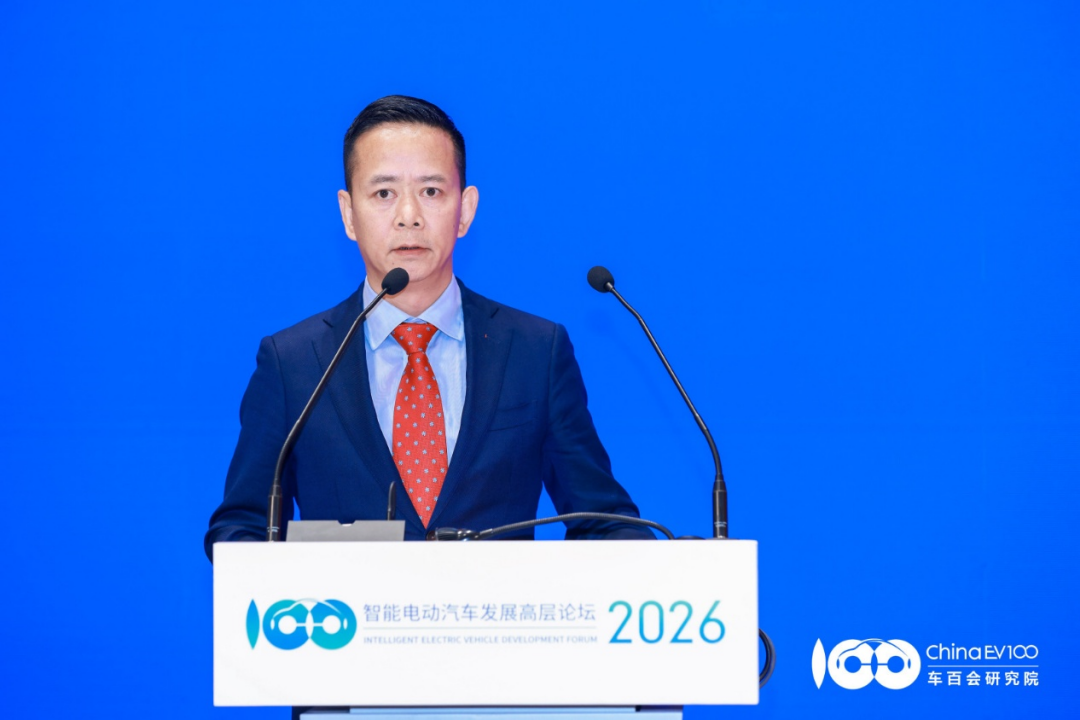
Zhang Yun, Global CEO and China Chairman of Ries Strategy Consulting; Source: China EV100 Research Institute
Zhang Yun emphasized that in the AI era, automobiles will evolve into a form of embodied intelligence—essentially "car-shaped robots." Yet, no matter how technology shifts, two fundamental human desires remain unchanged: riding comfort and the freedom of driving. The core value of super technology lies in creating a super-comfortable mobile space; future vehicles could serve as private sanctuaries for work or leisure. Meanwhile, autonomous driving will return humans to a state reminiscent of the horse-drawn carriage era—free from the need to drive and able to focus entirely on the experience.
Super technology will also drive the emergence of new categories centered on "super driving" experiences. Take flying cars: they aren't designed to fly the entire journey but are ultimate off-road vehicles that fly when needed, tapping into humanity's instinct to explore and seek freedom. While Zhang Yun acknowledges that riding comfort represents the more mainstream demand, he argues that both paths will define the future trajectory of the industry.
However, super technology alone is not enough. Companies must translate technical advantages into category dominance, using category innovation to build cognitive barriers and avoid getting trapped in a cycle of technical one-upmanship. For instance, Ries helped XPENG position itself as an "AI Car" with standard intelligent driving across its lineup—a sharp contrast to Tesla's paid, optional model. Zhang Yun also noted that Tesla and Huawei have already established powerful mindshare advantages by positioning themselves as super technology enterprises.
In conclusion, Zhang Yun argued that the disruptors of tomorrow's automotive landscape will be those who seize the trends of super technology, be the first to define "super categories" centered on either super riding or super driving, and successfully establish themselves as super technology brands.


