



With the US-Iran conflict flaring up this week, the Strait of Hormuz—the "energy heart" of global shipping—is navigating unprecedented uncertainty.
This geopolitical storm hasn't just rattled global oil prices; it has also trapped Hyundai Motor Group's first localized production base in the Middle East in a precarious bind.
A CKD (completely knocked down) plant originally slated to launch in Saudi Arabia in the fourth quarter of this year now faces mounting pressure to revise its roadmap, as logistics costs soar and the risk of supply chain disruptions intensifies.
Red Hedging Can't Dodge This Logistics 'Perfect Storm'
Hyundai's Saudi facility sits in King Abdullah Economic City along the Red Sea coast—a location that, geographically at least, seems to steer clear of the direct conflict swirling around the Strait of Hormuz.
Yet within the interconnected web of the global auto industry, insulating operations from a blockade at such a critical "chokepoint" is nearly impossible.
The reality on the ground is far grimmer than anticipated. Following the attack on Iran, the Islamic Revolutionary Guard Corps announced on the night of February 28 that no vessels would be permitted to transit the Strait of Hormuz.
This sudden shock has roiled global shipping markets, subjecting the industry to yet another extreme stress test.
Analysts warn that as the sole maritime passage from the Persian Gulf to the Indian Ocean, any substantial blockade of the Strait could trigger short-term panic buying of oil and vessels. Such hedging moves would only amplify the strain on energy transport and shipping capacity in the near term.
Across different shipping sectors, the impact is expected to vary: oil tankers are most exposed, followed by container shipping, while dry bulk transport faces a relatively softer blow.
Data from Clarkson Research shows roughly 11% of global maritime trade passes through the Strait of Hormuz. That includes 34% of oil exports, 30% of liquefied petroleum gas (LPG) exports, 20% of liquefied natural gas (LNG) trade, 18% of chemical trade, and 7% of automotive trade. Container and dry bulk trades account for 3% and 2%, respectively.
Although Hyundai's plant sits on the Red Sea, it operates on a typical CKD model: core components like engines and transmissions arrive by sea from Korea, where they are then assembled locally.
This means that while the exit route for finished vehicles may remain open, the "inflow artery" for raw materials remains at the mercy of the Strait of Hormuz.
Already, major international shipping lines like Hapag-Lloyd have suspended bookings in the region or diverted vessels around the Cape of Good Hope, significantly extending transit times.
German container group Hapag-Lloyd, for instance, announced on February 28 that it would halt all transits through the Strait of Hormuz until further notice. The carrier warned that services calling at Gulf ports could face delays, diversions, or schedule adjustments.
Even though Hyundai is shipping semi-finished components, transporting goods through a high-risk war zone makes rising logistics surcharges all but inevitable.
Chokepoint Pain: The Fragility of CKD Models and the Squeeze on Chinese and Korean Automakers
"Based on last year's data, Hyundai and Kia accounted for just 7.7% and 7.6% of sales in Africa and the Middle East, respectively, with the region contributing no more than 5% to profits," said Kim Chang-ho, an analyst at Korea Investment & Securities. "At current levels, the impact on the profitability of both automakers remains limited."
But that is a static snapshot based on current conditions. Should logistics costs remain elevated for an extended period, there is no guarantee those slim margins won't be completely eroded.
The "clot" in the Strait of Hormuz has effectively burst a bubble surrounding globalized manufacturing: the extreme fragility of just-in-time production when faced with severe geopolitical risk.
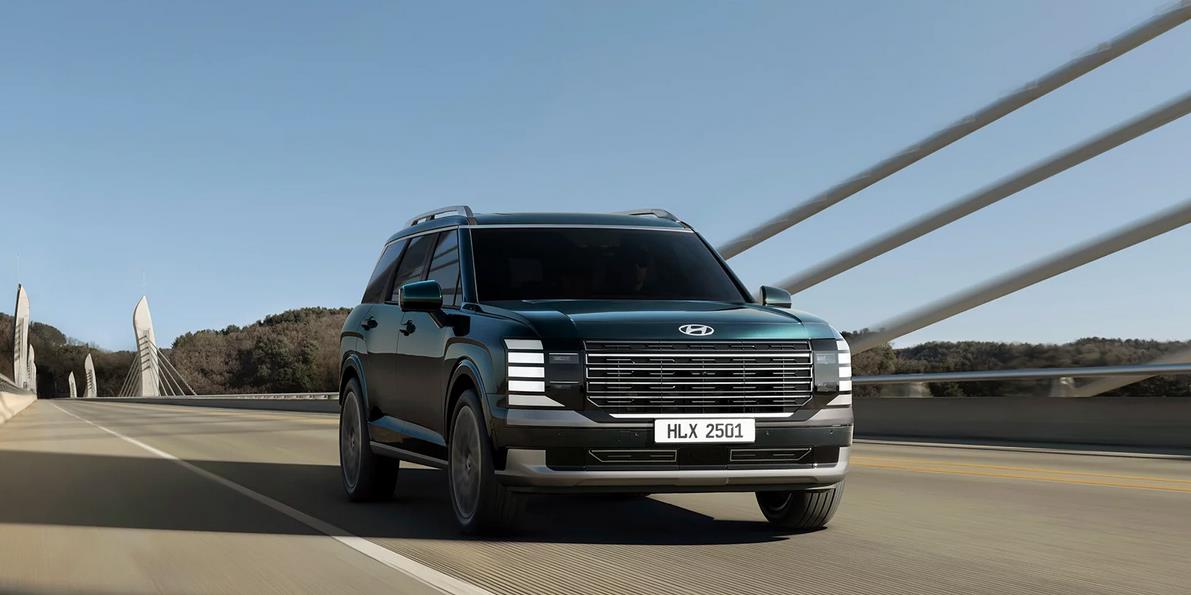
Image Source: Hyundai Motor
For Hyundai, this is more than a delayed launch; it is a blow to strategic credibility. The plant is a joint venture with Saudi Arabia's Public Investment Fund (PIF) and serves as a flagship project under Crown Prince Mohammed bin Salman's "Vision 2030" to reduce oil dependence and build a manufacturing base.
The site is slated to become a regional manufacturing hub serving the Middle East and Africa. But if core components fail to arrive on schedule, the goal of starting production in the fourth quarter could evaporate—potentially shaking Saudi confidence in Hyundai's ability to deliver in the future.
The "thunderclap" from the Strait of Hormuz has delivered a costly lesson in geopolitics to every Chinese and Korean automaker with ambitions to expand abroad.
Whether Hyundai's Saudi plant launches on time now depends less on construction progress and more on when the smoke clears over the Strait of Hormuz.
For the broader auto industry, this crisis is forcing a brutal consensus: expanding into the "Global South" requires more than just cost advantages and market enthusiasm. Rebuilding supply chains with immunity to geopolitical risk is now the key to survival.


