



Gasgoo Munich- China's Ministry of Finance, State Taxation Administration, and Ministry of Industry and Information Technology have jointly announced that, effective January 1, 2027, preferential tax treatments will be scrapped. This includes the policy halving the vehicle and vessel tax for energy-saving vehicles, as well as the full exemption for pure electric commercial vehicles, plug-in hybrids (including extended-range models), and fuel cell commercial vehicles.

Image Source: Ministry of Finance Official Website
An annual tax adjustment amounting to just a few hundred yuan may seem small in absolute terms, yet the market widely views it as a clear signal of a policy shift. Cui Dongshu, secretary-general of the China Passenger Car Association (CPCA), described this as a landmark step in implementing "equal rights" for internal combustion engine and electric vehicles. It represents a critical tax optimization as the new energy industry transitions fully from a period of policy support to a stage of market-driven maturity.
He argues that this reform favors the trend toward pure electrification. Far from being negative for the industry, it uses a structural and differentiated rollback of incentives to restore tax fairness and standardize competition rules.
Time to Reckon with the Tax Burden
The immediate catalyst for this policy adjustment is to rectify long-standing inequities in the tax system.
To grasp the significance of this shift, one must first understand the nature of the vehicle and vessel tax. It is a property tax levied on vehicles and ships in China, paid annually, with the amount directly tied to engine displacement. The larger the displacement, the higher the tax.
Under the vehicle and vessel tax law, the annual standard tax for passenger cars with engines between 1.0 and 1.6 liters ranges from 300 to 540 yuan. For those between 1.6 and 2.0 liters, it rises to 360 to 660 yuan, while models exceeding 4.0 liters face a bracket of 3,600 to 5,400 yuan. This sharp disparity in tax burden is by design—a mechanism using tax levers to encourage small-displacement consumption and curb demand for larger engines.
The turning point came with the rise of new energy vehicles. When the vehicle and vessel tax law took effect in 2012, pure electric and fuel cell passenger cars were explicitly excluded from taxation, while plug-in hybrids and other new energy models enjoyed exemptions. In 2015, authorities reissued a notice continuing the policy of halving the tax for energy-saving vehicles that met specific standards.
During the industry's infancy, this approach of "giving a leg up" was understandable. Data from the China Association of Automobile Manufacturers shows that in 2012, total sales of new energy vehicles were only about 12,800 units. The vast majority were commercial vehicles, and the volume of new energy passenger cars was so small it was negligible. The social cost of these tax exemptions was minimal.
But more than a decade later, the landscape has been completely transformed.
In 2025, the retail penetration rate of new energy passenger vehicles broke the 50% threshold for several consecutive months starting in March, reaching 53.9% for the full year. The market officially entered a new phase dominated by new energy. Entering 2026, electrification accelerated further. According to CPCA data, the retail penetration rate of new energy passenger cars climbed to 62.8% in June 2026, squeezing the market share of internal combustion engine vehicles down to 37.1%.

Image Source: China Passenger Car Association (CPCA)
It is an undisputed fact that the market has shifted from policy-driven to market-driven growth. Yet tax incentives have largely remained within their original framework, creating two increasingly prominent contradictions.
The first contradiction is "emissions without tax." Plug-in hybrids and extended-range vehicles still contain internal combustion engines and produce exhaust emissions while driving, yet they enjoy the same tax-exempt status as pure electric vehicles. CPCA data shows that sales of plug-in hybrids in China exceeded 3.5 million units in 2025, accounting for over 40% of total new energy passenger vehicle sales. At this volume, tax exemptions can no longer be justified as merely "nurturing the industry."
The second contradiction is high-end models "free-riding." The intent of the exemption was to lower the barrier to entry for affordable new energy cars, but in practice, it became a blanket exemption regardless of price point. Data indicates that the average selling price of plug-in hybrid passenger cars reached 218,000 yuan in 2025, with some models exceeding 1 million yuan. A million-yuan hybrid luxury sedan pays zero vehicle and vessel tax, while a 100,000-yuan gasoline family sedan pays several hundred. The regulatory function of a property tax is effectively lost.
Cui Dongshu notes that the core value of this adjustment lies in returning the vehicle and vessel tax to its essence as a "property tax" and "public usage fee." He emphasizes that true equality between fuel and electric vehicles does not mean a blanket cancellation of all incentives. Instead, it requires establishing a tax system where rights and responsibilities match, based on technical attributes, emission characteristics, and usage scenarios.
The new policy reflects this "layered" approach. On one hand, pure electric and fuel cell passenger cars, which have no engine displacement, remain outside the scope of the vehicle and vessel tax law and continue to enjoy zero tax burden—upholding the long-term strategic direction of electrification. On the other hand, transitional technologies like plug-in hybrids and extended-range vehicles, along with new energy commercial vehicles used for business, will see their tax incentives phased out, bringing their tax burden back in line with standard rates.
Cui believes that once the new policy takes effect, the tax burden on all internal combustion models will be unified. Hybrid models with internal combustion engines and commercial new energy vehicles will face tax levels equivalent to traditional fuel vehicles. This achieves tax fairness where "emissions mean taxation" and "commercial use means responsibility."
From a fiscal perspective, effectively replenishing tax sources is also a practical consideration. In recent years, pressure on local government budgets has continued to mount. As a local tax category, increased revenue from the vehicle and vessel tax provides a beneficial supplement to local finances.
The Dividends Are Gone—Now It's Time to Compete on Strength
If restoring fairness is the explicit goal of this reform, then forcing the industry to shed its "policy dependence" is the more profound, underlying current.
The explosive growth of China's new energy vehicle market in recent years has been the result of combined forces: technological breakthroughs, supply chain maturation, and policy dividends. A "combination punch" of incentives—including purchase tax exemptions, vehicle and vessel tax waivers, and green plate privileges—successfully cultivated the world's largest new energy vehicle market.
Against this backdrop, maintaining universal tax incentives is seeing diminishing marginal returns, and is even generating some side effects.
Cui points out that, in the long run, excessive phased tax incentives have, to a certain extent, distorted the logic of market competition. Some automakers, rather than deeply cultivating technological iteration or optimizing energy efficiency and intelligent experiences, have relied solely on the dual dividends of vehicle and purchase taxes to build price advantages and seize market share. This has led to stagnation and a race to the bottom in the industry, alongside a lack of motivation for technological upgrading.
He views this adjustment as a "key measure forcing the industry to shift from competing on policy dividends to competing on product strength." When the tax benefits for transitional models disappear, automakers can no longer rely on policy premiums to drive volume. They must return to the fundamentals of business. This means competition will intensify across core dimensions: battery range, fuel consumption when the battery is low, overall vehicle quality, and the experience of smart cockpits and driving.
This process will accelerate industry consolidation. Low-end capacity that is technologically backward and survives only on low prices and policy support will be rapidly cleared out. Meanwhile, automakers with independent core R&D capabilities and precise product definitions will gain a fairer market environment.
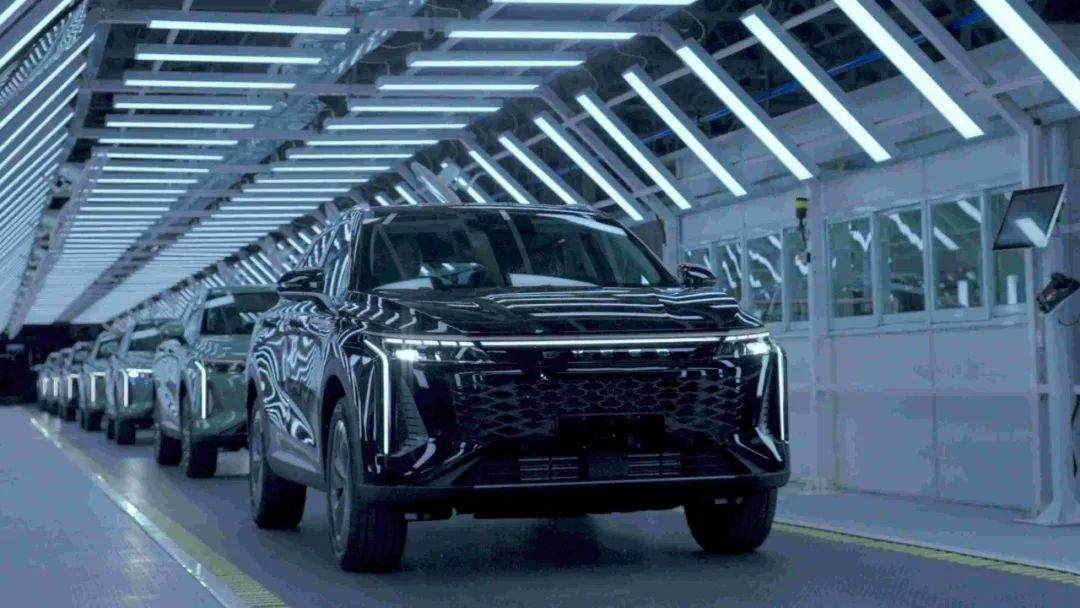
Image Source: Chery Automobile
Meanwhile, narrowing the tax gap between internal combustion, hybrid, and pure electric models provides a relatively fairer competitive environment for traditional automakers to continue investing in energy-saving and fuel power technologies. In recent years, the R&D efforts of many joint ventures and domestic automakers in fuel technology have been severely undervalued, with market resources tilting excessively toward new energy. This adjustment at least places internal combustion, hybrid, and pure electric technologies on a more level playing field, fostering a pattern of healthy competition across diverse technological routes.
Cui also notes that this policy adjustment clarifies the policy boundaries for technological pathways. Pure electric and fuel cell zero-emission passenger cars remain the core of the long-term strategy and will continue to enjoy institutional dividends and policy support. Conversely, plug-in hybrids and extended-range vehicles, which rely on internal combustion engines as transitional technologies, have seen their incubation period end and will no longer receive additional policy preferential treatment.
This differentiated adjustment avoids the industry shock that a blanket cancellation of incentives would cause, while precisely guiding industry R&D, production capacity, and capital resources toward the core track of pure electrification.
This Is Just the Beginning
Although the direct impact of this vehicle and vessel tax adjustment is limited, its symbolic significance and role as a铺垫 should not be underestimated. It may well be a "stepping stone" for deeper reforms in China's auto tax system.
An increasingly urgent reality is that as the ownership of new energy vehicles surges, the tax base for traditional fuel taxes is continuously shrinking. Yet, although electric vehicles use the roads just the same, they bear almost no direct tax burden for it.
Highway maintenance funds in China rely heavily on consumption taxes on refined oil products. According to data from the Ministry of Transport's Highway Research Institute and other sources, the annual funding requirement for maintaining ordinary national highways is about 600 billion yuan, while actual disbursement is only about 300 billion yuan. The gap is as high as 50%, leaving roughly 40% of ordinary highways in a state of "deferred maintenance."
With the continued rise in new energy vehicle ownership and the accelerated shrinking of the fuel tax base, some institutions estimate that electric vehicles have already created a gap of about 35% in fuel tax revenue—a gap that continues to widen. If this deficit grows, relying solely on fuel taxes will be insufficient to support the sustainable operation of highway maintenance. Eventually, new sources of revenue must be found to fill the void.
The industry discussion on "equal rights" for fuel and electric vehicles has long transcended tax fairness itself, pointing to deeper systemic design issues.
Wang Qing, deputy director of the Market Economy Research Institute at the Development Research Center of the State Council, has noted on multiple occasions that highway maintenance funds come primarily from consumption taxes on refined oil. With new energy vehicle monthly sales share already breaking 50%, regulators should focus more on fostering a fair competitive environment. He suggests that new energy vehicles should share the burden of highway maintenance costs just like fuel vehicles. Standards could be formulated based on data such as vehicle weight, energy consumption, and annual mileage, implemented through a tiered weight tax, ensuring all road users fairly share public costs.
Cui positions this adjustment as "the first step in reforming China's automotive tax system." He believes that starting with the vehicle and vessel tax—a small levy with low public perception—gives the market ample buffer time. This step-by-step strategy keeps reform costs low and social acceptance high. It accumulates valuable practical experience for broader tax reforms in the future, such as unifying road usage rules, piloting mileage-based billing, and establishing a modern automotive tax system combining "purchase tax + property tax + road usage fee."
In fact, discussion within the industry about the future direction of taxation is already fermenting. One frequently mentioned proposal is taxation based on vehicle weight. William Li, founder of NIO, has publicly suggested using vehicle weight as the tax basis, noting that for every 20% increase in vehicle weight, the rate of road damage increases by a factor of 2.07.
Others have suggested embedding road usage fees into electricity prices—the more you drive, the more you pay. The benefit of this approach is that it directly correlates with usage intensity, making it more precise than weight-based taxation. However, the implementation challenge lies in the scattered nature of charging infrastructure, including both public and private piles, making efficient collection a practical hurdle. Some have proposed a mileage tax, where drivers pay based on distance traveled. While technically feasible, this involves privacy protection and collection costs, making it difficult to implement in the short term.
Cui also touched on these possibilities. He believes future tax policies will continue to be standardized and refined, potentially introducing new constraint mechanisms like mileage taxes or weight taxes to guide more rational car consumption. Regardless of the form they take, these tax tools will gradually come into play, with the ultimate goal of achieving balanced development in the automotive society.
From a macro perspective, this vehicle and vessel tax adjustment is merely the first step in deep reform of the automotive tax system. China's traditional auto tax regime has long been built on the foundation of fuel taxes—a system designed for the internal combustion era that no longer fits the reality of widespread new energy vehicle adoption. The contradiction between electric vehicles paying zero fuel tax while occupying road resources equally must eventually be resolved.
The likely direction for future automotive taxation is a hybrid model of "base fixed tax + differentiated tiered tax." Larger vehicles will pay more, smaller vehicles less; those who drive more will pay more, those who drive less will pay less. Same road, same rights, same responsibility—this is the ultimate goal of equity and efficiency for the automotive society.
Viewed this way, the adjustment to the vehicle and vessel tax is hardly the end of "equal rights" for fuel and electric vehicles—it is merely the first substantive step. It marks the official launch of deep reforms to the automotive tax system. As policy dividends gradually recede, a fair tax framework covering the entire industry and spanning the full lifecycle—from purchase to ownership to use—is taking shape. The curtain on true equality is only just beginning to rise.


