Gasgoo Munich-The 19th Beijing International Automotive Exhibition is in full swing, gathering cutting-edge global auto tech to showcase the latest shifts in electrification and intelligence across the industry.
Themed "Knowing the Road, Knowing People, Knowing Users, Knowing Life," intelligent driving tech firm Horizon has built a standalone 1,000-square-meter booth in the main hall. It's the first public showing of its full-stack "digital brain for the physical world."
From chips to operating systems, from intelligent driving to smart cockpits, and from smart cars to robots, Horizon is sending a clear signal: it is no longer just a smart driving chip supplier, but a builder of underlying infrastructure for the era of vehicle-wide intelligence.
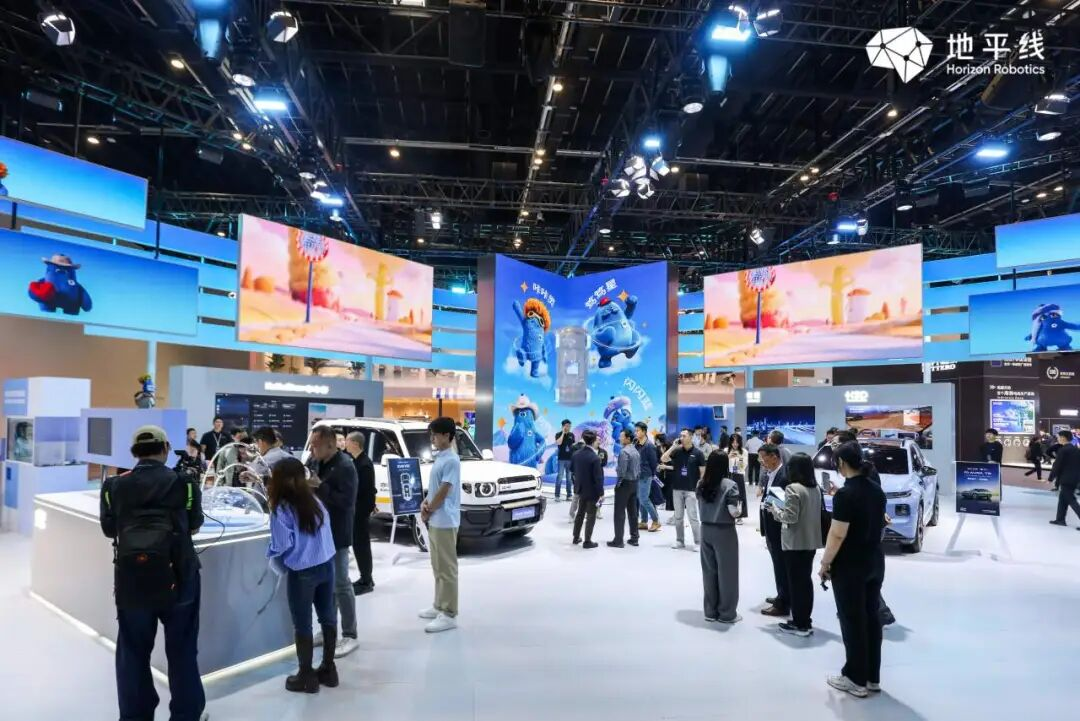
Image Source: Horizon
One in Every Three Smart Cars Runs on Horizon
Step onto Horizon's booth and the first thing that catches your eye is the central "Horizon Inside" transparent car installation—a suspended body with embedded chips and dynamic lighting on the chassis. It visually interprets the brand positioning: "Horizon doesn't build cars, but it provides the brain."
Centered on this visual landmark, the booth unfolds across four themes. The "Knowing the Road" intelligent driving zone highlights what Horizon prides itself on most: its massive scale.
A physical wall featuring the full Journey 2/3/5/6 chip series, paired with interactive touchscreens, allows visitors to browse archives of over 300 mass-produced models—a microcosm of Horizon's market standing.
Horizon holds 47.7% market share, retaining its title as champion in the domestic brand ADAS market. That means for every three intelligent vehicles in China, one uses a Horizon solution. Behind this number is a footprint spanning 27 OEMs (42 brands), including all top ten Chinese automakers. Over 300 models have hit the market, serving more than 6 million owners. In August 2025, Horizon crossed the 10 million shipment milestone, becoming the first domestic smart driving tech brand to reach that figure.
In the more technically demanding high-end intelligent driving market (urban NOA and above), Horizon has also delivered strong results. It ranks in the top three, standing as the only domestic chip supplier among them. In the rapidly exploding market for high-end domestic smart driving, Horizon holds 14.4% share—neck-and-neck with Huawei's 15.2% for second place. Together with NVIDIA, they form a "one superpower, two strong players" landscape, commanding a combined 89% market share.
Even more notable is the mainstream price band under 200,000 yuan—the segment with the most volume and fastest growth. Here, Horizon captures 44% of the domestic NOA market, firmly in first place. This positioning proves Horizon isn't just for high-end models; it is truly making "easy-to-use driver assistance available to everyone."
If chips and market share are "hard power," then user activation data for the HSD full-scene driver assistance system is the best proof of "soft reputation." HSD is China's first mass-produced one-shot end-to-end AD large model. An immersive city sandbox at the booth—covering urban, highway, off-road, and parking scenarios—demonstrates capabilities like "remote parking," "blade-like overtaking," and "off-road trail tracking." But the data is more striking: the Exeed ET5 and Deepal L06, the first models equipped with HSD, saw over 25,000 activations within 8 weeks of launch.
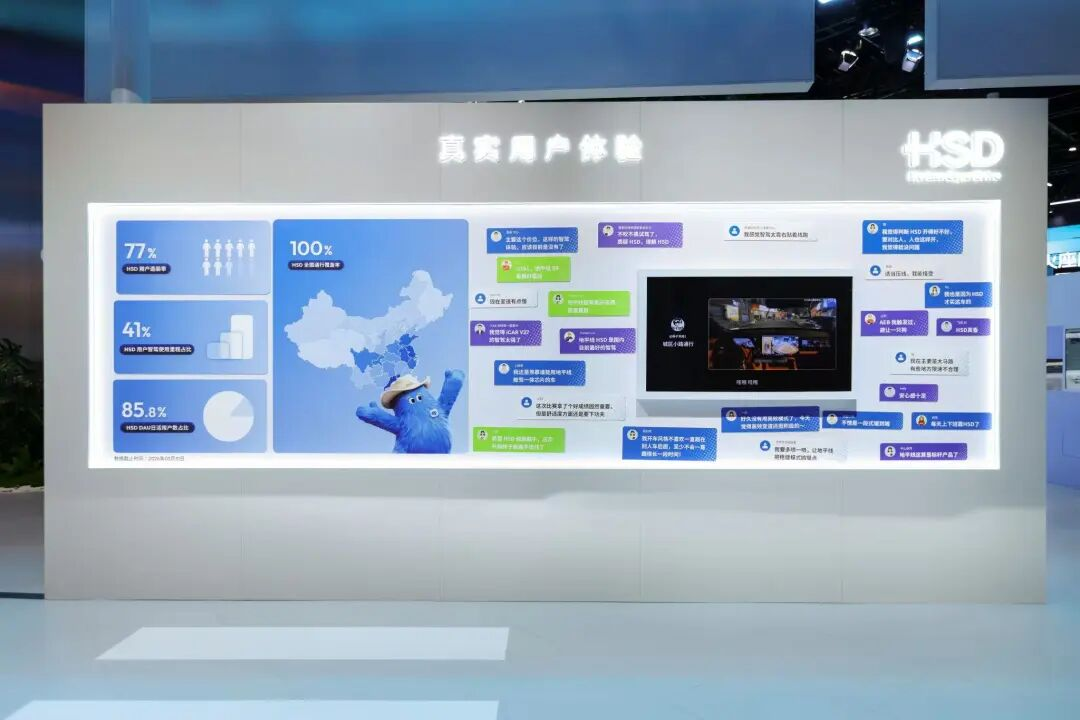
Image Source: Horizon
Among models offering HSD as a high-end option, 77% of users actively chose the HSD-equipped version, with top-trim models accounting for 83% of sales. During the Spring Festival, the ratio of intelligent driving mileage hit 41%, meaning HSD's driving miles nearly matched those of human drivers.
As shown by the big data dashboard in the "Knowing Users" zone—displaying real-time total mileage, activation counts, and audience interactions—Horizon is turning cold chip specs into tangible user value.
Cockpit-Driving Fusion: Replacing Two Systems with One Chip
The star of the show is undoubtedly the Horizon Starry® 6 series chip, launched just on April 22.
As China's first cockpit-driving fusion vehicle intelligent agent chip, the Starry 6P uses a 5nm automotive process, delivering 650 TOPS of AI compute and 273 GB/s memory bandwidth. It supports the simultaneous deployment of in-cabin digital AI agents and high-end intelligent driving large models. Its core value proposition: replacing traditional dual systems for driving and cockpit with a single chip.
On display, the Starry chip's SIP board, ECU board, and structural components are lined up, illustrating the evolution from driving to cockpit. Staff highlight two industry-firsts in its architecture:
First is the Adaptive Compute Engine (ACE): a hardware-level security-isolated compute core that combines like building blocks. It supports dynamic compute allocation between ADAS and the cockpit. When the car is parked, driving compute power can be fully released to the cockpit for gaming or entertainment.
Second is the Fortress physical isolation architecture: ADAS, IVI, instrumentation, and vehicle control each run on independent compute units without interference. Unlike traditional "multi-chip + Hypervisor" schemes, this architecture skips the thick virtualization layer, boosting compute utilization while achieving physical-level safety isolation. The intelligent driving domain meets the ASIL-D highest safety level.
When asked whether cockpit-driving fusion chips are superior to the "multi-chip + unified OS" route, Horizon Executive Director and Chief Ecosystem Officer Xu Jian was blunt: "This is the law of computing integration. Integration is always better—less information loss, more room for dynamic scheduling. It's hard, but Horizon insists on doing the 'hard but right' thing."
He revealed that Horizon's advantage goes beyond the chip itself: "We have massive mass-production engineering experience and know how to integrate with peripherals and software layers. In Q3 this year, we will achieve the world's first mass production on iCAR. This milestone is significant because we aren't just the first to announce, but the first to deliver."
If the chip provides the compute base, the operating system defines the interaction paradigm. Horizon's KaKaClaw™ is China's first vehicle intelligent agent OS, enabling "Task-as-a-Service" interaction. Users simply use natural language commands, and the system schedules across driving and cockpit domains in parallel to plan and execute complex operations. At the booth, visitors can interact with the KaKaClaw AI assistant via touchscreen.
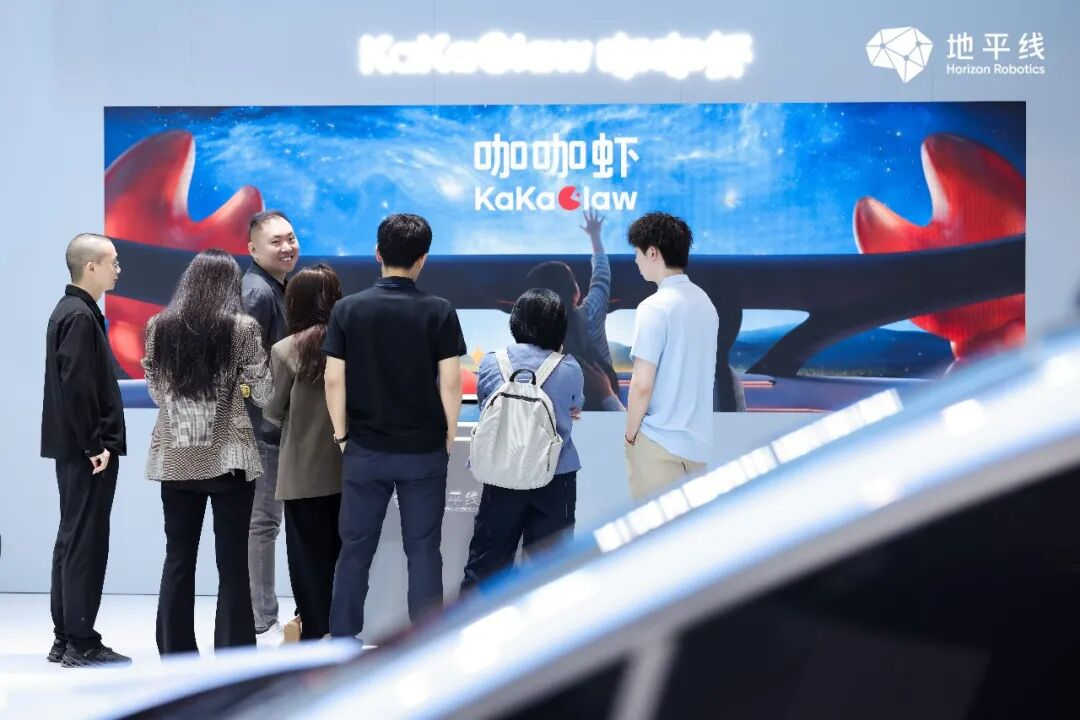
Image Source: Horizon
One detail that impressed many: when asked, "What happens to memories when the car gets old and needs replacing?" Xu Jian replied: "Memories can migrate. There's no barrier at all. This means the car's core value is no longer hardware or specs, but the long-term memory accumulated by the intelligent agent and the user. Hardware depreciates, but the vehicle Agent appreciates with memory."
On stage, Horizon dubs the "HSD + KaKaClaw" combo "China's advanced FSD + Grok"—the former solving "how to drive," the latter "how to interact." Together, they turn the car into a vehicle intelligent agent that can chat, act, play, grow, remember well, and have personality.
Ecosystem Spillover: Not Just Cars
Horizon's tech story doesn't end with cars. The "Knowing Life" zone showcases the spillover potential of its technology.
In the robot zone, visitors can shake hands with a robotic puppy in the camping area, interact with a humanoid robot in the coffee zone, and view a "sea, land, and air" robot window covering consumer, industrial, and special scenarios. Six robotic dogs from Vitapower's "Paw Patrol" became crowd favorites. Horizon positions its BPU architecture and toolchain as a universal technology base for the "digital brain of the physical world," allowing core capabilities to migrate at low cost from smart cars to robots.
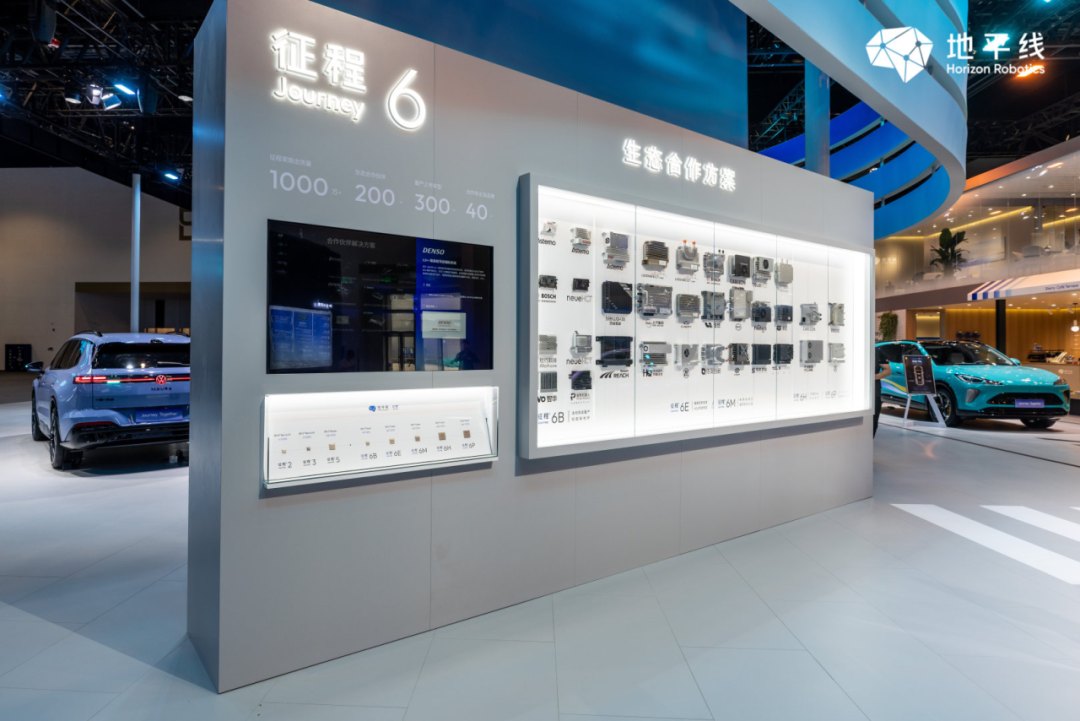
Image Source: Horizon
The final area features an ecosystem production wall and mass-production vehicle zone. It displays the Journey 6 full-series domain control solutions, products from 33 partners, and actual cars like the iCAR V27, Chery T9L, Deepal L06, and the new VW ID equipped with Horizon solutions. Notably, the FAW-Volkswagen ID. AURA T6 and the Golden Label VW ID. UNYX 07—equipped with the CARIAD driving assistance system—made their debut, marking a critical phase in the partnership's mass production.
In interviews, Xu Jian repeatedly emphasized Horizon's "ecosystem faith": "We believe open cooperation outweighs closed systems. But to adapt quickly to China's intelligence wave, we will occasionally build 'sample rooms'—jumping in to perfect the product and navigate the pitfalls ourselves. After that, we step back to being a Tier 2, opening our experience and toolchains to partners."
The strategy is paying off. According to booth information, Horizon's Starry chips can reduce vehicle hardware BOM costs by 1,500 to 4,000 yuan, cut R&D costs by 70%, and shorten the delivery cycle from 18 months to 8. For automakers seeking profit margins amidst a fierce price war, these numbers are highly attractive.
From a 47.7% ADAS market share to the first mass production of cockpit-driving fusion chips; from the launch of the first vehicle intelligent agent OS to tech spillover into robotics—Horizon's presence at the 2026 Beijing Auto Show is no longer that of a simple smart driving chip company. It is a physical AI infrastructure platform covering the full stack of "chip-OS-solution-ecosystem."
As smart cars move into the second half of the game—shifting from "electrification" to "vehicle intelligent agents"—Horizon aims to be the infrastructure builder defining the tech base so all players can build on top of it. Its first-to-market mass production of cockpit-driving fusion could well become an industry watershed.