



Gasgoo Munich- On April 13, Cadillac officially announced that its full-size flagship electric SUV, the Vistiq, will hit the market on April 22. This marks the third domestically produced EV SUV from SAIC-GM Cadillac, positioned between the Lyriq and the Escalade IQ. Built on GM's Ultium platform, it features a 2+2+2 six-seat layout.
As joint ventures grapple with the intense pressure of electrification, the Vistiq's launch is seen as a critical move for Cadillac in the new-energy race.
How does the Vistiq stack up?
In terms of exterior and dimensions, the Vistiq measures 5,222mm by 2,026mm by 1,799mm, with a wheelbase reaching 3,094mm — placing it firmly in the large electric SUV category.
The vehicle follows Cadillac's electric family design language, sporting a closed black crystal grille and vertical flowing headlights. It features a two-tone body design, paired with 22-inch wheels and 295/40 R22 self-sealing tires.
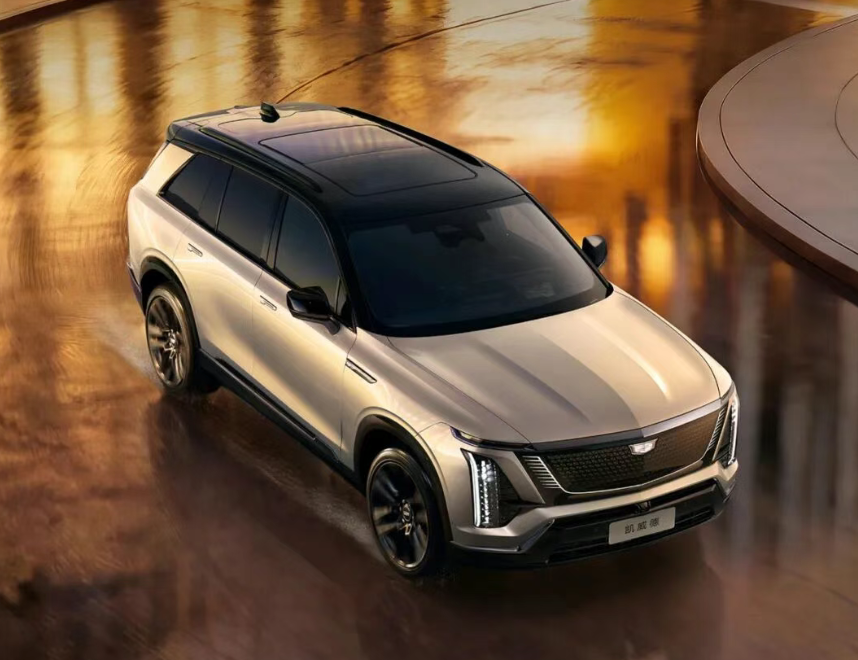
Image Source: Cadillac
Available exterior colors include Aurora Gold, Midnight Black, Shadow Green, Storm Gray, and Royal Blue. An available rear-axle steering system helps reduce the turning radius, enhancing maneuverability in tight spaces.
Inside, the Vistiq houses a 33-inch 9K curved panoramic screen spanning the dashboard, while retaining some physical buttons. The instrument and central screens merge into one unit, and combined with a central control screen and two independent second-row entertainment screens, the system supports up to seven screens working in unison.
The second row features two independent executive electric seats with 16-way adjustment, six-way aviation headrests, 10-point massage, and intelligent heating and ventilation — all optimized for Chinese seating preferences.
The audio system is a 23-speaker AKG Studio setup supporting Dolby 7.1.4 Atmos. The vehicle also rides on WABCO air springs and ZF CDC continuously adjustable dampers, with an air suspension smart entry/exit mode to ease boarding and alighting.
On intelligent driving, the Vistiq employs an industry-first in-cabin hidden LiDAR, integrated into the upper edge of the front windshield. This avoids the traditional roof-mounted protrusion and reduces interference from rain, snow, and dust. It is the first Cadillac model to use Momenta's intelligent driving solution, supporting L2++ advanced driver assistance and navigation-on-autopilot functions.
Powertrain specs show the single-motor version delivers a maximum output of 255 kilowatts. The dual-motor variant pairs a 183kW front motor with a 260kW rear motor for a combined 443kW, capable of sprinting from 0 to 100 km/h in under 4 seconds.
The ternary lithium battery pack offers three CLTC range options: 573 km, 601 km, and 642 km. The new vehicle supports DC fast charging, adding roughly 127 km of range in 10 minutes.
Cadillac Returns to the EV Fray
At the group level, GM's new-energy business in China is recovering. For the full year of 2025, GM China achieved total deliveries of nearly 1.9 million units. New-energy vehicle sales approached 1 million, accounting for over half of total sales — a 22.6% year-on-year increase.
SAIC-GM's cumulative NEV sales in 2025 reached 89,000 units, leading joint-venture automakers in both sales volume and penetration rate. Lyriq deliveries surged 90% year-on-year, with several key models showing resilient growth.
Furthermore, the partnership with Momenta signals a substantive step in Cadillac's intelligent localization. The in-cabin hidden LiDAR design also reflects the brand's attempt at technological differentiation.
The Vistiq's launch further perfects Cadillac's electric product matrix, filling the niche between the Lyriq and the Escalade IQ.
Yet Cadillac's challenges in the new-energy market are equally stark. Since their launches, the Lyriq and Optiq have underperformed overall, with sales and reputation falling short of expectations. Both models remain largely on the market's sidelines.
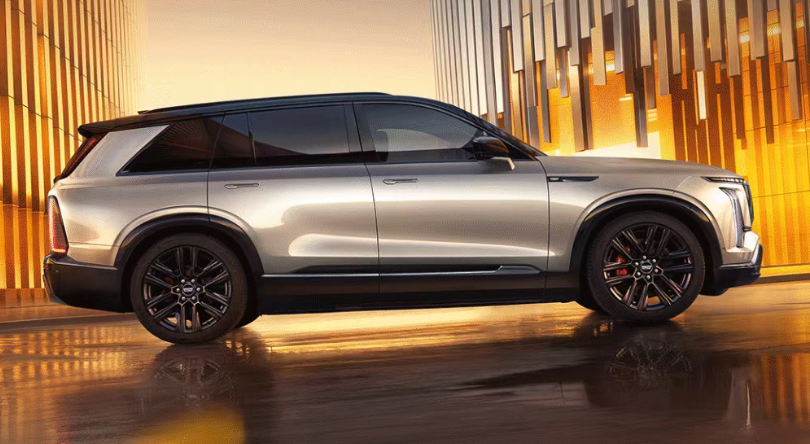
Image Source: Cadillac
Electric vehicles from traditional luxury brands generally hold limited appeal for Chinese consumers. Moreover, the large electric SUV segment is already crowded with popular domestic models like the NIO ES8, Li Auto L9, and AITO M9.
The NIO ES8 sold 46,700 units in 2025, a 408.6% surge. With an estimated starting price between 400,000 and 450,000 yuan, the Vistiq will face these rivals head-on.
Additionally, domestic brands have built high barriers in smart cockpits and user ecosystems. While the Vistiq introduces Momenta's solution for intelligent driving, a gap remains in overall system capability.
Joint ventures universally face the dilemma of "holding the line in internal combustion engines but failing to break through in electric vehicles." Whether Cadillac can break this deadlock with the Vistiq remains to be seen.
In terms of product strength, the Vistiq represents a significant leap for Cadillac — from dimensions and configuration to localized intelligent collaboration, it shows the brand trying to patch the shortcomings of previous EV offerings. But in China's current new-energy market, the brand halo of traditional luxury players has faded significantly on the electric track. Consumer logic has shifted from "brand first" to "product first" and even "ecosystem first."
Whether the Vistiq can carve out an opening amidst the encirclement of NIO, Li Auto, and AITO depends largely on the final pricing and the actual delivery of the user experience.


