Gasgoo Munich-The Chinese auto market didn't warm up in the first quarter of 2026 as expected. The aftershocks of the price war linger, and a wave of product homogeneity has swept in. From "refrigerators, color TVs, and sofas" to LiDAR counts, the obsession with stacking specs has left consumers suffering from fatigue, slowing growth across the industry. Yet, amidst the gloom, some are bucking the trend. VOYAH posted a 30% year-on-year increase in the first quarter, with March alone seeing an 80% surge from the previous month—making it one of the few new energy brands to outperform the broader market.
This growth is no accident; it is backed by a distinct product philosophy and competitive strategy. The vibe at this year's Beijing Auto Show made that clear. While nearly every automaker was touting "900V" platforms, "5C fast charging," and the number of cities open for city NOA, VOYAH's executives kept circling back to a surprisingly humble feature: a clothes rail. Shao Mingfeng, CBO of VOYAH Automotive Technology and general manager of its sales unit, went so far as to predict: "This is a high-frequency use case. Users will love it, and many brands will follow suit quickly." It wasn't a joke. It is VOYAH's underlying method for breaking the deadlock of market homogeneity. A strategic breakdown of this "first high-end new energy listing among central state-owned enterprises" reveals a clear path: in China's cutthroat market, VOYAH is carving out a route distinct from both the "new forces" and traditional joint ventures. Anchored by full control over the value chain and focused on solving real user pain points, it is seeking "certainty" in the noise.
Image Caption: VOYAH Automotive
From Spec Stacking to Scenario Mining
"The core issue in the current NEV market is a dual homogeneity of product and marketing," Shao said bluntly. "Every company is citing similar data, and the retail market has long since grown numb to it."
When specs fail to differentiate a brand in the consumer's mind, identifying real, unmet usage scenarios first becomes the key to winning votes. Pre-order data for the VOYAH Taishan X8 offers strong proof. Shao revealed that high-spec Ultra and Ultra+ trims accounted for a combined 95% of pre-orders. Buyers weren't blindly chasing numbers on a spec sheet; they were opting for solutions to specific problems: the parking and three-point-turn struggles of a large SUV made rear-wheel steering a necessity, while the demand for long-haul comfort made dual zero-gravity seats essential. Shao offered a simple conclusion: users are willing to pay for what they genuinely love. That's no joke—it punctures the bubble of the industry's price war. When companies solve real pain points instead of piling on high-cost, low-frequency features, consumers will pay for value, not just compare price tags.
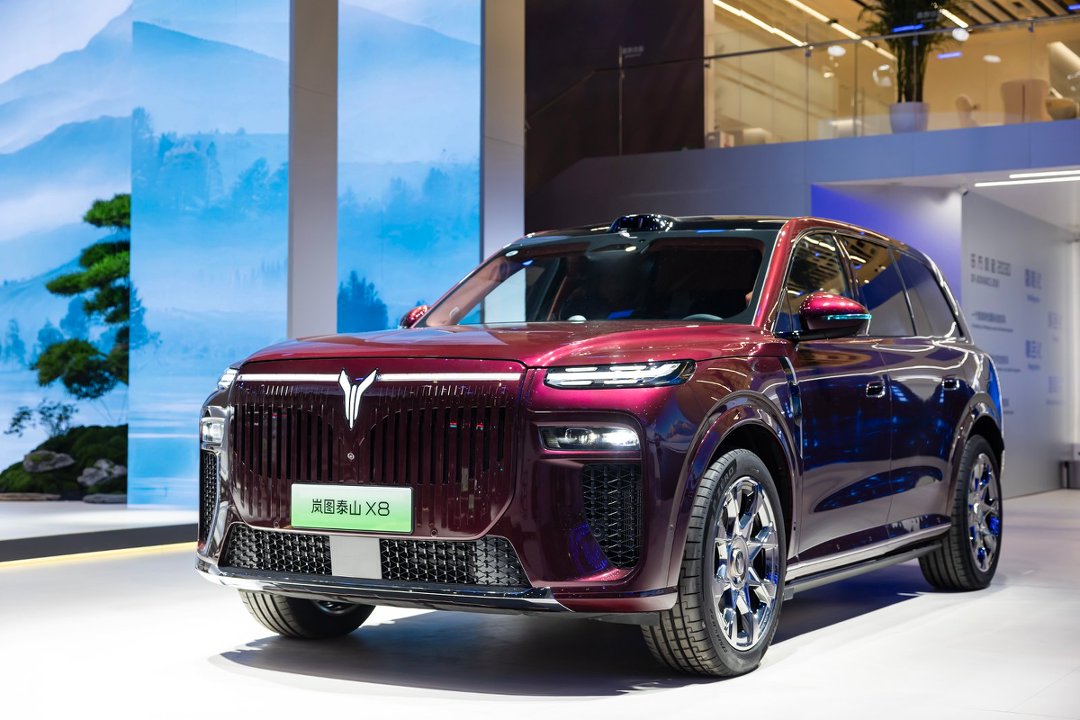
Image Caption: VOYAH Automotive
Lu Fang, chairman of VOYAH and secretary of its Party committee, addressed external criticism that "Chinese cars have gone astray" from a philosophical standpoint. Lu emphasized that VOYAH has full autonomous control over core technologies—powertrain, chassis, vehicle safety, electronic architecture, smart cockpits, and intelligent driving—and is fully capable of competing with any global brand. In his view, researching foundational tech like chassis and powertrain is not at odds with refining details like a clothes rail. The former is the technological bedrock of future vehicles; the latter is the tangible touchpoint of user demand. If a brand focuses only on specs while ignoring scenarios, even the strongest technology will struggle to translate into a good user experience.
This "dual-drive" model explains the logic behind VOYAH's structural growth in the first quarter of 2026. Unlike brands relying on a single breakout model to save the day, VOYAH's product matrix—the SUV duo, the Dreamer MPV, the Zhuiguang sedan, and the new Taishan X8—systematically covers different segments. The VOYAH Dreamer, in particular, has evolved from challenger to "Triple Crown" leader in the high-end NEV MPV market, topping charts in sales, Net Promoter Score (NPS), and quality. Lu noted that this leadership is no accidental spike; it is the result of consistent user choice, born of long-term, steady accumulation.
Yet, this methodology faces clear challenges. First is the "barrier to imitation." Low-cost, high-visibility features like a clothes rail are easy for rivals to copy quickly. Once all brands master scenario mining, the battlefield of homogeneity will shift from specs to creativity, triggering a new round of cutthroat competition. Second is the "cost of user education." Not every consumer grasps the practical value of rear-wheel steering on a 5.2-meter SUV. VOYAH must invest heavily in marketing to translate technical jargon into tangible experiences.
How Can State-Owned Automakers Prove "Operational Certainty" Amid a Wave of Losses?
In the NEV industry, losses are practically the norm. From cash-burning startups to traditional giants dragged into price wars, profitability is a scarce metric of corporate health. VOYAH holds a unique narrative advantage here. Lu emphasized that VOYAH is the only NEV player to have turned a profit by the time it went public.
That backdrop helped VOYAH secure consecutive share purchases from major shareholders and advance its full float conversion just over a month after listing in Hong Kong.
Lu attributes this market approval to VOYAH's operational certainty. That certainty isn't built on air; it rests on systematic control over the entire value chain—R&D, production, supply, sales, and service. In his view, full value chain control offers three advantages: agility in responding to market shifts, the capacity to serve users sustainably, and resilience against external risks like rising raw material costs. Lu acknowledged that rising material costs are a reality, making future price hikes likely. However, he stressed that VOYAH would prioritize absorbing those costs through internal technical and management innovations rather than passing them directly to consumers.
Image Caption: VOYAH Automotive
Still, there are risks behind this narrative of "certainty" that warrant scrutiny. First, while full value chain control offers stability, it also implies a heavier asset model and slower pivots. By contrast, startups often iterate faster through highly outsourced "integrated innovation." Second, the halo of "profitability" must be maintained. As the mix shifts toward pure-electric vehicles and overseas expansion accelerates, R&D and channel costs will surge. Competition in the pure EV segment is far fiercer than in hybrids. With Tesla and BYD having built deep cost moats, whether VOYAH can sustain profitability in the pure EV space remains a massive unknown.
Another key variable is VOYAH's relationship with Huawei. As "Huawei-backed" models like the Luxeed V9 flood the market, VOYAH must leverage Huawei's tech for intelligent driving and cockpits without facing accusations of "losing its soul." Shao's attitude is "face the competition, welcome the participation." He revealed that for the VOYAH Dreamer, sales of the Huawei intelligent driving version and the in-house developed version are split roughly 50-50. This shows a "dual-track" strategy: embracing open cooperation while retaining core in-house R&D. While this quickly plugs intelligence gaps in the short term, VOYAH must prove its own unique definition of smart tech over the long term. Otherwise, it risks becoming just "one of Huawei's many partners" in consumers' minds, making it significantly harder to build a premium brand.
The Deciding Factor and Time Window in the "Second Battlefield"
As domestic market competition shows no sign of easing, going global has become a necessity for every Chinese automaker.
Lu's recent visits to Germany and France, and the selection of new overseas targets, reveal two core judgments underpinning VOYAH's globalization strategy: the market opportunity arising from Europe's energy transition, and the collaboration space left by the decline of European manufacturing. Lu noted that Europeans are relatively resource-constrained yet highly focused on environmental protection, giving Chinese NEVs immense potential in the region. Meanwhile, low capacity utilization at traditional European factories opens the door for a "Chinese Brand + European Manufacturing" cooperation model.
Reportedly, VOYAH will launch the Dreamer in right-hand-drive markets in the second half of the year. Its overall overseas strategy will stick to a high-value approach, avoiding low-price cutthroat competition.
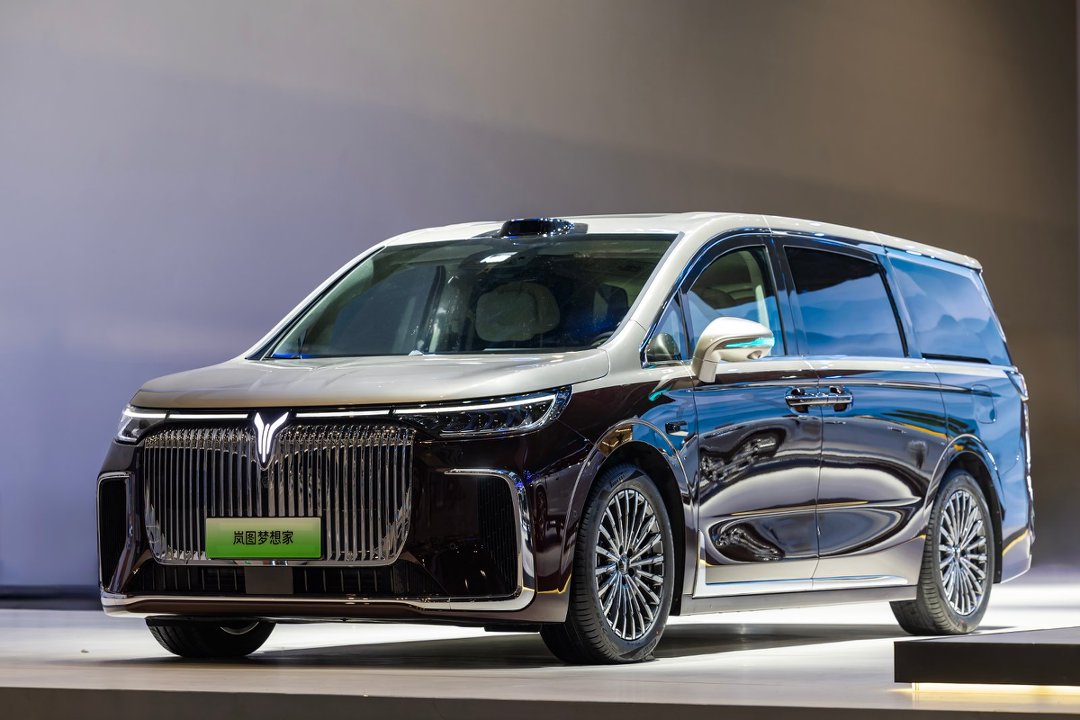
Image Caption: VOYAH Automotive
This strategic positioning aligns perfectly with VOYAH's state-owned roots. Unlike brands that crack open overseas markets with low prices, VOYAH aims to "build the brand and deliver on user experience and service," as Lu put it. This path is undoubtedly harder but more sustainable. Europe has the world's strictest standards for safety, environmental protection, and data privacy. VOYAH's willingness to enter this market serves as an endorsement of its technical prowess.
Yet the risks cannot be ignored. Geopolitical factors are reshaping the global auto trade landscape. The EU's anti-subsidy investigation into Chinese EVs and potential tariff barriers could disrupt the expansion plans of Chinese brands at any moment. Furthermore, European legacy brands are accelerating their own electrification, narrowing the window of opportunity for Chinese automakers. VOYAH faces a core question: once the German luxury trio (BBA) complete their EV iterations, what will VOYAH rely on to sustain its high-value positioning in Europe?
On the technology front, VOYAH is closely monitoring L3 conditional autonomous driving and the disruptive potential of AI in the auto industry.
The VOYAH Taishan Ultra is the first to feature a mass-produced intelligent architecture ready for L3 autonomy, having completed 200,000 kilometers of real-world road testing. Meanwhile, Lu has clear expectations for AI's future role: "AI will restructure or even disrupt the auto industry, because the car of the future will inevitably be a product of deep integration between the vehicle itself and AI."
When L3 autonomy frees the driver's hands and eyes, the possibilities for the smart cockpit will become limitless. Once occupants are no longer bound by the task of driving, their in-car needs will be unleashed, allowing them to do much more. The so-called "third space" will become a reality—transforming into a mobile office, a living space, or something entirely new. Lu noted that this means the car's definition will evolve from a tool for transport to a mobile intelligent space, which is why VOYAH is making early moves into the realm of embodied AI.
Of course, a gap remains between reality and this vision. The rollout of L3 autonomy depends not just on technical maturity, but on regulatory breakthroughs. Under current regulations, L3 functions are largely hardware pre-installs and technical reserves, difficult to convert directly into daily value for users. Convincing users to pay for future potential before policies loosen will test VOYAH's product definition and marketing prowess. Furthermore, Lu views AI as a mandatory subject; suggesting that ignoring it would be negligent. This reflects VOYAH's keen grasp of future trends but also creates new dilemmas for resource allocation. Can its management bandwidth and financial reserves support a three-front war: full value chain control, global expansion, and AI transformation? As a profitable player whose volume still lags behind the giants, VOYAH must prioritize precisely to avoid the trap of doing everything but mastering nothing.
Conclusion
At the 2026 Beijing Auto Show, VOYAH presented itself as a study in contradictions: steady and responsible like a state-owned enterprise, yet innovative and user-centric like a startup; emphasizing the systemic certainty of full value chain control while actively embracing external partners like Huawei; rooted in domestic differentiation while ambitiously plotting globalization and an AI transformation.
Summarizing the drivers of VOYAH's continued progress, Shao cited four engines: "terminal-driven, organization-driven, technology-driven, and open cooperation-driven." The most intriguing is "organization-driven"—letting those who hear the gunfire make decisions, and giving the marketing department enough clout to voice user demands to the backend. The ability to implement this mechanism of user sovereignty within a traditional state-owned enterprise is the core gene that sets VOYAH apart from other "second-generation" startups.
Of course, the fundamental challenges remain. How can VOYAH build an irreplaceable brand moat while squeezed between the Huawei ecosystem, the Xiaomi ecosystem, and traditional luxury brands? How can it hold the profit line during its EV transition, avoiding the quagmire of losing more money the more it sells? And how can it find safe footing in the game of globalization and geopolitics? Lu's answer is "certainty"—operational, technical, and value certainty.
In a turbulent market, "certainty" is a scarce commodity. VOYAH's experiment is essentially an answer to a question that has plagued the Chinese auto industry for years: Can a state-owned automaker shed its rigid stereotype through market-oriented reform and deep technical cultivation to become a leader in the global automotive revolution?
The clothes rail is a clever idea, but can it sustain the long-term value of a premium brand? Time will tell. But for now, VOYAH has emerged from the dead end of spec stacking and found its own path into the consumer's mind. It is a path worthy of respect, but one that is also full of thorns.