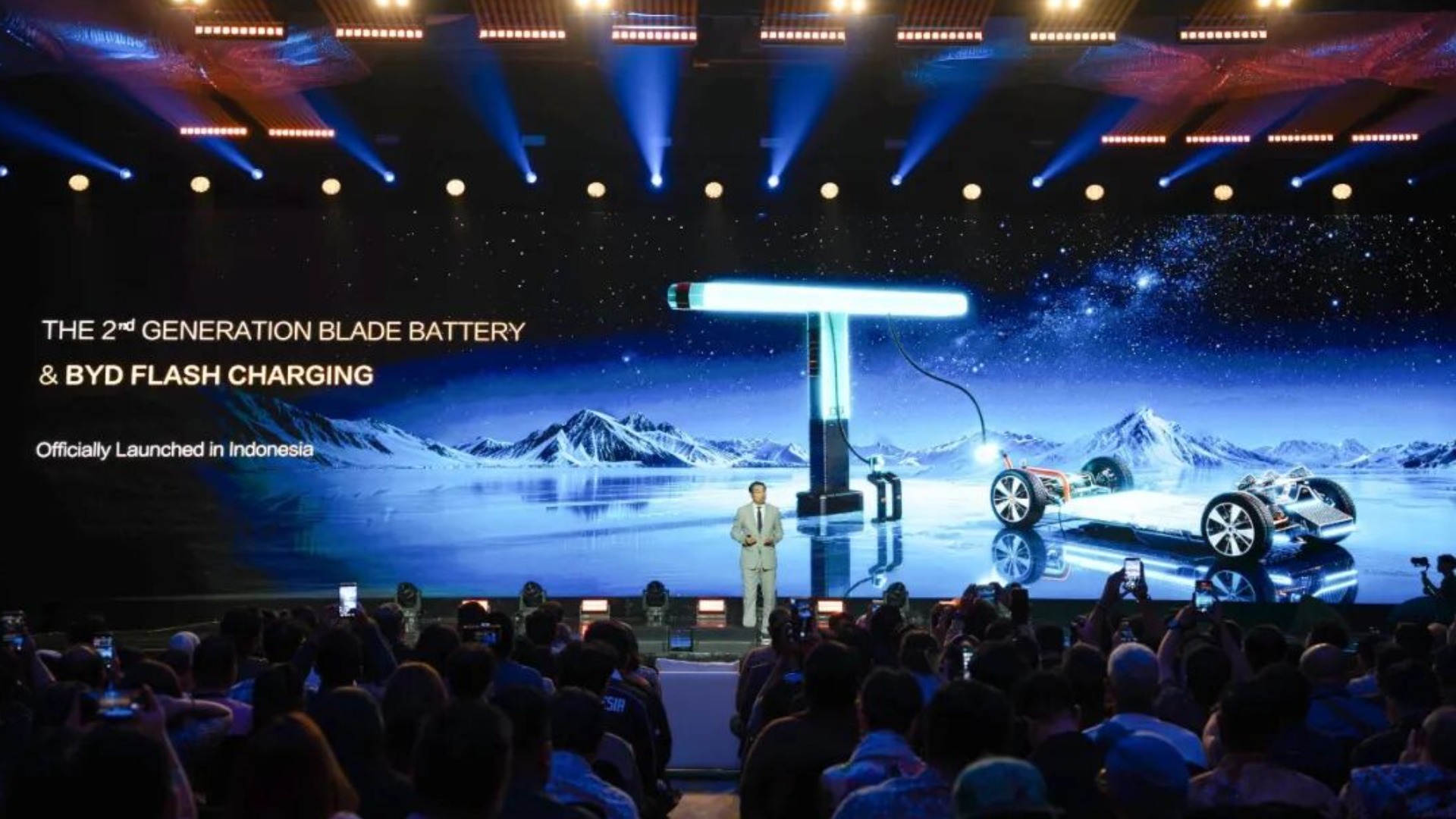
Gasgoo Munich-Changan NEVO issued a price adjustment notice through official channels on April 30.
Citing a surge in global automotive-grade chip costs, the company announced it will raise the official guide price for its Q07 Tianshu Intelligent LiDAR Edition by 3,000 yuan, effective midnight on May 7. The increase affects three variants: the 215 LiDAR Zunrong, 215 LiDAR Flagship, and 215 LiDAR Flagship PLUS, which will now cost 159,800 yuan, 169,800 yuan, and 179,800 yuan, respectively.

Image Source: Changan NEVO
The price hike comes with a clear boundary: vehicles produced before May 7 will still be sold at the original price. In the short term, this may spur consumers to visit showrooms during the May Day holiday.
Just two days earlier, on the evening of April 28, BYD issued a similar announcement. The optional "God's Eye B" assisted driving LiDAR package for select models under its Dynasty, Ocean, and Fangchengbao networks will increase from 9,900 yuan to 12,000 yuan—a hike of 2,100 yuan—taking effect on May 1.
BYD cited the same supply chain culprit: a sharp rise in global memory hardware costs.
A Wave of Price Hikes
The moves by BYD and Changan NEVO are just a snapshot of a broader trend. Since 2026, more than 15 new-energy automakers have announced price increases or reduced terminal discounts, with hikes ranging from 2,000 yuan to 10,000 yuan.
Looking back further, Chery's premium brand Exeed was among the first to signal a shift in March. The high-spec LiDAR version of the Exeed ET5 saw its price increase by 5,000 yuan to 164,900 yuan. The new Xiaomi SU7 lineup also saw a 4,000 yuan hike, while several models under the Harmony Intelligent Mobility Alliance raised prices after upgrading LiDAR configurations. By April, the list of automakers adjusting prices had grown even longer.
This round of price hikes shares a common label: LiDAR. Whether it's the NEVO Q07 Tianshu Intelligent LiDAR Edition or BYD's God's Eye B package, the adjusted models all feature advanced autonomous driving systems powered by LiDAR.
These systems rely on memory chips far more heavily than standard models. Real-time processing of LiDAR point cloud data and running on-board large language models require support from high-capacity, high-speed DRAM chips.
Take BYD's God's Eye B system: it uses an NVIDIA OrinX chip with roughly 254 TOPS of computing power and is equipped with between 16GB and 64GB of DRAM. With memory chip prices soaring, this directly drives up the cost of intelligent hardware per vehicle.
Data from TrendForce shows that in the first quarter of 2026, contract prices for commodity DRAM surged by 90% to 95% quarter-over-quarter—up from an earlier forecast of 55% to 60%. NAND Flash prices also climbed 55% to 60%, compared with a previously projected 33% to 38%, with "room for further increases not ruled out."

Image Source: VCG
UBS data paints an even starker picture: over the past three months, DRAM prices in the automotive sector have jumped 180%, with spot prices for high-end automotive-grade DDR5 soaring as much as 300%.
The pressure on automakers is palpable. In January, NIO Chairman William Li bluntly stated, "The biggest cost pressure for the auto industry this year isn't raw materials—it's rising memory chip prices." He estimated this could add 3,000 yuan to 5,000 yuan in costs per high-end new-energy vehicle.
Voyah Chairman Lu Fang echoed those concerns. He noted that prices for batteries and chips—especially memory chips—are rising rapidly, "causing severe disruption to the supply chain and posing massive challenges for cost control at OEMs." He further predicted that if these cost pressures persist, "an overall increase in vehicle prices is highly likely."
Voyah's response strategy is threefold: tapping internal potential to cut costs, expanding scale to offset expenses, and advancing supply chain localization and domestic substitution.
This May Only Be the Beginning
What's even more painful for the industry is that the pressure driving these price hikes shows no sign of easing anytime soon.
Unlike the 2021 chip shortage, which stemmed from pandemic-induced production imbalances and cyclical supply-demand mismatches, the current crisis is rooted in the AI industry's relentless siphoning of semiconductor capacity.
As large model applications accelerate, data center demand for high-bandwidth memory is growing exponentially. Memory giants like Samsung, SK Hynix, and Micron are shifting advanced capacity heavily toward AI, tightening the supply of automotive-grade memory chips left for the auto industry.
With the supply fulfillment rate for automotive-grade memory chips below 50%, some automakers have been forced to accept supplier demands for higher prices just to secure production and deliveries.
Ingenic has been blunt: its products are "extremely scarce, and prices are rising—there is no room for negotiation." The company predicts that the shortage of automotive DRAM will persist and views rising prices as the core driver of its performance. That stance reflects a broader judgment from the upstream sector about where the market is headed.
Image Source: SK Hynix
Cui Dongshu, secretary-general of the China Passenger Car Association (CPCA), highlighted another pressure point building up: power batteries. "The global AI boom is driving explosive demand for power storage, sending prices for non-ferrous metals like copper soaring and squeezing automakers," he said. He also noted that after more than two years of explosive EV sales, surging prices for resources like lithium carbonate have intensified the tug-of-war between upstream and downstream players.
The data backs him up. Battery-grade lithium carbonate prices have jumped from roughly 75,000 yuan per ton at the start of 2025 to 171,900 yuan per ton in March 2026. UBS, meanwhile, has raised its forecast to around 185,000 yuan per ton and expects global lithium demand to double to 3.4 million tons by 2030. Demand growth is projected at 14% in 2026, accelerating to 16% in 2027.
With cost curves for both memory chips and power batteries climbing simultaneously, profit margins across the auto industry are getting squeezed from both sides. "Profits in the auto industry are sliding seriously because of severe cost pressure from upstream," Cui said bluntly. "The burden on the industry itself is becoming increasingly difficult to bear."
Against this backdrop, forecasts for chip demand remain upward. Investment cycles for AI infrastructure typically span years, and capital spending by top tech companies continues to climb—meaning demand for computing power and storage won't recede anytime soon. The battle for capacity is far from over.
And in this battle, the auto industry is in a relatively weak position. As Li Bin put it, "The auto industry can't compete with AI and data centers for chips. Their investments run into the hundreds of billions of dollars."
This wave of price hikes triggered by chip costs has, for now, only just begun.