



Gasgoo Munich- On March 19, Voyah (07489.HK) officially began trading on the Main Board of the Hong Kong Stock Exchange. As a high-end new-energy brand spun off from Dongfeng Motor Group Co., Ltd. (hereinafter referred to as "Dongfeng Group"), Voyah landed in Hong Kong via an "introduction" method, becoming the first high-end NEV automaker from a central state-owned enterprise to list in the city.
For any company, the first day of trading is a moment in the spotlight.
Five Months, Finally Listed
Voyah's listing process moved with distinct urgency. From submitting its application in October 2025 to officially trading in March 2026, the entire journey took just over five months.
The capital maneuver began on August 22, 2025. Dongfeng Group announced plans to push for privatization and delisting, simultaneously launching Voyah's spin-off. Under the scheme, Dongfeng Group distributed its 79.67% stake in Voyah to shareholders through a combination of "share distribution and absorption merger." Subsequently, Voyah listed by introduction, while the parent company saw its H-share listing status withdrawn.

Image Source: Voyah
This "child lists, parent delists" strategy aims to shift capital market attention from the sluggish traditional internal combustion engine business to pure new-energy assets that represent future growth potential.
The "introduction listing" model chosen by Voyah is characterized by "listing only, no new shares, no fundraising." This means it will not issue new shares at the outset, merely listing securities held by existing shareholders. For Voyah, the immediate priority isn't raising capital but quickly establishing an independent identity in international capital markets, creating a compliant platform for future placements, debt financing, and employee incentives.
In terms of access approvals, Voyah secured pre-approvals from multiple agencies—including the NDRC, Ministry of Commerce, SAFE, and CSRC—within four months.
On February 11, 2026, the Hong Kong Stock Exchange granted approval in principle; the following day, officials confirmed that all preconditions for Dongfeng Group's privatization and Voyah's spin-off had been met.
Taking the Future
For Dongfeng, Voyah's listing is a strategic attempt to restructure the group's valuation logic.
The parent company, Dongfeng Group, faces the challenge of a contracting traditional business. Data shows Dongfeng's overall sales slumped from 4.27 million units in 2016 to 2.47 million in 2025.
Financially, Dongfeng Group's net profit plunged from 10.2 billion yuan in 2022 to 58 million yuan in 2024, following a loss of 3.89 billion yuan in 2023. On the Hong Kong market, its market capitalization has languished at low levels, effectively eroding its financing function.
By contrast, Voyah's financial performance shows growth. Revenue climbed from 12.749 billion yuan in 2023 to 34.86 billion yuan in 2025. In 2025, net profit turned positive for the first time, reaching 1.02 billion yuan. Gross margin stabilized at 20.9%, ranking among the top in the industry.
Sales maintained high-speed growth. Annual sales surged from 50,300 units to 150,000 units last year, representing a compound annual growth rate of 73%.
For Dongfeng Group, Voyah's independent listing is a realistic path to restructuring valuation logic. Voyah not only carries the strategic task of moving the brand upmarket but also bears the function of opening new financing channels and regaining the trust of international capital. Post-listing, Voyah will operate as an independent public entity, able to replenish capital through market-based means such as share issuance, placements, and bond offerings, reducing reliance on the parent company for funds.
Voyah has planned the launch of four new models in 2026, all equipped with L3-level intelligent driving hardware. These product iterations and R&D efforts require continuous capital injection—the very significance of an independent listing platform.
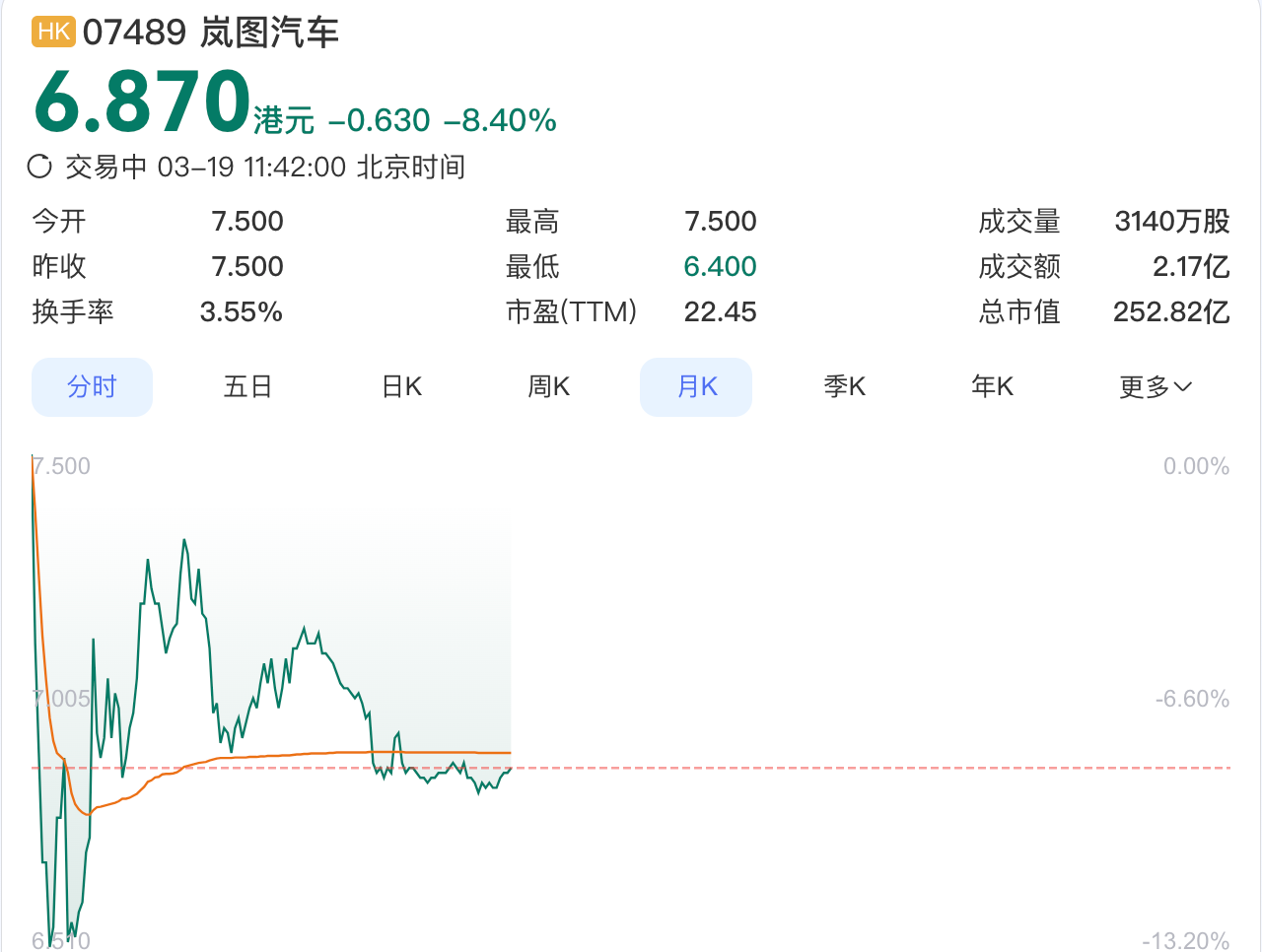
Image Source: Baidu Stock
Yet, capital markets are no fairy tale. Voyah's share price performance on its debut added a dose of cold reality to this "passing of the baton."
Behind the opening plunge lies a mix of broader environment and company-specific factors. Global capital market volatility has intensified, and investors have become rational—even cautious—about the new-energy track. At the same time, while profitable, Voyah still lags behind top brands in sales scale, and its product structure relies heavily on a single model, the Voyah Dreamer, failing to achieve broad-based success.
The prospectus reveals that in 2025, Voyah received 1.08 billion yuan in government-related subsidies, exceeding the net profit attributable to shareholders for the period. Meanwhile, the selling expense ratio remained at a relatively high 15.3%, with sustained heavy marketing investment significantly diluting profits.
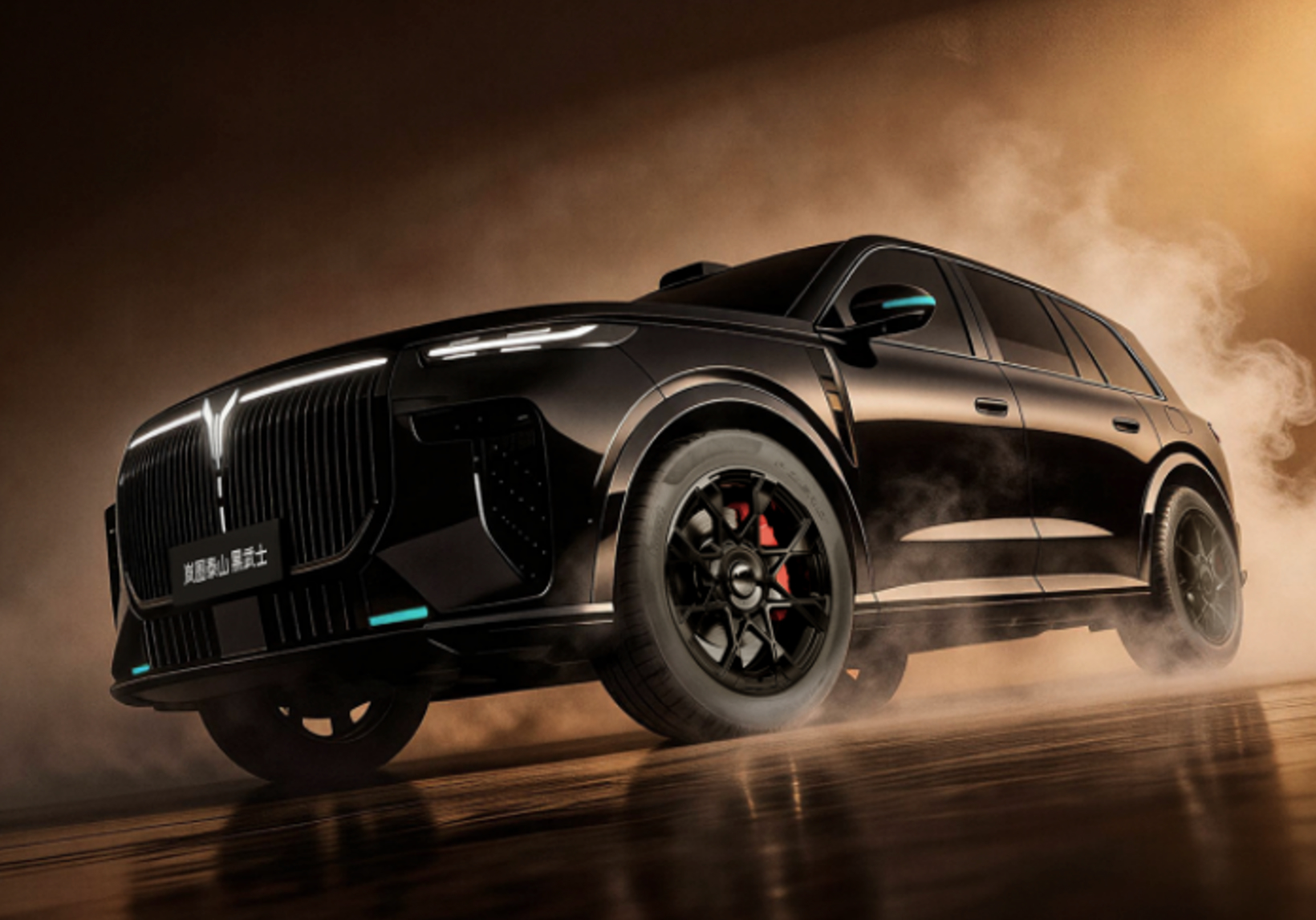
Image Source: Voyah
Furthermore, while Voyah's strategy of "fully embracing Huawei" helps build hits—such as the unveiled "Voyah Taishan X8," which features four LiDARs and a new HarmonyOS cockpit—the partnership is not exclusive. Huawei's Qiankun intelligent driving and HarmonyOS solutions have already landed at multiple automakers, posing the question of how Voyah will build differentiated competitiveness amid a trend of technological homogenization.
Voyah's official opening in Hong Kong marks a comprehensive shift in Dongfeng's strategic transformation focus toward self-owned new-energy brands. Although the capital market offered a prudent valuation on day one, this serves more as a stress test for a "second-generation" automaker born from a state-owned enterprise.
For Voyah, a successful listing is only the first step. In an increasingly competitive new-energy market, whether it can convert its status as the "first central SOE stock" into tangible market share—through subsequent model deliveries, mastery of R&D, and optimization of sales structure—will be the key to securing long-term trust from the capital market.


