Gasgoo Munich-China's annual humanoid robot production is on track to top 100,000 units this year, according to Gan Xiaobin, deputy director of the science and technology department at the Ministry of Industry and Information Technology (MIIT). Speaking at a July 7 press conference for the 2026 World Artificial Intelligence Conference, Gan pointed to the rapid iteration of large models, AI agents, and AI chips as the driving force.
Multiple agencies previously estimated global humanoid robot shipments at just 13,000 to 16,000 units in 2025. Unitree led the pack, delivering over 5,500 pure humanoid units to claim the global top spot in third-party tallies. Agibot crossed the 5,000-unit mark, while UBTECH recorded sales of 1,079 full-size embodied-intelligence humanoid robots.
Fast forward to 2026, and the landscape is shifting. Deeper collaboration across the domestic supply chain and faster localization of core components are combining with aggressive commercialization and capacity expansions. The result: a rapid unlock of production capacity.
In early June, Unitree announced it had built roughly 11,000 units of a single bipedal humanoid model alone — a figure that excludes other variants and wheeled-chassis products.
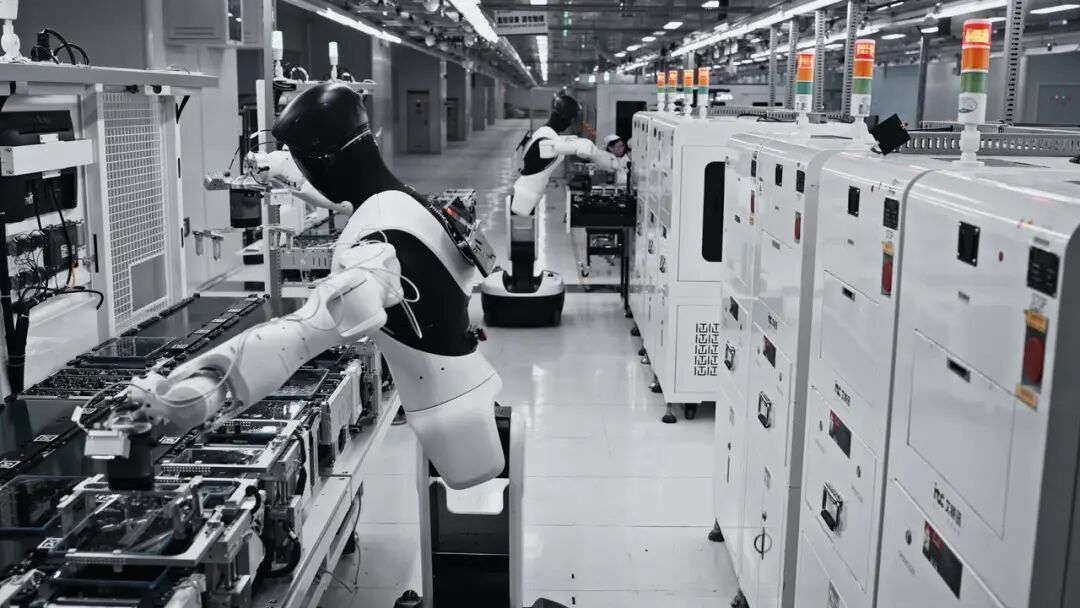
Image credit: Agibot
Agibot, for its part, rolled its 15,000th embodied-intelligence robot off the line in late June — less than three months after hitting the 10,000-unit milestone. The landmark unit, an Agibot Genie G2, was delivered the same day to a Longcheer Technology factory. That March milestone had seen the 10,000th general-purpose embodied robot come off the line.
Meanwhile, players like Engine AI and Leju Robotics are pushing their own capacity expansions.
In late March, an automated line — jointly built by Dongfang Precision and Leju Robotics — became the country's first to produce over 10,000 humanoid robots annually, churning out one unit every 30 minutes. By May, Engine AI had launched its Shenzhen Honghualing base, tightening the cycle to one unit every 15 minutes.
The message is clear: humanoid robots are leaving behind the experimental days of small-batch trial runs and stepping firmly into the era of standardized manufacturing.