



Gasgoo Munich- The Auto China 2026 in Beijing marks a defining moment for the global automotive industry. While the event's scale is striking—spanning 380,000 square meters, showcasing 1,451 vehicles, and featuring 181 global debuts—the most meaningful transformation is structural. The industry is no longer centered on producing standalone vehicles; it is rapidly evolving toward the creation of fully integrated, intelligent mobility ecosystems.
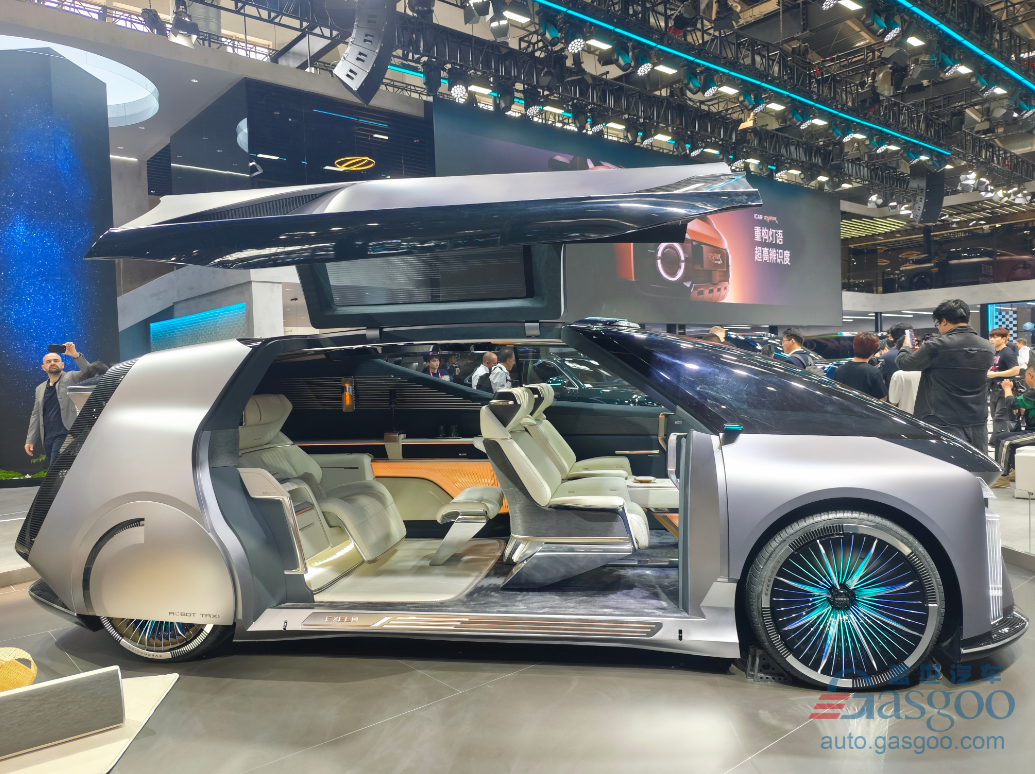
This transition is evident in the exhibition design itself. In many halls, automakers are increasingly co-located with core suppliers, presenting vehicles alongside the technologies that power them. This arrangement reflects a fundamental shift: modern vehicles are no longer isolated engineering products but the result of tightly coupled collaboration across semiconductors, software, sensing systems, and cloud platforms.
From Automakers to Ecosystem Integrators
A clear example of this transformation can be seen in Hall E1, where Chery Group presents an extensive lineup of 57 models alongside key technology suppliers such as Black Sesame Technologies and MINIEYE. Rather than separating vehicle displays from supplier technologies, the exhibition integrates them into a unified narrative, demonstrating how perception algorithms, autonomous driving chips, and vehicle platforms are co-developed.
Black Sesame Technologies highlights its automotive-grade high-compute chips designed to support advanced driver assistance and autonomous driving functions, while MINIEYE showcases its latest intelligent driving and intelligent cabin solutions. By placing these suppliers directly next to finished vehicles, the exhibition underscores a critical point: the intelligence of modern cars is inseparable from the capabilities of their upstream technology partners.
This co-development model signals a broader industry shift. Automakers are evolving into ecosystem integrators, responsible not only for vehicle assembly but also for orchestrating complex networks of hardware and software providers to deliver cohesive user experiences.
AI and Robotics as Core Enablers
Artificial intelligence and robotics emerge as central themes across multiple halls, illustrating how automotive innovation is increasingly driven by software capabilities.
In Hall E1, Chery showcases its humanoid robot "Mornine," a 167-centimeter-tall platform with 40 degrees of freedom, capable of navigating dense crowds in real time. While seemingly outside the traditional scope of automotive manufacturing, the robot serves a strategic purpose. Its ability to perceive and respond to dynamic environments relies on the same core technologies used in autonomous driving, including sensor fusion, environment mapping, and decision-making algorithms. By deploying these systems in a humanoid form, Chery is effectively expanding the training and validation scenarios for its automotive AI.
In Hall E2, XPENG presents a broader vision of future mobility by showcasing a modular flying vehicle concept alongside its own robotics developments. The flying vehicle reflects ongoing exploration into low-altitude mobility, while the robotics initiatives highlight the company's investment in embodied AI. Together, these exhibits suggest that the boundaries of mobility are expanding beyond ground transportation into multi-scenario, multi-form ecosystems.
Meanwhile, NIO demonstrates how software is redefining traditional vehicle functions. Its ET9 sedan features the SkyRide active suspension system, which is capable of executing synchronized, high-precision movements in response to external inputs. While the "dancing" demonstration attracts attention, the underlying significance lies in the system's ability to process sensor data and adjust vehicle dynamics in real time—an example of how mechanical systems are becoming increasingly software-defined.
Battery Innovation as Critical Infrastructure
Despite the prominence of AI and robotics, battery technology remains the foundation of the intelligent mobility ecosystem. Nowhere is this more evident than in Hall E3, which is entirely occupied by BYD and its sub-brands, including Dynasty, Ocean Series, DENZA, FANGCHENGBAO, and YANGWANG.
BYD uses this space to present a vertically integrated approach to electrification, with a strong focus on its second-generation Blade battery and ultra-fast FLASH charging technology. These innovations address one of the most persistent challenges in electric vehicles: performance degradation under low-temperature conditions.
Conventional lithium-ion batteries experience reduced efficiency in cold environments due to increased internal resistance and slower ion movement within the electrolyte. BYD's updated battery architecture is designed to mitigate these effects through improved material composition and thermal management, enabling more stable performance and faster charging even in extreme climates.
This advancement is particularly important as vehicles become increasingly dependent on high energy consumption systems, including advanced computing platforms, sensor arrays, and continuous connectivity. Reliable battery performance is no longer just about driving range—it is essential for maintaining the overall functionality of intelligent vehicle systems.
The Convergence of a Unified Technology Stack
The Auto China 2026 highlights the rapid convergence of multiple technological domains into a unified automotive stack. This stack integrates (including but not limited):
High-performance automotive semiconductors and centralized computing platforms
AI-driven perception, planning, and control systems
Advanced battery technologies and energy management solutions
Intelligent connectivity and cloud-based services
Software-defined vehicle architectures and user interfaces
...
This convergence is accelerating the transition toward software-defined vehicles, where capabilities can be continuously updated through over-the-air upgrades. As a result, vehicles are no longer static products but evolving platforms that improve over time.
Redefining Mobility and the Driving Experience
The implications of these developments extend beyond technology. As vehicles become intelligent and interconnected, the concept of driving itself is being fundamentally redefined. The role of the driver is shifting toward supervision, with increasing reliance on automated systems to handle complex tasks.
At the same time, mobility is being reimagined as an integrated service ecosystem, where vehicles, infrastructure, and digital platforms interact seamlessly. Automakers are transitioning from manufacturers to providers of comprehensive mobility solutions.
Conclusion
The Auto China 2026 demonstrates that the automotive industry is entering a new phase defined by integration, intelligence, and ecosystem-driven innovation. The convergence of AI, robotics, battery technology, and supply chain collaboration is transforming vehicles into sophisticated, connected platforms.
The central insight is clear: the future of mobility will not be defined by individual vehicles, but by the ecosystems that connect them. As this transformation continues, the meaning of a car—and the experience of driving—will be fundamentally reimagined.


