Let's start with the conclusion:
In the past three years, China's automotive expansion abroad didn't just "suddenly take off."
It was driven by three converging forces: the restructuring of the global auto industry, China's own systemic competitive advantages, and real product gaps in overseas markets.
Together, these forces have created a rare strategic window of opportunity.
For those who seize it, this will become their second growth curve;
for those who miss it, it could define the ceiling of an entire generation of automakers.
Many people ask me: "Why now? Why China?"
In the following, I'll explain why this moment — right now — is the perfect time for China's auto industry to go global, from three distinct perspectives.
1. We are now standing at the largest industrial transformation window the global automotive sector has seen in a century.
You can think of today's auto industry as three curves bending at the same time.
The first curve is the powertrain transition — from the ICE (internal combustion engine) era to the NEV (new energy vehicle) era.
Most major markets have already drawn their phase-out timelines for combustion vehicles — the EU, the UK, and Japan have all announced plans to ban sales of ICE cars.
But planning is easy; execution is hard — especially for an industry as massive and supply-chain-intensive as automotive.
And in this new race, who holds the largest scale and the lowest cost in core supply chains — batteries, motors, electronic controls, and full-vehicle integration?
The answer is clear: China.
Today, China's NEV market penetration has surpassed 50%, with continuous upgrades across the supply chain, complete-vehicle manufacturing, and charging infrastructure.
This is not an experiment — it is a full-scale industrial transition, and China has become the first country in the world to complete a structural shift from fossil-fuel vehicles to new energy vehicles.
By contrast, Europe's policies are ambitious but face major implementation hurdles, while North America's electrification journey is slowing down.
The second curve is the electronic and software architecture curve — the shift from a mechanical product to a "computer on wheels."
In a typical intelligent electric vehicle, electronics and software now account for 30% to 40% of the vehicle's total value.
This domain perfectly overlaps with the capabilities China has built over the past decades in consumer electronics, the internet, and mobile devices — capabilities that can now be systematically applied to automobiles.
New technologies, including artificial intelligence, are converging within smart EVs, turning the car into a comprehensive carrier of cutting-edge innovation, continuously updated and iterated through rapid software evolution.
The third curve is the global supply chain distribution — shifting from a single-center model to a multi-center one.
As geopolitical tensions, tariffs, and energy prices grow increasingly complex and volatile, the traditional automotive hubs are facing rapidly rising costs and declining certainty.
At the same time, the pursuit of supply chain security, autonomy, and controllability is accelerating a transformation from globalized production toward "region-for-region" localization.
Regions such as ASEAN, the Middle East, and Latin America are proactively seeking new partners and industrial collaborators. This represents not only a challenge to the old model of global division of labor, but also a historic opportunity to build new ecosystems in the global automotive supply chain.
When these three curves overlap, a clear pattern emerges:the foundation of the old order is loosening,the new order has yet to fully take shape,and China stands precisely at every critical junction of this transformation. That is what makes this moment "the right time" — a perfect window in history.
2. China has already developed a systemic combination of cost efficiency and value density — an unparalleled comparative advantage in the global automotive industry.
With this window of opportunity open, one question remains: "Why China — and not another country?" The answer lies in China's systemic advantage.
China's balance of unit cost and unit value sits in a remarkably competitive and rare "high value-for-money" zone.This is most evident on the manufacturing side: for a mid-sized pure electric vehicle, Chinese automakers' total cost — across batteries, supply chain, and manufacturing efficiency — can be at least 40% lower than that of comparable European or American models.
At the same time, high-value features such as smart cockpits, large screens, connectivity, and advanced safety systems have already been "democratized" in China, appearing in models priced around 100,000 RMB (≈USD 15,000). This means that in the USD 20,000–30,000 price range, Chinese cars deliver a level of experience density that most traditional global brands simply cannot match.
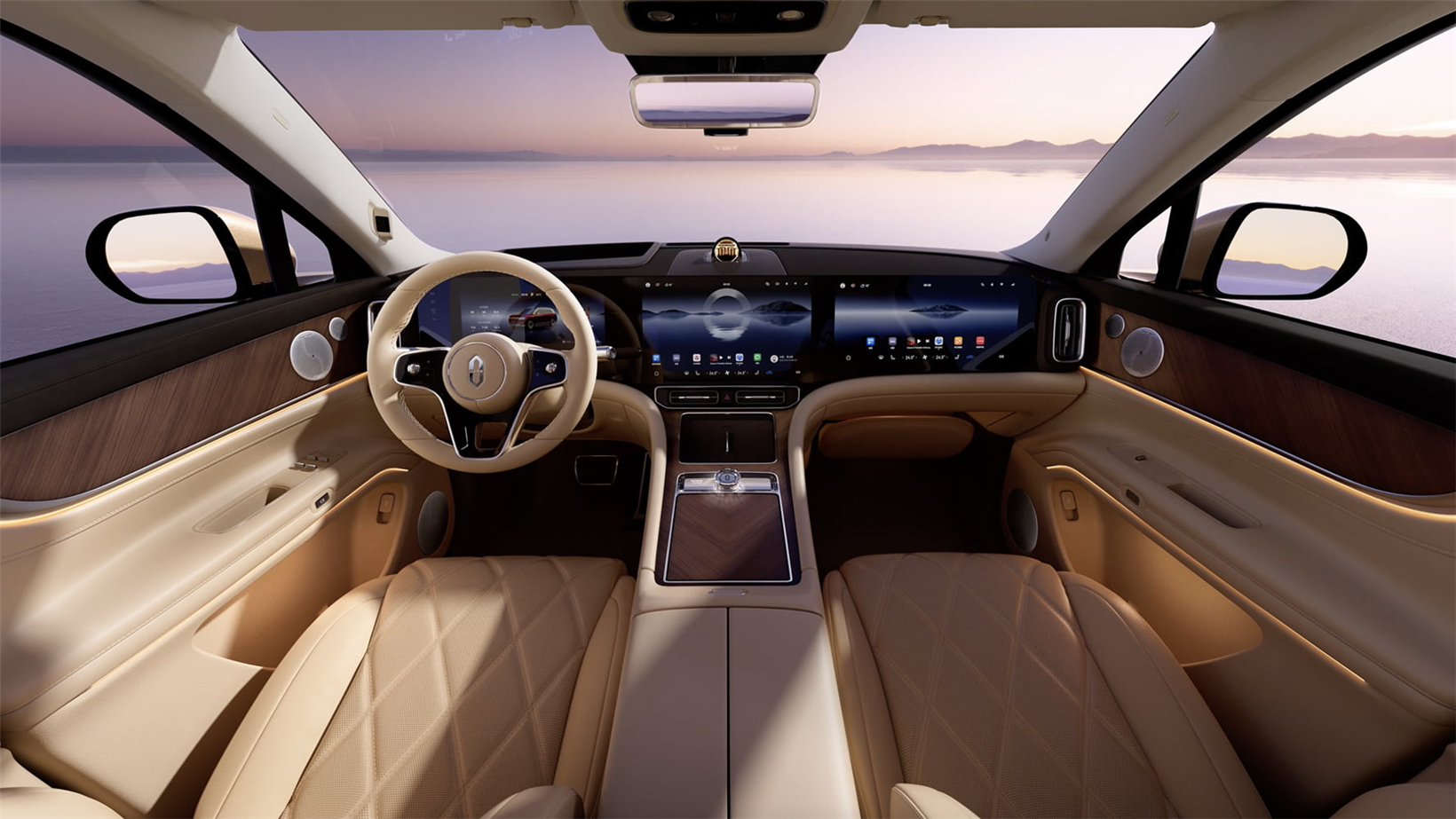
AITO M7's cockpit; photo source: AITO
Why can China achieve this? The key lies in its systemic advantage.
China possesses the most complete new energy vehicle (NEV) supply chain in the world, built around highly concentrated industrial clusters.From upstream materials, batteries, and chips to complete vehicle manufacturing, the entire value chain can often operate within a single province.Tesla's four-hour supply loop around its Shanghai Gigafactory is a perfect example of the extreme efficiency and value that such an industrial ecosystem creates.
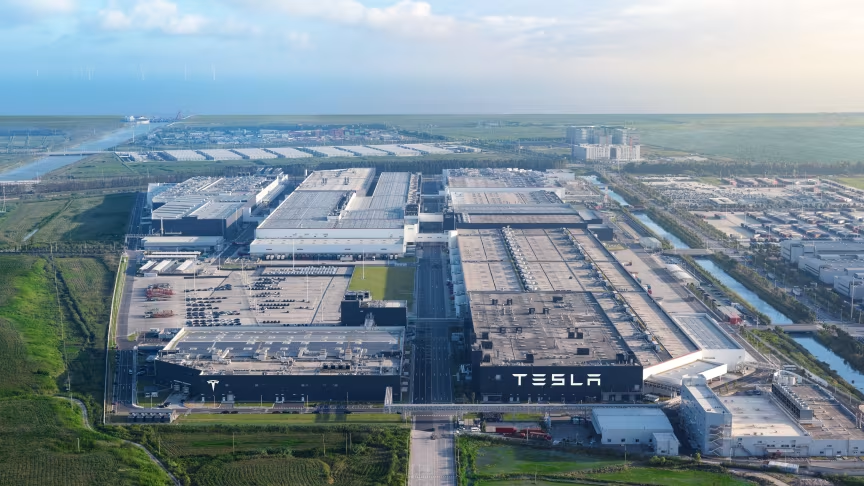
Tesla Gigafactory Shanghai; photo source: Telsa
China has the largest automotive market in the world, with over 30 million vehicles sold annually. The penetration rate of new energy passenger cars has surpassed 50%, and every intelligent vehicle on the road functions as a mobile data terminal.
This enables Chinese automakers to continuously optimize their algorithms, user experience, and features based on real-world driving conditions and user feedback. Under an "AI-driven + user feedback" model, China's innovation and iteration speed is the fastest in the world.
China also operates at the fastest pace.It's no exaggeration to say that Chinese automakers now run on an "internet rhythm." New features can be rolled out via OTA updates, while UI, interaction, and voice systems refresh on a weekly cycle; new models are launched on a yearly or even quarterly cycle.
So as electrification and intelligence become the new battleground, China's long-cultivated "small-step, fast-iteration" approach from the smartphone and internet industries transfers seamlessly into automotive.Cars are becoming more like digital products — one new function per week, one new model per year.
These forces amplify each other, driving a rapid leap in product competitiveness generation after generation.
This complete ecosystem gives China's auto industry crushing comprehensive competitiveness in the intelligent EV era — not just isolated advantages, but a system-wide transformation of capability.
In one sentence: China's industrial advantage today isn't about being a "cheap car factory," but about a system of high value density and high efficiency — a victory of the ecosystem.
That's why this moment is the right time in terms of capability.
3. The final perspective — one that is often overlooked in many discussions — is the real demand gap among global consumers.
If you divide the global market into roughly three segments, a clear pattern emerges.
(1) High-end new energy demand in developed markets:
Europe and North America remain the world's automotive strongholds.Consumers there care about safety, brand, sustainability, and regulatory compliance.Chinese brands such as MG, BYD, and Zeekr have already begun to compete head-on in certain niches, gaining traction as market space gradually opens up.
(2) Affordable new energy and intelligent vehicle demand in emerging markets:
In ASEAN, the Middle East, and Latin America, most families are looking for vehicles that are economical to own and operate, reliable in quality, decently equipped, and reasonably priced.Traditional multinational automakers often continue selling outdated platforms, powertrains, and designs in these markets, struggling to quickly introduce the latest electric and intelligent technologies.
(3) "Utility vehicle" demand in public and fleet operations:
In segments such as ride-hailing, logistics, taxis, and rental fleets, the most critical factor is total cost of ownership (TCO) — vehicles must be affordable to buy, economical to run, and easy to maintain.
When these three layers of demand overlap, a clear market vacuum emerges —
between low-cost basic cars and high-end luxury vehicles — where consumers want cars that combine new energy, intelligence, and affordability.
This happens to be the exact segment Chinese automakers excel at:vehicles that embody the "new" of electrification and smart technology,while driving costs low enough to make innovation accessible to the masses — technology made inclusive. These cars are well-equipped, reasonably priced, and uncompromising in experience.
This isn't "price dumping"; it's the natural victory of value density.
So you can already see it happening: on the roads of Southeast Asia, Chinese brands are becoming increasingly common; in Japan's electric bus fleets and Germany's electric taxis, Chinese vehicles are taking a growing share;and in markets across the Middle East and Eastern Europe, more and more consumers are choosing Chinese new energy cars.
With strong products, controllable costs, and reliable service, China's auto industry has achieved genuine all-round growth through years of intense domestic competition.
When Chinese automakers and supply chain companies can deliver great products, competitive pricing, and localized services,their collective advantage in going global becomes self-evident.
Closing Thoughts
So, coming back to our original question — why is this the right time for China's auto industry to go global?
First, from a time perspective, electrification, intelligence, and globalization are all bending their curves at the same moment. The old order is loosening, and a new one is emerging — creating a once-in-a-century industrial restructuring window.
Second, in terms of comparative advantage, China has built a systemic ecosystem defined by high value density and high efficiency, giving it comprehensive strength across the entire value chain.
Third, on the demand side, there's a massive global — especially emerging market — gap for affordable, intelligent, new energy vehicles.And building products that are good and affordable has always been one of China's greatest strengths.
When these three forces converge, China's automotive expansion overseas is no longer a question of "whether to go," but rather "how — and at what pace — to participate in this new global redistribution."
Combined with the intensifying competition in the domestic market, going global has become not just a strategic option, but the natural outcome of China's industrial capability overflowing beyond its borders.
If the last century belonged to Detroit, Tokyo, and Stuttgart, then the coming era of mobility belongs to China's fast-rising intelligent and electric automotive industry.
Written by Xiaoying Zhou — CEO and Editor-in-Chief, Gasgoo International