



Gasgoo Munich-After a collective sprint in the first quarter, China's new energy vehicle market entered April with a mix of sustained high volume and structural divergence.
Leapmotor surged to the top with more than 71,000 deliveries, driven by a surge in its new models. Meanwhile, brands incubated by traditional automakers are displaying a clear trend of group-based competition, with the Geely camp accelerating its push and Changan and BYD's high-end series steadily gaining volume.
New Entrants: Leapmotor Pulls Away, Xiaomi Joins the 30,000 Club
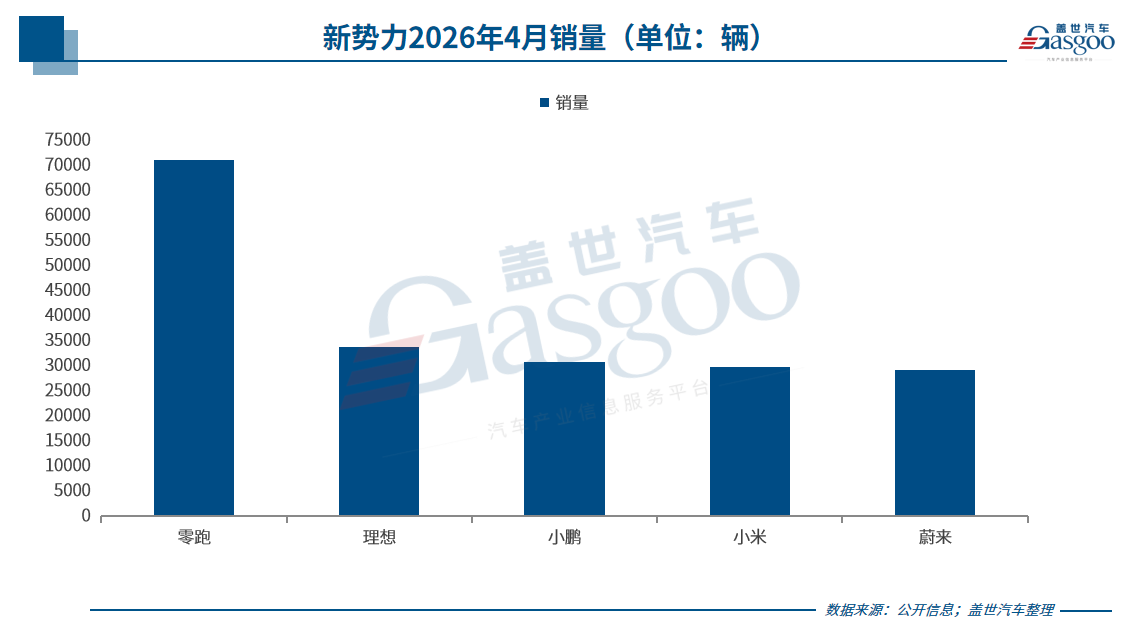
Leapmotor delivered 71,387 vehicles in April — a record for the brand. That represents a 73.9% year-on-year jump and a more than 40% increase from March. Not only did it cross the 70,000-unit threshold for the first time in four months, but it also established a commanding lead over other new entrants.
This performance was built on the concentrated release of several new models. The A10, launched on March 26, stood out with its delivery momentum fully unleashed in April; officials revealed daily factory capacity has surpassed 1,000 units. Meanwhile, the D19, which officially hit the market on April 16 to target the 200,000-yuan-and-above segment, secured over 15,000 firm orders within 15 days, further solidifying the brand's growth trajectory.
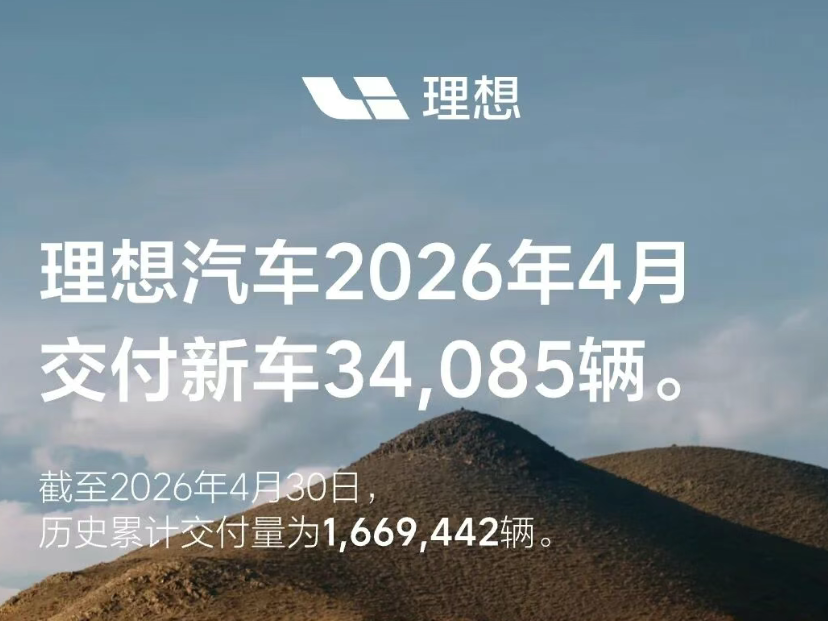
Image source: Li Auto
Li Auto delivered 34,085 new vehicles in April, a slight year-on-year increase of 0.43%, bringing its cumulative total to 1,669,442 units as of April 30. However, month-on-month deliveries fell about 17% from March's high of 41,053 units, suggesting the novelty of its extended-range L-series is facing challenges.
At the 2026 Beijing Auto Show, the new Li Auto L9 Livis made its global debut and is scheduled for an official release on May 15. The market performance of this upcoming model will directly define Li Auto's growth curve for the second half of the year.
Xiaomi Auto's April deliveries surpassed 30,000 units for the first time — a roughly 50% monthly increase and a yearly high — propelling it into the first tier of the "30,000 Club" among new entrants. Cumulative deliveries for the first four months reached 109,000 units. The new SU7 continues to sell well, with locked orders exceeding 80,000 units.
At the 2026 Beijing Auto Show, Xiaomi teased the Xiaomi YU7 GT, a high-performance pure electric SUV slated for official release at the end of May, further extending its competitive landscape. On the channel front, Xiaomi Auto added five new stores in April, bringing its total to 495 across 143 cities as its service network expands in tandem.
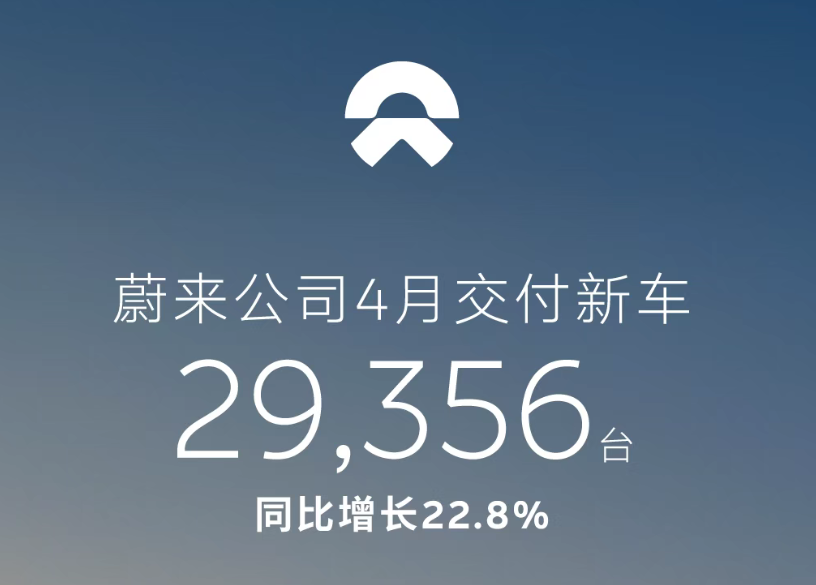
Image source: NIO
NIO delivered 29,356 vehicles in April, a 22.8% year-on-year increase, though this marked a retreat from March's 35,486 units. Specifically, the NIO brand delivered 19,024 units, while Onvo delivered 5,352 units — up 21.6% — and the Firefly brand delivered 4,980 units.
As of April 30, NIO's cumulative deliveries had surpassed 1.11 million units. Notably, the all-new ES8 reached the 100,000-unit delivery milestone in just 215 days, setting a new sales and delivery record for high-end models priced above 400,000 yuan in the Chinese market.
XPENG delivered 31,011 vehicles in April, a roughly 13% monthly increase and its highest monthly delivery of the year. However, it fell about 11.51% year-on-year, making it one of the few top-tier new entrants to post an annual decline. The newly released second-generation visual-language-action model, VLA 2.0, has positively influenced consumer decisions, significantly boosting test-drive satisfaction. During the Beijing Auto Show, multiple new XPENG models debuted, and market feedback on these upcoming vehicles will be key to reversing its fortunes.
HIMA (Harmonious Intelligent Mobility Alliance) delivered 32,759 vehicles across its lineup in April, up 18.9% year-on-year. HIMA made a series of aggressive moves in April: the AITO M6 secured over 10,000 firm orders within 15 minutes of pre-orders opening, with 5,000 deliveries completed within a week; the new AITO M9 has garnered over 25,000 pre-orders; the Luxeed V9 received over 22,500 orders within 72 hours of pre-sales; and the Stelato Z7 series collected over 12,000 firm orders in just 27 minutes.
Whether subsequent production capacity can match this surge in orders will be critical for HIMA brands to achieve transformative growth.
HIMA has already made preparations. According to official plans, monthly capacity for the AITO M6 has been ramped up to over 20,000 units. With the AITO M6, Stelato Z7, and other new models launching full deliveries in May, HIMA's monthly deliveries are expected to rebound above 40,000 units next month.
Incubator Brands: Group-Based Competition Takes Shape
Brands incubated by traditional automakers displayed a clear pattern of group-based competition in April. Geely, BYD, and Changan accounted for the bulk of the sector's growth, while Dongfeng, SAIC, and GAC's independent divisions are accelerating their pursuit.
On the Geely front, the Galaxy series continues to gain volume, while the ZEEKR brand hit a record high.
Geely Holding's multi-brand strategy in the new energy sector continues to yield scale effects. Geely Auto's total sales reached 235,164 units in April, with new energy models accounting for 135,591 units — or 57.7% of the total. The penetration rate has now exceeded 50% for three consecutive months.
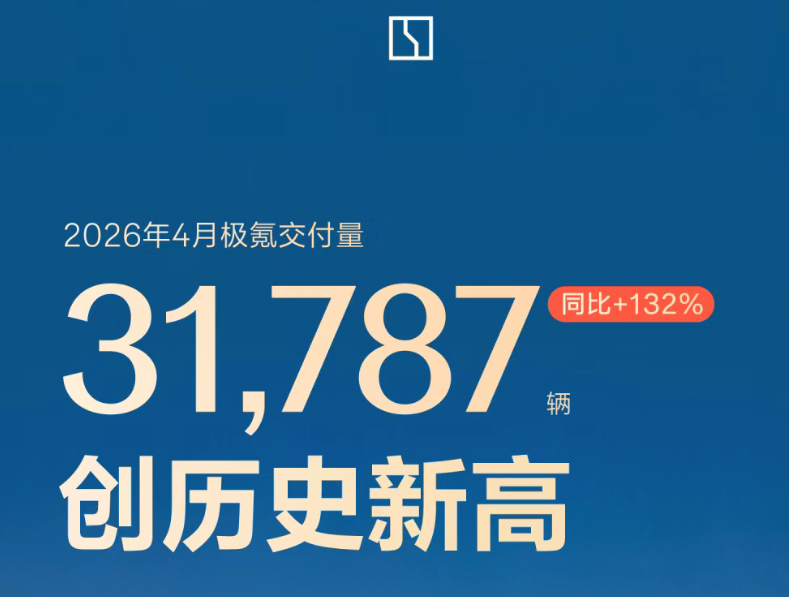
Image source: ZEEKR
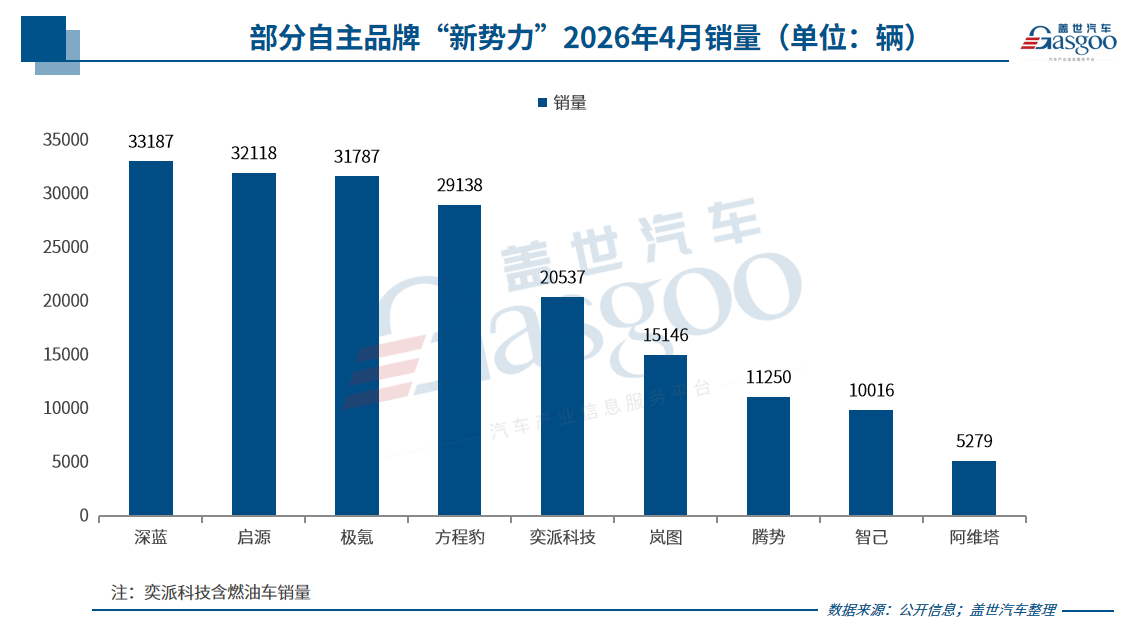
At the brand level, ZEEKR was the standout performer, delivering 31,787 vehicles in April — a 132% year-on-year surge and a brand record. Its high-end models continue to gain market acceptance; the ZEEKR 9X commands an average transaction price exceeding 530,000 yuan, while the ZEEKR 8X has heated up rapidly since its launch.
The Galaxy series delivered 91,001 units in April, up 10% from the previous month. The Geely Xingyuan contributed 41,938 units, firmly securing its position as the brand's volume leader, while the Galaxy Xingjian 7 EM-i has surpassed 200,000 cumulative sales since launch. Additionally, the Lynk & Co brand recorded sales of 22,755 units in April.
In the BYD camp, Denza is making steady progress, while Fangchengbao continues to ramp up volume.
BYD's passenger vehicle sales reached 314,100 units in April. As a core pillar of its high-end strategy, the Denza brand sold 11,250 units, with the Denza D9 continuing to lead the charge with 5,397 units.
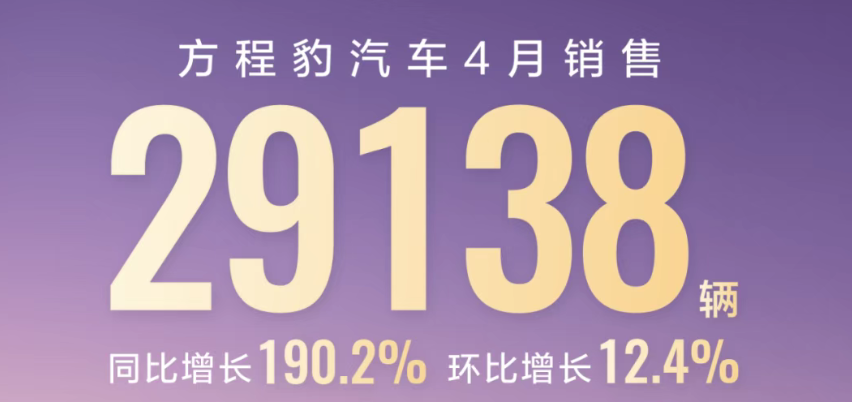
Image source: Fangchengbao
Fangchengbao sold 29,138 vehicles in April, showing strong growth momentum. The Titanium 7 alone contributed 17,001 units, becoming a popular choice in the hardcore off-road market. The Leopard 5 sold 5,511 units, while the Titanium 3 sold 5,206 units, indicating a gradual synergy across the product matrix. The Yangwang brand sold 264 units, maintaining its position in the million-yuan luxury segment.
For Changan Automobile, Deepal consistently surpassed the 30,000-unit mark, while NEVO contributed the bulk of the growth.
Changan's independent new energy sector performed strongly in April. Deepal sold 33,187 vehicles, a 64.8% year-on-year increase, marking its fourth consecutive month above the 30,000-unit threshold. The Deepal S05 contributed 17,269 units, with average monthly sales steadily exceeding 10,000 and cumulative sales surpassing 200,000 units.
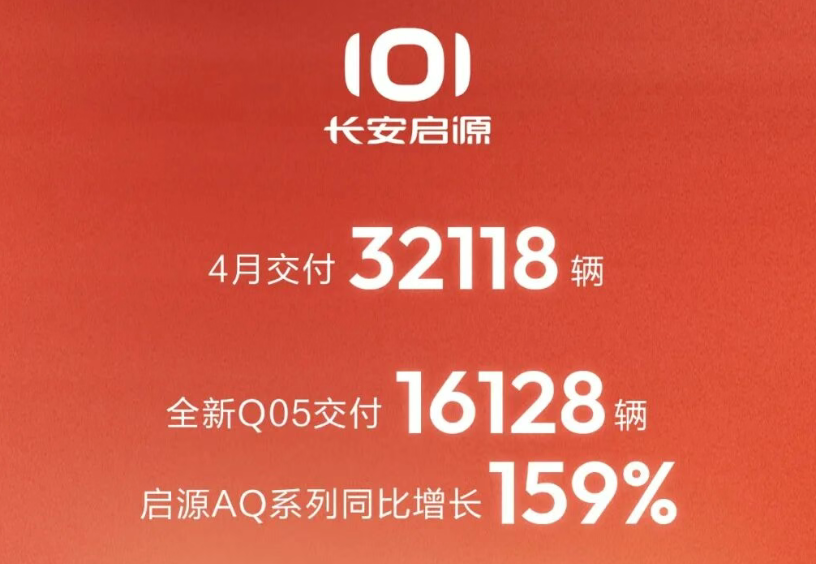
Image source: Changan Automobile
Changan NEVO delivered 32,118 units in April, with the NEVO AQ series surging 159% year-on-year and the flagship Q05 model delivering 16,128 units. Continued strong sales of models like the CS55 PLUS have provided NEVO with a solid market base.
Avatr sales reached 5,279 units in April. With the successive launches of the new Avatr 12 and Avatr 06T, the brand's product matrix is becoming increasingly diverse.
In the Dongfeng camp, Voyah and eπ are also seeing steady growth.
Dongfeng's independent new energy sector is accelerating overall. Voyah delivered 15,146 vehicles in April, up 51% year-on-year, bringing its cumulative deliveries for the first four months to 49,038 units, a 36% increase. At the Beijing Auto Show, Voyah opened pre-orders for the Taishan X8, which has already surpassed 30,000 orders.
eπ Technology sold 20,537 vehicles in April, with cumulative sales of 84,196 units for the first four months, an 18% year-on-year increase. It maintains a stable market share in the mainstream 80,000 to 200,000 yuan price band.
IM Motors, part of SAIC, reached sales of 10,016 units in April, with cumulative sales for the first four months surging 130% year-on-year. Amid the fiercely competitive new energy market, IM Motors is gradually carving out a differentiated niche, driven by the steady performance of models like the LS8.
In April 2026, the Hyper-Aion BU delivered 32,727 vehicles, up 15.6% year-on-year but retreating from March levels. After a sluggish start to the year, Aion is restoring growth momentum by adjusting its product structure. In a market plagued by increasing homogeneity, strengthening consumer brand recognition remains an urgent challenge. At the 2026 Beijing Auto Show, both Aion and Hyper underwent brand refreshes, aiming to boost consumer awareness through differentiated positioning.
Conclusion
April's new energy market served as a microcosm of structural divergence against a backdrop of high baselines and intense competition. Leapmotor's strong lead with over 70,000 deliveries demonstrated the explosive potential of the top new entrants, while Xiaomi held its ground in the first tier thanks to the high order volume of its new SU7. The industry landscape continues to reshape at an accelerated pace.
Among the incubator brands, ZEEKR hit a record high, while Galaxy and Deepal continued to scale up volume. However, some brands are enduring the growing pains of structural adjustment amidst price wars and product homogeneity. As the effects of the Beijing Auto Show continue to ripple out, the intensity of competition and the evolution of the market landscape in May will be worth monitoring closely.


