



Gasgoo Munich- As the "15th Five-Year Plan" kicks into high gear, green fuel has been written into the government work report for the first time — marking a substantive breakthrough in the Chinese auto industry's pursuit of energy diversification.
Green methanol took center stage once again at the Intelligent Electric Vehicle Development Forum 2026, which opened on April 11, 2026. In a keynote address, Geely Holding Group Chairman Li Shufu argued that developing green fuel based on local conditions — and building integrated bases for wind, solar, hydrogen, ammonia, and methanol — is a strategic necessity. "It is another viable path for the intelligent and electric transformation of China's auto industry," he said.
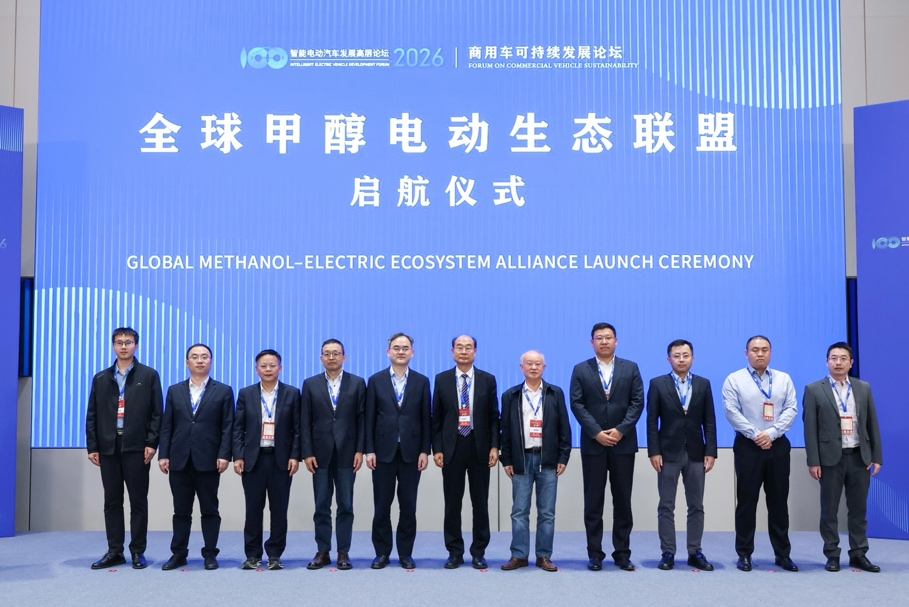
Image Source: Geely Auto
During the forum, the "Global Methanol-Electric Ecosystem Alliance" — initiated by the China EV100 — was officially launched. This move signals a shift from years of global consensus on energy transition to a new era of co-construction. The alliance spans automakers, non-road machinery manufacturers, core component suppliers, energy firms, research institutes, industry bodies, and investment institutions. Founding members include the China Automotive Technology and Research Center (CATARC), the MIIT Expert Committee on Methanol Vehicle Promotion, the Methanol Institute, Farizon New Energy Commercial Vehicle Group, Chery Commercial Vehicles, etc. Its inaugural event, the "Methanol Electric Forum 2026," is slated for this June in Hong Kong.
Green Methanol Takes Center Stage in Energy Transition
Green methanol is no sudden flash in the pan in China; its rise has been deliberate. In 2019, eight ministries, including the Ministry of Industry and Information Technology (MIIT), jointly issued guidelines encouraging the use of methanol vehicles in qualified regions — the first explicit policy push. By 2024, opinions on accelerating green transformation had incorporated methanol refueling into green transport infrastructure planning. That same year, the National Development and Reform Commission (NDRC) and five other departments called for exploring integrated bases for wind, solar, hydrogen, ammonia, and methanol. To date, more than 80 supportive policies have been rolled out across 39 cities in 20 provinces and municipalities.
Li Shufu traced this trajectory during his speech. "The MIIT launched methanol vehicle pilot work in 2012, followed by comprehensive acceptance in 2018 and large-scale promotion in 2019," he noted. "Today, there are over 80 policy documents encouraging the adoption of methanol electric vehicles." He described the application of China's wind, solar, hydrogen, ammonia, and methanol green energy in transportation as "a pragmatic technological route."
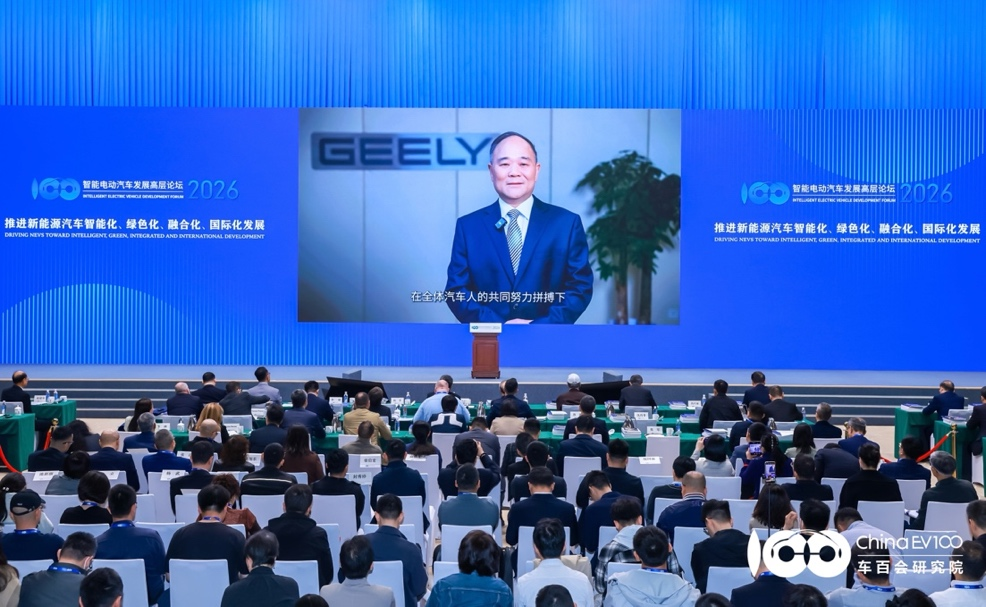
Image Source: Geely Auto
From a techno-economic standpoint, Li Shufu offered a sharp comparison: "Methanol boasts an energy density more than ten times that of lithium-ion batteries. For vehicles with the same carrying capacity, a lithium battery vehicle weighs twice as much as its methanol electric counterpart." He noted that greater weight drives up energy consumption. While lithium battery vehicles have gained massive acceptance in China, methanol electric vehicles still hold significant development potential in weight reduction and energy efficiency. That logic underpins Geely's two-decade-long investment in methanol power R&D.
Data from Geely reveals a closed-loop economic system spanning production, refueling, R&D, and carbon capture — what it calls the "Alcohol-Transport-Station-Vehicle-Capture" cycle. The company has developed over 20 methanol vehicle models and built more than 1,000 refueling stations, with technologies validated at major events like the Hangzhou Asian Games and the Harbin Asian Winter Games. In March 2025, a Geely-led project on "Technological Innovation and Industrialization of the Green Methanol Circular Economy Chain" won the first prize for technological development from the China Circular Economy Association.
An international consensus on green methanol industrialization is also accelerating. The EU, North America, and several European nations have incorporated green methanol into their transport transition plans with supportive policies. Organizations like the International Maritime Organization (IMO) are refining standards for methanol use; in shipping, particularly, methanol refueling and power technologies are entering commercial verification. The alliance effectively bridges China's experience in methanol vehicles with global energy transition demands. Geely plans to leverage the alliance to coordinate upstream and downstream resources, accelerating the global rollout of green methanol technology — with a focus on low-carbon transport and green logistics.
The Unique Value of Methanol Electric Vehicles
Crucially, the promotion of green methanol is not a replacement for electrification but a supplement to the existing energy mix. Methanol electric technology holds distinct advantages in heavy commercial vehicles, ships, and non-road machinery — sectors where high energy density and fast refueling are critical. In the passenger vehicle market, methanol electrics are set to coexist with pure electrics and plug-in hybrids. Li Shufu was clear on this: "Lithium-ion battery vehicles have been applied on a large scale in China with excellent results and are well-loved by users." Yet, he argued, methanol electric vehicles offer unique benefits in weight reduction, ecosystem-wide carbon reduction, and total lifecycle economics.
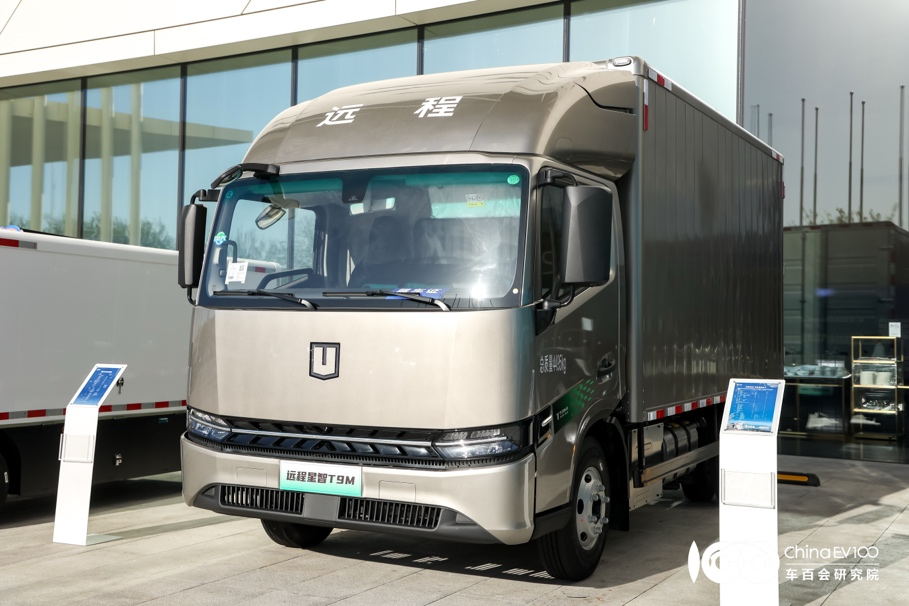
Image Source: Geely Auto
On the ground, the "Detailed Rules for Subsidies for Scrapping and Updating Old Operating Transport Ships" issued in 2024 have clarified fiscal support of up to 2,200 yuan per tonne for new clean energy vessels capable of using methanol. This extends green methanol's reach from road transport to waterways, significantly expanding its market potential. Li Shufu characterized these policy shifts as the "opening chapter of domestic substitution in a trillion-yuan energy market."
Ultimately, the launch of the "Global Methanol-Electric Ecosystem Alliance" marks more than just the birth of an industry body; it signals that green methanol has moved beyond technical verification and policy support into a phase of scaled, international promotion. The critical question now is whether the alliance can effectively coordinate cross-border standard recognition, integrate resources across industries, and establish certification systems for green methanol production. The "Methanol Electric Forum 2026" in Hong Kong this June will serve as the first window into the alliance's operational efficiency.


