



Gasgoo Munich- Recently, owners shopping for coverage discovered that Xiaomi has officially launched "Xiaomi Auto Insurance." The product offers not only more competitive pricing but also richer benefits, drawing significant attention from drivers.
One owner’s renewal screenshot shows a quote of 4,794.65 yuan from the policy, underwritten by BNP Paribas Cardif Tianxing, while traditional insurers quoted over 5,000 yuan. The policy also bundles eight roadside rescues, inspections, and safety checks, offering strong value for money.
Reactions online are mixed. Supporters see Xiaomi acting as a "price butcher" again, potentially cleaning up the messy, expensive reality of new-energy vehicle insurance. Others, however, are watching from the sidelines, questioning the newcomer’s ability to handle claims.
Automakers Entering the Fray Is the New Normal
Xiaomi Auto Insurance isn't a solo operation; it’s a classic alliance of heavyweights. The actual underwriter is Beijing BNP Paribas Cardif Tianxing Property & Casualty Insurance Co., Ltd.
Public records show BNP Paribas Cardif Tianxing was established on December 16, 2025, with a registered capital of 1 billion yuan. Its shareholder lineup is impressive: BNP Paribas Cardif holds 49%, Sichuan Yinmi Technology holds 33%, and Volkswagen Financial Services Overseas holds 18%. Notably, Sichuan Yinmi is wholly owned by Beijing Xiaomi Electronic Software Technology, which is 90% owned by Lei Jun.
Responding to market buzz, staff at BNP Paribas Cardif Tianxing emphasized that the insurer operates independently, with Xiaomi as just one major shareholder. The business is currently in a pilot phase, launching small-scale renewal services in Beijing on March 5, 2026, with no immediate expansion to other regions.
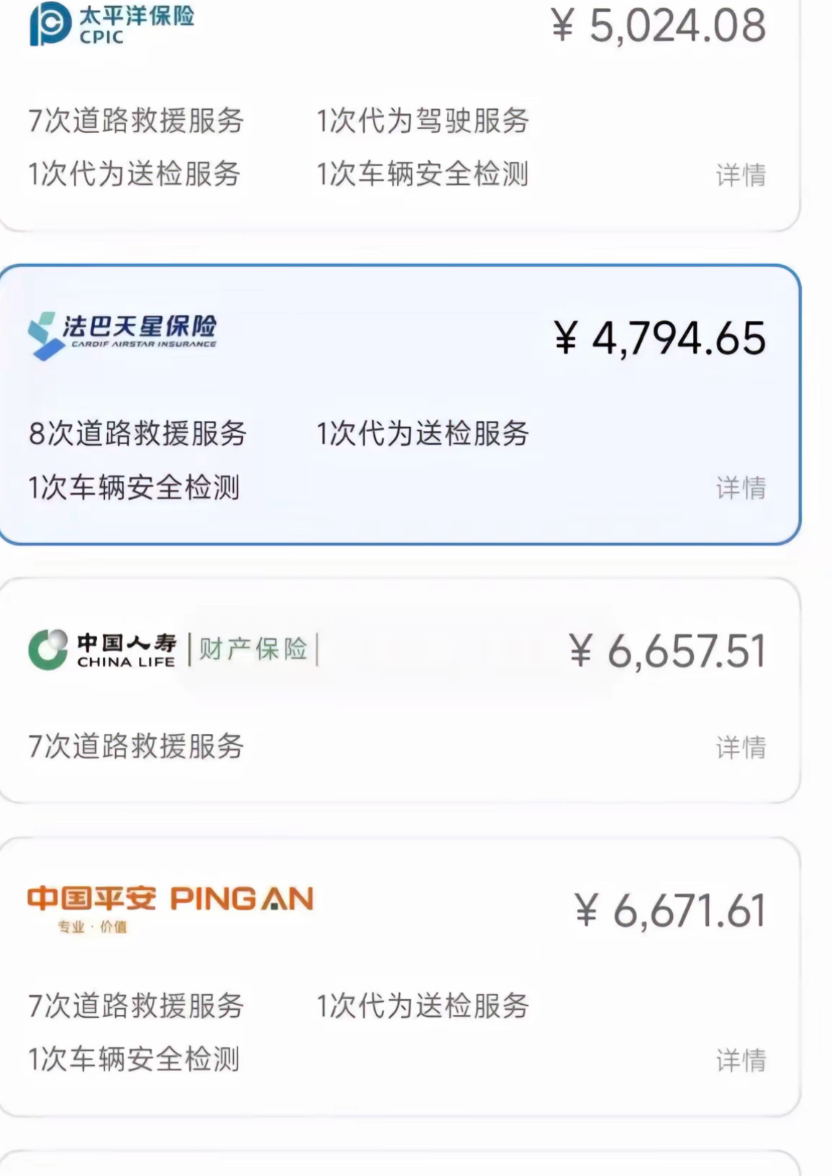
Image Source: Internet
In fact, automakers entering insurance is nothing new. Incomplete statistics suggest about 20 OEMs have ventured into the sector by acquiring or establishing insurance brokerage firms.
In 2022, Li Auto acquired Yinjian Insurance Broker, renaming it Beijing Li Auto Insurance Broker. NIO also acquired Huiding Insurance Broker through a subsidiary, rebranding it NIO Insurance Broker. In 2023, BYD fully acquired Yi'an Property Insurance, renaming it BYD Insurance, and secured approval for nationwide compulsory traffic insurance coverage in 2024.
Elsewhere, GAC Group set up Zhongcheng Insurance, FAW Group established Xin'an Auto Insurance, and Geely Group took a stake in Hezhong Property Insurance.
The rush into insurance is easy to understand. First, the surging number of new-energy vehicles has created a massive market. McKinsey predicts new-energy vehicle insurance premiums will reach around 480 billion yuan by 2030, accounting for over 40% of total auto insurance premiums.
Second, automakers hold core vehicle data and user resources, giving them a natural edge. Yang Weibin, a new-energy vehicle expert, notes that traditional insurance involves many middlemen. By cutting these layers, automakers can reduce costs and drive down insurance prices.
Furthermore, insurance allows automakers to close the loop connecting products, coverage, and after-sales repairs, boosting customer stickiness.
A Disruptor in the Making?
Will Xiaomi and its peers disrupt the new-energy vehicle insurance market? Judging by early signals, the odds are high.
While a single new player won’t drastically shift market share, the introduction of new models and philosophies will force incumbents to accelerate reforms in product design, digital services, and channel construction. This fosters a more diverse, value-driven competitive landscape.
Leveraging its shareholders' strengths in telematics, smart pricing, and IoT device coverage, BNP Paribas Cardif Tianxing is poised to explore innovations like "smart auto insurance" and "on-board data pricing," steering the market toward greater refinement and data integration.
For owners—especially those driving EVs—the most direct impact is on premiums and service. New-energy vehicle insurance has long been trapped in a paradox where drivers find it expensive and insurers lose money. The UBI (Usage-Based Insurance) model championed by automakers, where premiums hinge on driving behavior, will pressure traditional players to digitize fast.
Image Source: Xiaomi Auto
Data from BYD Insurance offers a reference point. In 2025, the company generated 2.871 billion yuan in insurance revenue with a net profit of 93.624 million yuan. The average premium per vehicle dropped from roughly 4,900 yuan in the second quarter of 2024 to about 3,800 yuan by the end of 2025.
A direct sales model proved crucial for cost control. In 2025, 100% of BYD Insurance’s written premiums came from direct channels, with zero commission or brokerage fees. This effectively bypassed the high costs of traditional agents and brokers, proving automakers can compress the middle chain to pass savings on to drivers.
Still, automakers face clear weaknesses in insurance. The core risk lies in claims, and the high loss ratio of new-energy vehicles remains unresolved. While several automaker-backed insurers are profitable, their combined cost ratios generally exceed 100%, meaning losses are often covered by investment income.
The pressure is even more pronounced when ride-hailing fleets make up a large portion of the business. This means underwriting capability, actuarial precision, and claims service remain areas where automakers must catch up.
To overcome these gaps, automakers need to look beyond mere price wars. While there is a long road ahead regarding profitability stability and network coverage, the transparency, refined pricing, and service ecosystems they bring are undoubtedly injecting vitality into the market.


