



Gasgoo Munich- In 2025, China's automotive sector found itself gripped by a paradox: rising output but shrinking profitability.
Data from the China Passenger Car Association showed the industry's annual profit margin slipping to 4.1%—the lowest level in a decade—with December plunging further to just 1.8%. Against total revenue of 11.18 trillion yuan and costs nearing 9.85 trillion yuan, net profit came in at only 461 billion yuan. Prolonged price wars, volatile raw material costs, and sustained R&D spending have left many automakers struggling to translate volume growth into meaningful earnings.
Yet amid this industry-wide squeeze, one earnings report stood out.
On March 24, Xiaomi posted its full-year 2025 results, reporting total revenue of 457.3 billion yuan, up 25% year-on-year, and adjusted net profit of 39.2 billion yuan, a 43.8% increase over a year earlier.
The spotlight, however, fell on its smart EV and AI-driven innovation segment. Revenue from this division surged 223.8% year on year to 106.1 billion yuan, with the business turning an annual operating profit for the first time, reaching 900 million yuan. Of that, 103.3 billion yuan came from automotive operations alone. Even more striking was the segment's gross margin, which climbed to 24.3%, up 5.8 percentage points from a year earlier.
How did a car brand barely more than one year old (its firts model Xiaomi SU7 hit the market in March 2024) manage to deliver such results in a market under pressure?
The profit formula: premium mix and supply chain discipline
A closer look at margins offers part of the answer. In the third quarter of 2025, Xiaomi's smart EV, AI, and other new initiatives segment posted a gross profit margin of 25.5%, significantly outpacing major EV peers. By comparison, BYD's vehicle margin hovered around 17.6%, while Tesla reported roughly 15.4%. On a like-for-like basis, Xiaomi's profitability stood out, underscoring unusual resilience for a newcomer.
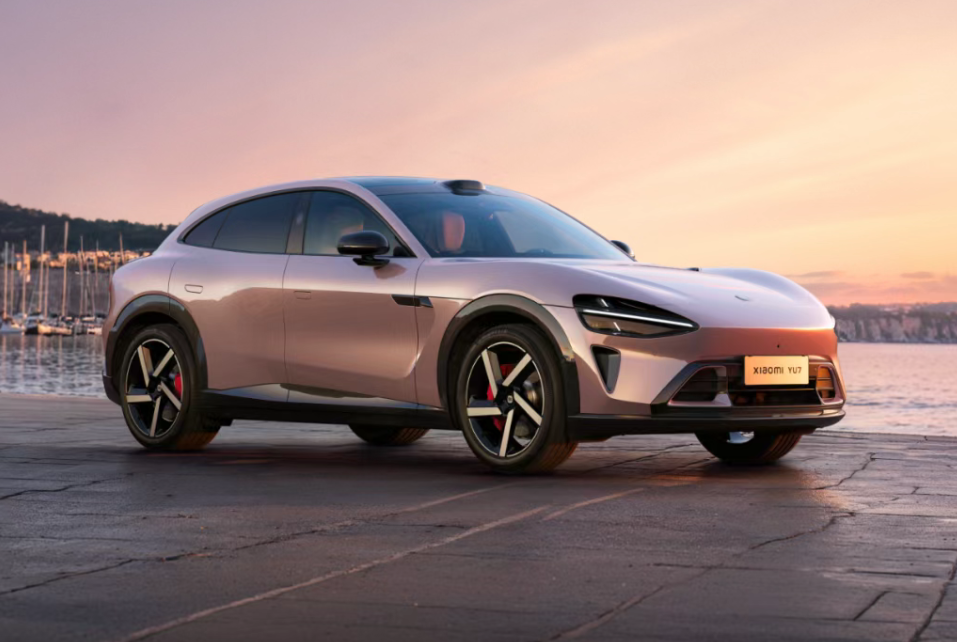
Xiaomi YU7; image source: Xiaomi EV
The drivers behind this performance can be distilled into two factors: product mix and supply chain capabilities.
First, Xiaomi has leaned into a higher-value product mix rather than relying solely on entry-level volume. In 2025, the SU7 Ultra pushed into the premium segment with a price tag of 529,900 yuan, while the YU7 SUV gained traction in the mid-to-large SUV category starting at 253,500 yuan. These models lifted Xiaomi's average selling price above 260,000 yuan.
The economics are straightforward: margins from a single high-end model can rival those from multiple lower-priced vehicles. Combined with deliveries reaching 411,082 units for the year—helping dilute fixed costs—and the reuse of supply chain efficiencies from its smartphone business, Xiaomi has built a solid foundation for strong margins.
Equally important is Xiaomi's supply chain DNA. The company has transferred the operational discipline honed in consumer electronics into automotive manufacturing—leveraging established supplier networks, scaling production rapidly, and maintaining tight cost controls.
These capabilities, refined over years in the smartphone business, have translated into a distinctive cost advantage in the auto segment. With 411,082 vehicles delivered in 2025, Xiaomi has firmly positioned itself among China's leading EV startups, with scale playing a decisive role in reinforcing its profitability.
Positioning Xiaomi: from breakeven to a distinct playbook
Viewed against China's broader NEV startup field, Xiaomi's performance reveals a clearer strategic identity. What looks impressive in isolation becomes even more telling when benchmarked against its closest peers.
The competitive landscape among China's NEV newcomers shifted notably in 2025. Four major players—XPENG, NIO, Li Auto, and Xiaomi—all achieved quarterly profitability, a milestone often described in the industry as "crossing the survival threshold." Yet beneath that shared milestone, their trajectories differ significantly.
Xiaomi EV posted its first profitable quarter in the third quarter of 2025, reporting an operating profit of 700 million yuan. XPENG followed in the fourth quarter with 380 million yuan in net profit and a gross margin of 21.3%. NIO also turned profitable in the same period, with net earnings of 283 million yuan. Li Auto, by contrast, had already reached this milestone back in late 2020, underscoring its earlier path to financial stability.
Each company has arrived here via a different route. Li Auto built its model around precise product positioning and the cost advantages of extended-range technology. NIO leaned into premium services and strong user loyalty to sustain higher transaction values. XPENG focused on driving down costs through technology and expanding its model lineup.
Xiaomi, however, has taken a markedly different approach. It has effectively transplanted the logic of consumer electronics into the automotive business—reshaping cost structures, using high-spec models as pricing anchors to lift margins, and leveraging its smartphone-era supply chain expertise to keep costs in check.
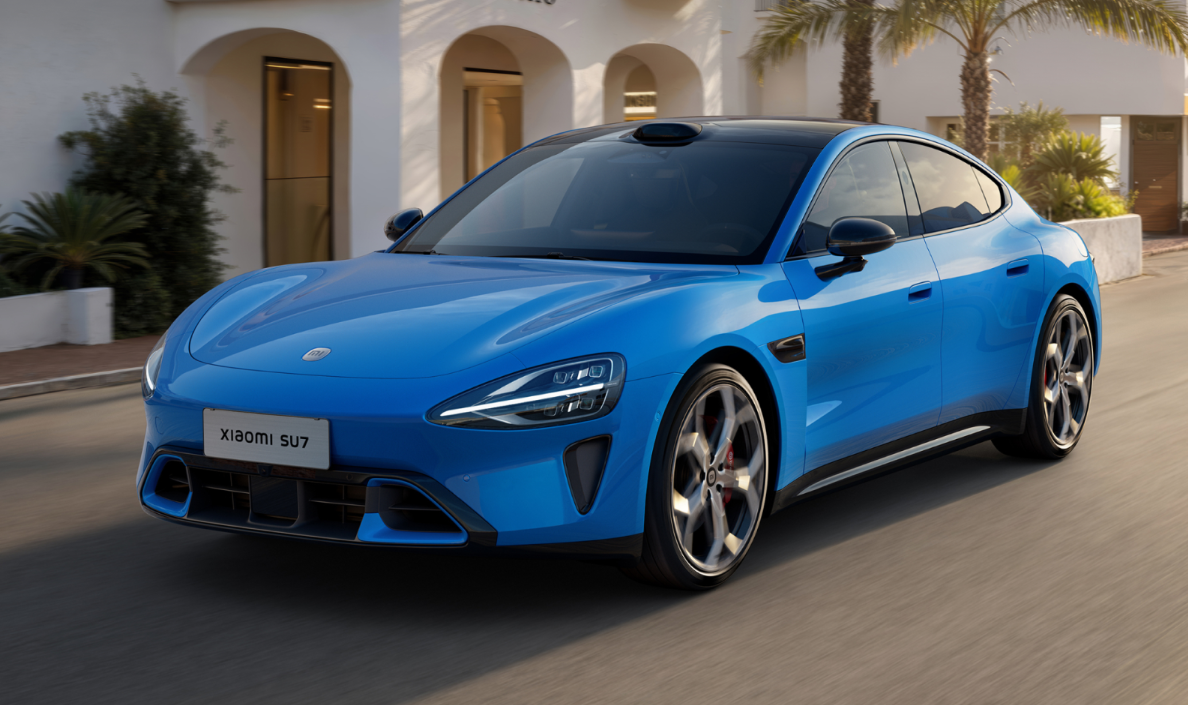
New-gen Xiaomi SU7; image source: Xiaomi EV
At the product level, Xiaomi's momentum is equally evident. The SU7 ranked as China's best-selling sedan priced above 200,000 yuan in 2025, while the YU7 led the mid-to-large SUV segment for seven consecutive months. In March this year, the updated SU7 generated more than 15,000 confirmed orders within 34 minutes of launch, surpassing 30,000 units within three days.
Taken together, these figures point to a broader conclusion: Xiaomi's automotive business is not only scaling rapidly but is also demonstrating a capacity to convert that scale into sustainable profitability.
Three hurdles for 2026: policy shifts, intensifying rivalry, and legacy pressures
Despite its standout performance, Xiaomi's automotive business is heading into a more complex operating environment. The strong results of 2025 may prove difficult to replicate as structural headwinds begin to build.
That caution was reflected in remarks by Xiaomi's Lu Weibing during the company's earnings call. He signaled that 2026 would bring heightened pressure, noting that purchase tax incentives are set to be reduced by half. Automakers are therefore likely to roll out their own consumer subsidies to sustain demand, potentially squeezing margins.
He also pointed out that China's EV sector remains in an early, crowded phase, with competition unlikely to consolidate in the near term. Against this backdrop, Xiaomi does not expect its automotive gross margin in 2026 to exceed the level achieved in 2025.
These comments underscore three key challenges that could shape Xiaomi's trajectory in the coming year.
The first is pricing pressure linked to subsidy rollbacks. With purchase tax incentives reduced, consumers will face higher upfront costs. To defend volumes, automakers are expected to introduce compensatory discounts or incentives, eroding margins further. In an industry already operating at historically low profitability, even modest price adjustments could have an outsized impact on earnings.
The second challenge lies in targeted competitive responses. Xiaomi's early success with the SU7 sedan and YU7 SUV has effectively defined two high-value battlegrounds—premium sedans above 200,000 yuan and mid-to-large SUVs. Rival automakers are expected to intensify their presence in these segments in 2026 with new, directly competing models. Whether Xiaomi can defend its share as competition escalates will be a critical test of its staying power.
The third pressure point comes from Xiaomi's broader business portfolio. The company's smartphone division has seen margins fall to around 11% in 2025 amid rising memory costs, while its IoT segment has slowed following tighter government subsidies. This creates a more complex balancing act: sustaining investment in the capital-intensive auto business while managing softer performance in its traditional revenue drivers. If legacy segments lose momentum, resource allocation toward the EV unit could come under greater scrutiny.
Each of these challenges carries weight. As industry observers note, achieving a single profitable quarter marks only a threshold moment; maintaining annual profitability, stabilizing order flow, and navigating intensifying competition will define long-term viability.
Final thought
In 2025, Xiaomi's automotive business delivered a distinctive performance, suggesting that even in a fiercely competitive, price-driven market, differentiation through product mix and supply chain execution can still unlock profitability.
The road ahead, however, is far from assured. As subsidies recede, rivals step up investment, and legacy businesses face headwinds, Xiaomi's ability to convert its current profitability into a durable competitive edge will be closely watched.
Whether it proves to be a short-lived standout or an enduring force among China's EV startups will become clearer over the next few quarters.


