



Gasgoo Munich- On April 9, the first SUV model under XPENG's MONA series — the L03 — officially appeared in the latest Ministry of Industry and Information Technology (MIIT) filing catalog.
According to the rear badge, the new car is named the XPENG MONA L03. It carries over the MONA M03's family design language and is positioned as a pure electric compact coupe SUV, with an official launch expected within 2026.
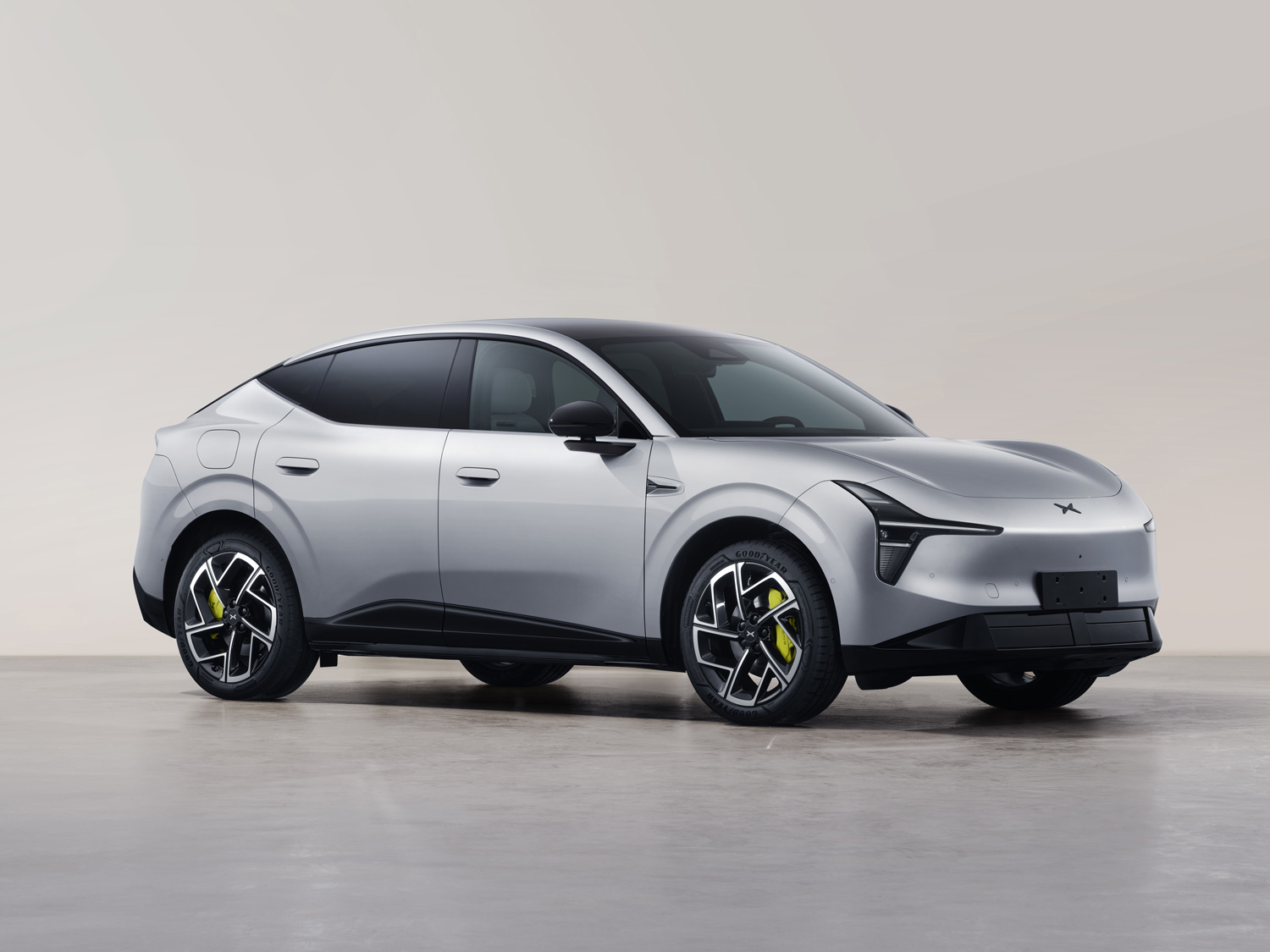
Image Source: MIIT
This marks the second model for the MONA brand since the M03 sedan's success. Sales of the M03 reached 197,500 units in 2025, accounting for 46% of XPENG Group's total sales. However, relying on a single model for nearly half of its volume exposes the company to significant structural risk. In the first two months of 2026, sales of the M03 have already declined from last year's peak of over 10,000 units per month. Although the refreshed 2026 model secured 10,000 orders within 37 minutes of its April 2 debut, the underlying issue of relying on a single successful model persists.
Against this backdrop, the arrival of the L03 represents more than just the unveiling of a new car; it is a critical step in XPENG's shift from "single-product dependence" to a broader "product matrix."
What the L03 Brings to the Table
First, the dimensions. The L03 measures 4,650 (4,672) / 1,920 / 1,600 mm in length, width, and height, with a wheelbase of 2,850 mm. This makes it roughly 13 cm longer than the M03, with a 3.5 cm longer wheelbase, though it remains a segment smaller than the XPENG G6.
Four curb weight variants — 1,855 kg, 1,875 kg, 1,920 kg, and 1,942 kg — suggest the L03 will offer at least two battery capacity options. Its range strategy mirrors the M03, with an estimated CLTC range between 500 and 650 km. Top speed is capped at 180 km/h, with 18-inch or 20-inch tires available.
Visually, the L03 retains the MONA family's signature cues. The front T-shaped "starship" light cluster is present, while the active intake grille and the noticeably sloping hood are clearly designed to minimize drag.
Yet the SUV stance gives the L03 better overall proportions than the M03. The side profile features a more radical fastback design that slopes down starting from the B-pillar — a classic coupe SUV silhouette. Semi-hidden door handles, frameless exterior mirrors, and rear privacy glass all maintain the MONA series' consistent sporty orientation.
The rear marks the biggest departure from the M03. While the M03 features T-shaped taillights that echo the headlights, the L03 adopts a full-width light bar with air ducts on both sides. The license plate recess has been moved down, leaving the center clean. The ends of the taillight bar feature a hollowed-out design, giving the L03 a more premium aesthetic than the M03.
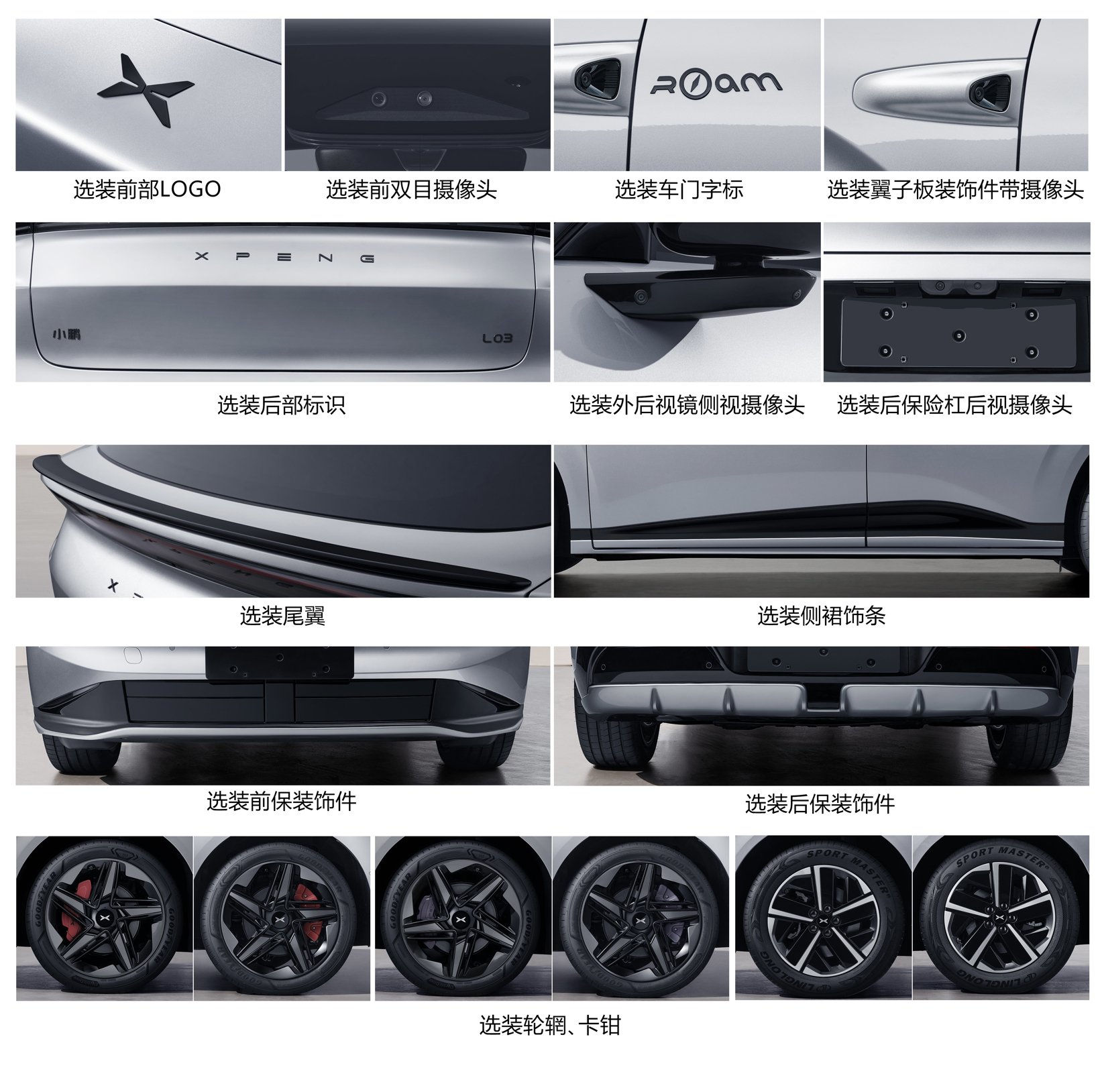
Image Source: MIIT
The L03 is equipped with a single motor delivering a maximum output of 183 kW — more powerful than the M03's motor but less than the G6's 218 kW. The battery comes from CALB and uses lithium iron phosphate (LFP) chemistry, moving away from the BYD Blade battery used previously.
The L03 continues the pure-vision approach, coming standard with XPENG's VLA 2.0 driver assistance system. Higher trims offer optional hardware such as front dual cameras and fender-mounted decorative cameras. It is speculated that the Max version will feature a single Turing chip, while the Ultra SE version will pack two, delivering a combined computing power of 1,500 TOPS.
Optional accessories are plentiful, ranging from a rear spoiler and side skirt trim to various wheel and caliper designs — clearly targeting young consumers' demand for personalization.
Regarding pricing, and taking the G6 and M03 ranges as reference, the L03 sits in the middle ground, expected to land around 150,000 yuan.
L03 Carries a Dual Mission
In 2025, XPENG's total sales reached 429,400 vehicles, with the MONA M03 alone contributing 197,500 units, or 46% of the total. Betting nearly half of your sales volume on a single model is an incredibly fragile position in the auto industry.
The sharp sales decline in early 2026 confirms this: it wasn't a flaw in the product itself, but consumers waiting for the refresh. This indicates the M03 has entered the middle-to-late stages of its product lifecycle, and relying on it alone to support the brand's sales ceiling is far from sufficient.
XPENG's sales target for 2026 is 550,000 to 600,000 units, representing growth of 28% to 40% over 2025. Cumulative deliveries in the first quarter reached 62,682, leaving a significant gap to the target. To make up ground in the remaining three quarters, relying solely on the M03 and G6 clearly won't suffice.
XPENG has planned eight new models for 2026, but the ones truly capable of shouldering the volume burden are precisely the two SUVs from the MONA brand: the L03 and another, more traditional SUV. Both are locked into the 120,000 to 150,000 yuan pure electric SUV segment.
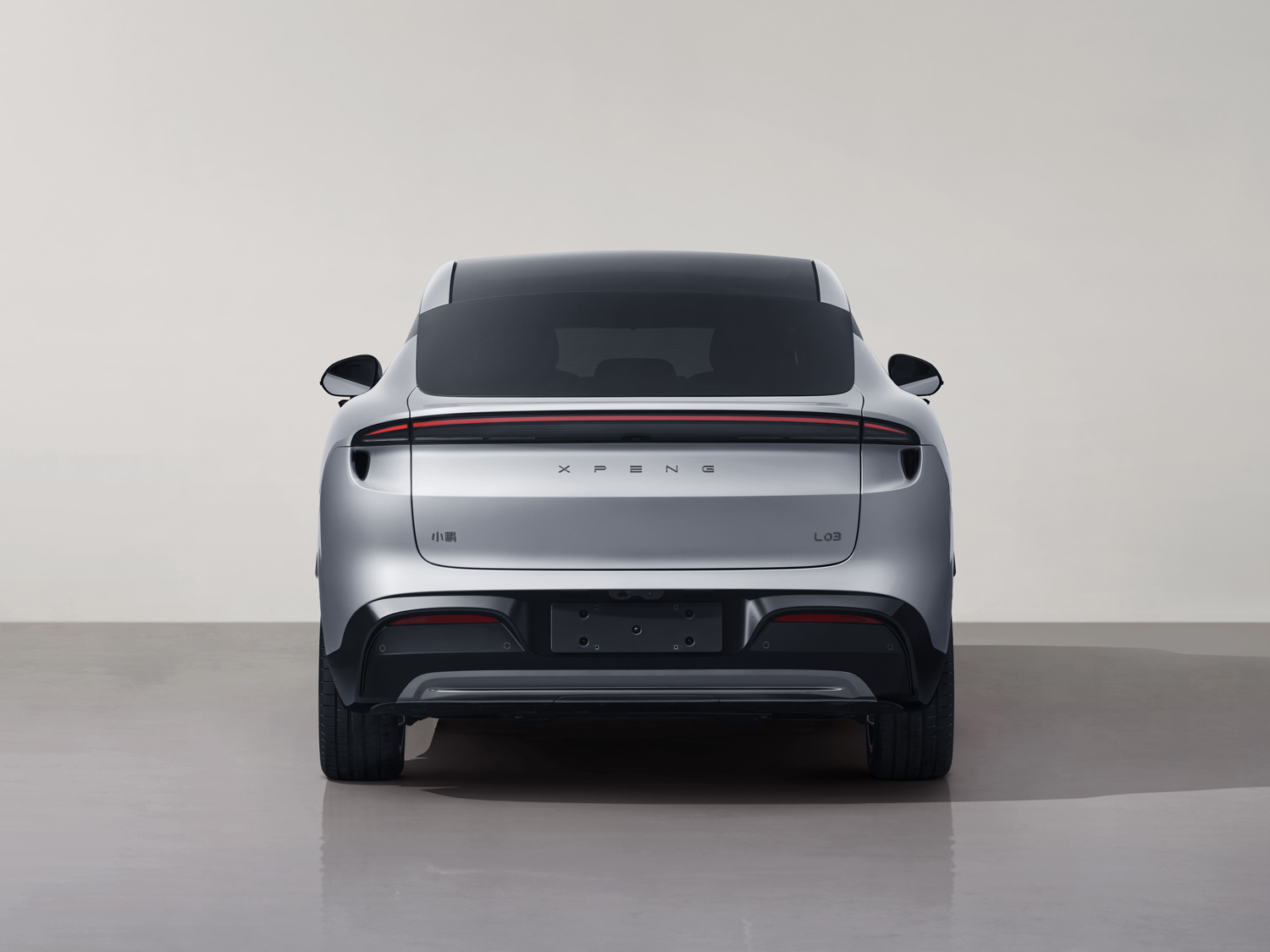
Image Source: MIIT
The arrival of the L03 first addresses the M03's inherent weakness: space. The M03 sold well primarily because it offered top-tier intelligent driving assistance for less money, but rear legroom was the most frequent user complaint. The SUV's natural space advantage is perfectly positioned to capture potential customers who were interested in the M03 but found the back seat too cramped.
An even more critical shift lies in the profit structure. At the 2026 M03 launch, He Xiaopeng was direct: "Low-margin vehicles offer no value. We will not produce cars priced below 100,000 yuan; while they offer scale, the value is too small."
Profit margins on the 2026 M03 have improved significantly compared to the 2025 version, thanks to in-house chip replacement and improved operational efficiency. With the L03 positioned in a higher price bracket, per-vehicle gross margins are naturally more attractive. Since the SUV category generally commands a premium over sedans, if the L03 can stabilize monthly sales above 10,000 units, it will deliver a substantial improvement to XPENG's overall profitability.
In terms of positioning, the 150,000 yuan pure electric SUV segment where the L03 sits is far less crowded than the 100,000 yuan sedan market. Bringing the XPENG VLA 2.0 system down to a 150,000 yuan SUV is a differentiator in itself. With the right pricing strategy, the L03 is fully capable of replicating the M03's high-volume success — but with higher per-unit profit.
Of course, challenges remain. The L03's fastback coupe styling implies compromises in rear headroom and trunk capacity. This design choice leans toward younger consumers, yet many competitors in the same price range opt for a more traditional, boxy silhouette that offers greater practicality. XPENG will need to find a balance between "design flair" and "utility."
However, viewed through the lens of overall strategy, the L03's significance goes beyond just being a new model. The M03 proved XPENG could build competitive products in the 100,000 to 150,000 yuan range; the L03 is tasked with extending that competitiveness to the SUV segment while pushing the price ceiling higher.
XPENG's goal for 2026 is not to dominate the market with a single car, but to use the MONA duo to secure the mass-market base, leverage high-end models like the GX to elevate the brand, and use range-extended vehicles to address range anxiety. This forms a more complete and healthier matrix, with the L03 serving as the crucial link connecting the tiers.


