



Gasgoo Munich- On February 25, XPENG unveiled plans to build the industry's first-ever humanoid robot mass production facility at the Guangtang Sci-Tech Innovation City Embodied Intelligence Industrial Park in Guangzhou's Tianhe District. This announcement marks a significant step in XPENG's humanoid robotics ambitions, transitioning from the technology validation phase to large-scale manufacturing.
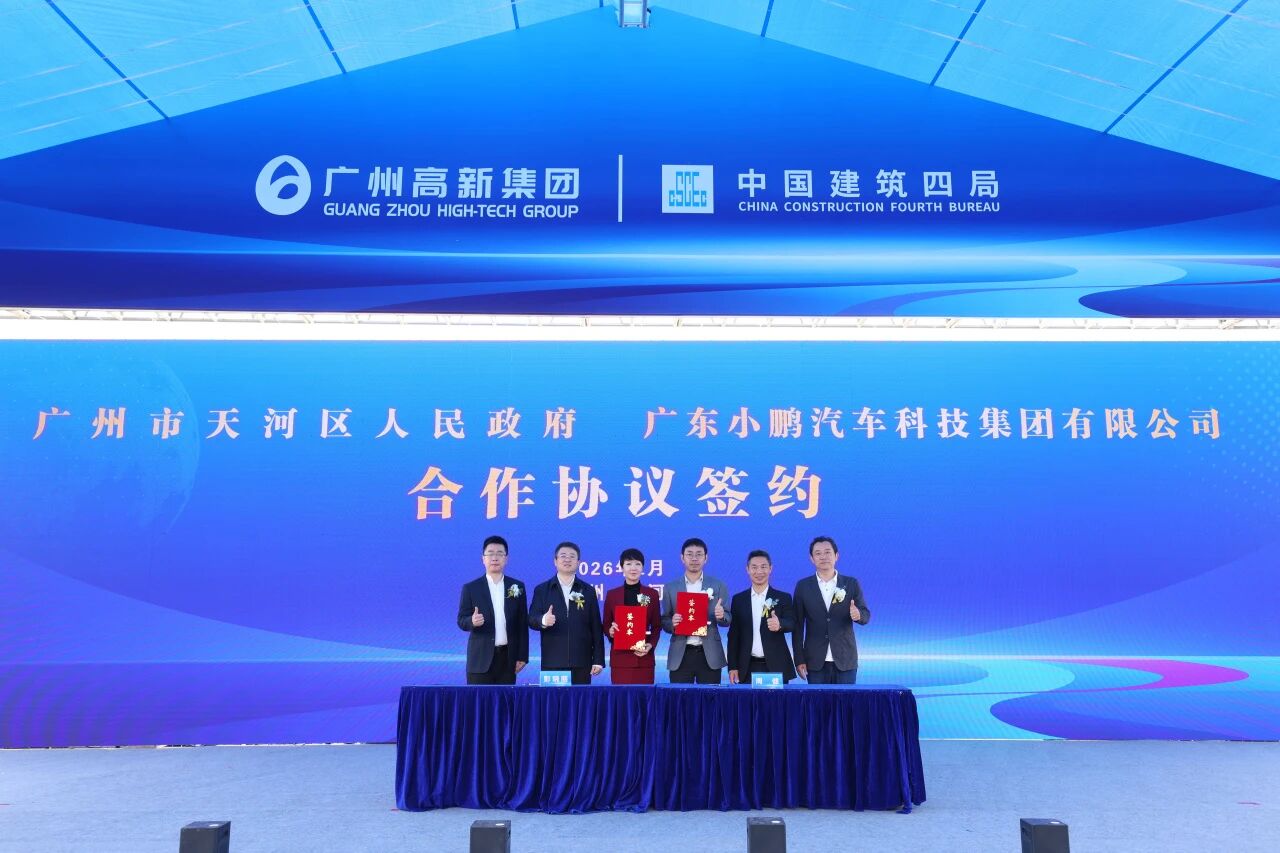
Image source: XPENG
The Guangtang Sci-Tech Innovation City Embodied Intelligence Industrial Park, which will house the humanoid robot manufacturing facility, spans approximately 110,000 square meters. The park will be built to meet high industrial standards, offering key infrastructure like power systems, load-bearing capabilities, and ceiling heights tailored to the needs of robotics R&D and manufacturing. Leveraging Tianhe District's strategic location and industrial advantages, the park aims to create a "Tech + Manufacturing" ecosystem focused on AI innovation.
Phase one of the project will focus on constructing high-standard facilities, including robotics production lines, to provide the crucial infrastructure for the industrialization of XPENG's advanced humanoid robot, IRON.
On the same day, XPENG and the Tianhe District government signed a strategic cooperation framework agreement, marking a commitment to jointly promote the development of the embodied intelligence sector.
XPENG has been developing robotic technology for seven years, evolving from early quadruped robots to the upcoming next-generation humanoid robot, IRON, which is set to debut at XPENG's 2025 Tech Day.
The new generation of IRON is a highly anthropomorphic humanoid robot, featuring a human-like spine, biomimetic muscles, fully-covered flexible skin, a 3D curved display on its head, dynamic bionic shoulders, and dexterous hands with 22 degrees of freedom in each hand.
In addition, the new-gen IRON will be the first to use all-solid-state batteries and will feature three Turing AI chips, providing an impressive 2,250 TOPS of AI computing power. It will also include XPENG's second-generation VLA large model, combining the "VLT + VLA + VLM" advanced brain models to enable complex interactions and walking capabilities.
The humanoid robotics industry faces dual challenges of insufficient training data and high mass-production difficulties. However, XPENG's full-stack, in-house development system, which has already been successful in the smart EV sector, provides unique advantages in chips, systems, control, and manufacturing, positioning the company to potentially break through the bottlenecks in large-scale production.


