



Gasgoo Munich- Jingwei Hirain and Geely Auto said on January 26 that their jointly developed Geely 3.0 ZCU (zonal control unit) platform has entered large-scale mass production.
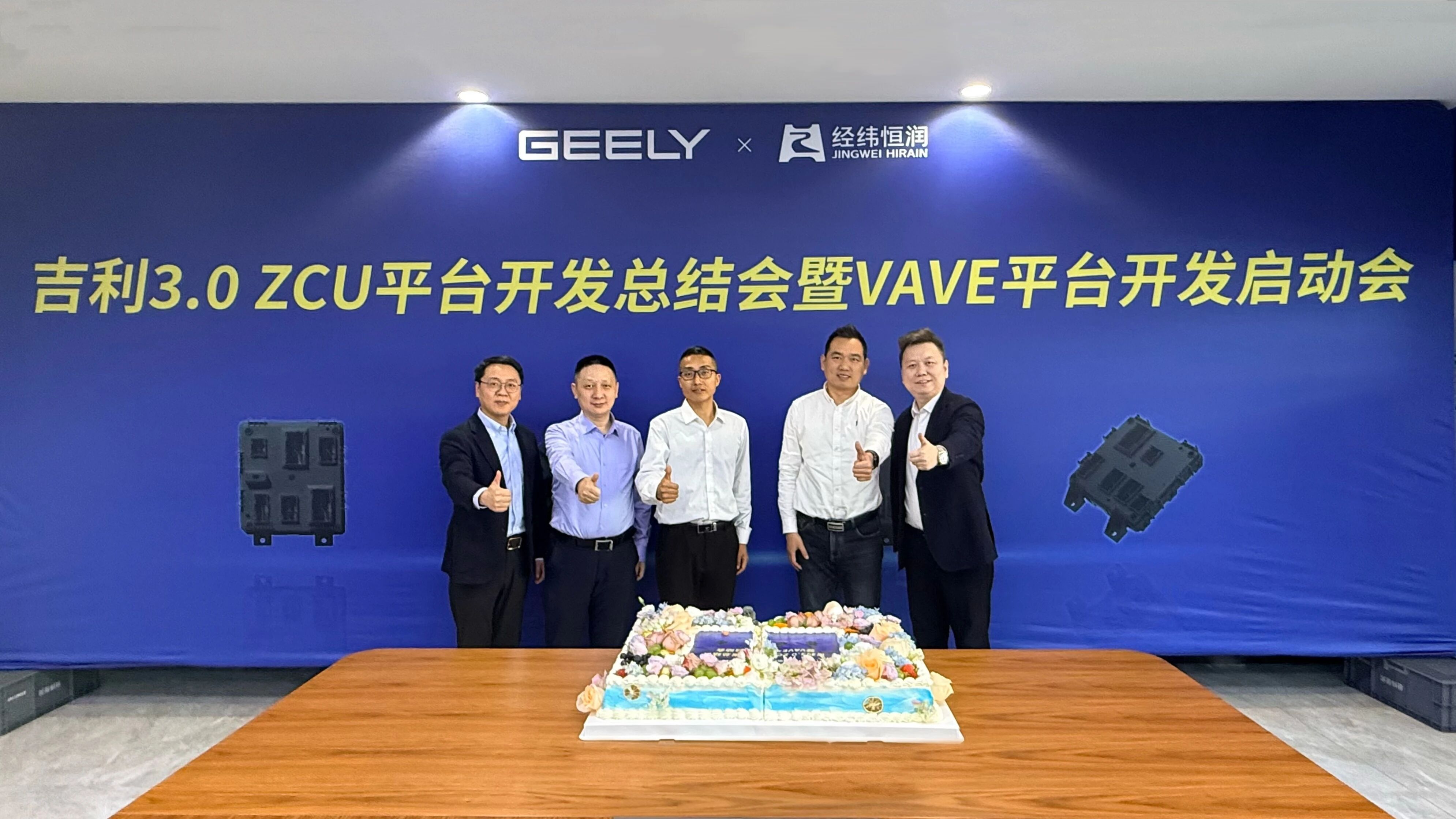
Image source: Jingwei Hirain
As a core pillar of Geely's next-generation electronic and electrical architecture, the platform has already been deployed across nine major models under the Geely Galaxy and Lynk & Co brands, marking its transition from engineering concept to commercial application.
Developed through close collaboration between the two companies' engineering teams, the ZCU 3.0 platform emphasizes higher integration, intelligence and safety. By consolidating functions such as body comfort systems and climate control into a single controller, the platform significantly reduces wiring complexity and streamlines vehicle architecture, creating a more flexible hardware foundation for future model upgrades. It also incorporates Jingwei Hirain's self-developed full-stack algorithms, spanning low-level electromechanical control through to higher-level intelligent decision-making, forming a closed loop linking perception, control and decision processes.
From a scalability and safety perspective, the platform is designed to support multi-domain integration, with functional safety levels ranging from ASIL B to ASIL D. Sufficient computing headroom has been reserved to accommodate future feature expansion. As one of China's few zonal control platforms to reach mass production, it reflects the broader industry shift away from distributed electronic control units toward centralized, zonal architectures.
The ZCU 3.0 platform made its production debut in July 2025 with the Geely Galaxy A7 and, benefiting from stable system compatibility, was rolled out to additional models including the Galaxy M9 and multiple Lynk & Co vehicles within six months. The delivery of the platform across nine models highlights the partners' ability to rapidly convert technology development into scalable manufacturing.
Looking ahead, Jingwei Hirain and Geely plan to deepen their cooperation, focusing on vehicle intelligence and multi-domain integration. The two companies aim to accelerate the application of these technologies across future models, supporting the ongoing evolution of automotive electronic and electrical architectures.


