



Gasgoo Munich- Since its inception in 1950, the FIA Formula One World Championship has evolved over more than seven decades to become the world's most influential motorsport. Built on a framework of unified technical regulations, it fuses cutting-edge engineering, fierce competition, and global commercial operations. It constantly breaks new ground through mechanical innovation, safety advancements, and shifting competitive landscapes.
From the post-war roots of mechanical racing to the diverse competition of the hybrid era, F1 has always sought a balance between speed, safety, and fairness. It has established itself as a dual benchmark for the automotive industry and competitive sports.
In retrospect, its history is not only a chronicle of racing technology's evolution but also a testament to humanity's relentless pursuit of extreme performance.
Foundations and Technical Exploration
In 1950, the first F1 World Championship kicked off at Silverstone in the UK, marking the official birth of modern top-tier formula racing. Early events focused on mechanical performance; cars used front-mounted engines and tubular frame structures, aerodynamic design was virtually absent, and safety protection was extremely rudimentary.
Nino Farina became the first Drivers' Champion, followed by titles for Juan Manuel Fangio and Alberto Ascari. Alfa Romeo and Ferrari laid the foundation for the early team hierarchy as the event gradually expanded from a European regional competition to a global stage.
The 1960s brought the first technical revolution. Rear-mounted engines became mainstream, and carbon fiber materials began to be applied, significantly improving handling and speed. Teams like Lotus and Cooper drove chassis and powertrain innovations, greatly enhancing the spectacle. In 1968, commercial sponsorship debuted on car liveries, launching F1's commercial exploration and injecting financial momentum for future growth.
During this period, the scale of the championship expanded steadily, track safety standards were initially established, and the competitive governance for drivers and teams became increasingly regulated.
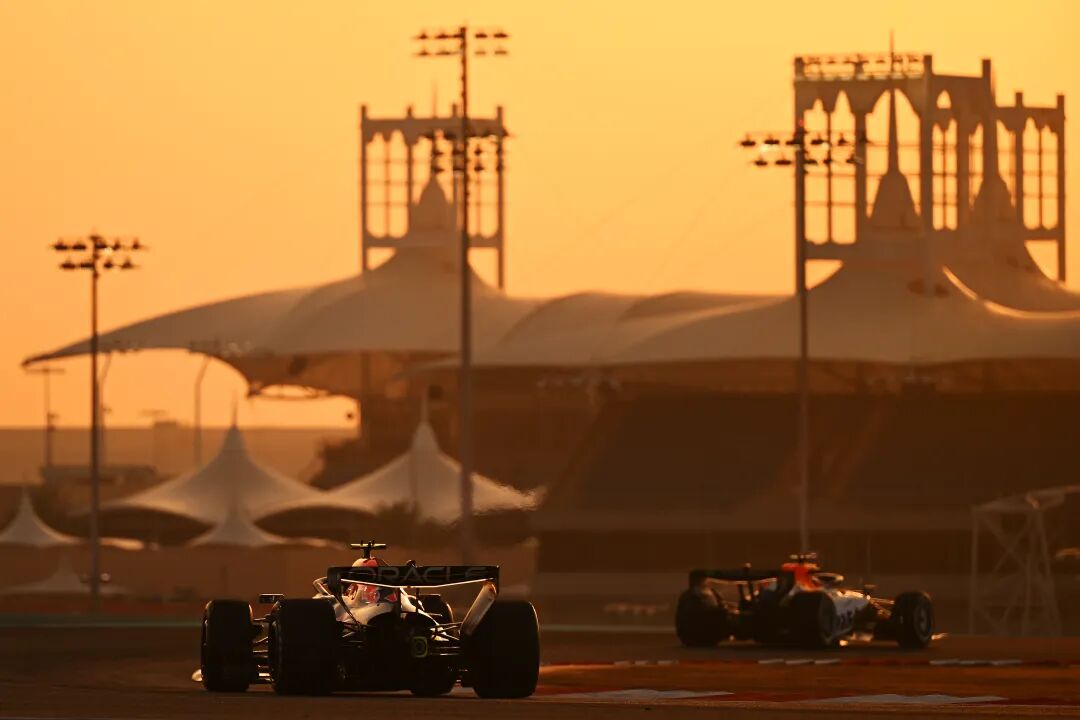
Image Credit: F1
The 1970s and 1980s saw the arrival of ground effects and turbocharging, bringing massive leaps in downforce and power as speed records were broken. Yet this technological sprint brought safety hazards; frequent accidents pushed the FIA to tighten rules, gradually limiting extreme aerodynamic designs and mandating safety devices. The signing of the first Concorde Agreement in 1981 clarified event management, team rights, and commercial revenue distribution, laying the groundwork for F1's commercial governance.
Turbo technology peaked in the mid-1980s before being banned, leading to the return of naturally aspirated engines. Technical development shifted toward balance and controllability.
In the early 1990s, Williams and McLaren formed a two-horse race, with legendary drivers like Prost and Senna forging classic duels. Global broadcast coverage expanded, and commercial value rose, yet safety risks remained unresolved. During this phase, F1 completed its transition from "mechanical racing" to "technical competition." The regulatory framework, commercial structure, and operations matured, paving the way for a subsequent golden era.
Safety Innovation and Global Expansion
The tragic death of Ayrton Senna at the 1994 San Marino Grand Prix became a turning point for safety. The FIA comprehensively upgraded safety standards, optimizing track design, reinforcing body protection, and limiting engine displacement and aerodynamic performance. The core principle of "safety first, without compromising competition" was established. During this time, V10 engines became the norm, and R&D focused on reliability and stability, while the intensity and spectacle of the racing improved in tandem.
From 2006 to 2013, F1 entered an era of multi-team contention, with Renault, Ferrari, McLaren, and Brawn GP alternating championships. A new generation of drivers, including Alonso, Raikkonen, and Hamilton, emerged. Rules were continuously optimized to gradually limit engine displacement and introduce Kinetic Energy Recovery Systems (KERS), pushing technology toward efficiency and energy conservation.
2014 brought a hybrid revolution as 1.6-liter turbocharged hybrid power units replaced naturally aspirated engines, marking F1's official entry into a new era of parallel environmental and high-efficiency focus. Mercedes capitalized on its hybrid advantage to establish a dynasty, with Hamilton securing multiple championships. The sport's technical direction shifted entirely toward energy management and electrification exploration.
In the 2020s, F1 pushed for diversified reforms, implementing a budget cap to balance the competitive gap among teams. Ground effects returned in 2022, increasing overtaking frequency and spectacle. New-generation drivers like Verstappen and Norris claimed titles, while McLaren, Red Bull, Ferrari, and Mercedes formed a four-way battle for supremacy, bringing suspense back to the sport.
In 2025, F1 marks its 75th anniversary. Its global fan base has surpassed 800 million, while viewership numbers and commercial value have hit record highs. The Chinese Grand Prix has cemented its position as a core Asian event, completing the sport's global layout.
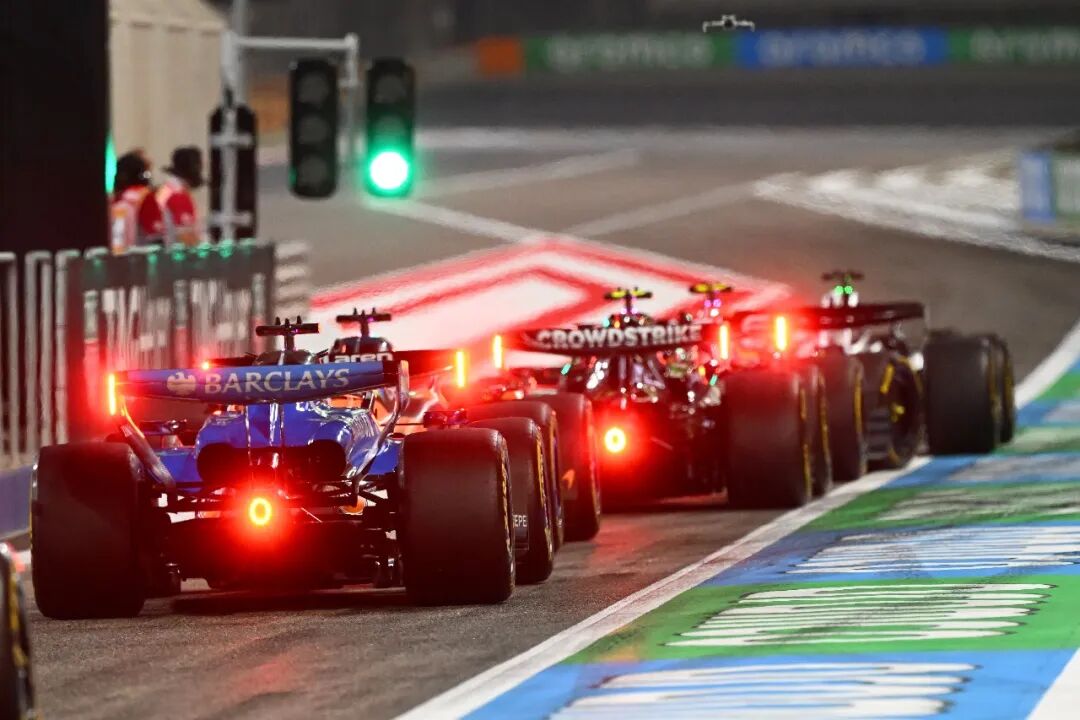
Image Credit: F1
On a technical level, F1 has consistently led automotive industry development. Technologies such as hybrid powertrains, materials science, aerodynamics, and intelligent control systems have continuously transferred to road cars.
In terms of safety, the Halo cockpit protection system, reinforced chassis, and upgraded track medical facilities have brought the fatality rate down to a historic low.
Commercially, event operations, media broadcasting, and brand partnerships have formed a mature ecosystem, becoming a model for the fusion of sports and business.
Over more than seventy years, F1 has upheld its competitive essence, achieving balanced development through technical innovation, safety improvements, and commercial expansion. From post-war beginnings to a global top-tier event, and from mechanical racing to hybrid intelligence, F1 has continuously adapted to changing times while maintaining the peak status of motorsport. Looking ahead to the 2026 regulatory cycle, F1 will continue to move toward sustainability, diversification, and high entertainment value, writing the next chapter of its legend of speed and passion.


