



Gasgoo Munich- On March 5, Qijing set a date for the debut of its first model: March 17. The headline feature is Huawei Qiankun's latest dual-optical path, image-grade 896-line LiDAR. Released just two days prior, the system boasts the highest specifications of any mass-produced LiDAR currently available worldwide.
With the debut countdown underway, the product born from GAC and Huawei's "embedded collaboration" has officially entered a critical phase—shifting from research and development toward market delivery.
Targeting the Coupe Market
Qijing’s first model clearly sidesteps the crowded, homogenous family sedan segment in favor of the niche shooting brake coupe. The strategy suggests a bid to balance aesthetics, driving dynamics, and intelligence through differentiated positioning.
Based on disclosed specifications, the vehicle’s core selling points center on intelligence and driving dynamics. It will feature Huawei Qiankun’s L3-level conditional autonomous driving hardware architecture, a HarmonyOS cockpit, and the XMC digital chassis engine.
The chassis was tuned by a team previously involved with McLaren and Aston Martin, aiming to sharpen handling. Meanwhile, the car will offer both pure electric and range-extended powertrain options, with a target price point around the 300,000 yuan mark.
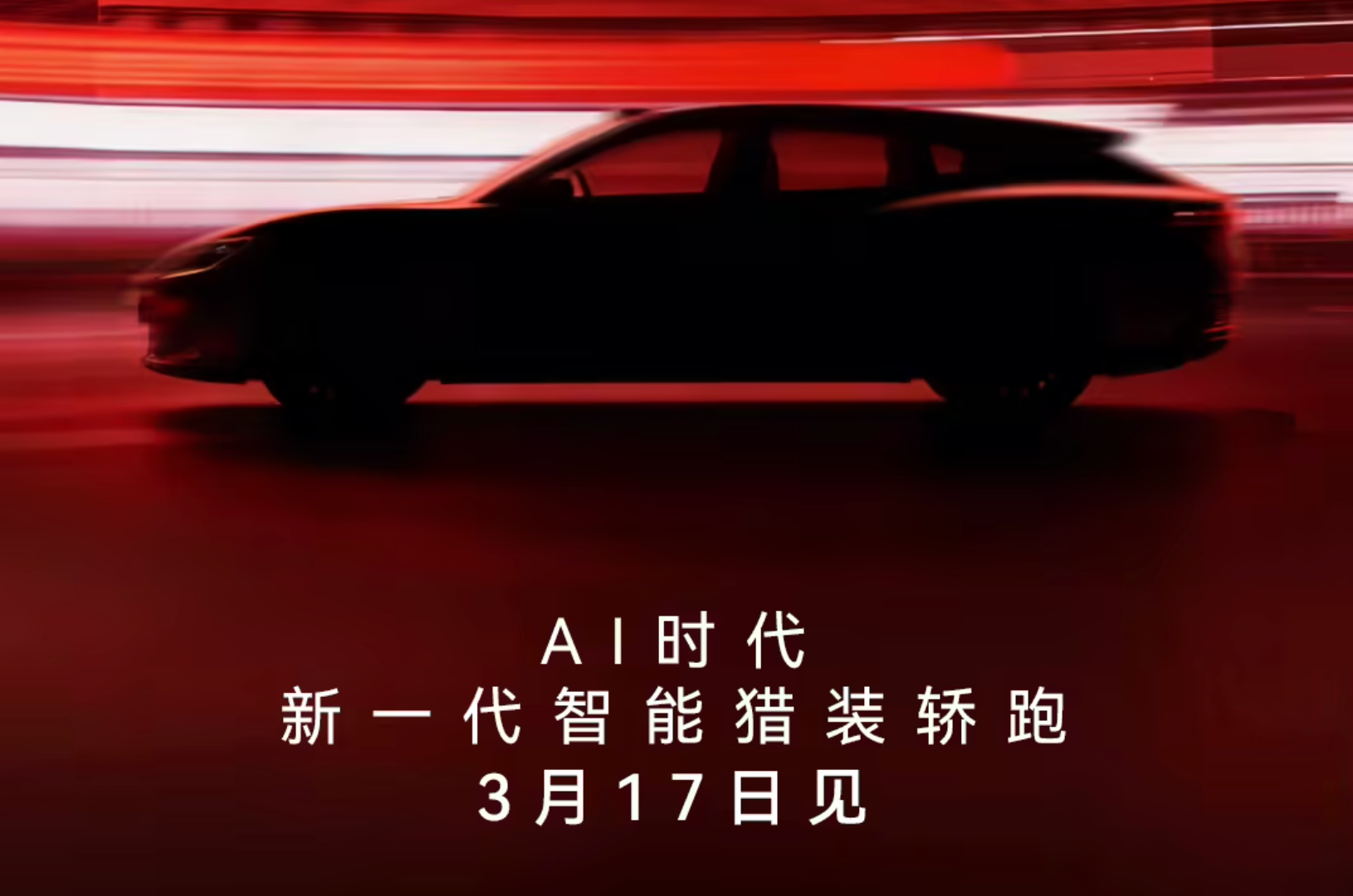
Image Source: Qijing
On the hardware front, Huawei’s new 896-line LiDAR is drawing significant attention. The system uses a dual-optical path architecture, integrating wide-angle and telephoto receiving units into a single device to achieve image-grade perception. Officially, resolution has surged compared to the previous generation, enabling the detection of smaller obstacles from 120 meters away—and delivering more stable recognition in complex weather and nighttime conditions.
The decision to target the coupe or shooting brake niche appears driven by shifting market demand. For years, this segment occupied a relatively minor position in China’s consumption structure. Despite numerous attempts by automakers to launch sporty coupes, the overall market remained limited, with many models struggling to generate consistent sales volume.
But the landscape has shifted over the past two years with the entry of players like Xiaomi. In 2024, Xiaomi launched its first model, the SU7, leveraging coupe styling and high performance as key selling points. The car quickly captured market attention and generated significant buzz among younger consumers.
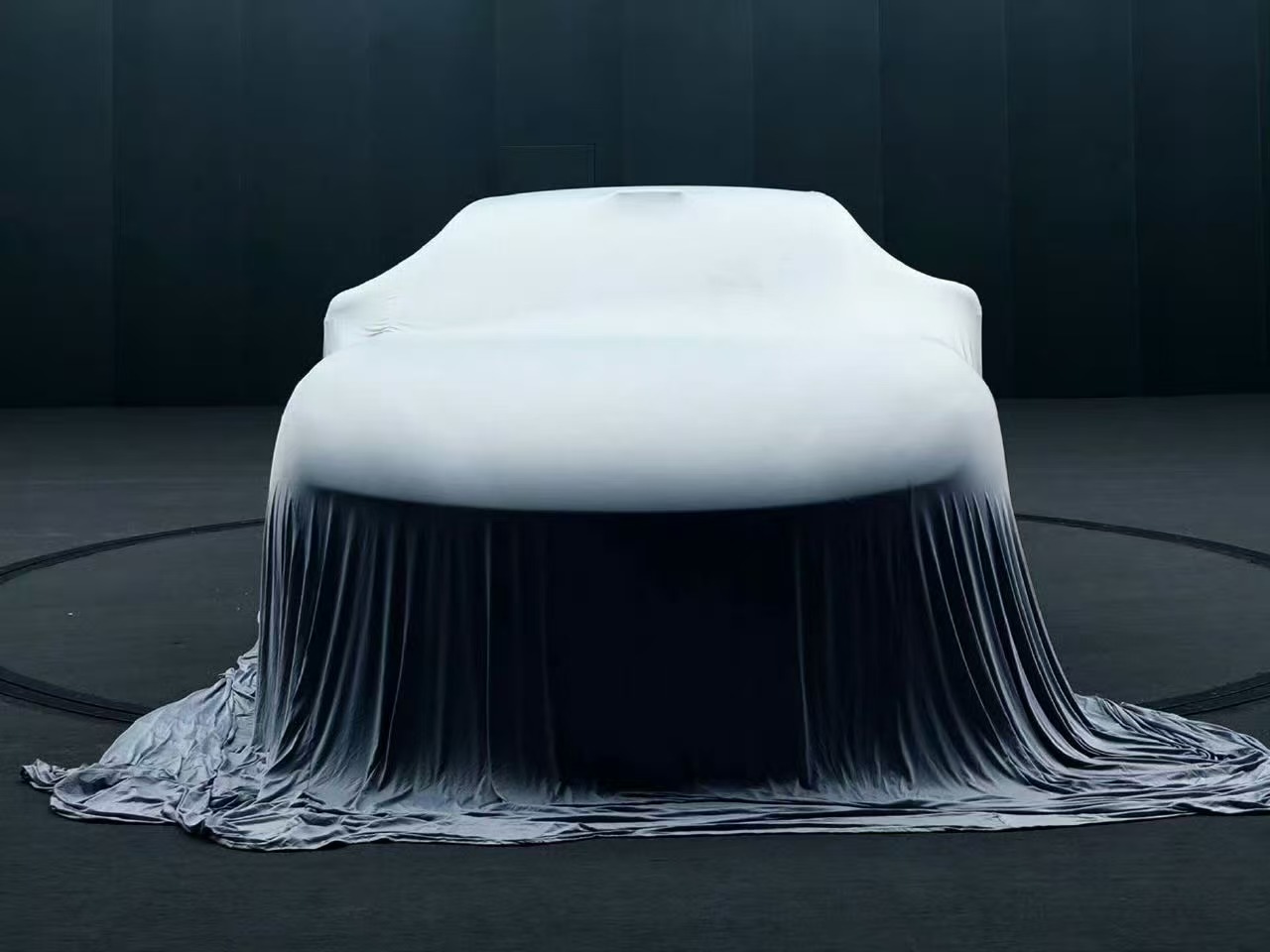
Image Source: @Qijing Liu Jiaming
Industry consensus holds that the SU7’s success validated remaining growth potential in the coupe segment, altering perceptions among some automakers. Qijing CEO Liu Jiaming noted that the shooting brake coupe addresses crossover needs between sedans, SUVs, and wagons, satisfying multi-dimensional consumer expectations.
As consumers demand more from design, performance, and intelligent experiences, coupe models hold distinct advantages in brand image and product differentiation.
However, the 300,000 to 400,000 yuan new energy bracket is already crowded with popular models. Tesla, NIO, and ZEEKR all boast mature products in this range. For a brand yet to officially launch, aligning brand awareness, product experience, and channel construction remains a formidable challenge ahead.
A Key Link in GAC’s Rally
For GAC Group, Qijing is more than just a new nameplate; it is a critical component of its new energy transition and high-end market strategy.
In early 2026, GAC Group set a new operational target at its annual high-quality development conference: returning annual production and sales to the 2 million mark. Data shows the group sold 1.722 million vehicles in 2025, a 14.1% year-on-year decline. Amid intensifying competition, achieving significant growth within a year requires GAC to find new drivers within its product structure and brand portfolio.
For years, GAC's sales structure relied heavily on joint ventures. GAC Toyota and GAC Honda long served as the primary volume drivers. Yet as new energy vehicles accelerate in popularity, these JVs face challenges in competitiveness regarding intelligence and electrification. Meanwhile, while GAC’s proprietary brands have maintained growth in the NEV sector, there remains room to improve their overall brand premium.
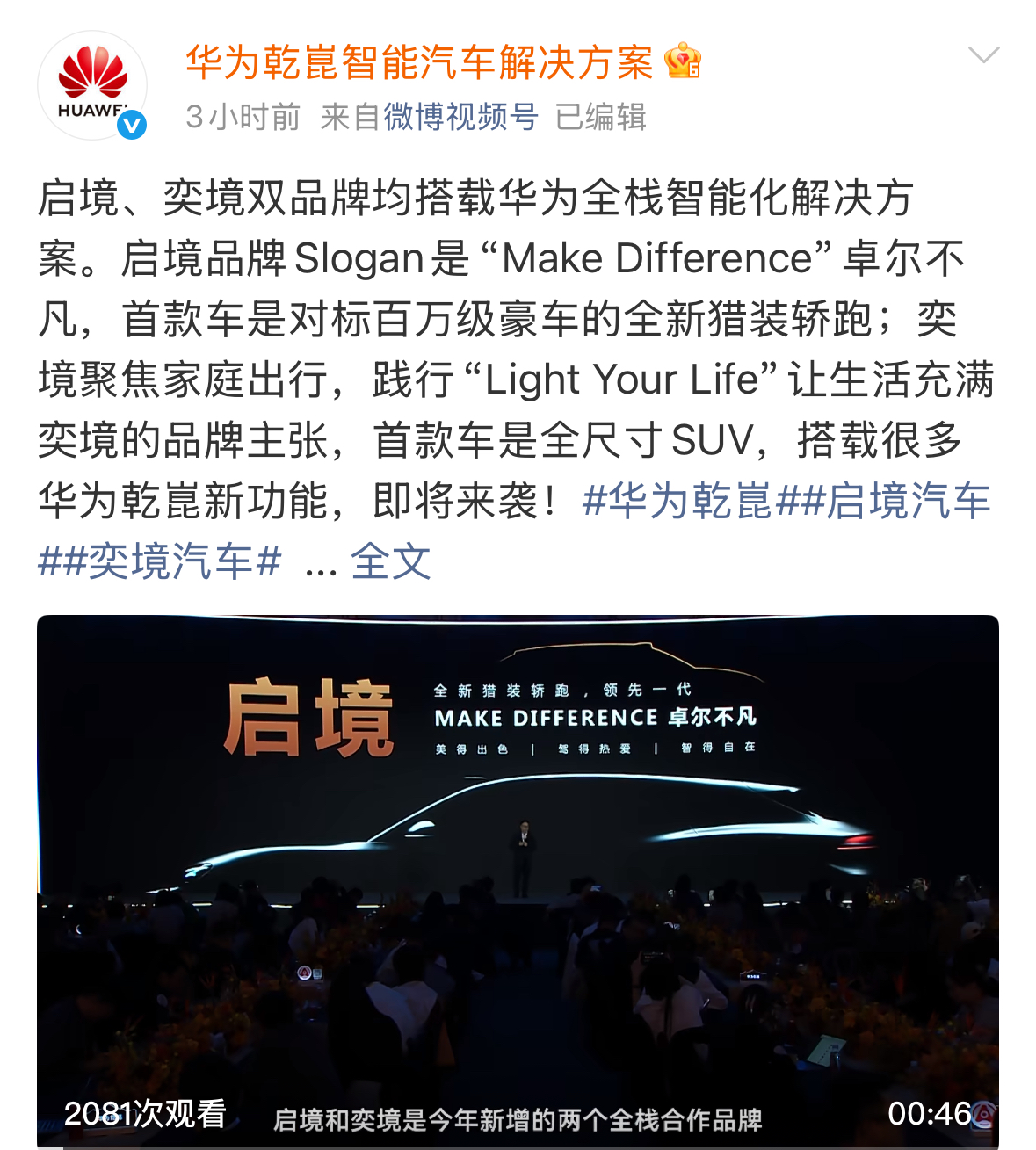
Image Source: @Huawei Qiankun Intelligent Automotive Solutions
Against this backdrop, GAC outlined a strategy to "stabilize joint ventures, strengthen proprietary brands, and expand the ecosystem." Qijing is a new brand born directly from this framework. Distinct from GAC’s Trumpchi, Aion, or Hyper, Qijing is positioned as a new platform targeting the high-end intelligent vehicle market, with both its products and organizational structure reflecting clear innovation.
In terms of origins, Qijing operates on a model of deep collaboration between GAC and Huawei. As the founding shareholder, GAC handles vehicle R&D, manufacturing, and the supply chain. Huawei, through its Qiankun intelligent automotive solutions, provides core technical support in intelligent driving, smart cockpits, and digital platforms.
Unlike traditional supplier relationships, this partnership is termed "embedded collaboration." Huawei doesn't just supply technical solutions; it also stations R&D and product teams for long-term involvement in development, integrating its IPD (Integrated Product Development) and IPMS (Integrated Product Marketing and Service) systems into the vehicle development process. This implies Qijing represents not merely a technical collaboration, but an exploration of organizational and R&D models.
From a technological perspective, Qijing will serve as a key platform for deploying Huawei Qiankun's higher-end intelligent driving systems. Official information indicates the first model’s hardware is designed for L3 autonomous driving capabilities and includes redundant systems, meeting upgrade requirements as future regulations gradually open up.
For GAC Group, this project also drives its upward brand trajectory. Competition in the market above 200,000 yuan has intensified in recent years, with high-end NEVs becoming a crucial battleground for profit and brand image. The emergence of Qijing signals GAC’s intent to establish fresh competitiveness in this price bracket through technical cooperation and a new brand identity.
At the same time, Qijing serves as a crucial testbed for GAC’s intelligence strategy. As the auto industry enters the "deep waters" of smart technology, software capabilities and electronic architecture are becoming core competitive strengths. Partnering with Huawei allows GAC to rapidly secure mature intelligent solutions and validate them in the market through this new brand.


