March 4, 2026. As China's "Two Sessions" gather momentum, proposals from business leaders offer a clear window into the industry's direction. Lei Jun, the Xiaomi founder known as the tech sector's "model worker," has submitted five recommendations this year. But these aren't just general appeals. They cut straight to the core bottlenecks of two booming sectors—humanoid robots and intelligent driving—tackling the engineering hurdles of deployment and the regulatory void in new business models.
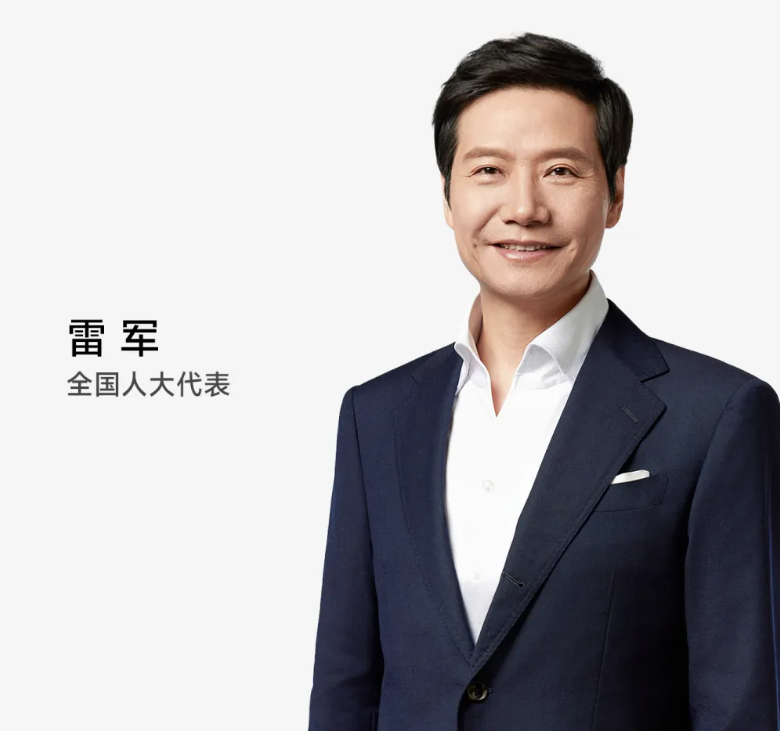
Image Source: Lei Jun's personal social media platform
Let's look beyond the surface. From an industry logic perspective, what critical signals about the future of mobility are buried in Lei Jun's five proposals?
Humanoid Robots: From 'Apprentice' to 'Full-Time'—How Long the Wait?
Lei Jun offered a vivid metaphor in his proposal: right now, humanoid robots are still just "apprentices."
The metaphor fits. Since 2024, humanoid robots have been on fire, hailed as the fourth disruptive product following personal computers, smartphones, and new energy vehicles. Data suggests that by 2035, China's humanoid robot shipments could exceed 2.6 million units—a blue ocean market worth hundreds of billions, even trillions of yuan.
But the vision outpaces reality. Lei Jun highlighted several hard truths giving industry insiders headaches:
1. Poor process stability: A robot on the factory floor can't just dance. In workshops filled with high heat, vibration, and grease, can it maintain a long enough mean time between failures (MTBF)? Can it achieve a "99% task success rate"?
2. Excessive costs: For today's bipedal robots, joint modules alone can cost tens or even hundreds of thousands of yuan. With per-unit hardware costs remaining stubbornly high, the return on investment simply doesn't add up.
3. Narrow application scenarios: There are too few "workstations" reserved for robots on the factory floor. Most current models can only handle odd jobs like transport or quality inspection, unable to perform complex flexible assembly like skilled workers.
Lei Jun's proposal is pragmatic: don't rush to talk disruption, solve the engineering problems first. He proposes that by 2027, the MTBF of humanoid robots in specific industrial scenarios should exceed 10,000 hours. He suggests expanding smart manufacturing application scenarios to boost utilization rates, pairing this with industrial subsidies and policy incentives, and strengthening the safety standards system.
That's a hardcore target. What does 10,000 hours mean? If operating 20 hours a day, it means running continuously for roughly 500 days without failure. For manufacturing, that is the entry threshold for a "formal employee." And if a fully robotic production line becomes reality, it will mark a true milestone for China's smart manufacturing.
Intelligent Driving: Should L2 'Hands-Off, Eyes-Off' Be Penalized?
Compared to the distant future of robots, the issues with intelligent driving are far more pressing.
Data cited by Lei Jun is worth noting: in the first three quarters of 2025, the penetration rate of L2 driver assistance in new domestic passenger cars exceeded 60%. This means driver assistance is no longer the exclusive domain of high-end vehicles—it has entered millions of households.
At the same time, L3 conditional autonomous driving has moved into large-scale commercial pilots, and the scope and number of L4 autonomous driving trials are expanding.
But problems have followed: technology is moving too fast, while regulations and user awareness are lagging behind.
The current conflict lies here:
- On the technology side: L2 is assistance; L3 is conditional automation. Yet in the eyes of many consumers, activating L2 means it's okay to sleep or watch TV.
- On the regulatory front: Current traffic laws and driving test systems are virtually silent on the assessment of intelligent vehicle features. Many people pick up a new car and hit the highway without understanding the logic of Adaptive Cruise Control (ACC) or lane centering.
- On the marketing front: Some automakers, eager for sales, exaggerate assistance capabilities, creating the illusion that "the car can drive itself."
To this, Lei Jun offers a controversial but necessary clarification: he proposes classifying 'hands-off, eyes-off' behavior in L2 mode as a traffic violation.
This strikes at the heart of the issue. At the L2 stage, the driver is always the responsible party. If a driver's hands leave the wheel or their eyes leave the road, it is fundamentally no different from using a phone while driving. Since using a phone incurs penalties, why shouldn't "hands-off, eyes-off" driving? This isn't just a constraint on drivers; it's a warning shot against automakers' over-marketing.
Building on this, Lei Jun further clarifies automaker responsibilities regarding feature promotion and user training, encouraging manufacturers to actively conduct advanced driving training to help users understand the operational boundaries of their vehicles.
Additionally, he mentions building a comprehensive public education system—using online science communication to debunk myths and offline immersive experiences to foster a new culture of civilized driving suited to the age of intelligent vehicles.
The logic forms a closed loop: technology must advance, regulations must keep pace, and human capabilities must improve in tandem. In the era of "human-machine co-driving," defining the liability of automakers versus users and establishing a new framework for traffic safety will be the central governance theme for the next five years.
A Million Talent Shortage: Discipline Reform Can't Wait
Among the five proposals, the one on talent deserves the closest reading. Lei Jun points out that the shortage of composite talent in intelligent connected new energy vehicles has reached 1 million.
The current predicament is awkward: students in traditional vehicle engineering don't understand code or algorithms, while computer science students don't understand chassis or batteries. Automakers often face the high cost of "retraining" new hires.
Therefore, Lei Jun suggests the Ministry of Education establish "Intelligent Electric Vehicles" as a first-level interdisciplinary major. This isn't just a name change for a college; it requires reconstructing the knowledge system to forcefully integrate mechanics, electronics, computer science, and data security.
At the same time, he encourages universities to hire corporate chief scientists and senior experts as adjunct professors, supports faculty internships at companies, and organizes student participation in automaker R&D projects. The goal is to shorten the "retraining" cycle after recruitment.
Furthermore, he proposes establishing special talent training funds to support school-enterprise joint training bases. Industry authorities should lead in setting up dedicated funds for scholarships, laboratory construction, and academic competitions.
This is a direct call to action for higher education, which is lagging behind industrial development. As cars become "mobile smart terminals," if universities are still teaching internal combustion engines with 20-year-old textbooks, how will graduates compete with Tesla, Huawei, or Xiaomi? Making industrial compliance and cybersecurity compulsory will produce graduates who are truly ready for the front lines.
Conclusion
Looking at Lei Jun's 2026 proposals—beyond tech philanthropy and industrial tourism—whether it's making robots "full-time" or establishing rules for smart driving, the core logic points to one word: standardization.
Over the past decade, China's auto industry achieved a leapfrog in electrification. In the coming decade, the second half of the smartification game won't be decided by isolated technological highlights, but by a comprehensive contest of engineering capability, regulatory maturity, and the depth of talent reserves.
Lei Jun's proposals, to some extent, voice the sentiments of China's tech manufacturing sector: we need not only the courage for technological innovation, but also the fertile ground for safe, reliable, and compliant deployment. Whether these recommendations materialize remains to be seen.