



Gasgoo Munich- If 2025 marked Leapmotor’s transformation from merely "surviving" to "doing okay," then the first quarter of 2026 is this ten-year-old startup’s bid to prove it can truly thrive.
In March, Leapmotor surged to the top of Italy’s battery-electric market with 5,513 registrations — a 2,827% year-on-year spike. First-quarter registrations totaled 11,637 units, capturing a 33.5% share of the local BEV market and a commanding 44.6% of the retail passenger vehicle channel.
Back home, Leapmotor delivered 50,000 units across its entire lineup in March, a 35% increase from a year earlier. Cumulative sales for the first three months reached 110,200 vehicles.
With an explosive ascent overseas and monthly sales reclaiming the 50,000 mark domestically, Leapmotor’s two-front strategy is shifting from concept to reality.
But a tougher arithmetic challenge lies ahead: the 2026 target of 1 million annual sales requires average monthly deliveries of roughly 100,000 units. For context, Leapmotor’s peak single-month deliveries in 2025 topped 70,000.
Domestic Push: A10’s Bright Start, But 100,000 Monthly Average Remains a Tough Fight
Leapmotor’s March sales climbed back to the 50,000 threshold, rising roughly 78% from February and securing the top spot among startup brands.
Driving that growth is the A10, launched on March 26. As the first model built on Leapmotor’s A platform, the A10 carries a price tag of 65,800 to 86,800 yuan. Yet for an EV priced under 100,000 yuan, it packs technology once reserved for the 150,000-yuan class — including LiDAR and door-to-door advanced driver assistance — ratcheting up competition in the small-EV segment like never before.
Leapmotor calls 2026 the inaugural year for its advanced driver-assistance systems, with the A10 serving as the core vehicle and the key engine in its drive for million-unit sales. To that end, the company has loaded the A10 with premium features, accelerating the mass adoption of high-level autonomous driving.
Analysts view the A10 as a critical play for the lower end of the market. In the 60,000 to 100,000 yuan bracket, vehicles with high-level intelligent driving are virtually nonexistent. By entering with overwhelming technological advantage, the A10’s rapid short-term volume gains come as no surprise.
But relying solely on the A10 won’t suffice.
In April, Leapmotor is set to unveil the Lafa 5 Ultra at the Beijing auto show, while the flagship D19 is scheduled for a global launch on April 16 — tasked with pushing the brand further upmarket.
Leapmotor’s 2026 product matrix is clearly defined: the A-series will target the lower market, the B and C series will defend the core base, and the D-series will aim for the premium ceiling.
Topping Italy: Leveraging Stellantis, the ‘Chinese Tech + European Channels’ Model Proves Viable
If its domestic performance was expected, Leapmotor’s showing in Italy has caught the industry off guard.
A 33.5% market share in Italy’s BEV sector during the first quarter means that for every three electric cars sold locally, one was a Leapmotor.
By model, the Leapmotor T03 ranked third in Italy’s overall sales chart, while the B10 claimed the top spot in the electric C-SUV segment.
This success is inextricably linked to Leapmotor’s deep partnership with Stellantis.
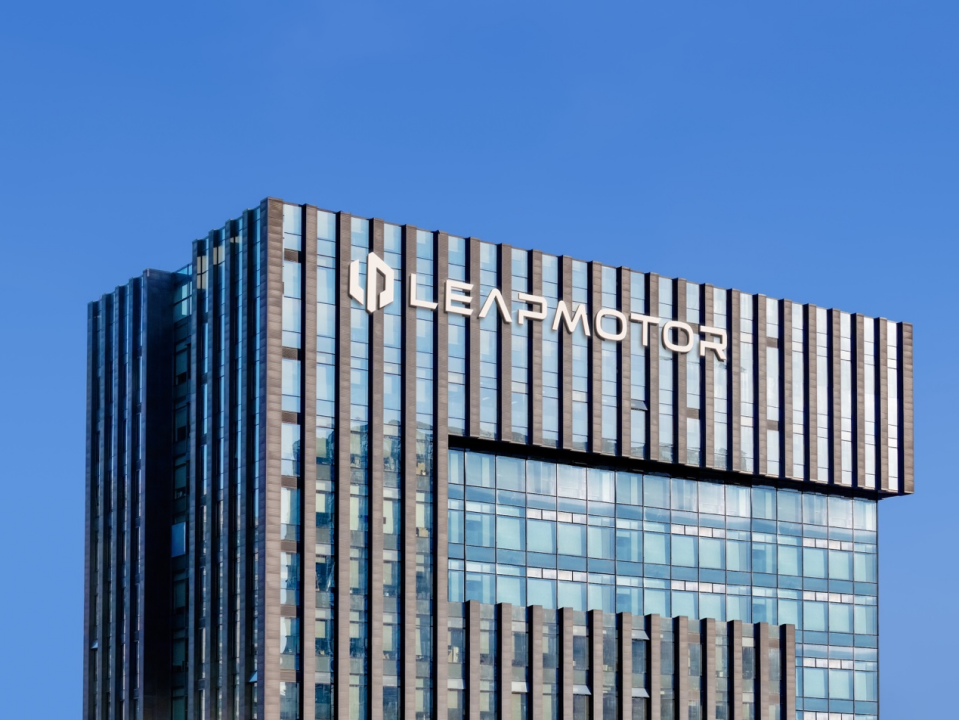
Image source: Leapmotor
This "Chinese technology plus European distribution" model is becoming Leapmotor’s core pathway for breaching geopolitical trade barriers and achieving long-term growth overseas.
However, uncertainty abroad is mounting. Just as a price-commitment mechanism on pure-electric imports between China and the EU was settled, new headwinds appear to be forming. According to European media outlet Euractiv, the European Commission is discussing a move that could significantly impact China-EU trade: extending current anti-subsidy tariffs on Chinese-made battery-electric vehicles to include hybrids imported from China, covering plug-in hybrids.
Leapmotor's overseas expansion remains a race against time.


