



Gasgoo Munich-As the wave of embodied AI sweeps through, the tech density at the 2026 Beijing Auto Show is quietly increasing.
According to Gasgoo, automakers like FAW, GAC, Chery, and XPENG showcased robots and core technologies prominently at this year's Beijing Auto Show. At the same time, a wave of core technology providers for intelligent vehicles signaled a deepening focus on embodied AI—either by releasing key solutions or announcing major strategic upgrades.
Beyond the automotive supply chain, products like Honor Robot's "Lightning" and "Genki Boy," along with Zhiyuan's Yuanzheng A3, also made appearances, interacting directly with attendees.
Robots taking center stage at an auto show sends a clear signal: If electrification was the initial phase of the smart vehicle revolution and autonomous driving the current competition, then embodied AI is likely the decisive battle for market leadership in the next decade.
Automakers flock to "building humans"
Technically, automakers expanding into robotics is not new.
But at this year's show, a significant shift is underway. From startups to legacy giants, and from private to state-owned enterprises, players are unveiling actual robot products or specific strategic plans.
Driven by the active efforts of leading automakers, robots are moving beyond the realm of technology demonstrations and entering the list of strategic priorities.
The key signal comes from the entry of the "national team."
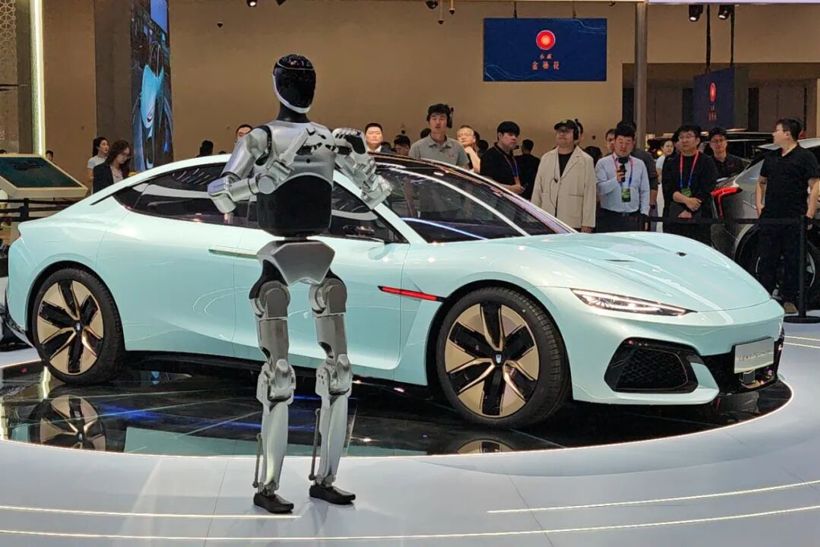
Image Source: FAW Die
During this year's Beijing Auto Show, China FAW attracted significant attention with its independently developed intelligent robot series. Not only did its full-sized humanoid robot make its global debut, but FAW Die's independent booth in the components zone also showcased a product portfolio covering full-sized humanoids, commercial service humanoids, wheeled-arm robots, quadrupeds, and lightweight joint modules.
These four robots have specific functions: the full-sized humanoid focuses on all-scenario, high-precision heavy operations, aiming to become a "highly capable assistant" in the future intelligent society; the commercial service humanoid targets reception and customer service at sales outlets; the wheeled-arm robot specializes in core industrial tasks like production handling and smart assembly; and the quadruped boasts advanced terrain-crossing capabilities for inspection and detection in high-risk or special environments.
Reports indicate that China FAW achieved full autonomy from core joint modules to complete system integration in just 190 days—moving from R&D to debut at the auto show—and constructed a five-dimensional development system covering "brain, body, integration, data, and components."
This means FAW has achieved technological capabilities across the board, from core components to a full range of product categories in the robotics sector.
Previously, external attention on the humanoid robot sector focused largely on two types of players: startups like Unitree and Zhiyuan, and technology-focused automakers like XPENG and Xiaomi.
As a representative of traditional automakers and a leader of China's auto industry, FAW's prominent entry into the embodied robotics arena carries significant benchmark value.
This is especially true given that Dongfeng Motor has already launched its own independently developed humanoid robot. With two "national team" automakers simultaneously allocating resources toward embodied AI, the strategic importance of this field is being elevated across the board.
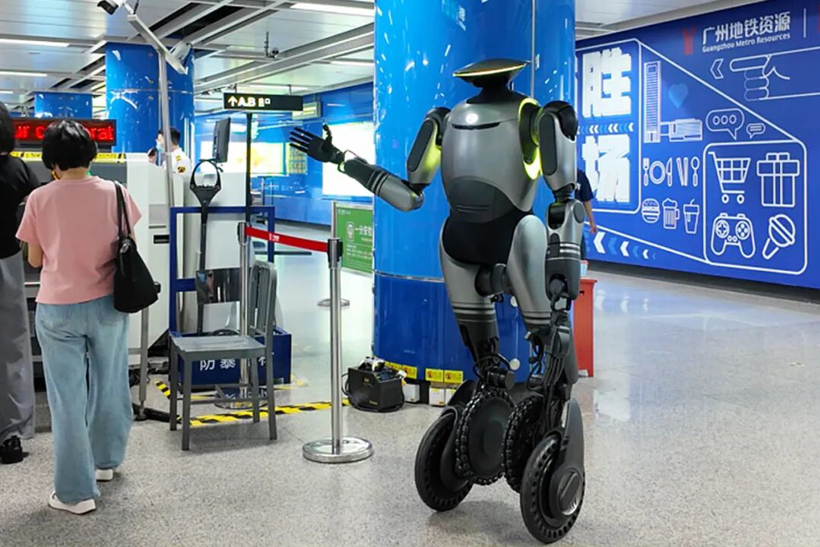
Image Source: GAC
Meanwhile, traditional automakers like GAC and Chery—representing the "pragmatic group"—have delivered convincing, actual results.
GAC Group's Huilun Technology showcased the fourth-generation embodied humanoid robot, GoMate Mini, along with four independently developed core components: an axial flux motor, an integrated joint module, a driver, and a dexterous hand.
Focusing on security scenarios, GoMate Mini features a pioneering variable wheel-foot structure, a top speed of 15 km/h, and a battery life exceeding 8 hours. It is already in regular operation on the Guangzhou Metro and is accelerating its expansion into automotive production lines, residential properties, and commercial districts.
Chery's Mojia Robotics presented a "pragmatic" lineup consisting of a smart police robot, the humanoid Moyin, and the quadruped robot dog, Argos.
To date, cumulative deliveries of Argos have exceeded 1,000 units. The smart police robot has also been deployed widely in multiple cities across the country, covering real-world scenarios such as school crossing guards, traffic direction, and event security.
As traditional automakers begin to emphasize delivery data and real-world case studies, the signal is clear: the criteria for evaluating automakers' expansion into embodied AI are quietly changing—from demo to delivery, and from "can move" to "can work."
If the entry of traditional automakers defined the "industrial base" of the embodied AI sector, the strategic upgrades of startups are pushing this expansion trend to a whole new level.
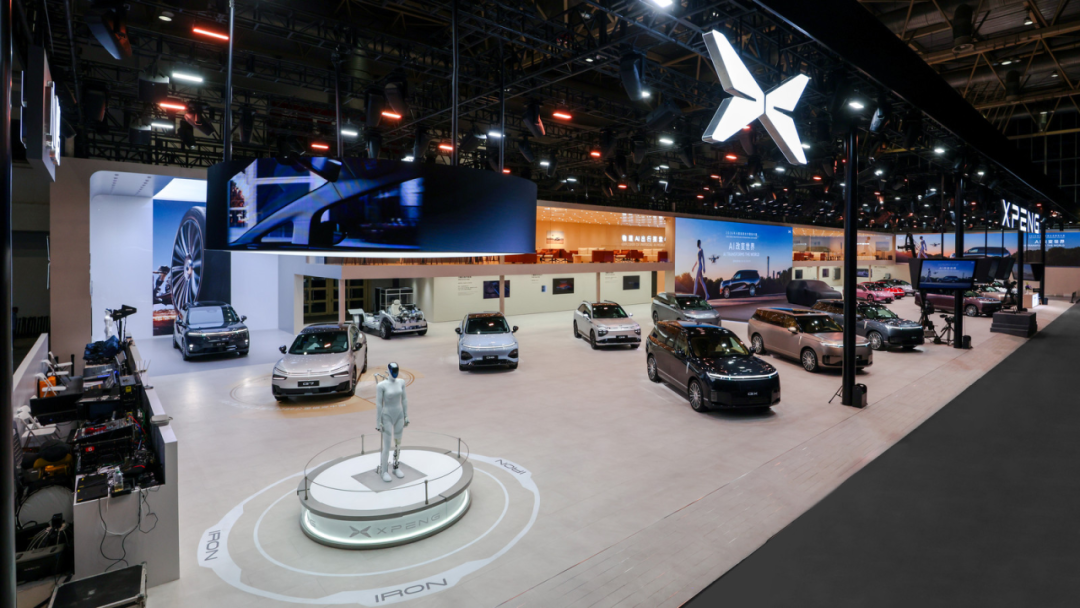
Image Source: XPENG
Recently, XPENG Motors officially renamed itself "XPENG Group," establishing its strategic positioning for the next decade as "becoming a global company for embodied AI."
Guided by this vision, the XPENG IRON humanoid robot is scheduled for mass production by the end of 2026, with full-year commercial sales starting in 2027 and a monthly production target of over 1,000 units by year-end. To support this, XPENG began construction of a full-chain mass production base for humanoid robots in Guangzhou in the first quarter of this year.
Li Auto's strategic shift is equally clear.
Earlier this year, Li Auto CEO Li Xiang convened a company-wide meeting to announce that the brand's positioning would no longer be limited to "building mobile homes," but would also strengthen its "embodied AI" attributes. At the meeting, Li explicitly stated that 2026 is the "final opportunity" to become a top global AI company, necessitating a rapid move to execute.
Xiaomi, too, recently unveiled a new humanoid robot. Prior to this, Xiaomi's CyberOne had already entered its own automotive factory, working on a self-tapping nut loading station.
Incomplete statistics indicate that at least a dozen automakers have clearly announced robotics strategies.
This means that "building robots" is shifting from a distinctive exploration by a few automakers to a strategic standard for mainstream players.
The supply chain moves in tandem
On the surface, automakers expanding into embodied AI is about "seeking a second growth curve."
But if we broaden the scope from the automakers to observe the overall movement of parts suppliers at this show, a deeper structural change emerges: the perception, decision-making, and execution capabilities accumulated over decades in the automotive supply chain are being systematically transferred to the robotics sector.
This is not a single company pivoting, but the transfer of an entire industrial system.
Yang Xiaoming, President of Aptiv China and Asia Pacific, stated during the show: "The underlying logic of embodied AI perception is consistent with intelligent driving perception. Automotive solutions can be directly applied to the field of humanoid robots."
Based on this technical commonality, Aptiv developed the PULSE™ fusion perception system, which debuted at this auto show. The solution is already in use with collaborative robots and autonomous mobile robots (AMRs), enabling safe and efficient human-robot collaboration in complex warehouse environments.
Chen Yuhang, founder and CEO of Yihang Intelligence, also believes that autonomous driving and robotics share the same roots—essentially, they are AI applications implemented in different physical forms.
"All resources—including talent, supply chains, and technology—are already available in the autonomous driving sector. This explains why we see many autonomous driving companies expanding into robotics, a significant flow of talent moving to robot firms, and numerous robotics companies adopting technology from the autonomous driving space. It's a gradual process. From the perspective of autonomous driving, robots and vehicles may belong to different industries, but from an AI standpoint, they actually share the same origins—a continuation from one stage of development to a higher one," Chen noted.
This is the underlying logic behind Yihang Intelligence's entry into robotics. Chen revealed that the company's first robot prototype has been completed and secured its first pilot project, with an official public debut expected within the year.
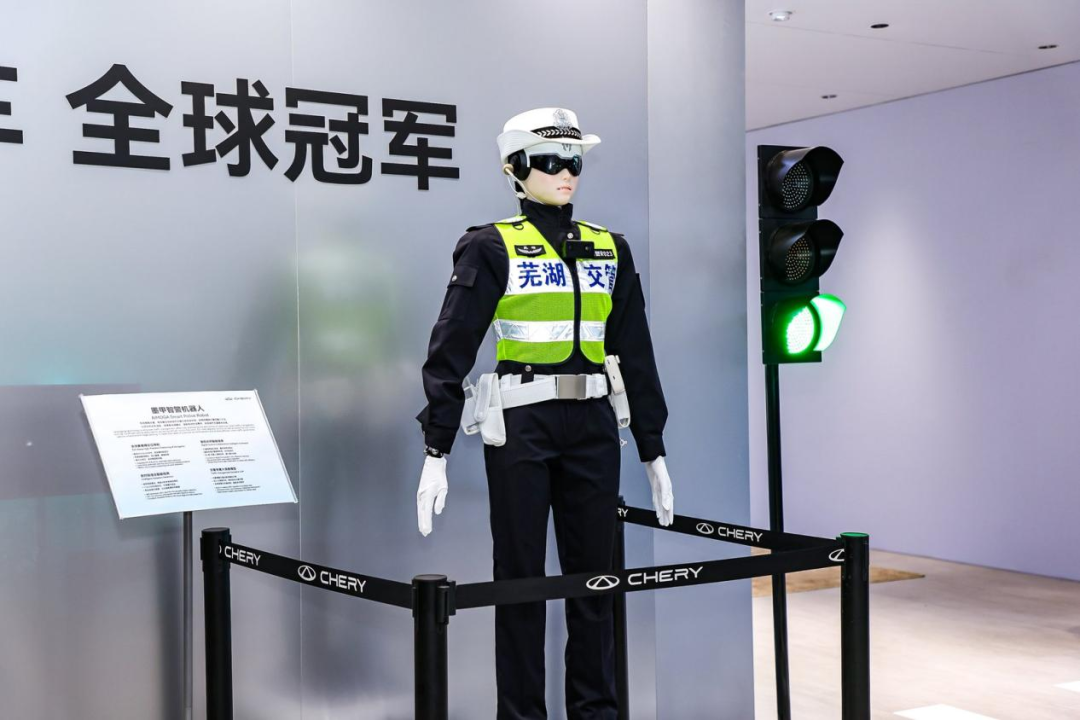
Image Source: Mojia Robotics
The rapid growth of Chery's Mojia Robotics is deeply rooted in Chery's 20-plus years of accumulation in vehicle R&D and manufacturing, including its mature development and verification processes, advanced supply chain management capabilities, and a global sales and service network.
On the technology front, Mojia is actively migrating automotive intelligent technologies to its robotics platform, applying autonomous-driving-level environmental perception to achieve centimeter-level positioning, dynamic obstacle avoidance, and comprehensive 3D perception in complex environments. On the energy front, it deeply shares Chery's "tri-electric" (battery, motor, control) technologies, including the use of Chery's solid-state batteries to enable long-duration continuous operation.
Additionally, numerous automotive supply chain companies—including Versigent, Valeo, Horizon Robotics, SemiDrive, NavInfo, Jingwei Hirain, Qingshan Industry, Xingyu, and Weifu Group—showcased embodied robotics solutions at the show, covering core technical fields such as joint modules, head modules, embodied "brains," "cerebellums," and dexterous hands.
Overall, from emerging autonomous driving chipmakers to traditional precision component manufacturers and global Tier 1 giants, nearly every key node in the intelligent vehicle supply chain is expanding into the robotics sector.
It is worth noting that, beyond the significant similarity in technical logic, Chen believes the deployment paths for robots and autonomous driving are also remarkably similar.
"Our understanding of robotics is very similar to our previous approach to autonomous driving. Autonomous driving follows a gradual process, and I believe robotics will follow suit. Humanoid robots may be the final form, but along the way, a large number of robots for specific scenarios will emerge, and these robots meet high-frequency, real-world needs," Chen pointed out.
Based on this consideration, Chen revealed that Yihang Intelligence's current robotics efforts focus primarily on transportation scenarios. "This is our primary consideration in the robotics field: starting with specific scenarios to develop specialized robot products. Currently, we are independently developing the robot body as well as the 'brain'—the entire AI system."
Those that don't deliver are being left behind
As automakers and suppliers flock to the sector, the embodied AI industry is undergoing an irreversible restructuring of its value logic.
An increasingly clear signal is that the core driver of this sector is shifting from a "technology focus" to a "mass production focus."
In other words, neither the capital markets nor the industrial end-users are willing to pay for sophisticated demos anymore; they want to see whether robots can actually work stably in real-world scenarios and whether the economics are viable.
In mid-April, AGIBOT founder, chairman, and CEO Deng Taihua stated at the 2026 Zhiyuan Partner Conference: "2026 is the first year of the deployment phase. Embodied AI is officially moving from the 'development phase' to the 'deployment phase,' and from 'can move' to 'can work.'"
From "can move" to "can work"—a brief phrase that highlights the shift in the industry's underlying logic.
Previously, the core value of a robot was reflected in how complex its movements were or how fluid its gait was. In the future, the basis of value will shift to a more pragmatic question: Can it replace a human on a production line, and is the replacement cost economical?
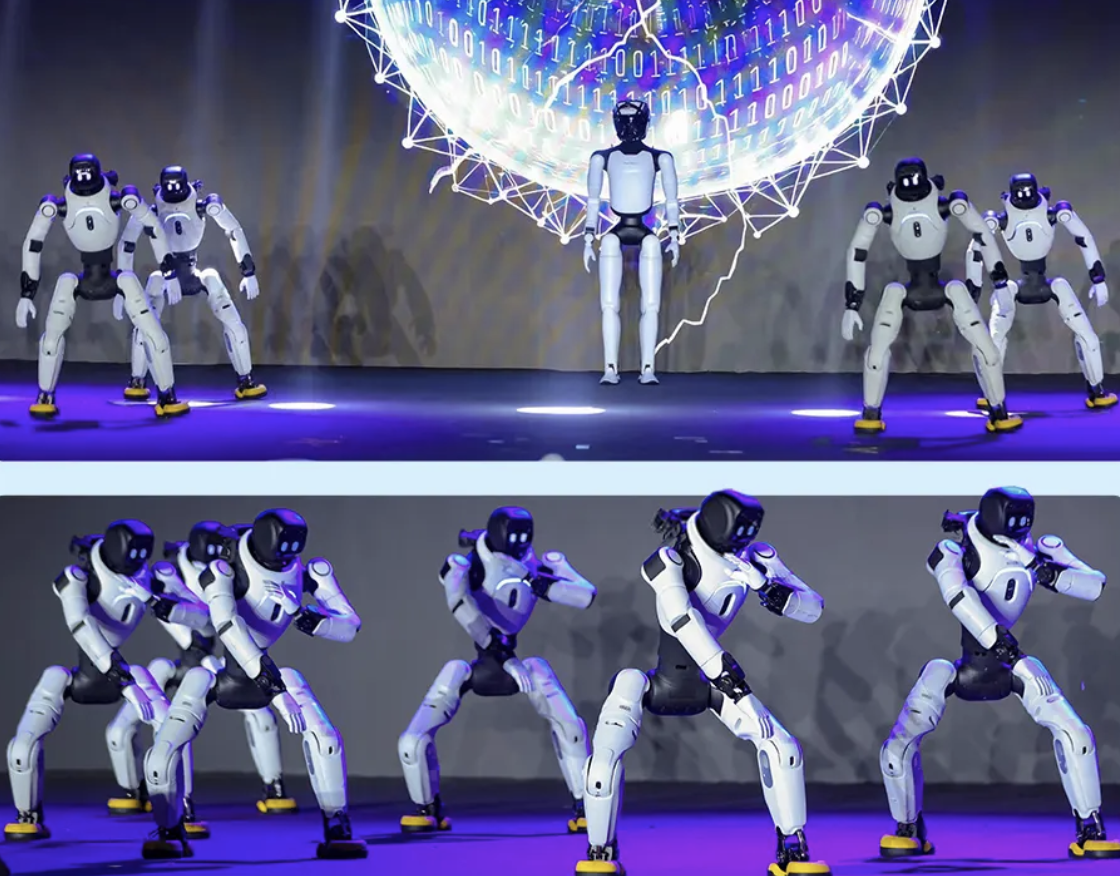
Image Source: AGIBOT
Zhiyuan co-founder, president, and CTO Peng Zhihui offered an even more direct assessment: "The true turning point for embodied AI is not just AI models entering the physical world, but products beginning to integrate into real workflows. The industry is shifting from 'selling robots' to 'delivering outcomes.'"
If the views of these two industry pioneers represent an industry consensus, the reaction of the capital market offers even more direct confirmation of the changing trends: companies that have already presented deployable solutions and verified their commercial capabilities in real-world scenarios are finding it easier to secure continued investment.
According to incomplete statistics from Gasgoo, the domestic embodied AI sector reported over 200 equity financing events in the first quarter of 2026, securing more than 30 billion yuan in total funding. That’s an average daily inflow of roughly 330 million yuan, including 16 deals exceeding 1 billion yuan.
A further analysis shows that the vast majority of this 30-plus billion yuan flowed to companies that could produce actual products, deliver orders, and demonstrate sustainable business models in real-world scenarios.
In other words, capital is no longer willing to invest in "concepts" or "team profiles." Instead, it is using real money to draw a clear distinction: those who can prove their business models get the ticket to the next round, while those still stuck at the demo stage are being eliminated from the financing window.
This also means that time is running out for expanding automakers and Tier 1 suppliers to demonstrate their capabilities.
So, which type of enterprise is most likely to succeed?
There is no conclusion yet. But a gradually clear reference point is this: the path for robots is not like the path for cars. Automotive functions and product forms are highly unified. Robotics, however, is more like autonomous driving: different scenarios require products of different forms and with different combinations of capabilities. For instance, a robot moving materials on a production line often doesn't need complex dialogue capabilities, while a home care robot doesn't require industrial-grade load capacity.
And it is precisely because of this high degree of scenario segmentation that it is unlikely a super-giant will emerge in the embodied AI field that dominates all sectors.
Conclusion
Looking back at the 2026 Beijing Auto Show, one signal is already clear: the battle for embodied AI to redefine the automotive industry has begun.
The last time the automotive industry shifted so significantly was at the onset of electrification. Today, as the supply chain collectively shifts to embodied AI, the sector and the strategy may be different, but one thing is certain: whoever is the first to implement a replicable solution in a real-world scenario will be better positioned to seize the initiative in the next stage of competition.


