



Gasgoo Munich-On April 1, Dongfeng Honda released its latest sales figures. Cumulative sales for the first quarter of 2026 reached 71,432 units, marking year-on-year growth. January sales hit 31,377 units, up 4.4%, while February climbed to 17,583 units—a 10.1% increase that defied the dual pressures of the Lunar New Year holiday and broader industry adjustments.
On the surface, these figures look routine, but they carry significant weight. They arrive at a time when joint-venture market share is being relentlessly squeezed and the penetration rate of new-energy vehicles has topped 50%. More importantly, they come after Dongfeng Honda’s own sales plummeted from a peak of 820,000 units in 2020 to a trough of 325,800 in 2025.
Is this “good start” merely a fleeting rebound, or a genuine turning point for stabilization and recovery?
After the Cliff
The speed of Dongfeng Honda’s decline has been staggering among mainstream joint ventures. In 2020, the company was firmly in the top tier with annual sales of 820,400 units. Yet, in just five years, annual volume has shrunk by nearly 500,000—a drop of over 60%.
Dongfeng Honda’s struggle is essentially a microcosm of the collective silence of joint-venture brands in the electric era. In the age of internal combustion engines, Japanese automakers were synonymous with fuel efficiency, durability, and low maintenance costs. But in the new-energy era, these attributes are inherent to electric vehicles—lower energy costs, simpler structures, and lower failure rates—effectively dismantling the technological moat once held by Japanese brands.
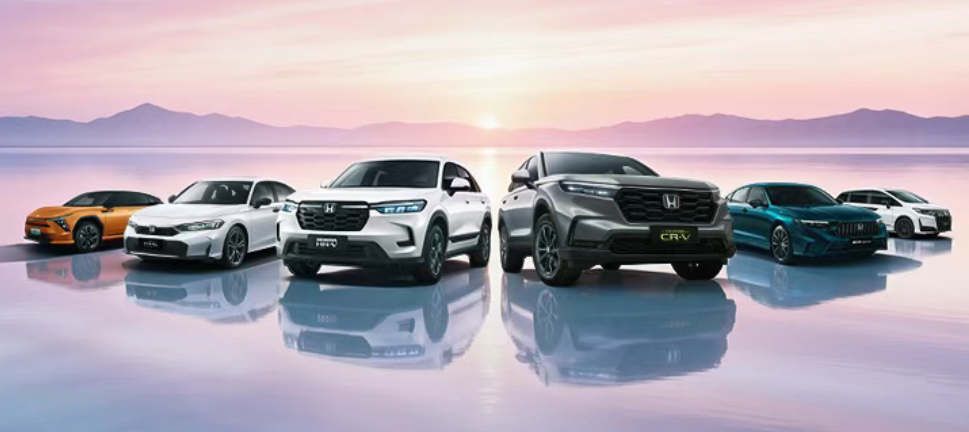
Image Source: Dongfeng Honda
Crucially, Dongfeng Honda’s attempts in the new-energy sector have repeatedly stumbled. The pure electric e:NS1, launched in 2022, saw monthly sales languish below 100 units for long periods, often suffering the embarrassment of single-digit sales.
The S7 pure electric SUV, launched in March 2025 after four years of development and heavy investment, met with a cold reception due to an initial price tag nearing 260,000 yuan. Cumulative sales in the first three months totaled fewer than 500 units. Even after subsequent “no-haggle” pricing policies were introduced, the market refused to bite.
The new “Lingxi” brand, despite showing sincerity with a starting price of 120,000 yuan, has been squeezed by products from BYD, XPENG, and Leapmotor in the same price bracket. As of June 2025, cumulative sales remained under 1,000 units. As one industry insider sharply noted, “The early ‘e:NS’ series relied on converted internal combustion platforms. The nature of ‘oil-to-electric’ conversion makes it hard to gain recognition.”
Falling sales are just the symptom; a deeper crisis lies in the lag of systemic capabilities. Dongfeng Honda is acutely aware of this. Cao Dongjie, executive deputy general manager, admitted, “Dongfeng Honda has developed a set of accustomed, standard processes and systems over the years. But in adapting to China’s current rapid and intense landscape, that standard system can’t keep up with the rhythm.”
This rigidity is evident in product development cycles: while domestic brands iterate models every 18 months, joint ventures still stick to the traditional 4-to-5-year development window. It also shows in the supply chain: an over-reliance on Japanese suppliers makes it difficult to respond quickly to localization needs in the Chinese market.
An even tougher challenge is the entrenchment of consumer perception. With the rise of domestic brands and new EV makers, the stereotype of joint-venture electric vehicles has solidified: “backward intelligence, low value for money, conservative design.” These labels create a natural chasm for Dongfeng Honda’s new launches, and models like the e:NS1 and S7 have failed to break this perception with sufficient product strength.
Meanwhile, domestic brands are dismantling the last defenses of joint ventures with a combination of “core electric tech plus intelligence.” One commentator observed, “When the penetration rate of passenger vehicle electrification exceeds 50%, our competitors are already fighting with ‘modern weaponry,’ while we can no longer hesitate clinging to ‘cold weapons.’”
The ICE Foundation Remains
Amid the noise of transition, Dongfeng Honda is re-evaluating its core assets: a cumulative user base exceeding 8.6 million and its technical legacy in internal combustion engines. This shift in thinking is reflected in its strategic narrative, moving from “comprehensive shift to electrification” to a dual-track path where “internal combustion vehicles are the stabilizer during transition, while new energy vehicles stage a comeback.”
This judgment is based on a sober assessment of the Chinese market’s reality. In January 2026, retail sales of conventional internal combustion passenger vehicles reached 948,000 units, still occupying more than 70% of the overall market. Given China’s vast territory and the massive differences in energy infrastructure and consumption habits across regions, internal combustion vehicles will remain the bedrock of auto consumption for a considerable time.
Cao has a clear view on this: “Even if the internal combustion share is only 30%, that still represents a volume of nearly 10 million units. Within those 10 million units, how we play our role well is the key point we need to think about.”
The advantage of internal combustion vehicles lies in quantifiable “hard power”: engine and transmission calibration, chassis tuning, and a long-standing reputation for reliability, durability, economy, and resale value.
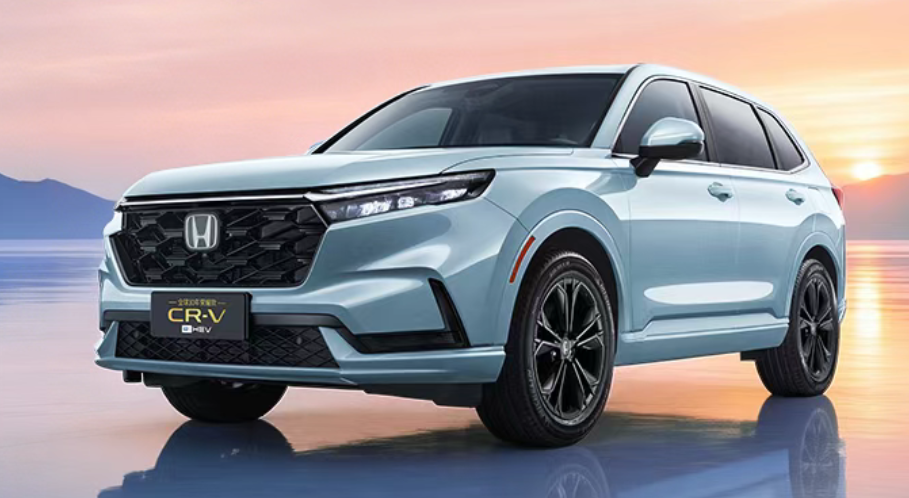
Image Source: Dongfeng Honda
According to the 2025 residual value report by the China Automobile Dealers Association, the Dongfeng Honda CR-V achieved a three-year residual rate of 60.27%, ranking first among joint-venture compact SUVs. In 2025, global cumulative sales of the CR-V surpassed 15 million units, with sales in China alone exceeding 3.2 million. Behind these numbers lies the embodiment of full-lifecycle product value—it is Dongfeng Honda’s deepest brand moat.
The end of 2025 marked a pivotal node for Dongfeng Honda’s strategic adjustment. Cao Dongjie, former CEO of Dongfeng Mhero Technology, was appointed executive deputy general manager. This manager, honed in the domestic brand sector, brought a new philosophy for reform to the joint venture.
At the 2025 Guangzhou Auto Show, Cao explicitly outlined a transformation direction focused on “localized R&D and localized supply chains.” The in-house R&D team will double in size, and the company will actively integrate the local Chinese supplier ecosystem.
This philosophy quickly took shape in product offerings. In January 2026, Dongfeng Honda launched a new version of the HR-V. The Pro version is priced at 109,900 yuan, and the Max version at 112,900 yuan. It carries the “golden powertrain” and core architecture technology shared with the CR-V, marking the first time the joint venture has brought its mid-to-high-end technology down to the 100,000-yuan mainstream market.
Complementing this is a strategy of price stability. Since late 2025, Dongfeng Honda has initiated a price stabilization policy, refusing to participate in a bottomless price war. The sales growth in January and February of 2026 was achieved under this strategy—rising against the industry’s overall downturn while avoiding the brand value erosion caused by “trading volume for price.”
In March 2026, news sparked industry interest: Dongfeng Honda’s pure electric model, the e:NS2, will be exported to the Japanese market. Sales are set to begin as early as spring, where it will be temporarily named the INSIGHT, with an initial limited run of 3,000 units. This marks the first time a joint-venture pure electric vehicle produced in China has been sold back to the Japanese market—a symbolic milestone.
Behind this move lie multiple considerations. On a product level, the e:N series blends Honda’s manufacturing experience with China’s advantages in electrification and intelligent technology; introducing it to Japan validates the company’s localized R&D capabilities. Strategically, exports can boost the capacity utilization of Chinese factories and create new revenue streams for the new-energy business.
More importantly, this “reverse export” shatters the long-standing pattern of joint ventures unidirectionally importing overseas models. It signals that the role of joint ventures in the global system is shifting from “manufacturing bases” to “technology exporters.”
Electrification was the first half; intelligence is the second. In the smart driving sector, Dongfeng Honda is accelerating its catch-up efforts. In 2025, the company partnered with Momenta to jointly develop a NOA advanced driver-assistance system, attempting to narrow the gap with leading new forces. At the same time, Dongfeng Honda is speeding up the introduction of Chinese platforms, technologies, and supply chains to precisely serve local users.
Cao revealed in an interview that 2027 will be a critical window for Dongfeng Honda’s transformation, when the company will officially unveil revolutionary intelligent breakthroughs and new achievements to the market. This means Dongfeng Honda is shifting from a “follower” to a “chaser.” The effectiveness of its intelligent layout will determine whether it can return to the mainstream view of market competition after 2027.


